Explore electrical engineering topics, components, circuits, power systems, wiring, safety, maintenance, and practical guides for students, technicians, and professionals.
Think about your daily routine. You wake up and turn on the lights, charge your phone, use a fan or air conditioner, and maybe run a water pump. All these…
Imagine you are working in a factory where heavy metal objects need to be lifted and moved quickly. Instead of using manual force, a machine picks up tons of scrap…
Imagine you bring a small piece of paper close to a charged comb after combing your hair. The paper suddenly jumps and sticks to the comb. This simple everyday observation…
Imagine you are holding a charged battery in your hand. When you connect it to a circuit, electricity starts flowing and powers devices like a bulb or fan. But have…
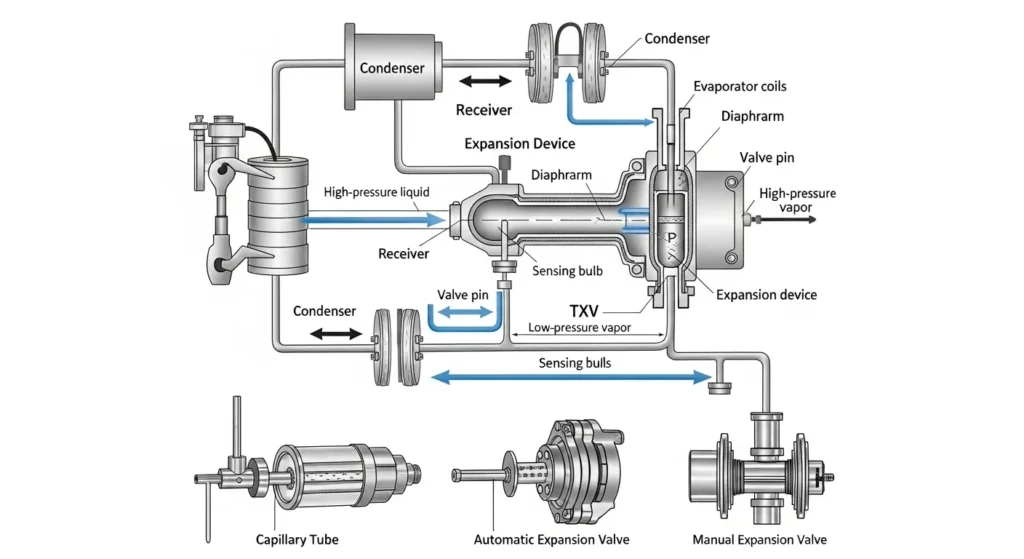
Imagine turning on your air conditioner during a hot summer afternoon. Within minutes, the room starts cooling down. While many components work together, the AC compressor is the main part…
Imagine walking into your room on a very hot day and switching on the air conditioner. Within minutes, the air becomes cool and comfortable. This cooling effect does not happen…
Imagine you are running an air conditioner at home. You notice that even though it consumes a certain amount of electrical power, not all of that power is actually used…
Imagine you are repairing a faulty electric fan at home. The power supply is fine, but the fan is not working. You suspect a broken wire or a damaged coil.…
Magnetic flux is a fundamental concept in physics and electrical engineering that helps us understand how magnetic fields interact with surfaces. The magnetic flux formula is widely used in real-world…
Imagine switching ON a heavy motor. You may notice a spark or a small delay before the motor runs smoothly. This happens because of a property called inductance. It controls…