
Imagine turning on a ceiling fan during a hot summer day. Within seconds, the fan blades begin spinning and cool the room. Have you ever wondered which part inside the motor actually rotates to create this movement? The answer is the rotor. Although hidden inside the motor, the rotor is one of the most important components responsible for converting electrical energy into mechanical motion.
Rotors are used in almost every electrical machine, including electric motors, generators, alternators, wind turbines, industrial pumps, electric vehicles, and household appliances. Without a properly designed rotor, these machines cannot produce the rotation needed to perform useful work.
Whether you are an electrical engineering student, technician, electrician, or beginner, understanding the rotor working principle is essential for learning how electrical machines operate. In this complete guide, you’ll learn what a rotor is, how it works, its types, components, rotor applications, advantages, disadvantages, common problems, maintenance tips, and the difference between rotor and stator. By the end of this article, you’ll have a solid understanding of one of the most critical parts of modern electrical machines.
What is Rotor?
A rotor is the rotating part of an electric motor or generator. It rotates inside the stator and interacts with the magnetic field to produce mechanical motion in motors or generate electricity in generators.
In electric motors, the rotor receives magnetic force from the stator and converts electrical energy into rotational movement. In generators, the rotor rotates mechanically and creates a changing magnetic field that produces electrical power.
Simply put, the rotor is the moving component that performs the actual rotating work inside an electrical machine.
Simple Explanation
Think of a bicycle wheel. The wheel rotates while the bicycle frame remains stationary. Similarly, the rotor rotates while the stator remains fixed inside the motor or generator.
Practical Example
In a washing machine motor, the rotor spins rapidly when electricity is supplied. This rotation turns the drum, allowing clothes to wash and spin efficiently.
Rotor Working Principle
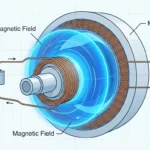
The rotor working principle is based on the interaction between magnetic fields.
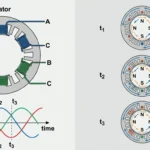
When current flows through the stator winding, it creates a rotating magnetic field. This magnetic field induces current or magnetic attraction in the rotor, causing it to rotate.
The rotating rotor then delivers mechanical power through the shaft.
Step-by-Step Working Process
- Electrical power is supplied to the stator.
- The stator creates a rotating magnetic field.
- The magnetic field reaches the rotor.
- Current is induced in the rotor conductors, or permanent magnets interact with the stator field.
- Magnetic forces produce torque.
- The rotor begins rotating.
- The shaft transfers mechanical power to the connected machine.
- Continuous magnetic interaction keeps the rotor spinning.
Easy Analogy
Imagine standing on a moving walkway at an airport. As the walkway moves, it carries you forward without you pulling yourself. Similarly, the rotating magnetic field created by the stator “pulls” the rotor into continuous rotation.
Types of Rotor
Different electrical machines use different rotor designs depending on speed, torque, efficiency, and application.
Squirrel Cage Rotor
The squirrel cage rotor is the most common rotor used in induction motors.
Features
- Aluminum or copper bars
- Very strong construction
- Low maintenance
- High reliability
Applications
- Ceiling fans
- Water pumps
- Compressors
- Industrial motors
Wound Rotor (Slip Ring Rotor)
This rotor contains insulated windings connected to slip rings.
Features
- External resistance can be connected
- High starting torque
- Better speed control
- Suitable for heavy loads
Applications
- Cranes
- Elevators
- Rolling mills
- Heavy industrial machines
Permanent Magnet Rotor
Permanent magnets replace wound conductors.
Features
- High efficiency
- Compact design
- No rotor copper losses
- Excellent performance
Applications
- Brushless DC motors
- Electric vehicles
- Drones
- Robotics
Salient Pole Rotor
Large projecting poles are mounted on the rotor.
Features
- Operates at low speed
- Large diameter
- High pole count
Applications
- Hydroelectric generators
- Large synchronous motors
Cylindrical (Non-Salient Pole) Rotor
The rotor has a smooth cylindrical shape.
Features
- High-speed operation
- Excellent mechanical balance
- Strong construction
Applications
- Steam turbine generators
- Turbo alternators
Main Components of a Rotor
Several components work together to ensure smooth and efficient rotor operation.
Rotor Core
The rotor core is usually made of laminated silicon steel.
Function
- Supports rotor conductors
- Provides a magnetic path
- Reduces energy losses
Rotor Conductors
These conductors carry induced or supplied current.
Function
- Generate magnetic fields
- Produce torque
- Enable energy conversion
Shaft
The shaft is mounted at the center of the rotor.
Function
- Transfers mechanical power
- Supports rotor rotation
- Connects external loads
Bearings
Bearings support smooth rotor movement.
Function
- Reduce friction
- Maintain alignment
- Increase equipment life
Slip Rings (Wound Rotor)
Slip rings connect the rotor winding to external circuits.
Function
- Transfer electrical current
- Improve starting performance
- Allow external resistance control
Cooling Fan
Many motors include a cooling fan attached to the rotor.
Function
- Dissipates heat
- Prevents overheating
- Improves efficiency
Advantages of Rotor
Understanding the rotor advantages and disadvantages helps engineers select the right electrical machine.
Advantages
- Produces mechanical rotation efficiently.
- High reliability.
- Long service life.
- Suitable for various motor types.
- Supports high-speed operation.
- Strong mechanical construction.
- Excellent power transmission.
- Available in multiple designs.
- Easy integration with industrial systems.
- High efficiency in modern motors.
These advantages make rotors indispensable in electrical machines ranging from small appliances to large industrial equipment.
Disadvantages of Rotor
Although highly effective, rotors also have some limitations.
- Rotor heating under heavy load.
- Bearing wear over time.
- Mechanical imbalance can cause vibration.
- Wound rotors require more maintenance.
- Slip rings need regular inspection.
- Manufacturing cost may be high.
- Cooling systems are necessary for large machines.
- Rotor failures may require motor disassembly.
- Permanent magnet rotors are expensive.
- High-speed operation requires precise balancing.
Rotor Applications
The rotor applications cover almost every industry using rotating electrical equipment.
Home Applications
- Ceiling fans
- Washing machines
- Refrigerators
- Air conditioners
- Vacuum cleaners
Industrial Applications
- Compressors
- Conveyor systems
- Pumps
- Machine tools
- Cranes
- Rolling mills
Transportation
- Electric vehicles
- Metro trains
- Electric forklifts
- Railway traction motors
Renewable Energy
- Wind turbines
- Hydroelectric generators
- Small power generators
Modern Technology
- Robotics
- CNC machines
- Automated factories
- Medical equipment
- Aerospace systems
Difference Between Rotor and Stator
Many students confuse these two major machine components.
| Feature | Rotor | Stator |
|---|---|---|
| Position | Rotating part | Stationary part |
| Motion | Rotates continuously | Remains fixed |
| Function | Produces mechanical rotation | Produces magnetic field |
| Location | Inside stator | Outer frame |
| Mechanical Stress | High | Low |
| Bearings Required | Yes | No |
| Maintenance | Higher | Lower |
| Connected To | Shaft | Machine frame |
Understanding the difference between rotor and stator helps beginners understand the complete operation of motors and generators.
Selection Guide
Selecting the correct rotor improves machine efficiency and reliability.
Choose the Correct Rotor Type
Select squirrel cage, wound rotor, permanent magnet, or salient pole based on the application.
Check Speed Requirement
High-speed machines require cylindrical rotors with excellent balance.
Consider Starting Torque
Heavy-load applications benefit from wound rotors.
Core Material
Choose laminated silicon steel for lower energy losses.
Cooling System
Large motors should include effective cooling arrangements.
Operating Environment
Consider:
- Dust
- Moisture
- Temperature
- Corrosive atmosphere
- Continuous operation
Maintenance Requirements
For low-maintenance applications, squirrel cage rotors are often the best choice.
Common Problems & Solutions
Why does the rotor overheat?
Possible causes
- Overloading
- Poor ventilation
- Bearing failure
- Electrical imbalance
Solution
Reduce load, improve cooling, and inspect bearings.
Why does the motor vibrate excessively?
Possible reasons include:
- Rotor imbalance
- Bent shaft
- Worn bearings
- Loose mounting
Balance the rotor and replace damaged bearings if necessary.
Why does the rotor make unusual noise?
Common causes include:
- Bearing wear
- Misalignment
- Loose rotor components
Inspect mechanical parts and perform regular maintenance.
Can a damaged rotor be repaired?
Minor damage such as bearing replacement or balancing can usually be repaired. Severe shaft or core damage may require rotor replacement.
How can rotor life be increased?
- Avoid overloading.
- Maintain proper lubrication.
- Keep cooling passages clean.
- Inspect bearings regularly.
- Perform vibration monitoring.
Future Trends
Rotor technology continues to improve with modern engineering developments.
Important future trends include:
- Lightweight rotor materials.
- High-strength magnetic alloys.
- Improved rotor balancing techniques.
- Advanced cooling systems.
- Smart vibration monitoring sensors.
- AI-based predictive maintenance.
- Higher efficiency permanent magnet rotors.
- Improved manufacturing automation.
- Better energy-efficient motor designs.
- Increased use in electric vehicles and renewable energy systems.
These innovations are helping manufacturers build electrical machines that consume less energy while delivering higher performance and longer service life.
Conclusion
The rotor is one of the most important components of every electric motor and generator because it is responsible for producing the rotating motion that powers countless electrical systems. Understanding the rotor working principle, types, components, rotor applications, and rotor advantages and disadvantages provides a strong foundation for anyone studying electrical engineering or working with rotating machines. Whether used in household appliances, industrial equipment, transportation systems, or renewable energy plants, the rotor plays a critical role in efficient energy conversion. As motor technology continues to evolve with better materials, improved cooling, and smart monitoring systems, modern rotors are becoming more efficient, reliable, and durable. Mastering rotor fundamentals will make learning advanced electrical machines much easier.