
Imagine running a large industrial motor in a factory. The motor is working, but your electricity bill is surprisingly high even though the machine is not producing more useful output. You may wonder why this happens.
The answer is often related to reactive power. Reactive power plays a very important role in AC electrical systems. It is not useful work power, but it is necessary for the operation of magnetic devices like motors and transformers.
Understanding what is reactive power is essential for electrical students, engineers, and technicians working in power systems. Reactive power affects power factor, system efficiency, voltage stability, and transmission losses.
In this article, you will learn reactive power definition, reactive power working principle, types of reactive power, applications, advantages and disadvantages, and practical engineering examples.
Think of this as a practical guide from real electrical engineering experience.
Reactive Power
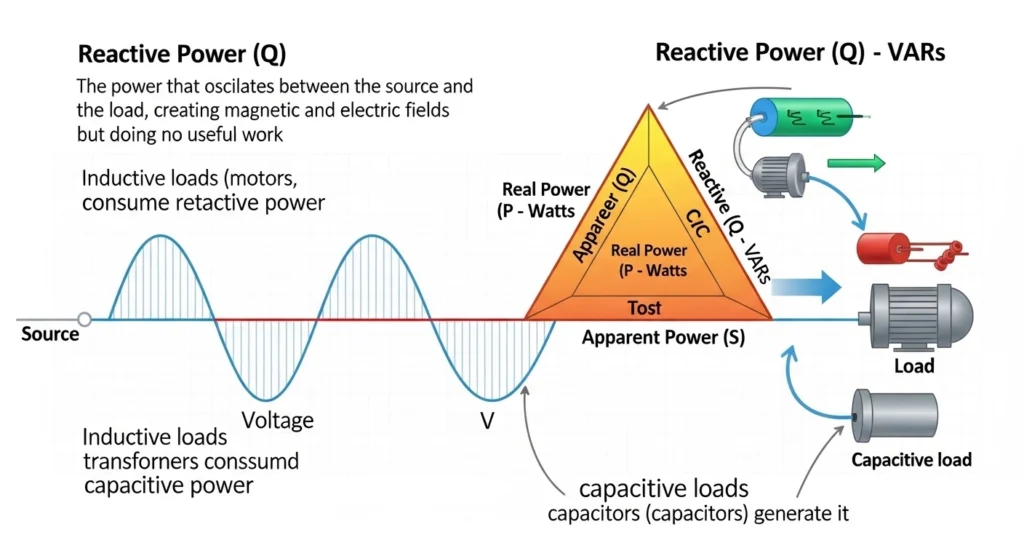
Reactive power is an important concept in electrical engineering, especially in AC (Alternating Current) systems. In simple words, reactive power is the type of electrical power that does not perform any useful work directly, but it is still necessary to maintain voltage levels and keep electrical systems running smoothly.
In an AC system, electrical power has three types: active power, reactive power, and apparent power. Active power is the real power that does useful work like running motors, lighting bulbs, or heating devices. Reactive power, on the other hand, is used to create and maintain magnetic fields in devices like transformers, inductors, and motors.
The reactive power working principle is based on the energy exchange between the source and reactive components. In AC circuits, elements like inductors and capacitors store energy temporarily. Inductors store energy in a magnetic field, while capacitors store energy in an electric field. This energy is not consumed permanently; instead, it flows back and forth between the source and the load. This back-and-forth flow of energy is called reactive power.
For example, in an electric motor, reactive power is needed to create a magnetic field in the coils. Without this magnetic field, the motor cannot rotate. However, this power does not contribute to actual mechanical output; it only supports the operation of the motor.
Reactive power is measured in VAR (Volt-Ampere Reactive). It is represented by the symbol Q. While active power is measured in watts (W), reactive power helps maintain system voltage and stability.
👉 Simple understanding:
- Active Power → Does useful work
- Reactive Power → Supports system operation
- Apparent Power → Total power (combination of both)
Although reactive power does not do direct work, it is very important for the proper functioning of electrical systems. If reactive power is not controlled, it can cause voltage drops, energy losses, and reduced efficiency in power systems.
In modern electrical networks, devices like capacitors and power factor correction units are used to manage reactive power. This improves efficiency and reduces electricity losses.
In conclusion, reactive power is a necessary part of AC electrical systems. It supports voltage stability, enables motor operation, and ensures smooth performance of electrical equipment even though it does not produce direct usable energy.
What Is Reactive Power? Definition, Working Principle, and Simple Explanation
Reactive power is the portion of electrical power in an AC (Alternating Current) system that continuously flows back and forth between the power source and reactive components such as inductors and capacitors. Unlike active power, reactive power does not perform useful work such as rotating a motor shaft or producing light. Instead, it is essential for creating and maintaining the magnetic and electric fields that allow many electrical devices to operate efficiently.
Without reactive power, equipment such as induction motors, transformers, generators, and fluorescent lighting systems would not be able to establish the electromagnetic fields required for normal operation.
Simple Definition of Reactive Power
Reactive power is the power that creates and sustains magnetic and electric fields in AC electrical systems. It is measured in kilovolt-amperes reactive (kVAR) and continuously moves between the source and the load without being permanently consumed.
Reactive Power Explained in Simple Words
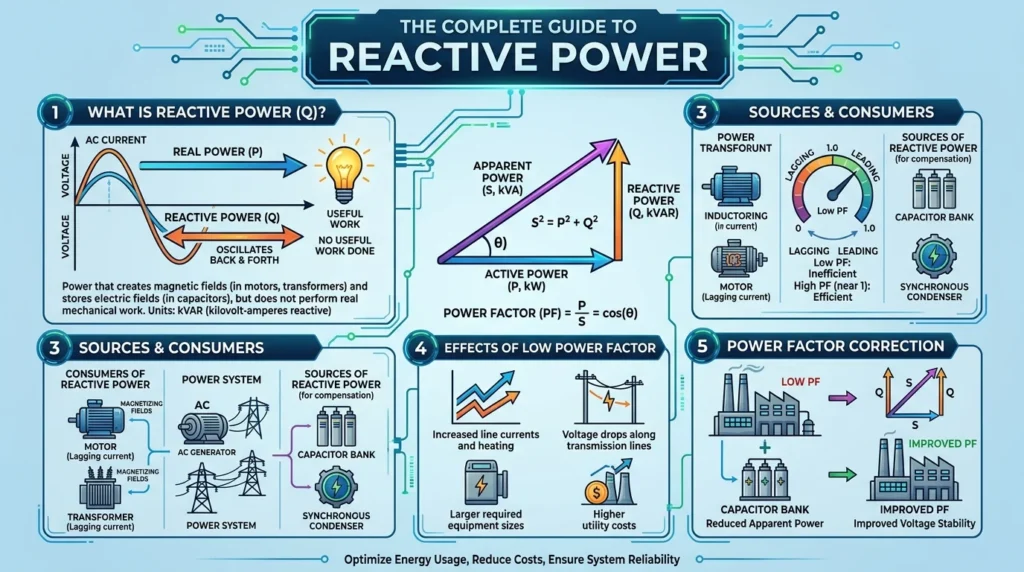
Electrical power in an AC circuit is divided into three main types:
- Active Power (kW): Performs useful work such as running motors, heating elements, and lighting.
- Reactive Power (kVAR): Maintains the magnetic and electric fields required by inductive and capacitive devices.
- Apparent Power (kVA): The total power supplied by the electrical source, consisting of both active and reactive power.
Although reactive power does not directly produce mechanical work or heat, it is essential for the stable and efficient operation of AC power systems.
Practical Example of Reactive Power
An induction motor is one of the best examples of reactive power in action. Before the motor can rotate, it must first create a rotating magnetic field inside the stator. This magnetic field is produced using reactive power. Once the field is established, active power performs the useful work of turning the motor shaft. Without sufficient reactive power, the motor cannot start or operate correctly.
How Does Reactive Power Work?
Reactive power works by storing energy temporarily in magnetic or electric fields and then returning that energy to the power source during each AC cycle. Instead of being consumed, the energy continuously oscillates between the source and the load.
1. Voltage and Current Phase Difference
The working principle of reactive power is based on the phase relationship between voltage and current.
- In inductive loads (motors, transformers, reactors), the current lags behind the voltage.
- In capacitive loads (capacitor banks and cables), the current leads the voltage.
This phase difference causes reactive power to flow back and forth within the electrical system.
2. Energy Storage in Electric and Magnetic Fields
Reactive components temporarily store electrical energy during one part of the AC cycle and release it during another.
- Inductors store energy in magnetic fields.
- Capacitors store energy in electric fields.
This continuous charging and discharging process creates reactive power.
3. Continuous Energy Exchange
Unlike active power, reactive power is not permanently consumed by the load. Instead, energy continuously moves between the source and the reactive components during every AC cycle. This ongoing exchange is necessary to maintain electromagnetic fields and ensure smooth equipment operation.
Simple Analogy
Imagine pushing a child on a swing.
Each push keeps the swing moving back and forth, but the swing does not travel permanently in one direction. Similarly, reactive power continuously transfers energy between the source and the load to maintain the required magnetic or electric fields, even though it does not perform useful mechanical work itself.
This is why reactive power is considered essential for the operation of AC electrical systems, despite not being converted directly into usable energy.
Types / Classification of Reactive Power
Reactive power is mainly classified into two types.
What Is Inductive Reactive Power? Complete Guide with Examples
Reactive Power is a type of electrical power found in alternating current (AC) systems. Inductive reactive power is mainly produced by inductive loads such as motors, transformers, generators, and coils. These devices need magnetic fields to operate, and reactive power helps create and maintain those magnetic fields. Although reactive power does not perform useful mechanical work like active power, it is still necessary for the proper operation of many electrical systems.
In an inductive circuit, current does not flow exactly at the same time as voltage. Instead, the current lags behind the voltage because inductive devices store energy temporarily in magnetic fields. This delay creates inductive reactive power. It is measured in VAR, which stands for volt-ampere reactive. Electrical engineers often represent inductive reactive power with the symbol “Q.”
Electric motors are one of the most common sources of inductive reactive power. When motors run, they require magnetic fields to rotate their internal parts. Transformers also consume reactive power to magnetize their cores. Industrial plants with many motors and transformers usually have high inductive reactive power demand. If too much reactive power exists in a system, the power factor becomes low. A low power factor reduces system efficiency and increases energy losses in cables and electrical equipment.
To improve power factor and reduce inductive reactive power problems, engineers use power factor correction equipment such as capacitor banks and synchronous condensers. Capacitors produce capacitive reactive power, which helps balance the inductive reactive power in the system. This improves voltage stability, reduces current flow, and increases overall electrical efficiency.
Inductive reactive power is important in power transmission and distribution systems because it affects voltage regulation and system performance. Without sufficient reactive power, many AC machines and devices would not function correctly. However, excessive reactive power can overload equipment and increase electricity costs for industries. Therefore, managing inductive reactive power is an important part of electrical engineering and power system design.
Overall, inductive reactive power plays a major role in operating electrical machines, maintaining magnetic fields, and supporting modern industrial and power systems, even though it does not directly produce usable work or energy output.
- Produced by inductive loads.
Examples:
- Motors
- Transformers
- Inductors
Characteristics:
- Current lags voltage
- Causes low power factor
Capacitive Reactive Power vs Inductive Reactive Power: Key Differences Explained
Reactive Power is an important part of alternating current (AC) electrical systems. Capacitive reactive power is the type of reactive power that is produced by capacitive loads such as capacitors, long transmission cables, underground lines, and electronic circuits. Unlike active power, capacitive reactive power does not perform useful mechanical work, but it plays a key role in maintaining voltage levels and improving power system stability.
In a capacitive circuit, the current leads the voltage. This means the current reaches its peak before the voltage does. This happens because capacitors store energy in an electric field and release it back into the system. When this energy is continuously stored and released, it creates capacitive reactive power. It is measured in VAR (volt-ampere reactive) and is represented by the symbol “Q” in electrical engineering.
Capacitors are the main source of capacitive reactive power. They are widely used in power factor correction systems to balance inductive loads such as motors and transformers. When a system has too much inductive reactive power, the voltage drops and efficiency decreases. Capacitive reactive power helps neutralize this effect by improving the power factor and stabilizing voltage levels. This makes electrical systems more efficient and reduces energy losses in transmission lines.
In long-distance power transmission, especially in high-voltage systems, capacitive reactive power naturally increases due to the capacitance of overhead lines and underground cables. If not controlled properly, it can cause voltage rise and instability. Engineers use reactors, compensation devices, and control systems to manage excess capacitive reactive power.
Capacitive reactive power is also important in electronic devices, communication systems, and renewable energy systems such as solar and wind power plants. It helps maintain proper voltage levels and ensures smooth operation of electrical equipment.
Overall, capacitive reactive power is essential for balancing electrical systems, improving efficiency, and maintaining stable voltage in modern power networks, even though it does not directly contribute to useful energy output.
- Produced by capacitive loads.
Examples:
- Capacitor banks
- Power factor correction devices
Characteristics:
- Current leads voltage
- Improves power factor
Understanding difference between inductive and capacitive reactive power is important.
Key Components That Affect Reactive Power in Electrical Systems
Reactive power is generated, consumed, and controlled by several electrical components within an AC power system. These components play a vital role in maintaining voltage stability, improving power factor, and ensuring the efficient operation of electrical equipment. Understanding their functions helps engineers design more reliable and energy-efficient power systems.
1. Inductors
Inductors are one of the primary consumers of reactive power. They create magnetic fields when alternating current flows through them, causing the current to lag behind the voltage.
Functions of Inductors
- Store electrical energy in magnetic fields.
- Consume inductive reactive power (lagging kVAR).
- Create the magnetic flux required for motors and transformers.
- Increase the reactive power demand of the electrical system.
- Lower the overall power factor if not properly compensated.
Common Examples:
- Induction motors
- Transformers
- Reactors
- Electromagnetic coils
- Chokes
2. Capacitors
Capacitors generate capacitive reactive power by storing energy in electric fields and releasing it back into the system. They are widely used for power factor correction because they offset the lagging reactive power consumed by inductive loads.
Functions of Capacitors
- Store electrical energy in electric fields.
- Supply leading reactive power (leading kVAR).
- Improve system power factor.
- Reduce current flowing through transmission lines.
- Minimize voltage drops and transmission losses.
- Increase the overall efficiency of electrical systems.
Common Applications:
- Capacitor banks
- Power factor correction panels
- Distribution substations
- Industrial electrical installations
3. Transformers
Transformers require reactive power to establish the magnetic field inside their cores. Although they transfer active power efficiently, they continuously consume reactive power during operation, even under light-load conditions.
Functions of Transformers
- Consume reactive power to maintain magnetic flux.
- Enable efficient voltage transformation.
- Support power transmission and distribution networks.
- Influence the power factor of electrical systems.
- Contribute to the total reactive power demand.
4. Transmission Lines
Transmission and distribution lines have both inductance and capacitance, making them important contributors to reactive power flow. Their behavior changes depending on line length and system loading.
Functions of Transmission Lines
- Produce inductive reactive power due to line inductance.
- Generate capacitive reactive power because of line capacitance.
- Affect voltage regulation and system stability.
- Influence reactive power flow across the electrical network.
- Require reactive power compensation, especially in long-distance transmission systems.
Long transmission lines often require capacitor banks, shunt reactors, or Flexible AC Transmission Systems (FACTS) devices to maintain voltage within acceptable limits.
The balance of reactive power in an AC electrical system depends on the interaction of inductors, capacitors, transformers, and transmission lines. Inductive devices consume reactive power, while capacitors supply it to the network. Proper management of these components improves power factor, reduces energy losses, enhances voltage stability, and ensures the reliable operation of modern power systems.
Advantages and Disadvantages of Reactive Power
Reactive power is an essential part of every AC electrical system. Although it does not perform useful mechanical work, it is necessary for maintaining voltage levels, creating magnetic fields, and ensuring the reliable operation of electrical equipment. However, excessive or poorly managed reactive power can reduce system efficiency and increase operating costs.
Advantages of Reactive Power
Reactive power offers several important benefits that help maintain the stability and efficiency of electrical power systems.
1. Creates and Maintains Magnetic Fields
Reactive power provides the energy required to establish magnetic fields in inductive devices such as motors, transformers, and generators. Without these magnetic fields, such equipment cannot operate properly.
2. Maintains Voltage Stability
A sufficient supply of reactive power helps keep system voltage within safe operating limits. Stable voltage improves the performance of electrical equipment and reduces the risk of voltage fluctuations.
3. Supports Efficient Motor Operation
Industrial motors depend on reactive power to generate rotating magnetic fields. This enables motors to start, run efficiently, and deliver the required mechanical output.
4. Improves Power System Reliability
Proper reactive power management enhances the stability of power grids, minimizes voltage collapse, and helps maintain a continuous electricity supply during varying load conditions.
5. Enables Efficient AC Power Transmission
Reactive power plays a key role in transmitting electricity over long distances by supporting voltage regulation and maintaining system stability across transmission networks.
6. Supports Renewable Energy Integration
Modern power systems use reactive power compensation to stabilize voltage when integrating renewable energy sources such as solar farms and wind power plants into the electrical grid.
Real-World Benefit
Factories, manufacturing plants, and large commercial facilities rely on reactive power for operating induction motors, transformers, HVAC systems, and other heavy electrical equipment. Without adequate reactive power, these systems would not function efficiently or reliably.
Disadvantages and Limitations of Reactive Power
Although reactive power is necessary, excessive or uncontrolled reactive power can negatively affect electrical system performance.
1. Increases Current Flow
Higher reactive power causes more current to flow through conductors, even though no additional useful work is performed.
2. Causes Higher Transmission Losses
The increased current results in greater I²R (copper) losses in cables, transformers, and transmission lines, reducing overall energy efficiency.
3. Reduces Power Factor
Large amounts of reactive power lower the power factor, causing electrical systems to operate less efficiently and increasing the demand on generators and transformers.
4. Increases Electricity Costs
Many utility companies impose penalties on industrial customers with poor power factors because excessive reactive power places additional stress on the electrical network.
5. Produces Additional Heating
Higher current flow increases heating in transformers, cables, switchgear, and other electrical equipment, which can shorten equipment lifespan.
6. Reduces System Capacity
Excessive reactive power occupies part of the transmission system’s capacity, leaving less room for delivering useful active power.
Importance of Reactive Power Compensation
To reduce these disadvantages, engineers use capacitor banks, synchronous condensers, STATCOMs, and other reactive power compensation devices to improve power factor, minimize losses, and maintain voltage stability.
Applications of Reactive Power in Electrical Systems
Reactive power has numerous applications in modern electrical networks, helping improve voltage regulation, equipment performance, and grid reliability.
Industrial Applications
Reactive power is widely used in industrial facilities where large inductive loads are common.
Common Industrial Uses
- Induction motor operation
- Manufacturing and processing plants
- Heavy machinery and conveyor systems
- Steel, cement, and chemical industries
- Pumping and compressor stations
- HVAC and refrigeration systems
Power System Applications
Power utilities rely on reactive power to maintain efficient and reliable electricity transmission.
Major Applications
- Voltage regulation
- Power factor correction
- Grid stability enhancement
- Transmission and distribution systems
- Substations
- Load balancing
- Reactive power compensation using capacitor banks and FACTS devices
Commercial Applications
Commercial buildings require reactive power for the efficient operation of electrical equipment.
Common Commercial Uses
- Office buildings
- Hospitals
- Shopping malls
- Hotels
- Airports
- Universities
- Data centers
Modern Technology Applications
Reactive power management has become increasingly important in today’s smart and sustainable electrical systems.
Emerging Applications
- Smart grid infrastructure
- Solar photovoltaic (PV) power plants
- Wind energy systems
- Electric vehicle (EV) charging stations
- Battery energy storage systems (BESS)
- Microgrids
- Industrial automation systems
Why Reactive Power Is Important
Reactive power is essential for maintaining voltage stability, supporting electromagnetic equipment, improving power quality, and ensuring the reliable operation of modern AC electrical systems. When properly managed through power factor correction and reactive power compensation, it reduces energy losses, improves system efficiency, and enhances the overall reliability of power networks.
Comparison Section
Difference Between Active Power and Reactive Power
| Feature | Active Power (kW) | Reactive Power (kVAR) |
| Work Done | Yes | No |
| Energy Type | Real energy | Stored energy |
| Measurement Unit | Watt | VAR |
| Purpose | Useful output | Field support |
| Loss Contribution | Low | Can increase losses |
This table helps understand difference between active and reactive power.
Selection Guide
When managing reactive power:
- Measure load power factor
- Install capacitor banks if PF is low
- Avoid overcompensation
- Monitor harmonic distortion
- Use automatic correction systems
Beginner Tips
- Maintain power factor above 0.9
- Use APFC panels in industries
- Regularly check capacitor health
Common Reactive Power Problems and Their Solutions
Reactive power issues can reduce power system efficiency, increase electricity costs, and shorten the lifespan of electrical equipment. Identifying the root cause and applying the correct solution helps maintain voltage stability, improve power factor, and ensure reliable system operation.
1. Why Is Reactive Power High in Industrial Facilities?
Large industrial plants typically have high reactive power demand because they operate numerous inductive loads.
Common Causes
- Large induction motors
- Transformers operating under heavy loads
- Welding machines
- Compressors and pumps
- HVAC systems
- Industrial machinery with inductive coils
Effects
- Low power factor
- Increased current flow
- Higher electricity bills
- Utility power factor penalties
- Greater transmission and distribution losses
Recommended Solutions
- Install properly sized capacitor banks.
- Use Automatic Power Factor Correction (APFC) panels.
- Monitor the power factor regularly.
- Replace oversized or inefficient motors where possible.
- Perform periodic power quality analysis.
2. Why Does Voltage Fluctuate?
Voltage fluctuations often occur when reactive power is not properly balanced throughout the electrical network.
Common Causes
- Insufficient reactive power compensation
- Sudden changes in electrical load
- Long transmission and distribution lines
- Heavy inductive equipment
- Poor voltage regulation
Effects
- Equipment malfunction
- Motor overheating
- Reduced equipment life
- Lighting flicker
- Lower system reliability
Recommended Solutions
- Install voltage regulators.
- Use capacitor banks for voltage support.
- Apply dynamic reactive power compensation devices such as STATCOM or SVC.
- Improve system monitoring and load balancing.
3. Why Do Capacitor Banks Fail?
Capacitor banks are reliable devices, but improper operating conditions can significantly reduce their lifespan.
Common Causes
- Overvoltage conditions
- Harmonic distortion
- Excessive operating temperature
- Incorrect capacitor sizing
- Frequent switching operations
- Poor maintenance
Effects
- Reduced capacitance
- Overheating
- Bulging or leakage
- Premature capacitor failure
- Reduced power factor correction performance
Recommended Solutions
- Install harmonic filters or detuned reactors.
- Ensure adequate ventilation and cooling.
- Use properly rated capacitors.
- Inspect capacitor banks regularly.
- Replace damaged capacitors immediately.
- Follow manufacturer maintenance recommendations.
4. Why Is the Power Factor Low?
A low power factor is one of the most common problems in AC power systems.
Common Causes
- Excessive inductive loads
- Underloaded transformers
- Aging motors
- Insufficient reactive power compensation
Recommended Solutions
- Install capacitor banks.
- Use APFC panels.
- Reduce unnecessary inductive loads.
- Optimize transformer loading.
- Monitor the power factor continuously.
Future Trends in Reactive Power Management
Modern electrical power systems are becoming smarter, more automated, and more energy-efficient. Advanced technologies are improving the way reactive power is monitored, controlled, and optimized across transmission and distribution networks.
Smart Reactive Power Control
Artificial intelligence and digital technologies are transforming reactive power management.
Emerging Technologies
- AI-based power factor optimization
- Real-time reactive power monitoring
- IoT-enabled electrical sensors
- Predictive maintenance systems
- Cloud-based energy management platforms
- Automated capacitor bank switching
These technologies improve system efficiency while reducing maintenance costs and energy losses.
Reactive Power in Renewable Energy Systems
Renewable energy sources require advanced reactive power control to maintain voltage stability and grid reliability.
Key Applications
- Solar photovoltaic (PV) power plants
- Wind energy systems
- Battery Energy Storage Systems (BESS)
- Hybrid renewable power plants
- Microgrids
Modern power electronic converters automatically regulate reactive power to support stable grid operation.
Advanced Power Grid Technologies
Future electrical grids will rely on intelligent devices capable of dynamically controlling reactive power.
Modern Grid Solutions
- Flexible AC Transmission Systems (FACTS)
- Static VAR Compensators (SVC)
- Static Synchronous Compensators (STATCOM)
- Dynamic reactive power compensation
- Digital substations
- Wide-area monitoring systems (WAMS)
These technologies improve voltage regulation, increase transmission capacity, reduce power losses, and enhance grid reliability.
The Future of Reactive Power Management
The future of reactive power management lies in intelligent automation, digital monitoring, and renewable energy integration. As electrical grids become more complex, utilities and industries will increasingly rely on AI-driven control systems, smart sensors, advanced power electronics, and real-time analytics to optimize power factor, maintain voltage stability, reduce energy losses, and improve overall system efficiency. These innovations will create more reliable, sustainable, and energy-efficient electrical networks for the future.
Conclusion
Reactive power is a fundamental concept in AC power systems. It supports magnetic and electric field formation but does not perform useful mechanical work. Understanding what is reactive power is essential for improving power factor, reducing losses, and maintaining system stability.
We discussed reactive power working principle, types of reactive power, applications, and advantages and disadvantages. Proper reactive power management improves electrical system efficiency and reduces operational cost.
As a junior engineer, always monitor load type, power factor, and harmonic effects. Strong knowledge of reactive power helps in designing modern power systems.
Keep learning and practicing real-world power engineering concepts.