
Imagine standing near the sea and watching the ocean water move in and out along the coastline every day. These movements, called tides, are caused mainly by the gravitational pull of the moon and the sun. While most people see tides as a natural ocean phenomenon, engineers see them as a powerful and predictable source of renewable energy.
A Tidal Power Plant uses the natural rise and fall of ocean tides to generate electricity. Unlike fossil fuel power plants, tidal energy does not rely on coal, oil, or gas. Instead, it uses the movement of seawater to rotate turbines and produce electrical power.
With the growing global demand for clean and sustainable energy, tidal power plants are becoming an important renewable energy technology. They produce electricity with very low environmental pollution and provide a reliable energy source because tidal movements are highly predictable.
In this article, you will learn the Tidal Power Plant working principle, its types, main components, and practical Tidal Power Plant applications. We will also discuss the Tidal Power Plant advantages and disadvantages, compare it with other renewable energy systems, and explain future trends in tidal energy technology.
What is a Tidal Power Plant?
Definition
A Tidal Power Plant is a renewable energy power station that generates electricity by using the natural movement of ocean tides.
Simple Explanation
In simple terms, a tidal power plant converts the energy of moving seawater into electrical energy. When tides rise and fall, large amounts of water flow through turbines. These turbines rotate generators that produce electricity.
Practical Example
For example, coastal areas with strong tidal movements can build tidal power stations to generate electricity for nearby cities. When the tide flows in or out, the water passes through turbines installed in dams or underwater systems.
This process transforms the natural movement of the ocean into usable electrical power.
Tidal Power Plant Working Principle
The Tidal Power Plant working principle is based on converting the kinetic and potential energy of tidal water into mechanical energy and then into electrical energy.
Step-by-Step Working Process
- Tidal Movement
Ocean tides rise and fall due to gravitational forces from the moon and sun.
- Water Storage
In some tidal systems, a dam or barrier stores seawater during high tide.
- Water Flow Through Turbines
When the tide level changes, water flows through turbines installed in the plant.
- Turbine Rotation
The flowing water rotates the turbine blades.
- Electricity Generation
The turbine is connected to a generator that converts mechanical energy into electrical energy.
- Power Transmission
The generated electricity is transmitted through power lines to homes, industries, and businesses.
Simple Analogy
Think of a tidal power plant like a water mill. Instead of river water turning the wheel, ocean tides move water through turbines to generate electricity.
Types of Tidal Power Plants
Tidal energy systems are classified based on how they capture the energy of ocean tides.
What is a Tidal Barrage Power Plant? Working Principle, Components, Advantages, and Applications
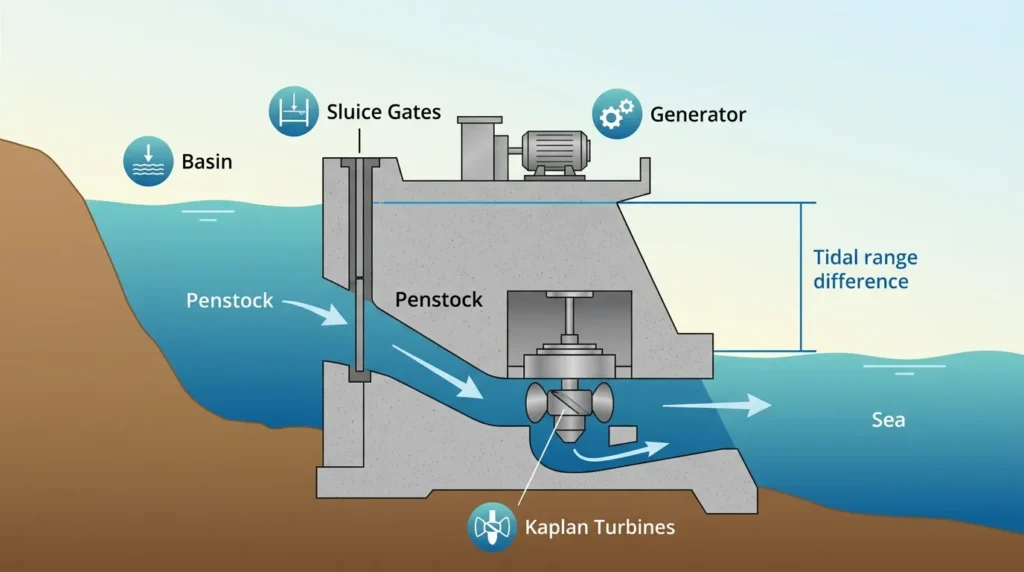
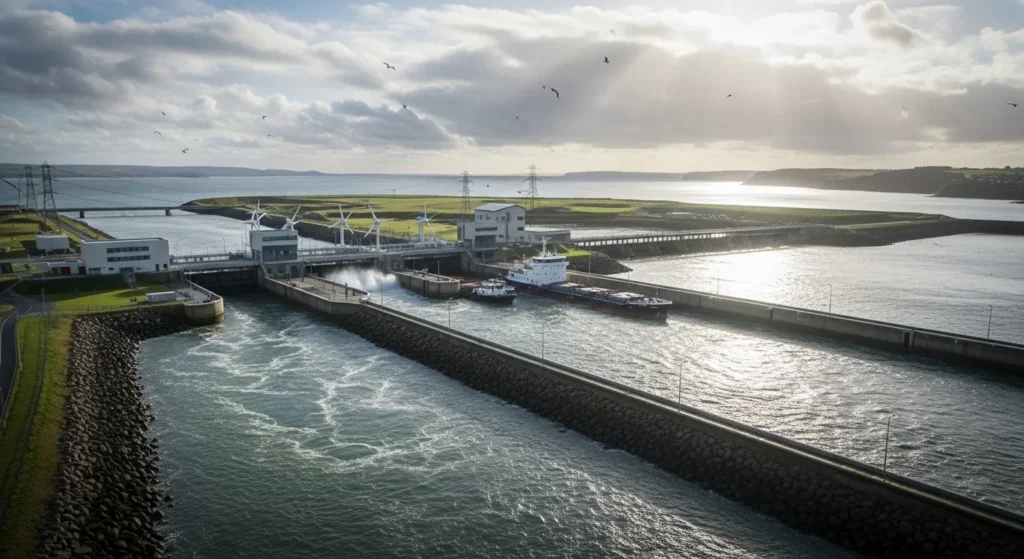
A Tidal Barrage Power Plant is a type of renewable energy power station that generates electricity by utilizing the natural rise and fall of ocean tides. It is one of the oldest and most widely used tidal energy technologies, designed to capture the potential energy created by the difference in water levels between high tide and low tide. A tidal barrage is essentially a large dam or barrier constructed across the entrance of an estuary, bay, or river mouth where tidal ranges are significant. The barrage contains turbines, sluice gates, generators, and other equipment that control the movement of seawater. During high tide, seawater flows into the tidal basin through the sluice gates, storing a large volume of water behind the barrage. As the tide recedes, the stored water is released back into the sea through specially designed turbines. The flowing water rotates the turbine blades, converting the kinetic and potential energy of the moving water into mechanical energy. The turbine shaft drives a generator, which converts this mechanical energy into electrical energy using the principle of electromagnetic induction. The generated electricity is then transmitted through transformers and high-voltage transmission lines to homes, industries, and commercial facilities. Some modern tidal barrage power plants are designed to generate electricity during both incoming (flood) and outgoing (ebb) tides, significantly increasing overall energy production and plant efficiency. One of the biggest advantages of a tidal barrage power plant is its highly predictable electricity generation because tidal movements are controlled by the gravitational forces of the Moon and the Sun and can be accurately forecast years in advance. Unlike solar and wind energy, tidal power is not affected by changing weather conditions, making it one of the most reliable renewable energy sources. Additionally, tidal barrage plants produce clean electricity without burning fossil fuels, helping reduce greenhouse gas emissions and dependence on conventional energy sources. However, these power plants also have limitations, including high construction costs, limited suitable coastal locations, and potential impacts on marine ecosystems and sediment movement. Despite these challenges, continuous advancements in turbine technology, environmentally friendly engineering, and smart energy systems are making tidal barrage power plants more efficient and economically viable. Today, they play an important role in sustainable energy development and are expected to become an increasingly valuable source of renewable electricity for coastal regions around the world.
A tidal barrage is similar to a dam built across a coastal bay or river estuary.
Features:
- Water is stored during high tide
- Water flows through turbines during low tide
- Generates electricity when water levels change
This is one of the most common tidal energy systems.
What is a Tidal Stream Generator? Working Principle, Components, Advantages, and Applications
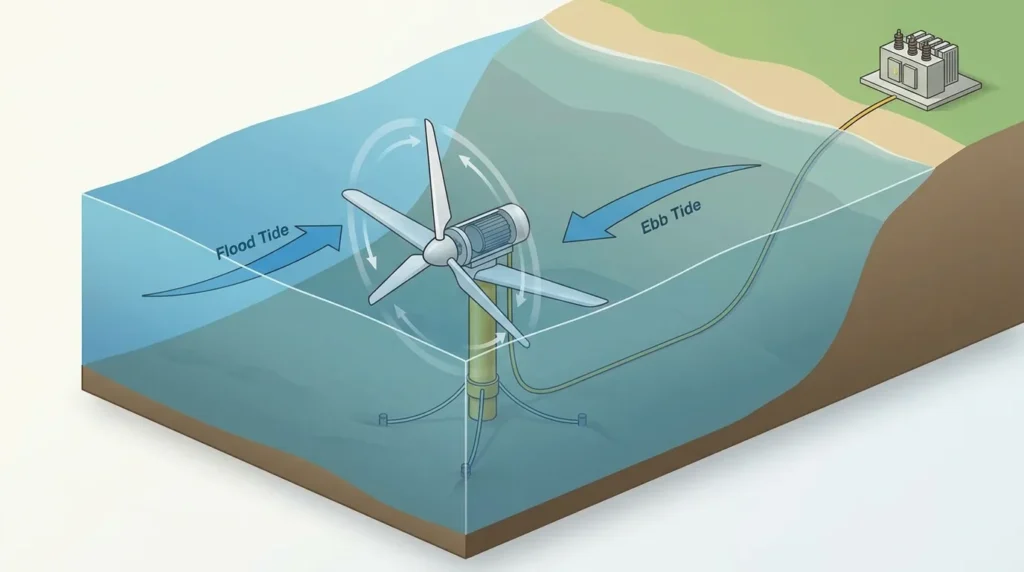
A Tidal Stream Generator is a renewable energy device that generates electricity by capturing the kinetic energy of fast-moving tidal currents. Unlike a tidal barrage power plant, a tidal stream generator does not require a dam or large barrier across an estuary. Instead, it is installed directly on the seabed or mounted on floating platforms in areas where tidal currents are naturally strong, such as narrow channels, coastal straits, and offshore locations. As the tides rise and fall, seawater flows through the turbine blades, causing the rotor to spin. This rotational motion is transferred through a drive shaft to a generator, which converts the mechanical energy into electrical energy using electromagnetic induction. The generated electricity is then transmitted to an onshore substation through underwater power cables before being supplied to the electrical grid. Since tidal currents are highly predictable, tidal stream generators provide a reliable and consistent source of renewable electricity.
A typical tidal stream generator consists of several important components, including turbine blades, a rotor, a drive shaft, a gearbox (in some designs), a generator, a support structure or foundation, underwater power cables, and a control and monitoring system. The turbine blades are specially designed to capture the energy of moving seawater efficiently while minimizing environmental impacts on marine life. Modern systems often use variable-speed turbines and advanced control systems to maximize power output under different tidal conditions.
One of the biggest advantages of tidal stream generators is that they generate clean electricity without producing greenhouse gas emissions during operation. They have a relatively small environmental footprint because they do not require the construction of large dams or tidal barrages. They also have lower visual impact since most of the equipment is installed underwater. In addition, tidal currents are more predictable than wind or solar resources, allowing operators to accurately forecast electricity generation. However, tidal stream generators also face challenges such as high installation costs, difficult underwater maintenance, corrosion caused by seawater, and the need for locations with strong tidal currents. Marine growth on turbine components and extreme ocean conditions can also affect long-term performance.
Today, tidal stream generators are increasingly used in coastal renewable energy projects, offshore power generation, island electrification, hybrid renewable energy systems, and smart electrical grids. Ongoing advancements in turbine design, corrosion-resistant materials, floating support structures, and underwater monitoring technologies are improving efficiency, reducing maintenance costs, and making tidal stream energy one of the most promising technologies for sustainable electricity generation in the future.
Tidal stream systems work like underwater wind turbines.
Features:
- Installed directly in fast-moving tidal currents
- Water flow rotates turbine blades
- No large dams required
These systems are considered environmentally friendly compared to tidal barrages.
What is a Tidal Lagoon Power Plant? Working Principle, Components, Advantages, and Applications
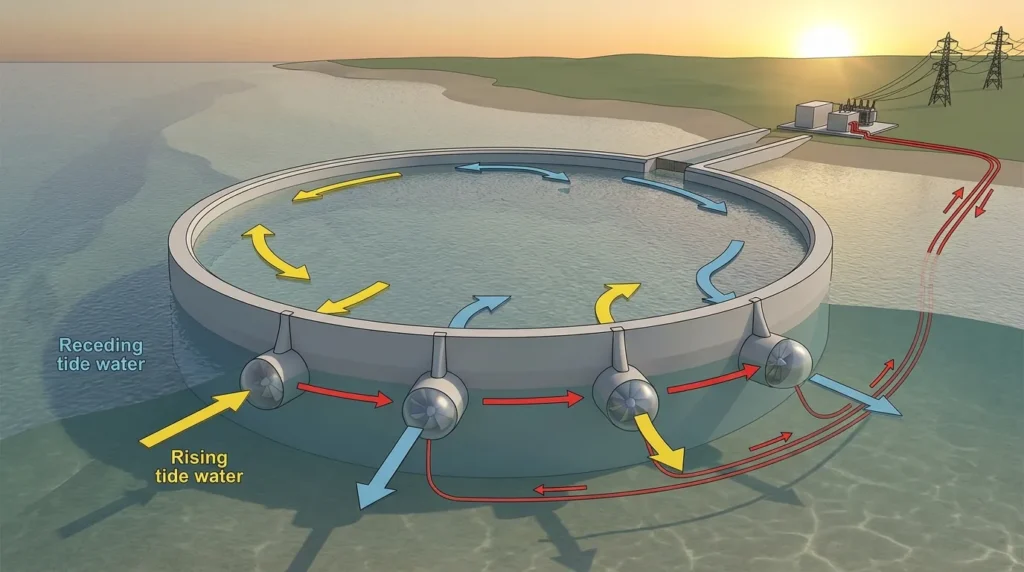
A Tidal Lagoon Power Plant is a renewable energy facility that generates electricity by utilizing the natural rise and fall of ocean tides within a man-made enclosed lagoon. Unlike a tidal barrage power plant, which blocks the entrance of an estuary or river mouth, a tidal lagoon is constructed by building a circular or U-shaped seawall along the coastline to create an artificial reservoir. As the tides rise and fall, seawater is allowed to enter and leave the lagoon through specially designed turbines installed in the lagoon wall. During high tide, seawater flows into the lagoon and is stored inside the enclosed basin. When the tide begins to fall, the stored water is released back into the sea through the turbines. Similarly, electricity can also be generated during the incoming tide as water flows into the lagoon. The moving seawater rotates the turbine blades, converting the kinetic and potential energy of tidal water into mechanical energy. The rotating turbine shaft drives a generator, which converts the mechanical energy into electrical energy through electromagnetic induction. The generated electricity is then stepped up by transformers and transmitted to the electrical grid using high-voltage transmission lines.
A typical tidal lagoon power plant consists of several important components, including the lagoon wall or embankment, tidal basin, reversible turbines, generators, sluice gates, transformers, control and monitoring systems, and power transmission equipment. Modern tidal lagoons often use reversible low-head turbines that can generate electricity during both flood tides and ebb tides, significantly improving energy production and overall efficiency. Computerized monitoring systems continuously regulate water levels, turbine operation, and electrical output to ensure safe and efficient plant performance.
One of the major advantages of a tidal lagoon power plant is that it generates clean, renewable, and highly predictable electricity with virtually no greenhouse gas emissions during operation. Since the lagoon is built offshore or along the coastline rather than blocking an entire estuary, it generally has a lower environmental impact on river ecosystems and navigation than traditional tidal barrage systems. Tidal lagoons also have long operational lifespans, low operating costs after construction, and can contribute to coastal protection by reducing the impact of storm surges and coastal flooding. However, they also face challenges such as high initial construction costs, long project development periods, limited suitable coastal locations, and potential impacts on marine habitats and sediment movement. Despite these challenges, advances in marine engineering, turbine technology, and environmentally sustainable design are making tidal lagoon power plants increasingly attractive as a reliable source of renewable energy. As countries continue to expand clean energy production, tidal lagoon technology is expected to play an important role in future coastal electricity generation and sustainable power systems.
A tidal lagoon is a circular or enclosed structure built in coastal areas.
Features:
- Creates a controlled water basin
- Generates electricity during both incoming and outgoing tides
- Can produce power for longer periods
5. Main Components of a Tidal Power Plant
A tidal power plant is made up of several civil, mechanical, and electrical components that work together to convert the energy of ocean tides into electricity. Each component has a specific role in controlling seawater flow, driving the turbines, generating electrical power, and delivering electricity safely to the power grid.
Tidal Barrage or Dam
The tidal barrage (or dam) is the primary structure of a tidal power plant. It is built across an estuary or bay to control the flow of seawater between the sea and the tidal basin. By creating a difference in water levels during high and low tides, the barrage provides the hydraulic head required to operate the turbines efficiently.
Tidal Basin
The tidal basin is a large reservoir where seawater is stored during tidal cycles. It creates the water level difference needed for electricity generation and ensures a controlled flow of water through the turbines.
Turbine
The turbine is the main energy-conversion component. As seawater flows through the turbine during incoming or outgoing tides, the moving water rotates the turbine blades, converting the kinetic and potential energy of tidal water into mechanical energy.
Generator
The generator is mechanically connected to the turbine shaft. When the turbine rotates, the generator converts the mechanical energy into electrical energy through the principle of electromagnetic induction.
Sluice Gates
Sluice gates regulate the amount of seawater entering and leaving the tidal basin. They control water levels, optimize electricity generation, and help protect the plant during extreme tidal conditions and storms.
Control and Monitoring System
Modern tidal power plants use computerized control systems equipped with sensors and automation technology to monitor water levels, turbine speed, generator performance, gate operation, and electrical output. These systems improve plant efficiency, reliability, and operational safety.
Transformer
The electricity produced by the generator is initially generated at a relatively low voltage. A transformer increases this voltage to a higher level, making long-distance power transmission more efficient by reducing energy losses.
Power Transmission System
The power transmission system consists of switchgear, substations, and high-voltage transmission lines that deliver electricity from the tidal power plant to the national electrical grid and end users.
6. Advantages of Tidal Power Plants
Tidal power is one of the most dependable renewable energy sources because ocean tides occur in regular and predictable cycles. Unlike solar and wind energy, tidal movements can be accurately forecast, making tidal power plants capable of providing reliable and sustainable electricity for many decades.
Major Advantages
- Renewable and Sustainable Energy Source – Tidal energy is naturally replenished by the gravitational forces of the Moon and the Sun, ensuring an endless source of clean energy.
- Highly Predictable Electricity Generation – Tidal cycles are consistent and can be predicted years in advance, allowing reliable power generation and better energy planning.
- Environmentally Friendly Operation – Tidal power plants generate electricity without burning fossil fuels, producing little to no greenhouse gas emissions during operation.
- Long Operational Life – Civil structures such as barrages, dams, and tidal lagoons can operate efficiently for 50 years or more with proper maintenance.
- Low Operating and Maintenance Costs – Although installation costs are high, operating expenses remain relatively low because tidal energy requires no fuel.
- High Energy Density – Water is approximately 800 times denser than air, allowing tidal turbines to produce more energy than similarly sized wind turbines.
- Reliable Base-Load Renewable Energy – Predictable tidal cycles provide a dependable source of electricity that complements other renewable energy systems.
- Reduced Dependence on Fossil Fuels – Tidal power helps improve national energy security by reducing reliance on coal, oil, and natural gas.
- Coastal Flood Protection – Some tidal barrage projects also serve as flood-control structures, protecting coastal communities from storm surges and high tides.
Overall Benefits
Tidal power plants provide clean, renewable, predictable, and reliable electricity with a long service life and low operating costs. Their ability to generate power according to predictable tidal cycles makes them one of the most stable renewable energy technologies available for suitable coastal regions.
7. Disadvantages and Limitations of Tidal Power Plants
Despite their many advantages, tidal power plants face several technical, environmental, and economic challenges. These limitations influence project feasibility and explain why tidal energy is less widely adopted than other renewable energy sources.
Major Disadvantages
- High Initial Construction Cost – Building tidal barrages, underwater foundations, turbines, and marine infrastructure requires significant capital investment.
- Limited Suitable Locations – Tidal power plants can only be built in coastal areas with sufficient tidal ranges or strong tidal currents, limiting their global deployment.
- Environmental Impact on Marine Ecosystems – Changes in water flow may affect fish migration, marine habitats, sediment movement, and water quality if not properly managed.
- Complex Marine Construction – Construction and maintenance in seawater environments require specialized equipment, skilled personnel, and advanced engineering techniques.
- Corrosion and Material Degradation – Continuous exposure to saltwater accelerates corrosion of turbines, gates, generators, and other metal components, increasing maintenance requirements.
- Variable Electricity Generation – Although tides are predictable, electricity is generated only during specific tidal periods rather than continuously throughout the day.
- Long Development and Construction Time – Large-scale tidal power projects often require several years for planning, environmental approval, construction, and commissioning.
- Possible Impact on Navigation and Fishing – Tidal barrages and marine structures may affect shipping routes, fishing activities, and recreational water transport in some coastal regions.
Overall Limitations
While tidal power is a clean, renewable, and highly predictable source of energy, its high capital cost, limited geographical availability, environmental considerations, and complex marine engineering requirements restrict its widespread adoption. However, continuous advancements in turbine technology, floating tidal systems, and environmentally friendly designs are expected to improve the economic viability and future growth of tidal energy worldwide.
8. Applications of Tidal Power Plants
Tidal power plants play an important role in modern renewable energy systems by converting the natural movement of ocean tides into clean electricity. Their predictable power generation makes them valuable for supporting sustainable energy production and reducing dependence on fossil fuels.
Electricity Generation
The primary application of tidal power plants is generating electricity for coastal cities, towns, industries, and remote communities. The electricity produced is supplied directly to the national power grid.
Renewable Energy Systems
Tidal power plants contribute to national and global renewable energy programs by providing a reliable source of clean electricity with minimal carbon emissions.
Hybrid Renewable Energy Systems
Tidal energy can be integrated with solar power, wind energy, battery storage systems, and hydropower to create hybrid power systems that provide a more stable and continuous electricity supply.
Coastal Flood Protection
Some tidal barrage projects also function as flood-control structures, protecting coastal communities from high tides, storm surges, and seawater intrusion.
Remote Island Power Supply
Tidal energy can provide reliable electricity to islands and isolated coastal regions where extending conventional power grids is difficult or expensive.
Industrial and Commercial Power Supply
Large-scale tidal power plants can supply electricity to ports, coastal industries, desalination plants, and commercial facilities that require reliable energy.
Future Smart Energy Networks
Modern tidal power plants are increasingly being integrated into smart grids and energy management systems, improving grid stability, renewable energy utilization, and overall electricity distribution efficiency.
Comparison: Tidal Power Plant vs Hydroelectric Power Plant
Understanding the difference between tidal power plant and hydroelectric power plant helps students understand renewable energy systems.
| Feature | Tidal Power Plant | Hydroelectric Power Plant |
|---|---|---|
| Energy Source | Ocean tides | River water |
| Location | Coastal areas | Rivers and dams |
| Energy Predictability | Highly predictable | Depends on rainfall |
| Environmental Impact | Affects marine life | Affects river ecosystems |
| Energy Availability | Twice daily | Continuous water flow |
Both systems use moving water to generate electricity, but their sources and locations differ.
10. Selection Guide for Tidal Power Plants
Selecting a suitable location for a tidal power plant is one of the most important factors in ensuring efficient and reliable electricity generation. Since tidal energy depends on the natural rise and fall of sea levels, engineers must carefully evaluate geographical, environmental, technical, and economic conditions before constructing a tidal power project. Proper site selection maximizes energy production while minimizing environmental and financial risks.
Important Factors to Consider
Coastal Location
A tidal power plant should be built along coastlines, estuaries, or bays where strong and predictable tidal movements occur throughout the year. The availability of suitable coastal conditions directly affects the plant’s efficiency.
Tidal Range
The difference between high tide and low tide should be large enough to generate sufficient hydraulic energy. Areas with higher tidal ranges generally produce more electricity and offer better economic returns.
Water Flow Velocity
For tidal stream power plants, the speed of tidal currents is critical. Faster water flow increases turbine efficiency and electricity generation.
Environmental Impact Assessment
Engineers must assess the potential effects on marine ecosystems, fish migration, coastal habitats, sediment movement, and water quality. Sustainable designs help reduce environmental impacts and comply with environmental regulations.
Economic Feasibility
The project’s construction cost, maintenance expenses, expected electricity output, and long-term financial benefits should be carefully analyzed to ensure economic viability.
Grid Connectivity
The power plant should be located close to the electrical transmission network to reduce installation costs and transmission losses.
Tips for Beginners
- Choose locations with high and predictable tidal ranges.
- Study local tidal data before planning a project.
- Consider both environmental protection and energy production.
- Evaluate construction and maintenance costs before investment.
- Select the appropriate tidal power technology based on site conditions.
Selection Summary
A successful tidal power plant requires strong tidal resources, suitable coastal geography, minimal environmental impact, and good economic feasibility. Careful planning and site selection improve power generation efficiency and ensure the long-term sustainability of the project.
11. Common Problems and Solutions of Tidal Power Plants
Although tidal power is a clean and renewable source of energy, tidal power plants face several engineering and environmental challenges. Understanding these problems and their solutions helps improve plant performance, reliability, and operational life.
Q1: Why do tidal power plant components corrode?
Continuous exposure to saltwater, moisture, and harsh marine environments causes corrosion of turbines, gates, generators, and other metallic structures.
Solution:
- Use corrosion-resistant materials such as stainless steel and special alloys.
- Apply protective coatings and marine-grade paints.
- Perform regular inspection and preventive maintenance.
Q2: How does a tidal power plant affect marine life?
Rotating turbines and changes in water flow may disturb fish, marine mammals, and other aquatic organisms, potentially affecting local ecosystems.
Solution:
- Install fish-friendly turbine designs.
- Conduct environmental monitoring programs.
- Design projects to minimize habitat disruption.
- Follow environmental protection regulations.
Q3: Why does sediment accumulate around tidal structures?
Changing water flow patterns can cause sand, silt, and other sediments to collect near barrages, lagoons, and turbine installations, reducing efficiency.
Solution:
- Carry out regular dredging operations.
- Design structures to minimize sediment deposition.
- Monitor sediment movement continuously.
Q4: Why are tidal power plants expensive to build?
Construction requires large civil engineering structures, underwater foundations, specialized turbines, and marine installation equipment, making the initial investment very high.
Solution:
- Plan for long-term investment and operational savings.
- Use improved construction techniques to reduce costs.
- Combine tidal energy with other renewable energy projects to improve economic returns.
Q5: Why does electricity generation vary in tidal power plants?
Electricity production depends on the natural tidal cycle, so power output changes with the timing and height of the tides.
Solution:
- Integrate tidal energy with battery storage systems.
- Connect tidal plants to smart grids.
- Combine tidal energy with wind or solar power to provide a more stable electricity supply.
12. Future Trends in Tidal Power Technology
Tidal energy technology continues to evolve with advancements in marine engineering, turbine design, energy storage, and smart power systems. These innovations aim to increase efficiency, reduce costs, and minimize environmental impacts, making tidal energy a more practical source of renewable electricity.
Advanced Tidal Turbines
Modern turbine designs are becoming more efficient, durable, and environmentally friendly. Improved blade designs increase energy capture while reducing impacts on marine life.
Floating Tidal Energy Systems
Researchers are developing floating tidal platforms that can operate in deeper waters with strong tidal currents. These systems reduce construction complexity and expand the number of suitable installation sites.
Smart Grid Integration
Future tidal power plants will be integrated with smart electrical grids, enabling real-time monitoring, automated power distribution, improved grid stability, and better management of renewable energy resources.
Hybrid Renewable Energy Systems
Combining tidal, wind, solar, and battery energy storage systems will provide more reliable and continuous electricity generation while reducing dependence on fossil fuels.
Artificial Intelligence and Remote Monitoring
AI-based monitoring systems and advanced sensors will improve predictive maintenance, fault detection, performance optimization, and operational efficiency.
Eco-Friendly Marine Engineering
Future projects will focus on environmentally sustainable designs that reduce impacts on marine ecosystems, improve fish safety, and protect coastal biodiversity.
Future Outlook
As technology advances and the demand for clean energy continues to grow, tidal power is expected to become more efficient, economically viable, and environmentally sustainable. With improvements in turbine technology, smart grids, and hybrid renewable systems, tidal energy will play an increasingly important role in the global transition toward renewable electricity generation.
Conclusion
A Tidal Power Plant is an innovative renewable energy system that uses the natural movement of ocean tides to generate electricity. By converting tidal water flow into mechanical and electrical energy, these plants provide a clean and reliable power source.
Understanding the Tidal Power Plant working principle, types, and components helps electrical students and engineers learn how ocean energy can be transformed into usable electricity. Tidal power plants offer several advantages such as predictable energy production and low environmental pollution.
However, the Tidal Power Plant advantages and disadvantages must be carefully considered before installation. High construction costs and limited suitable locations remain major challenges.
Despite these challenges, tidal energy has great potential for the future. With advanced turbine technology and improved engineering solutions, tidal power plants may become an important part of the global renewable energy system.