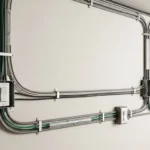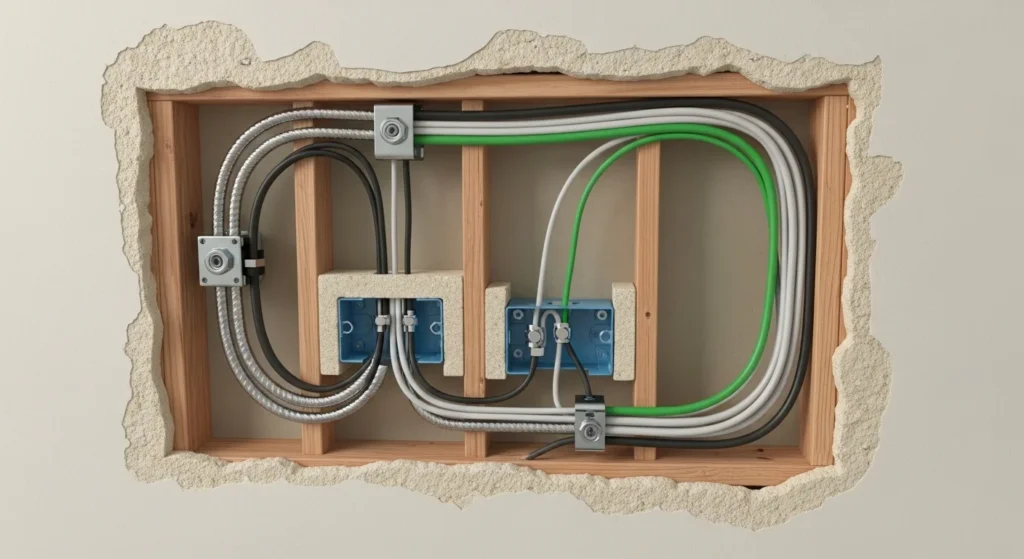

Imagine walking into a modern house where you see clean walls, no visible wires, and perfectly placed switches and sockets. Everything looks organized and safe. Behind those smooth walls, a complete electrical wiring system is working silently to power lights, fans, appliances, and other devices. This system is commonly known as Concealed Conduit Wiring in Homes.
In modern residential construction, concealed wiring has become the most preferred method because it provides safety, durability, and a clean interior appearance. Instead of running wires on the wall surface, electricians install conduits inside the walls, ceilings, or floors before plastering. The electrical wires are then pulled through these conduits to supply power throughout the house.
Understanding Concealed Conduit Wiring in Homes is important for electrical students, engineers, technicians, and beginners who want to learn how modern electrical installations are designed. Proper wiring ensures electrical safety, prevents fire hazards, and supports long-term reliability. concealed conduit wiring
In this article, you will learn the concealed conduit wiring working principle, types of concealed conduit systems, main components, advantages and disadvantages, applications, comparison with surface wiring, troubleshooting tips, and future trends in residential electrical wiring.Concealed conduit wiring is a modern electrical wiring system in which electrical wires are placed inside conduit pipes, and these pipes are hidden within the walls, ceilings, or floors of a building. During construction, electricians first install PVC or metal conduit pipes inside the walls before plastering. After that, insulated electrical wires are pulled through these conduits and connected to switches, sockets, lights, and other electrical devices. Once the wall plaster and paint are completed, the wiring becomes completely invisible, and only electrical fittings remain visible. This wiring system provides better protection to the wires from moisture, dust, and mechanical damage, making it safer and more durable. Because of its neat appearance and high level of safety, concealed conduit wiring is widely used in modern homes, offices, commercial buildings, hotels, and hospitals.
What Is Concealed Conduit Wiring in Homes?
Concealed conduit wiring is a modern electrical wiring system in which conduit pipes and insulated electrical cables are installed inside the walls, ceilings, or floors of a building. Once the conduits are positioned, the building surfaces are plastered or finished, completely hiding the wiring from view. This method provides better protection for electrical cables while giving homes a clean, safe, and aesthetically pleasing appearance.
Definition of Concealed Conduit Wiring
Concealed conduit wiring is an electrical installation method in which insulated conductors are routed through PVC or metal conduit pipes embedded within the building structure. The conduits protect the cables from mechanical damage, moisture, dust, and other external environmental factors while allowing the wires to be replaced or upgraded when necessary.
Concealed Conduit Wiring Explained in Simple Words
In a concealed conduit wiring system, electricians install conduit pipes before the walls, ceilings, or floors are plastered. Electrical wires are then pulled through these conduits after the construction work is completed. Since the conduit pipes remain hidden inside the building, only electrical accessories such as switches, sockets, lighting fixtures, and distribution boards are visible.
This wiring method is widely used in modern residential, commercial, and industrial buildings because it improves safety, durability, and the overall appearance of the electrical installation.
Practical Example
Consider a newly constructed house. Before plastering the walls, electricians install PVC conduit pipes according to the electrical layout. After the plastering and painting are completed, insulated electrical wires are pulled through the conduits and connected to switches, sockets, lights, and the distribution board. The finished installation looks neat because all wiring remains hidden inside the walls while being protected from physical damage.
How Does Concealed Conduit Wiring Work?
The working principle of concealed conduit wiring is based on protecting electrical cables inside conduit pipes while safely distributing electrical power throughout the building. The conduit acts as a protective pathway that shields the wires from mechanical damage, moisture, dust, and accidental contact.
Step 1: Planning the Electrical Layout
Before construction begins, an electrical layout is prepared showing the locations of switches, sockets, lighting points, distribution boards, and electrical appliances.
Step 2: Installing the Conduits
PVC or metal conduit pipes are fixed inside the walls, ceilings, or floors before plastering. Junction boxes, switch boxes, and outlet boxes are installed at the required locations to provide access for electrical connections.
Step 3: Plastering the Building Structure
After the conduit system has been securely installed, the walls and ceilings are plastered or covered with finishing materials. This completely conceals the conduit network while leaving only the electrical boxes exposed.
Step 4: Pulling the Electrical Wires
Once construction is complete, insulated electrical wires are pulled through the conduit pipes using a draw wire or fish tape. The conduit protects the cables and makes future wire replacement easier without damaging the building structure.
Step 5: Connecting Electrical Accessories
The wires are connected to switches, sockets, light fixtures, fans, circuit breakers, and the distribution board according to the electrical design. After testing, the electrical system is ready for safe operation.
Working Principle Summary
The concealed conduit wiring system safely carries electrical power through insulated wires enclosed within protective conduit pipes hidden inside the building structure. This design protects the wiring from physical damage, moisture, and environmental hazards while improving safety, simplifying maintenance, and providing a clean, modern appearance.
Step-by-Step Installation Process of Concealed Conduit Wiring
The installation of concealed conduit wiring follows a systematic process to ensure electrical safety, reliable performance, and easy future maintenance. Below are the main steps involved in installing a concealed conduit wiring system.
Step 1: Planning the Electrical Layout
The process begins with designing a detailed electrical layout. Engineers or electricians determine the locations of switches, socket outlets, lighting fixtures, distribution boards, and electrical appliances. Proper planning helps minimize wiring complexity and ensures compliance with electrical standards.
Step 2: Cutting Wall Grooves (Wall Chasing)
After the layout is finalized, grooves (also called chases) are cut into the walls, ceilings, or floors. These grooves provide space for installing conduit pipes while keeping the wiring concealed within the building structure.
Step 3: Installing Conduit Pipes
PVC or metal conduit pipes are securely fixed inside the wall grooves using clamps or suitable fasteners. The conduits are arranged according to the electrical drawing and include bends where necessary to allow smooth wire pulling.
Step 4: Installing Junction and Switch Boxes
Junction boxes, switch boxes, socket boxes, and outlet boxes are installed at designated locations. These boxes provide safe points for wire connections, electrical accessories, and future maintenance.
Step 5: Plastering and Finishing the Walls
Once the conduit system has been inspected and approved, the wall grooves are filled and plastered. This completely conceals the conduit pipes, leaving only the switch and socket boxes exposed for final installation.
Step 6: Pulling the Electrical Wires
After the plaster has dried and the building structure is complete, insulated electrical wires are pulled through the conduit pipes using a draw wire or fish tape. The conduit protects the wires while allowing them to be replaced or upgraded if required.
Step 7: Installing and Connecting Electrical Accessories
Finally, electricians connect the wires to switches, sockets, lighting fixtures, ceiling fans, circuit breakers, and the distribution board. After completing the connections, the entire electrical installation is tested for continuity, insulation resistance, grounding, and proper operation before being energized.
Simple Analogy
Think of concealed wiring like the plumbing pipes inside a house. Water pipes are hidden inside walls, but they still deliver water efficiently. Similarly, concealed conduits carry electricity safely inside the walls.
4. Types / Classification
There are different types of Concealed Conduit Wiring in Homes, mainly based on the type of conduit used.
Types of Concealed Conduit Wiring
Concealed conduit wiring can be classified based on the type of conduit used. Each type offers different levels of protection, flexibility, durability, and cost. Choosing the right conduit depends on the building type, environmental conditions, and electrical load requirements.
PVC Concealed Conduit Wiring
PVC (Polyvinyl Chloride) concealed conduit wiring is the most commonly used wiring system in residential buildings. PVC conduits are installed inside walls, ceilings, or floors to protect insulated electrical wires while providing a clean and concealed appearance.
Key Features
- Lightweight and easy to handle
- Corrosion and moisture resistant
- Electrically non-conductive
- Simple and quick to install
- Low maintenance requirements
- Affordable compared to metal conduits
- Long service life
Common Applications
- Residential houses
- Apartments
- Villas
- Small commercial buildings
- Office interiors
PVC conduits are the preferred choice for home electrical wiring because they provide excellent insulation, durability, and cost-effectiveness.
Metal Concealed Conduit Wiring
Metal concealed conduit wiring uses galvanized steel, mild steel (MS), or aluminum conduits to provide superior mechanical protection for electrical cables. These conduits are commonly installed in locations where electrical systems require higher durability and enhanced safety.
Key Features
- High mechanical strength
- Excellent protection against physical damage
- Fire-resistant construction
- Suitable for heavy electrical loads
- Long service life
- Provides effective grounding when properly installed
Common Applications
- Commercial buildings
- Industrial facilities
- Factories
- Warehouses
- Hospitals
- Educational institutions
Metal conduits are ideal for environments where electrical wiring is exposed to heavy-duty operating conditions or requires additional mechanical protection.
Flexible Concealed Conduit Wiring
Flexible concealed conduit wiring uses corrugated PVC or flexible metallic conduits that can easily bend around obstacles without requiring additional fittings. This type of conduit is especially useful where rigid conduit installation is difficult.
Key Features
- Highly flexible and easy to bend
- Simplifies installation in confined spaces
- Ideal for complex wiring routes
- Reduces the number of conduit fittings
- Protects wires from vibration and movement
- Available in both PVC and metal versions
Common Applications
- False ceilings
- Modular kitchens
- HVAC equipment
- Air-conditioning systems
- Electrical control panels
- Smart home automation systems
- Equipment connections
Flexible conduits are widely used where electrical installations require adaptability, quick installation, or protection from vibration while maintaining a concealed wiring system.
Main Components of a Concealed Conduit Wiring System
A concealed conduit wiring system consists of several essential components that work together to ensure the safe, reliable, and efficient distribution of electricity throughout a building. Each component has a specific function in protecting electrical cables, supporting electrical accessories, and maintaining a secure installation.
Conduit Pipes
Conduit pipes form the backbone of the concealed wiring system. They provide a protected pathway for electrical cables and shield them from mechanical damage, moisture, dust, and other environmental factors. Depending on the application, conduit pipes may be made from PVC, galvanized steel, or flexible materials.
Functions
- Protect electrical wires from physical damage
- Provide a safe route for cable installation
- Allow easy replacement or upgrading of wires
- Improve the durability of the electrical system
Electrical Wires
Electrical wires carry electrical power from the distribution board to switches, sockets, lighting fixtures, fans, and other electrical appliances. Most residential installations use insulated copper conductors because of their excellent electrical conductivity and durability, although aluminum conductors may be used in certain applications.
Functions
- Transmit electrical current safely
- Supply power to electrical loads
- Ensure reliable operation of household circuits
- Minimize power losses when properly sized
Junction Boxes
Junction boxes are protective enclosures where two or more electrical wires are connected. They provide secure connection points while protecting wire joints from accidental contact, moisture, and dust.
Functions
- House electrical wire connections
- Protect cable joints from damage
- Simplify inspection and maintenance
- Improve electrical safety
Switch Boxes
Switch boxes are installed inside walls to securely hold switches, socket outlets, dimmers, and other electrical accessories. They also provide adequate space for electrical connections behind the accessories.
Functions
- Support switches and sockets
- Protect electrical connections
- Maintain a neat wall finish
- Allow easy installation and replacement of accessories
Distribution Board (DB)
The Distribution Board (DB), also known as the consumer unit or breaker panel, is the central control point of the home’s electrical system. It receives power from the utility supply and distributes it safely to different electrical circuits through circuit breakers and protective devices.
Functions
- Distribute electrical power to individual circuits
- Protect circuits against overloads and short circuits
- Isolate faulty circuits when required
- Improve electrical safety and system reliability
Bends, Elbows, and Connectors
Conduit fittings such as bends, elbows, couplers, connectors, tees, and adaptors are used to join conduit sections and change the direction of conduit runs without damaging the electrical cables.
Functions
- Connect separate conduit sections
- Change conduit direction smoothly
- Protect wires while passing through bends
- Ensure a secure and continuous conduit system
Additional Components Used in Concealed Conduit Wiring
Depending on the installation, several additional components may also be included:
- Inspection boxes for easy maintenance and cable access
- Draw wire (fish tape) for pulling cables through conduits
- Saddles and clamps for securing conduit pipes
- Bushes and locknuts for protecting cable entry points
- Earth wire for electrical grounding and safety
- Circuit breakers (MCBs/RCCBs/RCBOs) for fault protection
Together, these components create a safe, durable, and well-organized concealed conduit wiring system suitable for modern residential, commercial, and industrial buildings.
6. Concealed Conduit Wiring Advantages
Understanding concealed conduit wiring advantages and disadvantages is important before choosing this wiring system.
Advantages
- Provides a clean and modern interior appearance
- Protects electrical wires from dust and moisture
- Reduces the risk of accidental damage
- Improves electrical safety
- Long-lasting wiring system
- Suitable for modern residential construction
Real-World Benefits
Most modern houses, apartments, and commercial buildings use concealed wiring because it improves both safety and aesthetics.
7. Disadvantages / Limitations
Although concealed wiring offers many benefits, it also has some limitations.
Disadvantages
- Higher installation cost
- Difficult to repair if a fault occurs
- Requires careful planning before construction
- Wall cutting may weaken structure if done incorrectly
- Modifying wiring later can be challenging
Despite these challenges, concealed wiring remains the most preferred method in modern homes.
Applications of Concealed Conduit Wiring
Concealed conduit wiring is widely used in residential, commercial, institutional, and industrial buildings because it provides superior safety, durability, and a clean appearance. Its ability to protect electrical cables while keeping them hidden makes it the preferred wiring method for modern construction projects.
Residential Homes
Concealed conduit wiring is the standard choice for newly constructed homes, villas, and residential houses. The wiring remains hidden inside walls and ceilings, creating an attractive interior while protecting electrical cables from physical damage and environmental factors.
Common Applications
- Living rooms
- Bedrooms
- Kitchens
- Bathrooms
- Garages
- Outdoor lighting circuits
Apartments and Multi-Story Buildings
Apartment complexes and high-rise residential buildings extensively use concealed conduit wiring to ensure organized electrical distribution, improved safety, and easier maintenance throughout multiple floors.
Benefits
- Neat electrical installation
- Better fire protection
- Long-lasting wiring system
- Efficient cable management
Offices and Commercial Buildings
Modern offices, shopping malls, banks, hotels, and commercial complexes use concealed conduit wiring to maintain a professional appearance while supporting large electrical loads and communication systems.
Common Applications
- Office lighting systems
- Computer and network wiring
- Air-conditioning systems
- Conference rooms
- Security and surveillance systems
Smart Homes and Home Automation Systems
Concealed conduit wiring is ideal for smart homes because it allows electrical, communication, and automation cables to remain hidden while supporting advanced technologies.
Typical Applications
- Smart lighting systems
- Home automation controllers
- Smart switches and sockets
- CCTV security systems
- Video door phones
- Motion sensors
- Voice-controlled devices
Educational and Healthcare Facilities
Schools, colleges, universities, hospitals, and medical centers require safe, reliable, and well-organized electrical installations. Concealed conduit wiring protects electrical circuits while maintaining a clean and hygienic environment.
Common Applications
- Classrooms
- Laboratories
- Hospital wards
- Operating rooms
- Diagnostic centers
- Administrative offices
Industrial Buildings
Although metal conduit systems are often preferred in heavy industries, concealed conduit wiring is also used in industrial offices, control rooms, laboratories, and production facilities where additional cable protection and a tidy installation are required.
Common Applications
- Control panels
- Industrial offices
- Machine control rooms
- Electrical equipment rooms
Public and Government Buildings
Many public buildings use concealed conduit wiring to improve safety, enhance aesthetics, and reduce maintenance requirements.
Examples
- Airports
- Railway stations
- Government offices
- Libraries
- Museums
- Community centers
Why Concealed Conduit Wiring Is Widely Used
Concealed conduit wiring is preferred because it combines safety, durability, and aesthetics in a single electrical installation system. It protects cables from mechanical damage, moisture, and dust while providing a clean interior finish, making it the ideal wiring solution for modern residential, commercial, institutional, and smart building applications.
9. Comparison Section
Understanding the difference between concealed conduit wiring and surface conduit wiring helps electricians choose the correct system.
| Feature | Concealed Conduit Wiring | Surface Conduit Wiring |
|---|---|---|
| Installation | Hidden inside walls | Installed on wall surface |
| Appearance | Clean and aesthetic | Visible conduits |
| Maintenance | Difficult to repair | Easy to repair |
| Installation Cost | Higher | Lower |
| Protection | Excellent protection | Moderate protection |
Both wiring systems are useful depending on the building design and electrical requirements.
10. Selection Guide
Choosing the right concealed conduit wiring system requires careful planning.
Important Factors
- Building design
- Electrical load requirements
- Budget availability
- Safety standards
- Future expansion possibilities
Tips for Beginners
- Always design wiring before construction begins.
- Use high-quality PVC conduits.
- Maintain proper conduit spacing.
- Avoid sharp conduit bends.
- Ensure proper earthing and circuit protection.
Proper planning ensures a safe and efficient electrical system.
11. Common Problems & Solutions
Common Problems in Concealed Conduit Wiring and Their Solutions
Although concealed conduit wiring is one of the safest and most durable electrical wiring systems, problems can still occur due to poor installation, overloading, aging components, or lack of maintenance. Identifying the cause early and applying the correct solution helps improve safety, prevent electrical failures, and extend the life of the wiring system.
Q1: Why Do Concealed Electrical Wires Fail?
Concealed wires can fail when the cable insulation becomes damaged or when the wires are improperly installed inside the conduit. Mechanical damage during construction, excessive heat, moisture, or aging insulation can also cause cable failure.
Common Causes
- Poor-quality electrical cables
- Damaged insulation during installation
- Excessive heat buildup
- Moisture entering conduit pipes
- Rodent damage (in rare cases)
- Overloaded electrical circuits
Recommended Solution
- Use high-quality ISI/IEC-certified electrical wires.
- Install conduit pipes correctly to avoid cable damage.
- Perform insulation resistance testing before energizing the system.
- Replace damaged cables immediately.
- Avoid overloading electrical circuits.
Q2: Why Do Electrical Switches Stop Working?
A switch may stop working because of loose electrical connections, worn-out contacts, damaged wiring, or a defective switch mechanism.
Common Causes
- Loose wire terminals
- Burnt switch contacts
- Damaged switch mechanism
- Faulty wiring inside the switch box
- Excessive electrical load
Recommended Solution
- Turn off the power supply before inspection.
- Tighten all electrical connections.
- Replace damaged or worn-out switches.
- Check the continuity of connected wires.
- Use switches with the correct current rating.
Q3: Why Does the Circuit Breaker Trip Frequently?
Frequent tripping indicates that the protective device is detecting an unsafe electrical condition. This usually occurs due to overloads, short circuits, earth faults, or faulty appliances.
Common Causes
- Overloaded electrical circuits
- Short circuits
- Earth leakage faults
- Defective electrical appliances
- Loose wiring connections
- Incorrect breaker rating
Recommended Solution
- Distribute electrical loads across multiple circuits.
- Disconnect faulty appliances.
- Inspect wiring for short circuits.
- Replace damaged cables or accessories.
- Install correctly rated MCBs or RCBOs.
- Have the system inspected by a qualified electrician if the problem persists.
Q4: Why Are Electrical Outlets Not Receiving Power?
If a socket outlet has no power, the problem may be caused by loose wiring, a tripped circuit breaker, damaged cables, or faulty outlet connections.
Common Causes
- Tripped circuit breaker
- Loose wire connections
- Damaged electrical cables
- Faulty socket outlet
- Broken wire inside a junction box
Recommended Solution
- Check the distribution board for tripped breakers.
- Inspect junction boxes and socket connections.
- Test the outlet using appropriate electrical testing equipment.
- Replace damaged sockets or cables.
- Restore any loose electrical connections safely.
Q5: Why Do Lights Flicker in a Concealed Wiring System?
Flickering lights are usually caused by unstable voltage, loose electrical connections, overloaded circuits, or faulty lighting fixtures.
Common Causes
- Loose wiring connections
- Voltage fluctuations
- Faulty light switches
- Defective LED drivers or bulbs
- Overloaded circuits
Recommended Solution
- Tighten all electrical connections.
- Replace defective switches or light fixtures.
- Balance electrical loads across circuits.
- Check the incoming supply voltage.
- Replace damaged wiring if necessary.
Q6: Why Does a Socket or Switch Become Hot?
Excessive heating usually indicates poor electrical contact or excessive current flowing through the circuit.
Common Causes
- Loose terminals
- Overloaded socket outlets
- Poor-quality electrical accessories
- Undersized electrical wires
- Faulty electrical appliances
Recommended Solution
- Tighten all terminal connections.
- Avoid connecting multiple high-power appliances to one outlet.
- Replace damaged switches or sockets.
- Use wires with the correct current-carrying capacity.
- Install high-quality electrical accessories.
Tips to Prevent Concealed Conduit Wiring Problems
Following good installation and maintenance practices can significantly reduce electrical faults.
- Use high-quality conduit pipes, wires, and electrical accessories.
- Follow local electrical wiring standards and regulations.
- Avoid overloading electrical circuits.
- Test insulation resistance before energizing the installation.
- Inspect the distribution board periodically.
- Tighten loose electrical connections during maintenance.
- Replace damaged switches, sockets, and cables promptly.
- Have all electrical work carried out by a qualified electrician.
Proper installation, regular inspection, and preventive maintenance ensure that a concealed conduit wiring system remains safe, efficient, and reliable for many years.
Future Trends in Concealed Conduit Wiring
Concealed conduit wiring is continuously evolving with advancements in electrical engineering, smart building technologies, and sustainable construction practices. Modern wiring systems are becoming safer, more energy-efficient, and easier to install and maintain. As homes and commercial buildings become increasingly connected, concealed conduit wiring will continue to play a vital role in supporting next-generation electrical infrastructure.
Smart Electrical Wiring Systems
The growing adoption of smart homes is transforming the way electrical wiring systems are designed. Modern concealed conduit installations now support intelligent devices that improve convenience, safety, and energy efficiency.
Emerging Technologies
- Smart switches and sockets
- Home automation systems
- Voice-controlled lighting
- Smart energy management systems
- IoT (Internet of Things) devices
- Smart security and surveillance systems
- Remote monitoring through mobile applications
These technologies enable homeowners to control lighting, appliances, and security systems from anywhere while reducing energy consumption.
Fire-Resistant and Low-Smoke Wiring
Electrical safety remains a top priority in modern construction. New wiring materials are being developed to reduce fire hazards and improve occupant safety during emergencies.
Latest Developments
- Fire-resistant electrical cables
- Low Smoke Zero Halogen (LSZH) cables
- Flame-retardant PVC conduits
- Improved insulation materials
- Heat-resistant electrical accessories
These innovations help reduce the spread of fire, minimize smoke generation, and improve building safety.
Modular and Upgrade-Friendly Wiring Systems
Future concealed conduit systems are being designed to simplify renovations and technology upgrades without requiring major structural changes.
Key Features
- Modular conduit layouts
- Easy cable replacement
- Expandable electrical networks
- Quick installation techniques
- Reduced wall damage during upgrades
These systems make it easier to add new electrical circuits, smart devices, and communication cables as technology evolves.
Sustainable and Eco-Friendly Materials
The electrical industry is increasingly adopting environmentally friendly materials to reduce environmental impact while maintaining high performance.
Sustainable Innovations
- Recyclable conduit materials
- Eco-friendly PVC alternatives
- Low-carbon manufacturing processes
- Energy-efficient electrical components
- Sustainable insulation materials
These developments support green building standards while reducing waste and improving long-term sustainability.
Building Information Modeling (BIM) and Digital Design
Modern construction projects increasingly use digital planning tools to improve the design and installation of concealed conduit systems.
Benefits
- Accurate electrical layout planning
- Reduced installation errors
- Better coordination between construction teams
- Faster project completion
- Improved maintenance documentation
Digital modeling helps electricians and engineers design more efficient wiring systems before construction begins.
Integration with Renewable Energy Systems
As renewable energy becomes more common, concealed conduit wiring systems are being designed to support modern electrical technologies.
Applications
- Rooftop solar photovoltaic (PV) systems
- Home battery energy storage systems
- Electric vehicle (EV) charging stations
- Smart electrical meters
- Hybrid power systems
These installations require well-planned concealed conduit networks to safely distribute power throughout the building.
Improved Electrical Safety Technologies
Future concealed wiring systems will include advanced protection devices that continuously monitor electrical conditions and respond automatically to faults.
Advanced Safety Features
- Smart circuit breakers
- Arc Fault Detection Devices (AFDDs)
- Residual Current Devices (RCDs)
- Real-time fault monitoring
- Automatic overload protection
- Predictive maintenance systems
These technologies improve electrical safety, reduce fire risks, and increase system reliability.
The Future of Concealed Conduit Wiring
The future of concealed conduit wiring lies in smart technology, enhanced safety, energy efficiency, and sustainable construction. As residential and commercial buildings become more intelligent and connected, concealed conduit systems will continue to evolve with fire-resistant materials, modular installation methods, digital design tools, renewable energy integration, and advanced electrical protection devices. These innovations will create electrical systems that are safer, more reliable, easier to maintain, and better suited to the demands of modern living.
13. Conclusion
Concealed Conduit Wiring in Homes is the most widely used electrical wiring system in modern residential construction. By hiding conduit pipes and electrical cables inside walls and ceilings, this system provides a clean appearance while ensuring safety and protection for electrical wiring.
Although installation costs are higher and repairs can be difficult, the long-term benefits of safety, durability, and aesthetics make concealed wiring the preferred choice for modern homes. Understanding the concealed conduit wiring working principle, applications, and advantages and disadvantages helps electrical students and technicians design safe and reliable electrical installations.
For anyone learning electrical engineering or home wiring systems, mastering concealed conduit wiring is essential. With proper planning, high-quality materials, and correct installation techniques, this wiring method can provide a safe and efficient electrical system for many years.