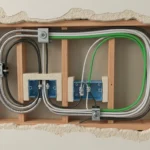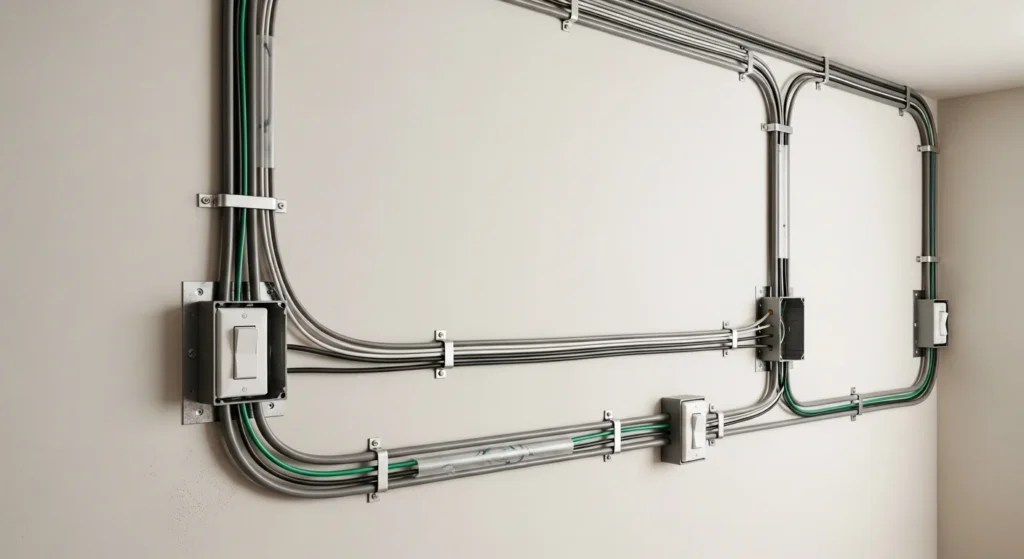

Imagine entering a house where electrical wires run neatly inside plastic or metal pipes mounted on the walls. The wires are protected, organized, and easy to inspect. This type of electrical installation is commonly known as Surface Conduit Wiring in Houses.
In many homes, especially during renovations or temporary installations, electricians prefer surface conduit wiring because it is easy to install, maintain, and modify. Instead of hiding wires inside walls, this method uses conduits fixed on the wall surface to carry electrical cables safely.
Understanding Surface Conduit Wiring in Houses is important for electrical students, engineers, technicians, and beginners who want to learn practical wiring methods used in residential buildings. It helps ensure electrical safety, proper installation, and long-term durability of the electrical system.
In this article, you will learn the surface conduit wiring working principle, different types of conduit systems, major components, advantages and disadvantages, applications in houses, comparison with concealed wiring, troubleshooting tips, and future trends in electrical wiring technology. Surface Wiring
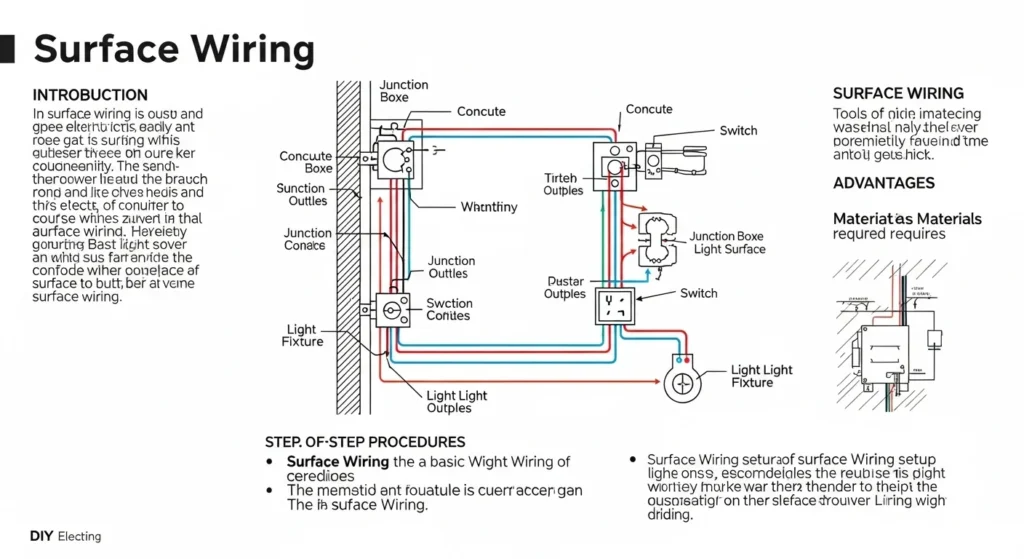
Surface wiring is a method of electrical installation in which wires or cables are installed on the surface of walls, ceilings, or other structures instead of being hidden inside them. In this system, the wires are clearly visible and are fixed using clips, casing, conduit pipes, or trunking. Surface wiring is commonly used in houses, shops, workshops, and temporary electrical installations where breaking the walls for concealed wiring is not practical. The main purpose of surface wiring is to provide an easy and quick way to distribute electricity while keeping the wiring accessible for inspection and maintenance.
The working principle of surface wiring is simple. Electrical power is supplied from the main distribution board, and insulated cables carry the current to switches, sockets, lights, and other electrical devices. The wires are mounted along the wall surface using protective materials such as PVC casing, conduits, or clips to prevent mechanical damage and ensure safety. Because the wires are visible, electricians can easily locate faults, repair damaged cables, or modify the wiring when necessary.
Surface wiring has several advantages. It is easy to install, requires less labor, and costs less compared to concealed wiring systems. It is also easier to inspect and repair because the wires are not hidden inside walls. However, surface wiring also has some limitations. The visible wires may affect the appearance of a room, and the cables can be exposed to dust, moisture, or accidental damage if they are not properly protected.
Despite these disadvantages, surface wiring is still widely used in many electrical installations, especially in locations where flexibility, low cost, and quick installation are important. Proper installation and good quality materials can improve the safety and durability of surface wiring systems.
Surface Wiring Ideas and Installation Methods
Surface wiring is an electrical installation method in which wires and cables are mounted on the surface of walls, ceilings, or structural elements rather than being concealed inside them. This wiring technique is widely used in residential, commercial, and industrial environments because it offers easy installation, simple maintenance, and convenient future modifications. Modern surface wiring systems are available in various designs that not only improve electrical safety but can also enhance the overall appearance of a building when installed properly.
PVC Casing and Capping Wiring
PVC casing and capping wiring is one of the most commonly used surface wiring methods in residential and light commercial installations. In this system, electrical wires are placed inside a PVC casing fixed to the wall, and a removable PVC cap covers the wires to provide protection and a neat appearance.
Features
- Wires are enclosed inside durable PVC casing.
- A protective cap covers and secures the wiring.
- Provides a clean, organized, and professional appearance.
- Easy access for maintenance and future wiring modifications.
- Lightweight and economical installation method.
For more detilas click link PVC Casing and Capping Wiring
Common Applications
PVC casing and capping wiring is commonly used in homes, offices, schools, educational institutions, and small commercial buildings where a balance between appearance, safety, and affordability is required.
Conduit Surface Wiring
Conduit surface wiring involves running electrical conductors through PVC or metal conduits that are mounted directly onto walls or ceilings. This method offers superior protection and is widely used in environments where wiring may be exposed to mechanical damage or harsh conditions.
Advantages
- Excellent electrical safety.
- High mechanical protection for cables.
- Long service life and durability.
- Resistant to dust, moisture, and environmental exposure.
- Easy inspection and maintenance.
Common Applications
Conduit surface wiring is frequently used in factories, workshops, warehouses, commercial buildings, garages, and industrial facilities where robust cable protection is essential.
Decorative Surface Wiring
Modern interior designs increasingly incorporate decorative surface wiring as part of the overall architectural style. Instead of hiding electrical installations, designers use aesthetically pleasing wiring systems that complement the interior decor.
Popular Design Ideas
- Colored PVC or metal conduits.
- Decorative wooden cable covers.
- Exposed industrial-style conduit layouts.
- Hidden LED strip channels and lighting pathways.
- Custom-designed cable management systems.
Benefits
Decorative surface wiring can enhance the visual appeal of a space while maintaining easy access to electrical systems. It is particularly popular in modern, industrial, loft-style, and commercial interior designs.
Raceway Wiring Systems
Raceway wiring systems use specially designed plastic or metal channels to organize and protect electrical and communication cables. Raceways provide a practical solution where frequent cable additions, replacements, or modifications are expected.
Features
- Neat and organized cable management.
- Easy installation and cable replacement.
- Suitable for power, data, and communication cables.
- Provides protection against accidental damage.
- Simplifies future upgrades and maintenance.
Suitable Applications
Raceway systems are widely used in offices, computer laboratories, server rooms, educational facilities, data centers, and commercial buildings where cable organization is important.
Wooden Batten Surface Wiring
Wooden batten wiring is a traditional surface wiring method in which insulated wires are fixed onto wooden battens mounted on walls or ceilings. Although less common today, it was widely used in earlier electrical installations.
Advantages
- Simple installation process.
- Low material and installation cost.
- Easy maintenance and inspection.
- Suitable for temporary electrical setups.
Limitations
Despite its simplicity, wooden batten wiring has become less popular because it offers lower fire resistance and less mechanical protection compared to modern conduit and raceway systems. It is now mainly used for educational demonstrations or temporary installations.
Choosing the Right Surface Wiring Method
The selection of a surface wiring system depends on several factors, including building type, safety requirements, environmental conditions, budget, and aesthetic preferences. PVC casing and capping are ideal for residential use, conduit wiring provides maximum protection in industrial environments, raceways are excellent for cable management, and decorative surface wiring offers stylish solutions for modern interiors.
With proper planning and installation, surface wiring systems can provide safe, reliable, cost-effective, and visually appealing electrical solutions for a wide range of residential, commercial, and industrial applications.
Surface Wiring Solutions for Smart Homes
Modern smart homes rely on advanced electrical and communication systems that require safe, organized, and easily accessible wiring. Surface wiring provides a practical solution for integrating smart technologies without extensive wall modifications. It allows homeowners and electricians to install, upgrade, and maintain smart devices efficiently while keeping cables protected and organized.
Smart Switch and Automation Wiring
Surface wiring is commonly used for smart switches, automated lighting systems, smart thermostats, and home automation controllers. Since smart systems often require additional communication cables and control wiring, surface-mounted conduits make installation and future upgrades much easier.
CCTV and Security System Cable Routing
Security cameras, alarm systems, and access control devices require reliable cable management. Surface wiring allows CCTV and security cables to be routed safely through conduits, protecting them from physical damage while maintaining a clean and professional appearance.
Wi-Fi, Internet, and Data Cable Management
Modern homes require extensive networking infrastructure. Surface conduit systems help organize Ethernet cables, fiber optic connections, and communication wiring, ensuring efficient network performance while simplifying future expansions and maintenance.
Benefits for Smart Homes
- Easy installation of automation systems
- Simplified cable management
- Convenient future upgrades
- Improved protection for communication cables
- Enhanced system reliability and organization
Industrial Surface Wiring Applications
Industrial environments require robust electrical systems capable of operating safely under demanding conditions. Surface wiring remains a preferred solution because it provides excellent protection, accessibility, and flexibility for industrial electrical installations.
Heavy-Duty Metal Conduits
Factories and manufacturing facilities often use heavy-duty metal conduits to protect electrical cables from impact, vibration, dust, moisture, and harsh environmental conditions. These conduits improve system durability and reduce the risk of cable damage.
Cable Tray Systems
Cable trays are widely used in industrial plants to support and organize large numbers of power, control, and communication cables. They provide easy access for inspection, maintenance, and future modifications.
Flexible Conduit Installations
Flexible conduits are commonly used for connecting motors, machinery, pumps, and equipment that experience movement or vibration. They provide protection while allowing the necessary flexibility for equipment operation.
Benefits in Industrial Facilities
- Easy inspection and maintenance
- High mechanical protection
- Organized cable management
- Reduced downtime during repairs
- Improved workplace safety
LED Lighting Surface Wiring Applications
Surface wiring is increasingly used in modern lighting installations because it combines functionality with attractive design options. It allows lighting systems to be installed quickly while maintaining accessibility for maintenance and upgrades.
LED Strip Lighting Channels
Surface-mounted channels provide a secure and professional method of installing LED strip lighting in homes, offices, retail stores, and commercial buildings. They improve appearance while protecting the lighting system.
Surface-Mounted Spotlights
Many modern interiors use surface-mounted spotlights that require visible wiring routes. Surface conduit systems allow these installations to be completed safely while maintaining a neat appearance.
Decorative Ceiling and Architectural Lighting
Creative surface wiring layouts can be integrated into ceiling designs to support decorative lighting, accent illumination, and architectural features, creating visually appealing environments.
Benefits for Lighting Systems
- Simplified installation
- Easy maintenance and replacement
- Flexible lighting layouts
- Improved cable protection
- Enhanced aesthetic possibilities
Advantages of Surface Wiring Systems
Surface wiring offers numerous practical benefits that make it popular in residential, commercial, and industrial installations.
Easy Installation
Surface wiring can be installed without cutting into walls, floors, or ceilings, reducing labor time and installation costs.
Low Maintenance Cost
Because the wiring remains accessible, inspections, repairs, and upgrades can be performed quickly and economically.
Quick Fault Detection
Electrical problems can be identified and repaired more easily since the wiring system is visible and accessible.
Easy Expansion and Modification
New circuits, outlets, communication cables, and equipment can be added with minimal disruption to the existing installation.
Suitable for Temporary Installations
Surface wiring is ideal for construction sites, temporary facilities, exhibitions, workshops, and locations where wiring may need to be relocated in the future.
Essential Safety Tips for Surface Wiring
Proper safety practices are critical for ensuring reliable and hazard-free electrical installations.
Use High-Quality Insulation
Always select cables with proper insulation ratings to prevent electrical leakage, short circuits, and shock hazards.
Avoid Circuit Overloading
Do not connect more electrical devices than a circuit is designed to handle. Overloading can cause overheating and fire risks.
Install Proper Earthing
Effective grounding protects both people and equipment by safely directing fault currents to the earth.
Select the Correct Conduit Size
Conduits should provide adequate space for the installed conductors. Overcrowded conduits can damage wire insulation and create overheating issues.
Protect Wiring from Moisture
Use weatherproof conduits, fittings, and junction boxes in damp or outdoor locations to prevent water ingress and corrosion.
Follow Electrical Standards
Always comply with local electrical codes, safety regulations, and recommended installation practices to ensure a safe and reliable wiring system.
Surface wiring is a practical and flexible electrical wiring method used in residential, commercial, and industrial applications. With modern materials and creative designs, surface wiring can provide both safety and attractive appearance while allowing easy maintenance and future upgrades.
2. What is Surface Conduit Wiring in Houses?
Surface Conduit Wiring in Houses is an electrical wiring system where insulated electrical wires are placed inside protective conduits that are mounted on the surface of walls or ceilings.
2. What Is PVC Conduit Wiring?
Clear Definition
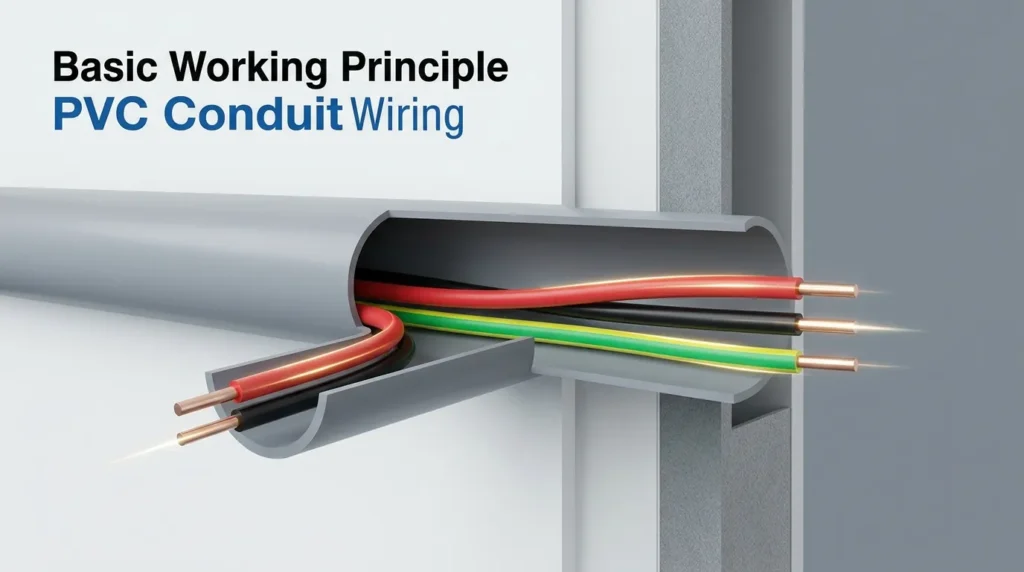
PVC conduit wiring is an electrical wiring system in which insulated electrical wires are installed inside PVC (Polyvinyl Chloride) conduit pipes. These conduits protect the wires from mechanical damage, moisture, dust, chemicals, and other environmental factors while providing a safe pathway for electrical current throughout a building.
Simple Explanation
In PVC conduit wiring, electrical cables are not left exposed. Instead, they are enclosed within strong, non-conductive PVC pipes that guide and protect the wires from one point to another. The conduits may be installed on the surface of walls and ceilings or concealed inside walls, floors, and ceilings depending on the building design and installation requirements.
PVC conduits are lightweight, corrosion-resistant, easy to install, and widely used in residential, commercial, and industrial electrical systems.
Practical Example
For example, during the construction of a new house, electricians install PVC conduits inside walls before plastering. Electrical wires are later pulled through these conduits to supply power to lights, switches, fans, and electrical outlets. If wiring needs to be replaced or upgraded in the future, the conduit system makes the process much easier and safer.
PVC conduit wiring is commonly used in homes, offices, schools, hospitals, shopping centers, factories, and other buildings where long-term electrical protection and safety are required.
3. PVC Conduit Wiring Working Principle
The PVC conduit wiring working principle is based on protecting electrical conductors while providing a safe and organized route for electricity to travel throughout the installation. The PVC conduit acts as a protective enclosure that isolates electrical wires from external damage and environmental conditions.
Step-by-Step Working Process
1. Power Supply Enters the Distribution Board
Electricity enters the building through the main power supply and is distributed through the distribution board (DB) to various electrical circuits.
2. Electrical Wires Are Installed Inside PVC Conduits
Insulated conductors are carefully pulled through the PVC conduit pipes. The conduits provide a protected pathway that keeps wires organized and secure.
3. Conduits Route Wires Throughout the Building
PVC conduits are installed along planned routes within walls, ceilings, floors, or on surfaces to carry electrical wiring safely to different locations.
4. Connections Are Made to Electrical Devices
The wires inside the conduits are connected to switches, sockets, lighting fixtures, fans, appliances, and other electrical equipment through junction boxes and fittings.
5. Continuous Protection and Insulation
Throughout its service life, the PVC conduit protects electrical conductors from physical impact, moisture, dust, corrosion, and accidental contact, helping maintain electrical safety and reliability.
Simple Analogy
Think of PVC conduits as protective highways for electrical wires. Just as roads provide a safe route for vehicles to travel from one destination to another, PVC conduits provide a secure pathway for electrical current to reach different parts of a building while protecting the wires from external hazards.
Why PVC Conduit Wiring Is Effective
PVC conduit wiring is highly effective because it combines electrical safety, durability, flexibility, and ease of maintenance. The conduit system not only protects the wiring but also allows future upgrades, repairs, and modifications without major structural damage to the building. This makes PVC conduit wiring one of the most widely used electrical installation methods in modern construction.
4. Types / Classification
There are several types of Surface Conduit Wiring in Houses, depending on the material and installation method.
PVC Conduit Wiring: Working Principle, Types, Components, Installation, Advantages, Disadvantages, and Applications
PVC conduits are made from plastic materials and are widely used in residential wiring.PVC conduit wiring is a widely used electrical wiring system known for its safety, durability, and neat installation. In this method, electrical wires are enclosed inside PVC (Polyvinyl Chloride) pipes or conduits, which are installed on the surface of walls or concealed within walls, ceilings, or floors. PVC is a non-conductive material, which means it does not carry electricity, making it highly safe for protecting wires from electric shocks, short circuits, and external damage. This type of wiring is commonly used in residential, commercial, and industrial buildings due to its long life and low maintenance requirements. One of the main advantages of PVC conduit wiring is its resistance to moisture, chemicals, and corrosion, which makes it suitable for both indoor and outdoor installations. It also protects wires from dust, rodents, and mechanical damage, ensuring better performance over time. Installation of PVC conduit wiring involves laying conduits according to a planned route, fixing them with clamps or embedding them in walls, and then pulling insulated wires through the conduit using a draw wire. Junction boxes and bends are used to change direction and connect different sections of wiring. Compared to traditional wiring systems like casing and capping, PVC conduit wiring offers a cleaner appearance and higher safety standards. It is also flexible and easy to modify or extend when needed. However, proper installation is important to avoid overheating and ensure smooth wire pulling. Overall, PVC conduit wiring is a modern, efficient, and reliable solution for electrical installations, providing excellent protection, safety, and durability in various environments.
Features
- Lightweight
- Corrosion-resistant
- Easy to install
- Affordable
PVC conduits are commonly used in houses and small buildings.
Metal Conduit Wiring: Working Principle, Types, Components, Installation, Advantages, and Applications
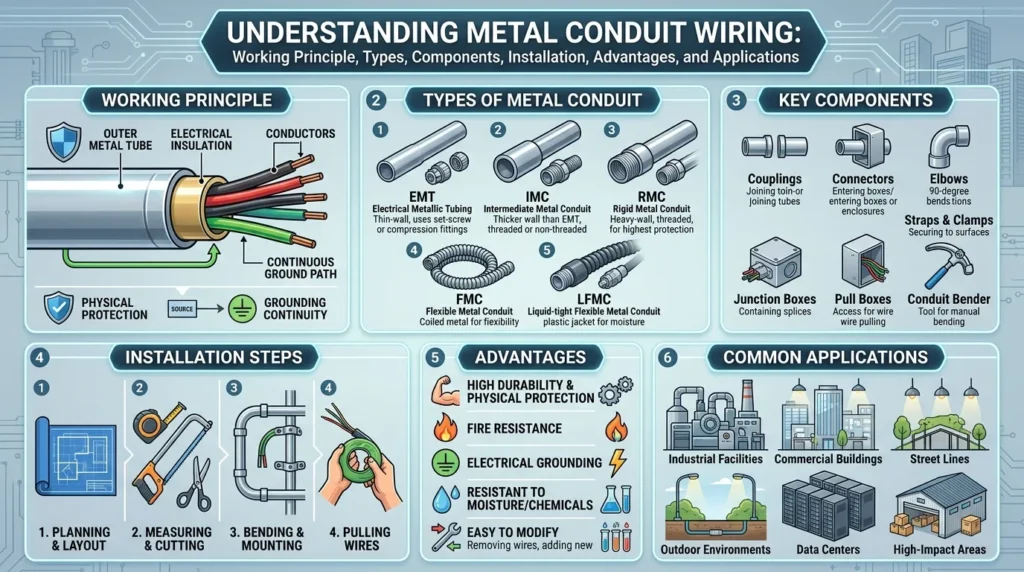
Metal conduits are made from steel or aluminum.Metal conduit wiring is a robust and highly secure electrical wiring system in which insulated conductors are enclosed inside metal pipes or conduits made of steel or aluminum. This system is widely used in industrial, commercial, and high-risk environments where maximum protection of electrical wiring is required. The metal conduit acts as a strong protective barrier against mechanical damage, fire hazards, moisture, and external impacts. Because the conduit itself is conductive, it is properly grounded to ensure safety, reducing the risk of electric shock and providing an effective path for fault current.
There are different types of metal conduit wiring, including rigid metal conduit (RMC), intermediate metal conduit (IMC), and electrical metallic tubing (EMT). RMC is the thickest and strongest type, commonly used in heavy-duty industrial installations. IMC is slightly lighter but still provides excellent protection, while EMT is thinner and easier to install, making it suitable for indoor applications. Installation involves fixing the metal conduits along walls, ceilings, or underground routes, followed by pulling insulated wires through them using fish tape or draw wire. Various fittings such as couplings, elbows, and junction boxes are used to connect and route the conduits efficiently.
One of the main advantages of metal conduit wiring is its durability and fire resistance. It can withstand harsh environmental conditions and provides superior protection compared to non-metallic systems. It also minimizes electromagnetic interference, making it ideal for sensitive electrical equipment. However, metal conduit wiring is generally more expensive and requires skilled labor for installation. Despite this, its long lifespan, safety, and reliability make it a preferred choice for critical electrical systems where protection and performance are top priorities.
Features
- Strong and durable
- High mechanical protection
- Suitable for industrial environments
These conduits are often used in workshops and factories.
Flexible Conduit Wiring: Working Principle, Components, Installation, Advantages, and Applications
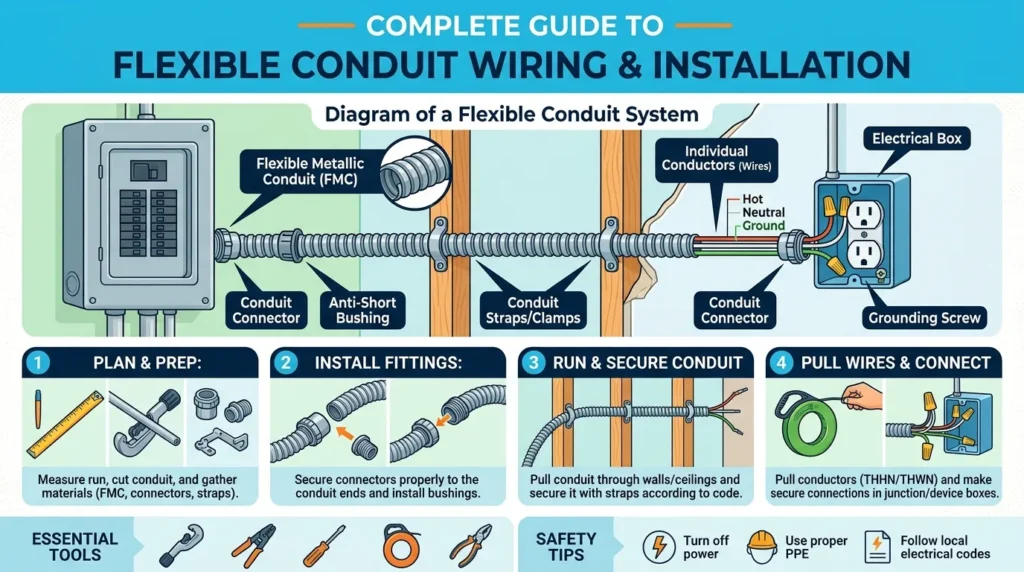
Flexible conduits are bendable pipes used where wiring paths are complex.Flexible conduit wiring is a practical and versatile electrical wiring system in which insulated conductors are enclosed within flexible conduits made of materials like PVC, rubber, or metal. Unlike rigid conduit systems, flexible conduits can bend easily, making them ideal for areas where wiring needs to pass through tight spaces, around obstacles, or in locations subject to vibration and movement. This type of wiring is commonly used in residential, commercial, and industrial installations, especially for connecting electrical equipment such as motors, air conditioners, and machinery.
One of the main advantages of flexible conduit wiring is its adaptability. It allows electricians to install wiring quickly and efficiently in complex layouts without requiring multiple fittings like bends and elbows. Flexible conduits are available in different types, including flexible metallic conduit (FMC), liquid-tight flexible conduit (LFMC), and non-metallic flexible conduit. Metallic types provide strong mechanical protection and grounding capability, while non-metallic conduits offer resistance to moisture, chemicals, and corrosion, making them suitable for damp or outdoor environments.
The installation process involves fixing the flexible conduit between two points and pulling the insulated wires through it. Because the conduit is flexible, it can absorb vibrations and prevent damage to wires, which is particularly important in industrial settings where machines operate continuously. It also provides protection against dust, moisture, and minor mechanical impacts, improving the lifespan and reliability of the wiring system.
However, flexible conduit wiring may not be as strong as rigid conduit systems and is generally used for short runs or specific applications rather than complete building wiring. Proper support and correct sizing are important to avoid sagging and overheating. Overall, flexible conduit wiring is an efficient, safe, and convenient solution for modern electrical installations where flexibility and ease of installation are essential.
Features
- Easy to bend around obstacles
- Used for machines or equipment
- Provides moderate protection
Flexible conduits are often used in equipment connections.
5. Main Components of a Surface Conduit Wiring System
A surface conduit wiring system consists of several important components that work together to provide safe, reliable, and organized electrical distribution. Each component has a specific function that helps protect electrical conductors and ensure efficient operation of the wiring system.
Conduit Pipes
Conduit pipes are one of the most important parts of a surface conduit wiring system. They act as protective channels that enclose electrical wires and shield them from physical damage, moisture, dust, and environmental conditions. Conduits may be made from PVC, steel, or other durable materials depending on the installation requirements and operating environment.
Electrical Wires
Electrical wires carry electric current from the power source to various electrical devices and equipment. These wires are insulated to prevent electrical leakage and ensure user safety. The size and type of wire are selected according to the electrical load and application requirements.
Junction Boxes
Junction boxes are protective enclosures used to connect, branch, and distribute electrical wires safely. They provide secure locations for wire connections and help prevent accidental contact with live conductors. Junction boxes also make future maintenance and troubleshooting easier.
Saddles or Clamps
Saddles and clamps are used to firmly secure conduit pipes to walls, ceilings, and other structural surfaces. They prevent the conduit system from moving, sagging, or becoming loose over time. Properly installed clamps improve the stability and durability of the entire wiring system.
Bends and Elbows
Bends and elbows are conduit fittings that allow conduit pipes to change direction smoothly. These fittings help route wiring around corners, obstacles, and structural elements without damaging the wires inside the conduit. Proper bending also improves the appearance and organization of the installation.
Switches and Sockets
Switches are used to control the flow of electricity to lights, fans, and other electrical devices. They allow users to turn electrical equipment on or off safely. Sockets, also known as electrical outlets, provide connection points for appliances and portable electrical devices, allowing them to receive power from the electrical system.
Conduit Couplings
Conduit couplings are fittings used to connect two sections of conduit pipe together. They ensure a continuous and secure pathway for electrical wires and help maintain the integrity of the conduit system.
Locknuts and Bushings
Locknuts and bushings are small but essential fittings used where conduits enter junction boxes or electrical panels. They secure the conduit in place and protect wire insulation from sharp edges that could cause damage.
Distribution Board
The distribution board, often called a DB panel, is the central point where electrical power is received and distributed to different circuits within the building. It contains protective devices such as circuit breakers and fuses that help safeguard the electrical system against overloads and short circuits.
Importance of These Components
Each component of a surface conduit wiring system plays an important role in ensuring electrical safety, protection, and efficient power distribution. When properly selected and installed, these components create a wiring system that is durable, easy to maintain, and capable of providing reliable electrical service for many years.
In summary, conduit pipes, electrical wires, junction boxes, saddles, clamps, bends, elbows, switches, sockets, couplings, and distribution boards work together to form a complete and effective surface conduit wiring system.
6. Advantages and Disadvantages of Surface Conduit Wiring
Understanding the advantages and disadvantages of surface conduit wiring helps homeowners, electricians, and engineers select the most suitable wiring method for a particular installation. Surface conduit wiring is valued for its accessibility, ease of maintenance, and flexibility, but it may not always provide the same visual appeal as concealed wiring systems.
Surface Conduit Wiring Advantages and Disadvantages
| Aspect | Description |
|---|---|
| Easy Installation | Conduits are mounted directly on walls or ceilings, eliminating the need to break or cut building structures. |
| Simple Maintenance | Electrical faults can be located and repaired quickly because the wiring system is easily accessible. |
| Easy Inspection | Wires and conduit fittings can be visually inspected without removing wall coverings. |
| Ideal for Renovations | Suitable for upgrading existing buildings where concealed wiring installation would be difficult or expensive. |
| Flexible Modifications | New circuits, outlets, and electrical equipment can be added with minimal structural changes. |
| Mechanical Protection | Conduits protect electrical cables from physical damage, moisture, dust, and accidental impact. |
| Cost-Effective Upgrades | Future electrical expansions can be completed without major reconstruction work. |
| Improved Safety | Properly installed conduits reduce the risk of wire damage and electrical hazards. |
Real-World Benefits
| Benefit | Explanation |
|---|---|
| Easy Circuit Expansion | Electricians can add new circuits without damaging walls or ceilings. |
| Reduced Maintenance Time | Fault finding and repairs can be completed faster compared to concealed wiring systems. |
| Lower Renovation Costs | Existing electrical systems can be upgraded without extensive building modifications. |
| Convenient Troubleshooting | Wiring pathways remain visible, making inspections and testing easier. |
7. Disadvantages and Limitations of Surface Conduit Wiring
While surface conduit wiring offers many practical benefits, it also has certain limitations that should be considered during system design and installation.
Surface Conduit Wiring Limitations
| Disadvantage | Description |
|---|---|
| Visible Appearance | Exposed conduits may affect the overall aesthetics of interior spaces. |
| Dust Accumulation | Dust and dirt can collect on conduit surfaces over time, requiring periodic cleaning. |
| Less Attractive Than Concealed Wiring | Many homeowners prefer concealed wiring for a cleaner and more modern appearance. |
| Risk of Loose Conduits | Poor installation or inadequate support can cause conduits to become loose over time. |
| Potential Clutter | Multiple conduit runs can create a crowded appearance if not properly planned. |
| Physical Exposure | Surface-mounted conduits may be more susceptible to accidental impact in high-traffic areas. |
| Additional Space Requirement | Conduits occupy wall or ceiling space that could affect room aesthetics. |
Overall Assessment
| Category | Evaluation |
|---|---|
| Installation Ease | Excellent |
| Maintenance Accessibility | Excellent |
| Future Modifications | Excellent |
| Mechanical Protection | Very Good |
| Cost Efficiency | Good |
| Aesthetic Appearance | Moderate |
| Suitability for Renovations | Excellent |
Overall, surface conduit wiring remains one of the most practical and widely used wiring methods because it combines safety, flexibility, ease of maintenance, and cost-effective installation, especially in renovation, commercial, and industrial applications.
8. Applications of Surface Conduit Wiring Systems
Surface conduit wiring is widely used in residential, commercial, and industrial electrical installations due to its durability, flexibility, and ease of maintenance. Since the conduits are mounted directly on walls, ceilings, or structural surfaces, they provide excellent protection for electrical conductors while allowing easy access for inspection, repair, and future modifications. This wiring method is especially useful in locations where concealed wiring is impractical, expensive, or difficult to install. Its versatility makes it suitable for a wide range of electrical applications across different environments.
Residential Houses
Surface conduit wiring is commonly used in residential buildings where concealed wiring cannot be installed or where existing electrical systems are being upgraded. It is particularly popular in renovation projects, older buildings, garages, basements, and utility rooms. The exposed conduit system allows homeowners and electricians to add new circuits or make modifications without damaging walls or ceilings.
Workshops and Garages
Workshops, garages, and maintenance areas often contain tools, machinery, and equipment that can accidentally damage exposed electrical cables. Surface conduit wiring provides strong mechanical protection for wires and helps reduce the risk of electrical hazards. The durable conduit system also allows easy access for troubleshooting and maintenance.
Commercial Buildings
Many commercial facilities such as shops, offices, retail stores, warehouses, and small business premises use surface conduit wiring for electrical distribution. It offers a practical solution for routing power, lighting, communication, and data cables while allowing future expansion as business requirements change.
Industrial Facilities
Industrial environments require robust electrical protection due to the presence of heavy machinery, vibration, dust, moisture, and harsh operating conditions. Metal surface conduits are widely used in factories, manufacturing plants, processing facilities, and production areas to protect electrical conductors from physical damage and environmental hazards while ensuring safe operation.
Educational and Institutional Buildings
Schools, colleges, training centers, hospitals, and public buildings frequently use surface conduit wiring because it simplifies maintenance and future upgrades. Electrical technicians can easily access wiring systems without disrupting building structures, making it a cost-effective long-term solution.
Temporary Electrical Installations
Surface conduit wiring is often used for temporary electrical systems at construction sites, exhibitions, events, and project-based installations. The system can be installed, modified, and removed quickly while still providing adequate protection for electrical wiring during temporary operations.
Utility and Service Areas
Electrical rooms, pump houses, storage facilities, parking garages, and maintenance buildings commonly utilize surface conduit wiring because of its accessibility and durability. These locations often require frequent inspections and equipment upgrades, making surface-mounted conduits a practical choice.
Why Surface Conduit Wiring Is Widely Used
The popularity of surface conduit wiring comes from its combination of safety, flexibility, and ease of maintenance. It protects conductors from mechanical damage, simplifies troubleshooting, and allows future electrical modifications without extensive construction work.
9. Comparison Section
Understanding the difference between surface conduit wiring and concealed conduit wiring helps electricians choose the best system.
| Feature | Surface Conduit Wiring | Concealed Conduit Wiring |
|---|---|---|
| Installation | Mounted on wall surface | Installed inside walls |
| Maintenance | Easy to repair | Difficult to repair |
| Appearance | Visible conduits | Hidden wiring |
| Cost | Lower installation cost | Higher installation cost |
| Flexibility | Easy modification | Difficult modification |
Both wiring systems have advantages depending on the building design and installation requirements.
10. How to Select the Right Surface Conduit Wiring System
Selecting the appropriate surface conduit wiring system is essential for ensuring electrical safety, durability, and long-term performance. The choice of conduit depends on the installation environment, type of building, expected electrical load, and maintenance requirements. A well-planned conduit system not only protects electrical wires from physical damage but also makes future inspections, repairs, and upgrades much easier. Whether the installation is for a residential house, commercial building, or industrial facility, careful selection of conduit materials and sizes helps improve the overall reliability and efficiency of the electrical system.
Key Factors to Consider
Type of Building
The purpose of the building plays an important role in conduit selection. Residential buildings typically use PVC conduits because they are lightweight, affordable, and corrosion-resistant. Commercial and industrial facilities may require stronger metal conduits for additional mechanical protection and durability.
Environmental Conditions
The installation environment significantly affects conduit performance. Areas exposed to moisture, chemicals, extreme temperatures, or outdoor weather conditions may require specialized conduit materials with enhanced resistance to corrosion and environmental damage.
Budget Requirements
Project budget is another important consideration. PVC conduits generally offer a cost-effective solution for most residential applications, while metal conduits may involve higher material and installation costs but provide superior protection in demanding environments.
Safety Requirements
Electrical safety should always be a top priority. The selected conduit system should comply with local electrical codes and safety standards. Factors such as fire resistance, grounding requirements, and mechanical protection must be carefully evaluated during the selection process.
Ease of Maintenance
Surface conduit wiring is often preferred because it allows easy access to electrical cables. Choosing a conduit system that simplifies inspection, troubleshooting, and future modifications can reduce maintenance costs and downtime.
Practical Tips for Beginners
- Use PVC conduits for most residential and light commercial installations.
- Choose metal conduits in industrial areas or locations where greater mechanical protection is required.
- Plan conduit routes carefully before starting installation to avoid unnecessary bends and obstacles.
- Follow all applicable electrical codes and safety regulations.
- Ensure proper grounding, insulation, and conductor sizing.
- Select conduit sizes that provide sufficient space for future wiring additions.
- Use high-quality fittings, junction boxes, and support clamps for a secure installation.
Making the Best Choice
A properly selected surface conduit wiring system provides reliable protection for electrical conductors while supporting safe and efficient operation. Careful planning, correct material selection, and adherence to electrical standards help create an installation that is durable, easy to maintain, and capable of meeting future electrical demands.
11. Common Surface Conduit Wiring Problems and Solutions
Surface conduit wiring systems are generally reliable and durable, but improper installation, environmental conditions, and electrical faults can sometimes cause problems. Understanding these common issues and their solutions helps maintain a safe and efficient electrical system.
Why Do Surface Conduits Become Loose?
Loose conduits are often caused by improperly installed saddles, worn-out mounting hardware, vibration, or aging building materials. When conduits are not securely fastened, they may sag, shift position, or place stress on the wiring inside.
Solution:
Inspect all conduit supports regularly and tighten any loose screws or clamps. Replace damaged saddles and ensure support brackets are installed at the recommended spacing to provide proper conduit stability.
Why Do Wires Get Damaged Inside Conduits?
Electrical wires can become damaged due to sharp conduit bends, rough conduit edges, excessive pulling force during installation, or overcrowding inside the conduit. Damaged insulation increases the risk of short circuits and electrical faults.
Solution:
Use smooth bends and proper conduit fittings during installation. Avoid overfilling conduits and use appropriate wire-pulling techniques. Inspect and replace damaged wires immediately to maintain electrical safety.
Why Do Junction Boxes Overheat?
Overheating in junction boxes usually occurs when circuits are overloaded, connections become loose, or wire sizes are insufficient for the electrical load. Excessive heat can damage insulation and create potential fire hazards.
Solution:
Do not connect too many devices to a single circuit. Ensure all electrical connections are properly tightened and use correctly sized conductors for the expected load. Periodic inspection can help identify overheating issues before they become serious.
Why Is Electricity Not Reaching Outlets or Devices?
Loss of power to outlets may result from loose wire connections, broken conductors, tripped circuit breakers, damaged switches, or faults inside junction boxes. This problem can affect individual outlets or entire sections of the electrical system.
Solution:
Check circuit breakers and inspect connections inside junction boxes and outlets. Repair or replace damaged wiring and faulty components. If the fault cannot be identified easily, consult a qualified electrician for proper troubleshooting.
Why Does Moisture Enter Surface Conduits?
In outdoor or damp locations, poorly sealed conduits can allow moisture to enter the system. Moisture may cause corrosion, insulation deterioration, and electrical leakage.
Solution:
Use weatherproof conduits, sealed fittings, and waterproof junction boxes where required. Regularly inspect outdoor installations for signs of water intrusion and corrosion.
Why Do Circuit Breakers Trip Frequently?
Frequent breaker tripping may indicate overloaded circuits, short circuits, ground faults, or damaged wiring within the conduit system.
Solution:
Reduce the electrical load on the circuit, identify faulty appliances, and inspect wiring for damage. Replace defective components and ensure the electrical system is operating within its design limits.
12. Future Trends in Surface Conduit Wiring Systems
The future of surface conduit wiring is being shaped by advancements in building technology, safety standards, and sustainable construction practices. As residential, commercial, and industrial buildings become more intelligent and energy-efficient, electrical wiring systems must also evolve to meet these changing requirements. Modern surface conduit installations are no longer limited to protecting electrical cables; they are becoming an integral part of smart infrastructure that enhances safety, flexibility, and efficiency. Emerging technologies and innovative materials are expected to make surface conduit wiring more reliable, durable, and adaptable to future electrical demands.
Smart Home Wiring Integration
The growing popularity of smart homes is driving the development of advanced wiring systems. Modern surface conduits are increasingly being used to house communication cables, data networks, security systems, and smart automation wiring alongside traditional electrical circuits. This integration allows homeowners to easily upgrade smart devices, sensors, and control systems without major structural modifications.
Fire-Resistant Conduit Technologies
Fire safety remains a top priority in electrical installations. Manufacturers are developing fire-resistant and low-smoke conduit materials that can withstand high temperatures and prevent the spread of flames during electrical faults. These advanced conduits improve building safety and help meet increasingly strict electrical and construction regulations.
Modular and Flexible Electrical Systems
Future electrical installations are expected to become more modular and adaptable. Surface conduit systems allow easier access to wiring, making upgrades, repairs, and modifications simpler than concealed wiring methods. Modular conduit designs will enable electricians to expand electrical systems quickly as building requirements change.
Sustainable and Eco-Friendly Materials
Environmental concerns are encouraging the use of recyclable and environmentally friendly conduit materials. New conduit products are being manufactured from sustainable plastics and other eco-friendly materials that reduce environmental impact while maintaining durability and electrical safety standards.
Digital Monitoring and Smart Maintenance
Advanced monitoring technologies may soon be integrated into electrical conduit systems. Smart sensors can detect overheating, moisture, insulation deterioration, or wiring faults before serious problems occur. These systems will help improve preventive maintenance and reduce the risk of electrical failures.
Enhanced Safety and Efficiency
As building technologies continue to advance, future surface conduit wiring systems will provide greater protection, improved durability, and easier installation. These innovations will help create safer electrical environments, reduce maintenance costs, and improve the overall efficiency of electrical installations in modern buildings.
13. Conclusion
Surface Conduit Wiring in Houses is a practical and widely used electrical wiring method that provides protection, accessibility, and flexibility. By installing conduits on the surface of walls or ceilings, electricians can easily route electrical wires while ensuring safety and durability.
This wiring system is particularly useful in renovations, temporary installations, workshops, and buildings where concealed wiring is difficult. Although it may not be as visually appealing as concealed wiring, its advantages in maintenance and modification make it highly practical.
For electrical students and beginners, understanding the surface conduit wiring working principle, applications, and advantages and disadvantages is essential for developing strong electrical installation skills. With proper installation techniques and safety standards, surface conduit wiring can provide a reliable and efficient electrical system for residential buildings.