
Imagine pressing the start button on your car or switching on an electric fan. Within seconds, the motor begins rotating and performs useful work. Inside these electrical machines is a vital component called the armature, which plays a major role in converting electrical energy into mechanical energy—or mechanical energy into electrical energy, depending on the machine.
The armature is one of the most important parts of electric motors and generators. Without it, these machines cannot produce motion or generate electricity efficiently. Whether you are studying electrical engineering, working as a technician, or simply curious about how electrical machines operate, understanding the armature is essential.
In this complete guide, you will learn what an armature is, the armature working principle, different types, main components, advantages, disadvantages, armature applications, common problems, maintenance tips, and the difference between armature and field winding. By the end of this article, you will have a strong foundation for understanding motors, generators, and other rotating electrical machines.
What is Armature?
An armature is the rotating or stationary part of an electrical machine that carries the current-carrying winding. It interacts with the magnetic field to produce motion in motors or generate electricity in generators.
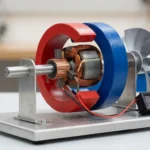
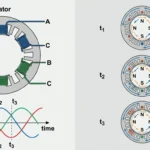
In most DC motors and DC generators, the armature is the rotating part connected to the shaft. In many AC machines, however, the armature is usually the stationary stator.
Simply put, the armature is the part where electrical energy and magnetic energy interact to perform useful work.
Simple Explanation
Think of a bicycle. The rider applies force to the pedals, and the wheels begin to rotate. In an electric motor, the magnetic field provides the force, while the armature acts like the pedals that receive the force and create rotation.
Practical Example
A cordless drill contains a DC motor. Inside the motor, the armature rotates rapidly as electric current flows through its windings. This rotation turns the drill bit and allows you to drill holes in wood, metal, or plastic.
Armature Working Principle
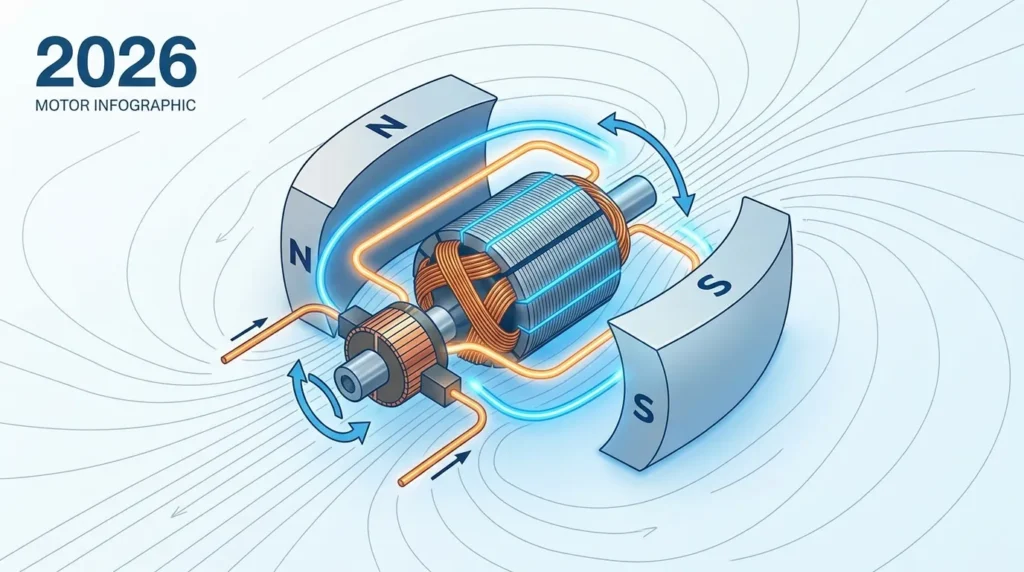
The armature working principle is based on the interaction between a magnetic field and a current-carrying conductor.
According to Fleming’s Left-Hand Rule, when a conductor carrying current is placed inside a magnetic field, a force acts on it. This force produces rotational motion in motors.
In generators, the opposite process occurs. When the armature rotates inside a magnetic field, electrical voltage is induced according to Faraday’s Law of Electromagnetic Induction.
Step-by-Step Working Process
- Electrical power is supplied to the armature winding.
- Current flows through the conductors.
- A magnetic field forms around the conductors.
- This magnetic field interacts with the field winding or permanent magnets.
- A mechanical force (torque) is produced.
- The armature begins rotating.
- Continuous current flow keeps the motor running smoothly.
Easy Analogy
Imagine rowing a boat. Every time you pull the oars, the boat moves forward. Similarly, every time current flows through the armature winding, magnetic forces push the armature, causing continuous rotation.
Types of Armature
Different electrical machines use different armature designs depending on their construction and application.
Drum Armature
The drum armature is the most common type used in modern electrical machines.
Features
- Windings are placed in slots around the armature core.
- Better cooling.
- Higher efficiency.
- Strong mechanical construction.
Applications
- DC motors
- DC generators
- Industrial machines
Ring Armature
The ring armature was one of the earliest armature designs.
Features
- Windings are wrapped around a ring-shaped core.
- Simple construction.
- Lower efficiency compared to drum armatures.
Applications
- Older electrical generators
- Educational demonstration models
Laminated Armature
This armature uses thin steel laminations instead of one solid iron core.
Features
- Reduces eddy current losses.
- Improves efficiency.
- Generates less heat.
- Extends machine life.
Applications
- Modern motors
- High-efficiency generators
- Industrial equipment
Slotted Armature
Conductors are placed inside specially designed slots in the core.
Features
- Better protection for windings.
- Improved magnetic performance.
- Reduced vibration.
Applications
- Heavy-duty industrial motors
- High-power generators
Main Components of an Armature
Several important parts work together to ensure efficient operation.
Armature Core
The armature core is made of laminated silicon steel sheets.
Function
- Provides a magnetic path.
- Supports the armature winding.
- Reduces energy losses.
Armature Winding
Copper wire is wound around the armature core.
Function
- Carries electrical current.
- Produces a magnetic field.
- Generates torque or voltage.
Shaft
The shaft supports the rotating armature.
Function
- Transfers mechanical power.
- Maintains alignment.
- Connects the armature to external equipment.
Commutator (DC Machines)
The commutator is attached to the armature.
Function
- Reverses current direction.
- Maintains continuous rotation.
- Connects the armature to carbon brushes.
Slip Rings (AC Machines)
Slip rings replace commutators in many AC machines.
Function
- Transfer electrical current.
- Provide continuous electrical connection.
- Do not reverse current direction.
Bearings
Bearings support smooth shaft rotation.
Function
- Reduce friction.
- Support the rotor.
- Increase machine life.
Advantages of Armature
The armature advantages and disadvantages should be understood before selecting a motor or generator.
Advantages
- Efficient energy conversion.
- Produces high starting torque in DC motors.
- Reliable operation.
- Supports precise speed control.
- Durable when properly maintained.
- Suitable for small and large machines.
- Works in generators and motors.
- Easy to repair and rewind.
- High mechanical strength.
- Proven technology used worldwide.
These benefits make armatures an essential component in electrical machines across many industries.
Disadvantages of Armature
Although highly effective, armatures also have certain limitations.
- Copper windings increase manufacturing cost.
- Heat generation during heavy loads.
- Insulation may deteriorate over time.
- Requires regular maintenance.
- Commutator and brushes wear in DC machines.
- Additional cooling may be needed.
- Heavy construction in large machines.
- Mechanical vibration may affect performance.
- Winding faults can reduce efficiency.
- Repair may require skilled technicians.
Armature Applications
The armature applications cover almost every sector where electrical machines are used.
Home Applications
- Ceiling fans
- Washing machines
- Mixers
- Vacuum cleaners
- Water pumps
Industrial Applications
- Conveyor systems
- Machine tools
- Rolling mills
- Cranes
- Compressors
- Industrial pumps
Automotive Industry
- Starter motors
- Windshield wipers
- Electric power steering
- Power windows
- Cooling fans
Renewable Energy
- Wind generators
- Hydroelectric generators
- Small solar-powered motor systems
Transportation
- Electric trains
- Battery-powered vehicles
- Electric forklifts
- Metro rail systems
Modern Technology
- Robotics
- Automated production lines
- Medical equipment
- CNC machines
- Smart manufacturing systems
Difference Between Armature and Field Winding
Many beginners confuse these two important motor components.
| Feature | Armature | Field Winding |
|---|---|---|
| Purpose | Carries working current | Produces magnetic field |
| Location | Rotor or stator | Usually stator in DC machines |
| Main Function | Produces torque or voltage | Creates magnetic flux |
| Current | Armature current | Field current |
| Rotating Part | Usually rotates in DC motors | Usually stationary |
| Connected To | Commutator or slip rings | Power supply |
| Heat Generation | Higher | Lower |
| Maintenance | Moderate | Low |
Understanding the difference between armature and field winding helps students understand how electrical machines operate efficiently.
Selection Guide
Selecting the correct armature depends on several important factors.
Choose the Correct Machine Type
Determine whether the armature is for a DC motor, AC motor, or generator.
Check Voltage Rating
Always match the armature with the machine’s operating voltage.
Consider Current Capacity
Higher current requires thicker conductors and better insulation.
Core Material
Choose laminated silicon steel cores for higher efficiency.
Insulation Quality
Good insulation improves safety and extends service life.
Cooling Method
Machines operating continuously should have effective cooling systems.
Operating Environment
Consider:
- Dust
- Moisture
- High temperature
- Chemical exposure
Industrial environments often require stronger insulation and better protection.
Common Problems & Solutions
Why does the armature overheat?
Possible causes
- Overloading
- Poor ventilation
- Shorted windings
- Excessive current
Solution
Reduce the load, improve cooling, and inspect the winding insulation.
Why does the motor produce sparks?
Possible reasons include:
- Worn brushes
- Damaged commutator
- Loose electrical connections
Replace worn components and clean the commutator.
Why does the motor lose power?
Possible causes:
- Open armature winding
- Short circuit
- Loose wiring
- Damaged insulation
Inspect the winding using a multimeter or growler test.
How can armature winding be protected?
Regular maintenance helps prevent failures.
- Keep the motor clean.
- Avoid overloading.
- Maintain proper cooling.
- Inspect insulation periodically.
Can a damaged armature be repaired?
Yes. Minor faults such as damaged windings or insulation can often be repaired by rewinding the armature. Severe mechanical damage may require replacement.
Future Trends
Electrical machine technology continues to improve with new materials and smarter designs.
Some important future developments include:
- High-efficiency laminated core materials.
- Better insulation systems.
- Lightweight armature construction.
- Improved cooling techniques.
- AI-based predictive maintenance.
- Smart motor monitoring sensors.
- Reduced energy losses.
- High-speed industrial motor designs.
- Greater use in electric vehicles.
- Advanced manufacturing using automated winding machines.
Although brushless motors reduce the need for traditional armatures in some applications, armatures remain essential in many industrial, automotive, and power-generation systems.
Conclusion
The armature is the heart of every electric motor and generator because it is the component where electrical energy is converted into mechanical energy or mechanical energy into electrical energy. Understanding the armature working principle, types, components, armature applications, and armature advantages and disadvantages provides a solid foundation for anyone studying electrical engineering or working with electrical machines. Whether used in household appliances, industrial equipment, transportation, or renewable energy systems, the armature plays a vital role in reliable machine operation. By learning how it functions and how to maintain it properly, students and technicians can improve machine performance, reduce failures, and extend equipment life. A strong understanding of the armature also makes it easier to study more advanced topics such as motors, generators, transformers, and modern electrical systems.