
A 220-volt outlet, also called a 240-volt outlet, supplies two hot wires at 120 volts each so it can run large appliances such as dryers, ranges and EV chargers. It needs a double-pole breaker, a 3- or 4-wire cable and a matching receptacle. Wiring one wrongly can start a fire, so follow NEC rules and have the work inspected.
What Is a 220V Outlet and How Is It Different From 120V?
A 220V outlet is a receptacle that is fed by two hot wires from opposite legs of a split-phase panel, giving 240 volts between them and 120 volts from either hot to neutral. A standard 120V outlet uses one hot wire and delivers about 1,800 watts on a 15-amp circuit, while a 30-amp 240V outlet can deliver 7,200 watts, so heavy appliances run cooler and faster. The voltage is called 220V in older wiring and many other countries, and 240V in modern North American panels.
What Wire Size and Breaker Does a 220V Outlet Need?
| Appliance | Breaker | Copper wire | Receptacle |
| Clothes dryer | 30 amps | 10 AWG | NEMA 14-30 |
| Electric range | 40 to 50 amps | 8 to 6 AWG | NEMA 14-50 |
| EV charger | 40 to 50 amps | 8 to 6 AWG | NEMA 14-50 |
| Welder | 50 amps | 6 AWG | NEMA 6-50 |
| Window AC, 240V | 20 to 30 amps | 12 to 10 AWG | NEMA 6-20 / 6-30 |
Wire sizes are copper conductors at 75 degrees Celsius from NEC Table 310.16, with the breaker sized to protect the wire. Check the appliance nameplate first: a 50-amp range circuit uses 6 AWG copper, while a 30-amp dryer circuit uses 10 AWG copper. Aluminium wire needs a larger size and special terminals.
How Do You Wire a 220V Outlet Step by Step?
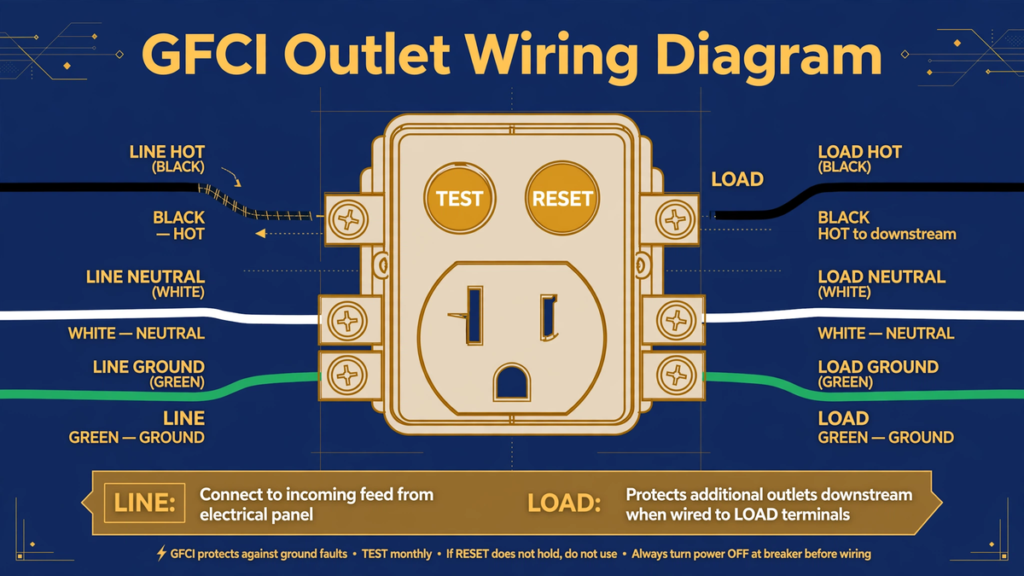
First, switch off the main breaker and confirm the panel is dead with a voltage tester. Run the correct cable from the panel to the outlet box, leaving about 8 inches of wire inside each box. At the panel, connect the black and red wires to the two poles of a double-pole breaker, the white wire to the neutral bar, and the green or bare wire to the ground bar. At the receptacle, connect black to X, red to Y, white to W and green to G, tighten each screw to the torque marked on the device, usually 20 to 25 inch-pounds, fit the cover, switch the breaker on, and test the outlet with a multimeter: you should read 240 volts hot to hot and 120 volts hot to neutral.
What Are NEMA 6-30, 14-30 and 14-50 Outlets?
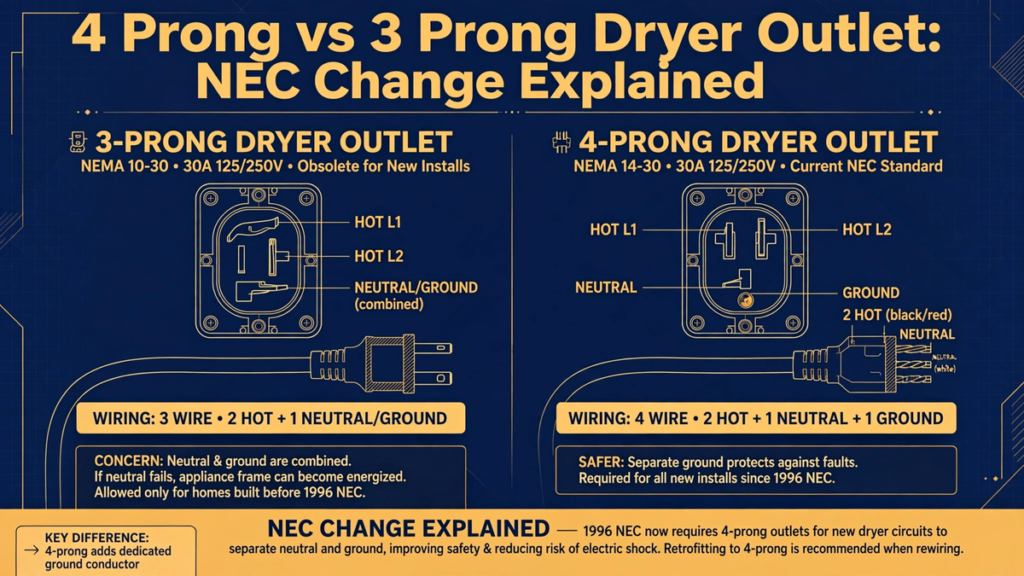
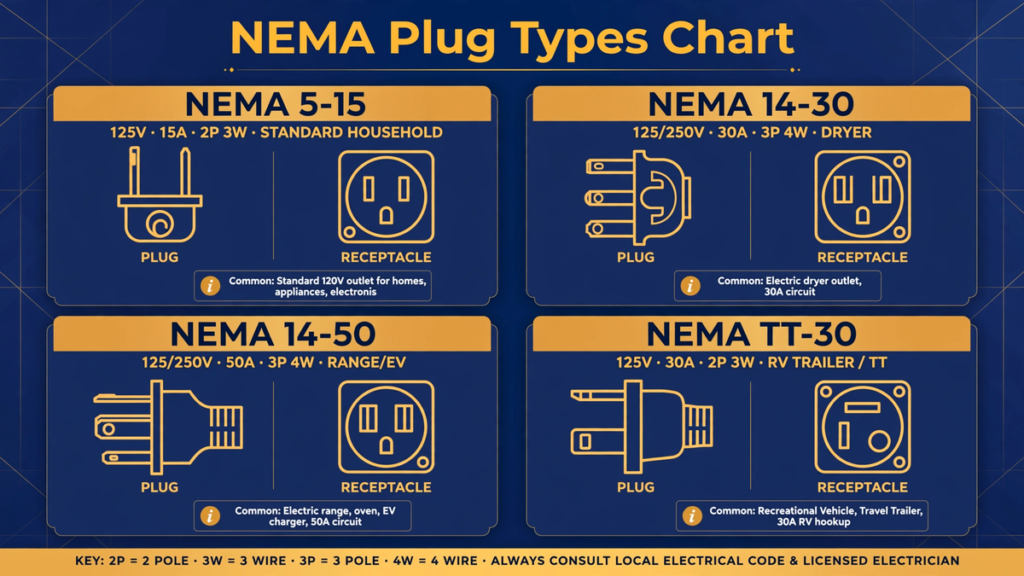
NEMA numbers describe the receptacle shape, so a plug only fits the outlet it was made for. NEMA 6-30 and 6-50 have two hots and a ground but no neutral, and suit welders and some air conditioners. NEMA 14-30 and 14-50 add a neutral, so they can feed both 240 volts for heating and 120 volts for timers, lights and controls in a dryer or range. New installations must use 4-wire NEMA 14 outlets; 3-wire NEMA 10 outlets are only allowed in existing homes and are no longer installed.
What Safety Rules Apply to 220V Outlets?
A 240-volt circuit carries enough energy to kill, so never work in a live panel. Use a double-pole breaker that disconnects both hot wires at once, never two single-pole breakers tied together. Torque terminals to the device rating, use a listed receptacle and box, fit a GFCI breaker where the NEC requires it, such as for outlets in garages and outdoors, and get a permit and inspection. If the panel is full, old or has no spare double-pole space, call a licensed electrician.
Frequently Asked Questions
Can I Replace a 120V Outlet With a 220V Outlet?
Not by swapping the receptacle. A 120V circuit has one hot, a neutral and a ground, while a 220V circuit needs two hots and a double-pole breaker. You must run new cable with black and red hots, fit a double-pole breaker and a listed 240V receptacle, and have it inspected. A 120V appliance plugged into 240V will be destroyed.
Why Does a 220V Outlet Need 3 or 4 Wires?
A 3-wire 240V circuit has two hot wires and a ground, which is enough for a pure 240V load such as a welder. A 4-wire circuit adds a white neutral, so the appliance can also use 120V for its timer, lights and controls. Modern NEC rules require a 4-wire circuit for dryers and ranges; the older 3-wire NEMA 10 circuit is not installed in new work.
What Wire Size Do I Need for a 50-Amp 220V Outlet?
Use 6 AWG copper wire for a 50-amp 240V circuit, with a 50-amp double-pole breaker and a NEMA 14-50 or 6-50 receptacle to match the load. For a continuous load such as an EV charger, the NEC requires the circuit to be sized at 125 percent of the load, so a 40-amp charger needs a 50-amp circuit. If the run is longer than 100 feet, check voltage drop and consider a larger wire.
Can I Use a 220V Outlet for an EV Charger?
Yes. A 240V, 50-amp NEMA 14-50 outlet is the most common plug-in Level 2 EV charger connection in the United States. It adds about 25 miles of range per hour on a 40-amp charger, compared with about 4 miles per hour on a 120V outlet. The circuit must be dedicated, use 6 AWG copper wire, and have GFCI protection if it is in a garage or outdoors.
Do I Need a Permit to Wire a 220V Outlet?
Yes, in most US jurisdictions a new 240V circuit needs an electrical permit and an inspection, because it adds load to the panel and runs new wiring. Permits usually cost 50 to 250 US dollars. A licensed electrician usually pulls the permit, and the inspector checks wire size, breaker size, torque and GFCI protection before the outlet is used.
Conclusion
A 220V outlet is a simple circuit when you match every part: two hot wires, the right breaker and wire size, a listed NEMA receptacle, and a solid ground. Check the appliance nameplate, torque the terminals, test hot-to-hot and hot-to-neutral voltages, and have the work inspected before you plug in a dryer, range or EV charger. For related reading, see our guide to 120V vs 240V and our guide to electrical panel design. For the official rules, see the National Electrical Code, NFPA 70.