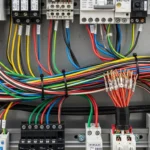

Imagine a newly constructed house where the electrical wiring has just been completed. Lights, switches, sockets, and circuit breakers are installed, and everything seems ready to use. However, before electricity is turned on, a professional electrician carefully checks every wire, connection, and safety device. This process is called electrical inspection.
Electrical systems power almost every part of modern life. From homes and offices to factories and hospitals, reliable electricity is essential for safety and productivity. However, poorly installed or damaged electrical systems can cause serious problems such as electric shocks, equipment failure, or even fires.
This is why electrical inspection is a critical part of electrical engineering and maintenance. It ensures that electrical installations meet safety standards and operate correctly.
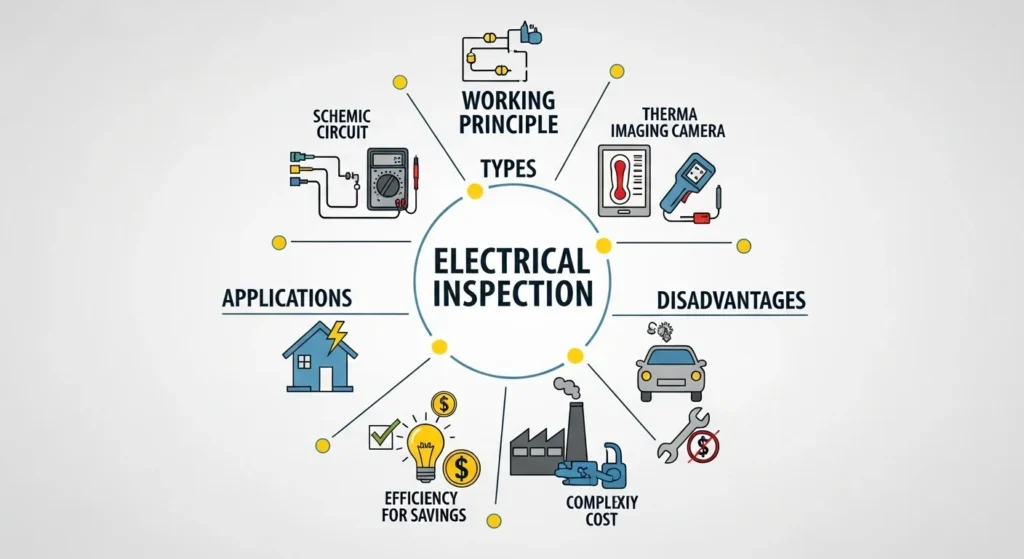
In this article, you will learn what electrical inspection is, the electrical inspection working principle, different types of inspections, important components involved, and real-world electrical inspection applications. The goal is to explain the concept in simple language so that students, technicians, and beginners can understand it clearly.
2. What is Electrical Inspection?
Definition
Electrical inspection is the process of examining electrical systems, equipment, wiring, and components to ensure they are safe, properly installed, and functioning correctly.
It helps identify faults, hazards, and violations of electrical standards before they cause serious problems.
Simple Explanation
In simple terms, electrical inspection means checking electrical systems carefully to make sure they are safe and working properly.
Inspectors verify that:
- Wiring is correctly connected
- Electrical devices are functioning properly
- Safety standards are followed
Practical Example
Before a new building receives electrical power from the utility company, an electrical inspector checks the wiring system, circuit breakers, earthing system, and load capacity.
If everything meets safety requirements, the system is approved for operation.
3. Electrical Inspection Working Principle
The electrical inspection working principle is based on identifying electrical faults, unsafe conditions, and improper installations through systematic examination and testing.
Step-by-Step Process
- Visual Inspection
The inspector first checks electrical components visually.
Examples include:
- Loose wires
- Damaged insulation
- Incorrect wiring connections
- Testing Electrical Equipment
Special tools are used to test electrical parameters such as:
- Voltage
- Current
- Resistance
- Insulation quality
- Verification of Safety Standards
Inspectors confirm that the electrical system follows standard safety codes and regulations.
- Identifying Potential Hazards
Possible dangers like overloads, short circuits, and poor grounding are identified.
- Documentation and Reporting
Finally, the inspector prepares a report that lists problems and recommended corrections.
Simple Analogy
Electrical inspection is similar to a medical check-up for electrical systems. Just like doctors check the human body to detect health issues early, inspectors check electrical systems to prevent accidents.
4. Types of Electrical Inspection
Electrical inspection can be classified into different types depending on the situation.
Initial Electrical Inspection: Importance, Procedure, and Safety Guidelines
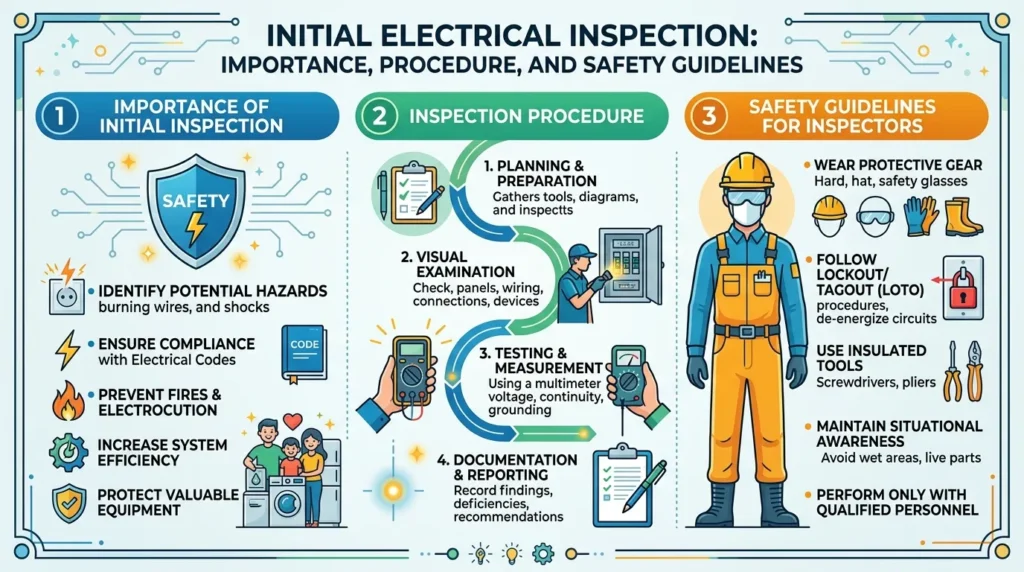
Initial electrical inspection is the first and most important step in ensuring the safe operation of any electrical system, equipment, or generator before it is put into use. This inspection helps identify potential faults, loose connections, damaged components, or unsafe wiring conditions that could lead to equipment failure, electrical shock, or fire hazards. It is commonly performed by qualified electricians or technicians before commissioning new installations, after maintenance work, or before regular operation of electrical systems. A proper initial inspection ensures that the system meets safety standards and is ready for reliable performance.
The procedure of initial electrical inspection involves a systematic check of all electrical components and connections. First, the technician visually examines the equipment for any signs of damage, such as cracked insulation, burnt wires, loose terminals, or corrosion. Next, all wiring connections are checked to ensure they are tight, properly insulated, and correctly installed according to the wiring diagram. The grounding or earthing system is also inspected to confirm that it provides a safe path for fault current, reducing the risk of electric shock. In generators and electrical systems, control panels, switches, circuit breakers, and protective devices are carefully tested to ensure they are functioning correctly.
After the visual inspection, basic electrical testing is performed using measuring instruments such as a multimeter or insulation tester. These tests help verify voltage levels, continuity of circuits, and insulation resistance. Any abnormal readings indicate potential faults that must be corrected before the system is energized. In some cases, load testing may also be performed to ensure the system can handle the expected electrical demand without overheating or voltage fluctuations.
Safety is a key focus during initial electrical inspection. Technicians must ensure that all power sources are disconnected before inspection begins and use proper personal protective equipment (PPE) such as insulated gloves and safety shoes. Warning signs should be displayed to prevent accidental energizing of the system during inspection. Following standard safety procedures helps reduce the risk of accidents and ensures a controlled working environment.
The importance of initial electrical inspection cannot be overstated, as it helps prevent equipment damage, improves system reliability, and ensures compliance with electrical safety standards. It also extends the lifespan of electrical equipment by identifying issues early and allowing timely corrective action. In industries, construction sites, and residential installations, this inspection plays a vital role in maintaining safe and efficient electrical operations.
Overall, initial electrical inspection is an essential safety practice that ensures electrical systems are properly installed, fully functional, and safe for operation.
This inspection is performed when a new electrical installation is completed.
Purpose:
- Verify correct installation
- Ensure compliance with safety standards
- Approve electrical connection
Routine Electrical Inspection: Importance, Procedure, and Safety Practices
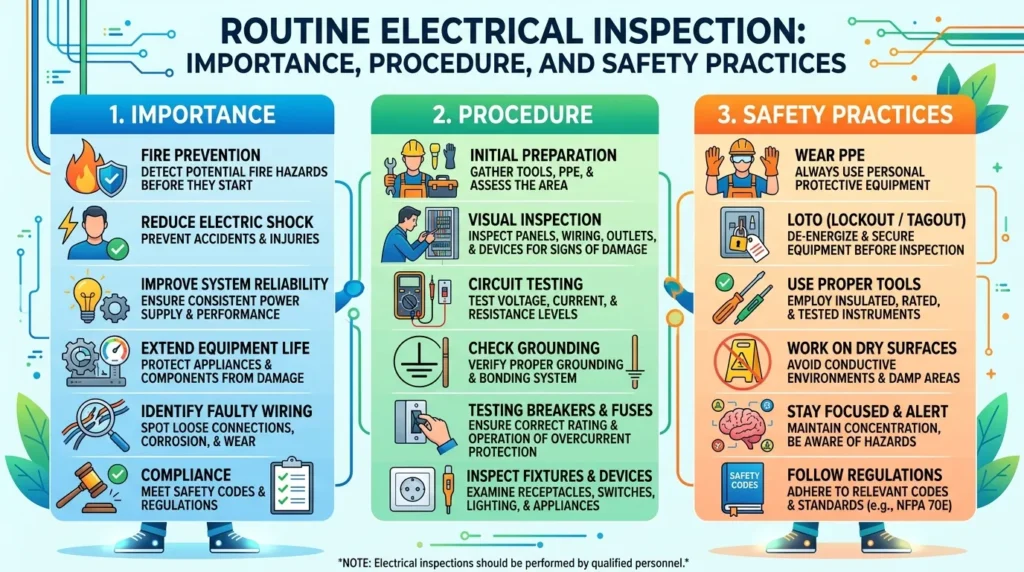
Routine electrical inspection is a scheduled and systematic examination of electrical systems, equipment, and installations to ensure they continue to operate safely, efficiently, and without faults. Unlike initial inspection, which is performed before commissioning, routine inspection is carried out regularly during the operational life of the system. It helps detect wear and tear, hidden faults, loose connections, overheating issues, and other electrical problems before they develop into serious hazards or cause system failure.
The main purpose of routine electrical inspection is to maintain long-term safety and reliability. Over time, electrical systems are exposed to continuous load, environmental conditions, vibration, and aging of components. These factors can lead to insulation breakdown, corrosion, or loosening of terminals. Regular inspection ensures that such issues are identified early and corrected promptly, reducing the risk of electrical shocks, fire hazards, and unexpected breakdowns.
The procedure of routine electrical inspection involves several important steps. First, a visual inspection is carried out to check for damaged cables, burnt marks, loose wiring, and signs of overheating around switches, sockets, control panels, and distribution boards. Next, electrical connections are tested to ensure tightness and proper contact. Protective devices such as circuit breakers, fuses, relays, and overload protection systems are checked to confirm they are functioning correctly.
In addition to visual checks, electrical testing is performed using instruments such as multimeters, clamp meters, and insulation resistance testers. These tools help measure voltage levels, current flow, continuity, and insulation strength. Any abnormal readings indicate potential issues that must be repaired immediately. In industrial and commercial systems, load testing may also be conducted to ensure the system can safely handle operational demands.
Safety is a critical part of routine electrical inspection. All inspections should be carried out after properly isolating the power supply. Technicians must use personal protective equipment (PPE) such as insulated gloves, safety helmets, and protective footwear. Clear warning signs should be displayed to prevent accidental energizing of circuits during inspection work. Following proper safety protocols reduces risks and ensures a safe working environment.
Routine electrical inspection plays a key role in preventing unexpected failures, improving system efficiency, and extending the lifespan of electrical equipment. It also helps reduce maintenance costs by identifying minor issues before they become major problems. In homes, industries, and commercial facilities, regular inspections are essential for maintaining uninterrupted and safe electrical operations.
Overall, routine electrical inspection is a vital maintenance practice that ensures electrical systems remain safe, reliable, and efficient throughout their service life.
Routine inspections are performed periodically to maintain system safety.
Purpose:
- Detect wear and damage
- Prevent electrical faults
- Ensure long-term system reliability
Special Electrical Inspection: Purpose, Procedure, and Importance
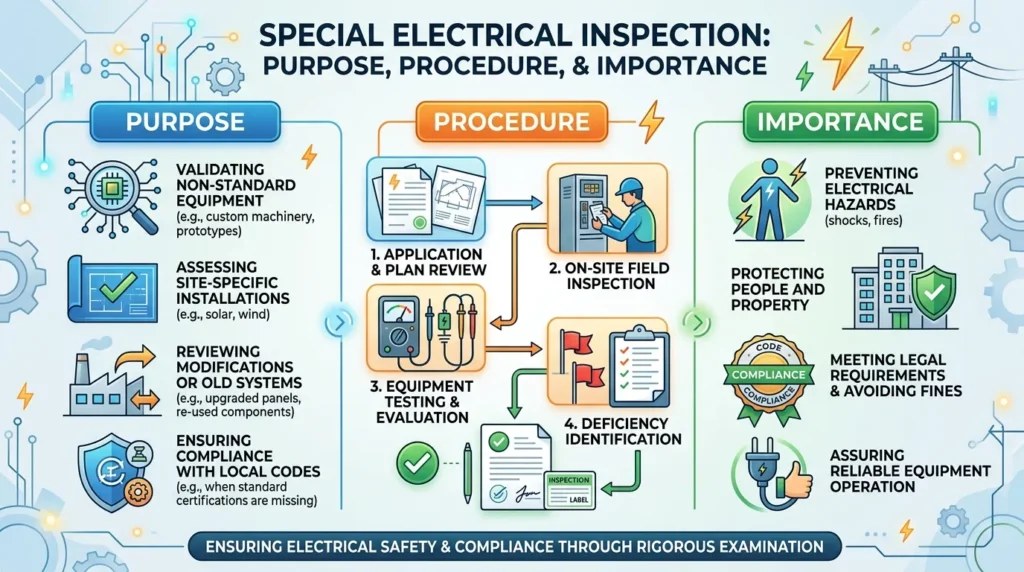
Special electrical inspection is a detailed and targeted examination of electrical systems carried out under specific conditions that require extra attention beyond routine or initial inspections. It is usually performed after unusual events such as electrical faults, system failures, overload incidents, short circuits, equipment modifications, or environmental damage like flooding or fire. The main purpose of a special inspection is to identify hidden damage, ensure system safety, and verify that electrical installations are still fit for safe operation.
Unlike routine inspections, special electrical inspections focus on identifying critical issues that may not be visible during normal checks. These inspections are often required when electrical equipment shows abnormal behavior such as frequent tripping of circuit breakers, voltage fluctuations, overheating, unusual noises, or burning smells. They are also conducted after major maintenance work, system upgrades, or installation of new electrical equipment to ensure proper integration and safe functioning.
The procedure of special electrical inspection involves a thorough and systematic evaluation of the entire electrical system. It begins with a detailed visual examination of all components, including wiring, control panels, distribution boards, switches, and protective devices. Technicians carefully look for signs of damage such as burnt insulation, corrosion, loose connections, and physical wear. After the visual inspection, advanced electrical testing is performed using specialized instruments such as insulation resistance testers, earth continuity testers, thermal scanners, and power quality analyzers.
Thermal imaging is often used during special inspections to detect overheating components that are not visible to the naked eye. Load testing may also be carried out to evaluate system performance under actual operating conditions. In some cases, fault analysis is performed to identify the root cause of previous failures and to prevent recurrence. All findings are carefully documented to support corrective maintenance and future reference.
Safety is extremely important during special electrical inspections due to the increased risk of existing faults. All systems must be properly isolated before inspection begins, and technicians must follow strict safety procedures. Personal protective equipment (PPE) such as insulated gloves, arc flash protection gear, safety helmets, and protective footwear must be used at all times. Clear warning signs and lockout-tagout (LOTO) procedures are also implemented to prevent accidental energization of circuits.
Special electrical inspections play a crucial role in restoring system reliability, preventing major breakdowns, and ensuring compliance with electrical safety standards. They help detect serious hidden faults early, reduce the risk of electrical hazards, and extend the operational life of equipment. In industrial plants, commercial buildings, and critical infrastructure systems, these inspections are essential for maintaining continuous and safe electrical operation.
Overall, special electrical inspection is a highly important diagnostic process that ensures electrical systems remain safe, stable, and fully functional after abnormal events or major changes.
This inspection is conducted after specific events such as:
- Electrical accidents
- System upgrades
- Equipment failures
Its goal is to identify the cause of problems and prevent future incidents.
Preventive Electrical Inspection: Purpose, Process, and Importance
Preventive electrical inspection is a proactive maintenance approach designed to identify and eliminate potential electrical problems before they lead to equipment failure, safety hazards, or system downtime. Unlike corrective or emergency inspections, preventive inspection is performed regularly as part of a planned maintenance schedule. Its main goal is to ensure that electrical systems remain safe, efficient, and reliable throughout their operational life.
The primary purpose of preventive electrical inspection is to reduce the risk of unexpected breakdowns and electrical accidents. Electrical systems naturally degrade over time due to continuous usage, heat generation, vibration, dust accumulation, and environmental exposure. These factors can cause loose connections, insulation deterioration, overheating, and component wear. Preventive inspection helps detect these early warning signs so that corrective action can be taken before serious damage occurs.
The procedure of preventive electrical inspection involves a detailed and systematic evaluation of all electrical components. It begins with a visual inspection of wiring, switches, sockets, control panels, circuit breakers, and distribution boards. Technicians check for signs of wear such as discoloration, burnt marks, corrosion, loose terminals, or damaged insulation. After visual checks, electrical testing is performed using tools like multimeters, clamp meters, insulation resistance testers, and earth resistance testers to measure voltage, current, continuity, and insulation quality.
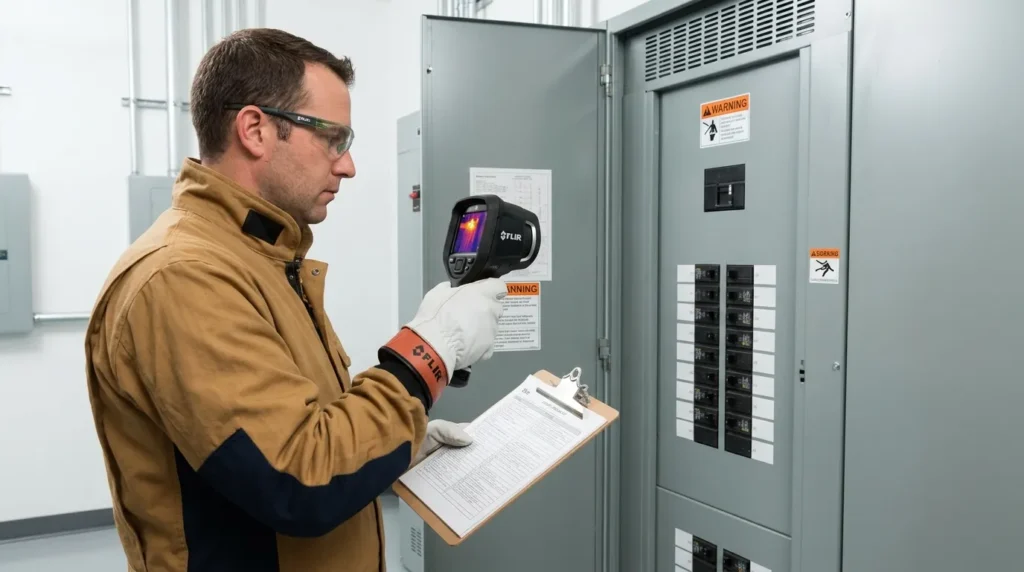
Thermal scanning is often used in preventive inspection to detect overheating components that may indicate overloaded circuits or poor connections. Load analysis is also conducted to ensure that electrical systems are operating within safe limits. If any irregularities are found, corrective maintenance is performed immediately to prevent future failures.
Safety is a key part of preventive electrical inspection. Before starting the inspection, power supply must be properly isolated, and lockout-tagout (LOTO) procedures should be followed to prevent accidental energization. Technicians must wear appropriate personal protective equipment (PPE) such as insulated gloves, safety helmets, and protective footwear. These precautions help minimize the risk of electrical shock and ensure a safe working environment.
Preventive electrical inspection plays a vital role in improving system reliability and extending the lifespan of electrical equipment. It helps reduce maintenance costs by addressing minor issues before they become major problems. It also improves energy efficiency by ensuring that electrical systems operate under optimal conditions.
Overall, preventive electrical inspection is an essential maintenance strategy that ensures continuous safety, reliability, and performance of electrical systems in residential, commercial, and industrial environments.
Preventive inspection focuses on identifying potential faults before they cause system failure.
It is commonly used in industries where electrical reliability is critical.
5. Electrical installation tools
Electrical installation tools are essential equipment used by electricians, technicians, and electrical engineers to safely install, repair, and maintain electrical systems in homes, buildings, and industries. These tools help professionals perform tasks such as cutting wires, stripping insulation, tightening connections, testing circuits, and installing electrical components. Without proper tools, electrical work would be unsafe, inefficient, and prone to mistakes. One of the most basic tools used in electrical installation is the screwdriver, which is used to tighten or loosen screws in switches, sockets, electrical panels, and circuit breakers. Electricians often use insulated screwdrivers to protect themselves from electric shocks while working on live circuits. Another very important tool is pliers, which are used for gripping, bending, cutting, and twisting wires. Different types of pliers are used in electrical work, such as combination pliers, long-nose pliers, and side-cutting pliers. Combination pliers are useful for holding and bending wires, while long-nose pliers are designed for working in tight spaces where fingers cannot reach easily. Side-cutting pliers are mainly used to cut wires cleanly and quickly. A wire stripper is another important electrical tool used to remove the insulation from electrical wires without damaging the metal conductor inside. Proper stripping of wires is necessary to create secure electrical connections. Electricians also use a voltage tester to check whether an electrical circuit is live or not before starting work. This tool is very important for safety because it helps prevent accidental electric shocks. A more advanced testing tool is the multimeter, which can measure voltage, current, and resistance in an electrical circuit. Multimeters are widely used for troubleshooting electrical faults and ensuring that electrical systems are working properly. Another commonly used tool in electrical installations is the measuring tape, which helps electricians measure distances accurately when installing cables, conduits, and electrical fixtures. Accurate measurements are important to ensure that wiring systems are installed neatly and according to design plans. Electricians also use a hammer to fix nails, clips, or supports for cables and conduits. In many installations, wires are protected by conduits, so electricians use tools like a conduit bender to bend metal or PVC conduits into the required shape without damaging them. A drill machine is another important tool used to create holes in walls, ceilings, or panels for installing electrical boxes, switches, and cable routes. In modern electrical work, cordless drills are very popular because they are portable and easy to use. A cable cutter is specifically designed to cut thick electrical cables smoothly without damaging the internal conductors. For pulling wires through conduits or pipes, electricians use a tool called a fish tape or cable puller, which helps guide wires through long or curved conduit paths. Safety tools are also an important part of electrical installations. Electricians wear insulated gloves, safety glasses, and sometimes insulated tools to protect themselves from electrical hazards. A ladder is also frequently used when installing electrical equipment on ceilings or high walls. In addition, electricians may use crimping tools to attach connectors or terminals to the ends of wires. Crimping creates strong and reliable electrical connections, which are essential for the safe operation of electrical systems. Modern electrical installation also includes the use of digital testing devices, which provide more accurate readings and help diagnose electrical problems quickly. All these tools play a vital role in ensuring that electrical systems are installed correctly, safely, and efficiently. Proper use of electrical installation tools not only improves the quality of work but also reduces the risk of accidents and equipment damage. Therefore, electricians must understand the purpose and correct usage of each tool before performing any electrical installation task. With the right tools and proper knowledge, electrical professionals can complete installations faster, maintain high safety standards, and ensure reliable electrical systems in residential, commercial, and industrial environments.
Electrical Testing Instruments and Inspection Checklist
Electrical testing instruments play a vital role in diagnosing faults, ensuring safety, and maintaining the reliability of electrical systems. These tools help technicians measure key electrical parameters, detect hidden issues, and verify proper system performance during inspections.
Multimeter
A multimeter is one of the most commonly used electrical testing devices. It is designed to measure essential electrical values such as:
- Voltage (AC/DC)
- Current (AC/DC)
- Resistance
In addition to these functions, many modern multimeters also test continuity and diode functionality. The multimeter helps electricians quickly identify faults such as broken circuits, short circuits, and incorrect voltage levels. It is an essential tool for both basic troubleshooting and advanced electrical diagnostics.
Insulation Resistance Tester
An insulation resistance tester, also known as a megger, is used to evaluate the quality of insulation in wires, cables, motors, and electrical equipment. Good insulation is critical for preventing leakage current and ensuring electrical safety. If insulation is weak or damaged, it can lead to short circuits, equipment failure, or even fire hazards. This tester applies a high voltage to measure insulation resistance and detect any breakdown in protective layers.
Circuit Tester
A circuit tester is a simple but effective tool used to determine whether an electrical circuit is live and properly connected. It helps verify the presence of voltage and continuity in wiring systems. Circuit testers are commonly used during installation and repair work to ensure that power is flowing correctly before connecting electrical devices or equipment.
Thermal Imaging Camera
A thermal imaging camera is an advanced diagnostic tool used to detect temperature variations in electrical systems. It identifies abnormal heat patterns that may indicate loose connections, overloaded circuits, or failing components. By detecting overheating early, thermal imaging helps prevent electrical failures, equipment damage, and fire risks. It is especially useful in industrial and commercial electrical inspections.
Inspection Checklist
An inspection checklist is an important documentation tool used by electricians and inspectors to ensure a systematic and complete evaluation of electrical systems. It helps maintain consistency and ensures that no component is overlooked during inspection. A typical checklist includes verification of wiring condition, grounding systems, protective devices, insulation levels, load distribution, and overall system safety. Using a checklist improves accuracy, accountability, and compliance with safety standards.
6. Advantages of Electrical Inspection
Electrical inspection provides many practical benefits.
Advantages include:
- Improves electrical safety
- Reduces risk of electrical fires
- Prevents equipment damage
- Detects faults early
- Improves system reliability
- Ensures compliance with electrical codes
- Protects human life and property
Regular inspections are essential for maintaining safe electrical systems.
7. Disadvantages / Limitations
Although electrical inspection is beneficial, it also has some limitations.
Electrical inspection disadvantages and limitations include:
- Requires skilled professionals
- Inspection tools can be expensive
- Some hidden wiring problems are difficult to detect
- Inspection may temporarily interrupt electrical operations
Despite these challenges, inspections remain essential for electrical safety.
8. Electrical Inspection Applications
Electrical inspection is essential across all sectors where electrical systems are used. It helps ensure safety, improve performance, and prevent failures by regularly checking wiring, equipment, and power distribution systems. From homes to advanced industrial facilities, electrical inspection plays a key role in maintaining reliable and hazard-free electrical operations.
Home Applications
In residential environments, electrical inspection is used to ensure the safety and proper functioning of household electrical systems. It includes:
- House wiring inspection to detect damaged or aging cables
- Electrical panel inspection for safe load distribution
- Appliance safety testing to prevent electric shock or short circuits
Regular home inspections help reduce the risk of electrical fires and ensure safe usage of domestic appliances.
Industrial Applications
In industrial settings, electrical inspection is critical due to the complexity and high load of electrical systems. It includes:
- Factory electrical system inspection for continuous operation
- Heavy machinery electrical checks to prevent breakdowns
- Power distribution panel inspection to ensure balanced load handling
These inspections help minimize downtime, improve efficiency, and enhance workplace safety in industrial environments.
Commercial Applications
Commercial buildings rely heavily on stable electrical systems for daily operations. Electrical inspection in this sector includes:
- Office building electrical safety checks
- Shopping mall lighting and power system inspection
- Hospital electrical system monitoring for critical equipment safety
In commercial environments, inspections ensure uninterrupted service and protect both equipment and occupants.
Modern Technology Applications
With technological advancements, electrical inspection is now widely used in modern and high-tech infrastructure, such as:
- Data centers for ensuring continuous power supply and system reliability
- Renewable energy systems like solar and wind power installations
- Smart buildings with automated electrical control systems
These advanced applications highlight the growing importance of electrical inspection in maintaining modern energy-efficient and intelligent infrastructure.
Overall, electrical inspection is a vital process that supports safety, reliability, and efficiency across residential, industrial, commercial, and modern technological systems.
9. Comparison Section
Difference Between Electrical Inspection and Electrical Testing
| Feature | Electrical Inspection | Electrical Testing |
|---|---|---|
| Purpose | Visual and safety check | Measurement of electrical parameters |
| Method | Observation and verification | Use of testing instruments |
| Scope | Overall system evaluation | Specific electrical performance check |
| Example | Checking wiring installation | Measuring insulation resistance |
Understanding the difference between electrical inspection and electrical testing helps technicians perform proper maintenance.
10. Electrical Inspection Selection Guide
Selecting the right electrical inspection method is essential for ensuring accurate fault detection, system safety, and long-term reliability. Different electrical systems require different inspection approaches depending on their complexity, usage, and operating conditions. A well-planned inspection strategy helps technicians identify problems early and maintain stable electrical performance.
Tips for Beginners
For beginners, electrical inspection should always start with simple and safe procedures before moving to advanced testing methods. Key guidelines include:
- Start with a visual inspection to identify obvious faults such as damaged wires, loose connections, or burnt components
- Use proper testing instruments like multimeters, insulation testers, and circuit testers for accurate measurements
- Always follow electrical safety standards and procedures such as isolation and lockout-tagout (LOTO)
- Carefully inspect grounding and protection systems to ensure safe fault current flow and proper system protection
Following these basic steps helps beginners build confidence while maintaining safety during inspection work.
Factors to Consider
Before selecting an inspection method, several important factors must be evaluated to ensure effective results:
- System size: Large industrial systems require more detailed and advanced inspection techniques compared to small residential systems
- Equipment type: Sensitive equipment like medical devices or data center systems require specialized inspection methods
- Safety requirements: High-risk environments demand strict safety procedures and advanced diagnostic tools
- Operating environment: Conditions such as heat, moisture, dust, or vibration can affect inspection frequency and methods
These factors help determine the depth and type of inspection required for each electrical system.
Final Note
Proper inspection planning is essential for maintaining electrical system reliability and preventing unexpected failures. By choosing the correct inspection method and following systematic procedures, technicians can improve safety, enhance performance, and extend the lifespan of electrical equipment in all types of environments.
11. Common Problems & Solutions (Electrical Inspection FAQs)
Understanding common questions and issues related to electrical inspection helps improve awareness of safety practices and ensures proper maintenance of electrical systems. Regular inspection plays a key role in preventing faults, improving efficiency, and reducing electrical hazards.
Q1: Why is electrical inspection necessary?
Electrical inspection is necessary to identify hidden faults in wiring, equipment, and electrical systems before they become serious problems. It helps prevent hazards such as short circuits, electric shocks, equipment damage, and fire risks. Regular inspection also ensures that electrical systems operate safely and efficiently according to required standards.
Q2: How often should electrical inspections be performed?
The frequency of electrical inspections depends on the type of system and its usage. Residential electrical systems are typically inspected every few years, especially during renovations or when issues appear. In contrast, industrial and commercial systems require more frequent inspections due to higher loads, continuous operation, and increased safety risks.
Q3: What are common problems found during inspections?
During electrical inspections, several common issues are often identified, including:
- Loose or faulty wiring connections
- Overloaded electrical circuits
- Damaged or deteriorated insulation
- Improper or missing grounding systems
- Worn-out switches, breakers, or sockets
Detecting these issues early helps prevent system failure and improves overall electrical safety.
Q4: Can electrical inspection prevent electrical fires?
Yes, electrical inspection plays a major role in preventing electrical fires. By identifying overheating wires, overloaded circuits, faulty connections, and damaged insulation at an early stage, inspectors can eliminate potential fire hazards before they become dangerous. Preventive maintenance based on inspection results significantly reduces fire risks.
Q5: Who should perform electrical inspections?
Electrical inspections should always be carried out by qualified electricians or certified electrical inspectors. These professionals have the knowledge, tools, and experience required to safely evaluate electrical systems, identify faults accurately, and ensure compliance with electrical safety standards. Improper inspection by untrained individuals can lead to serious safety risks.
12. Future Trends in Electrical Inspection
Electrical inspection is rapidly evolving with the advancement of modern technology. Traditional manual inspection methods are being enhanced and, in some cases, replaced by intelligent systems that improve accuracy, speed, and overall safety. These innovations are transforming how electrical systems are monitored, maintained, and diagnosed in residential, commercial, and industrial environments.
Smart Inspection Systems
Smart inspection systems use advanced sensors and IoT (Internet of Things) technology to continuously monitor electrical parameters such as voltage, current, temperature, and load conditions. These systems can detect abnormalities in real time and alert technicians before serious faults occur. Continuous monitoring reduces the need for manual inspections and improves overall system reliability.
AI-Based Fault Detection
Artificial intelligence (AI) is playing an increasingly important role in electrical inspection. AI-based systems analyze large amounts of electrical data to identify patterns and detect early signs of faults. These systems can predict equipment failure, identify overheating components, and suggest preventive actions. This predictive approach helps reduce downtime and improves maintenance efficiency.
Drone-Based Inspection
Drones are widely used for inspecting large-scale electrical infrastructure such as transmission lines, power towers, and remote installations. They can access difficult or dangerous areas without putting workers at risk. Equipped with high-resolution cameras and thermal imaging sensors, drones provide detailed visual and thermal data that helps identify faults quickly and accurately.
Digital Monitoring Systems
Modern electrical systems are increasingly integrated with digital monitoring platforms and smart grids. These systems allow real-time tracking of electrical performance across entire networks. Operators can monitor load distribution, detect faults instantly, and control electrical systems remotely. This improves efficiency, reduces energy losses, and enhances system stability.
Overall, these future technologies are making electrical inspection more intelligent, efficient, and safer. With continued innovation, electrical systems will become more reliable, predictive, and automated, significantly improving safety and performance standards across all sectors.
13. Conclusion
Electrical inspection is an essential process that ensures electrical systems operate safely and efficiently. It involves examining electrical wiring, equipment, and protective devices to detect faults and prevent hazards. Without proper inspection, electrical systems can develop dangerous problems such as short circuits, overloads, or insulation failures.
In this article, we explained what electrical inspection is, its working principle, types, important components, advantages and disadvantages, and real-world applications. We also discussed the difference between electrical inspection and electrical testing to help beginners understand the concept more clearly.
For electrical students, technicians, and engineers, learning about electrical inspection is an important step toward maintaining safe and reliable electrical installations. Regular inspections protect equipment, prevent accidents, and ensure compliance with safety standards.
By understanding and applying proper inspection practices, electrical professionals can build safer and more efficient electrical systems.