
Imagine walking into your home and switching on the lights. Instantly, the room becomes bright. You plug in a charger, start a fan, or turn on the television, and everything works smoothly. Behind these everyday actions is an essential system known as electrical wiring.
Electrical wiring forms the backbone of any electrical installation. It allows electricity to travel safely from the power source to electrical devices such as lights, fans, appliances, and machines. Without proper wiring, electricity cannot be distributed efficiently or safely.
For electrical students, engineers, technicians, and beginners, understanding electrical wiring is a fundamental step in learning electrical engineering and electrical installation practices. Poor wiring can lead to electrical failures, equipment damage, and even fire hazards.
In this article, you will learn what electrical wiring is, the electrical wiring working principle, different wiring types, major components, advantages and disadvantages, and real-world electrical wiring applications. This guide explains the concept in simple language so beginners can easily understand how electrical wiring systems work in homes, buildings, and industries.
What Is Electrical Wiring?
Definition
Electrical wiring refers to the arrangement of electrical conductors, cables, and associated devices used to distribute electrical power from a source to electrical loads.
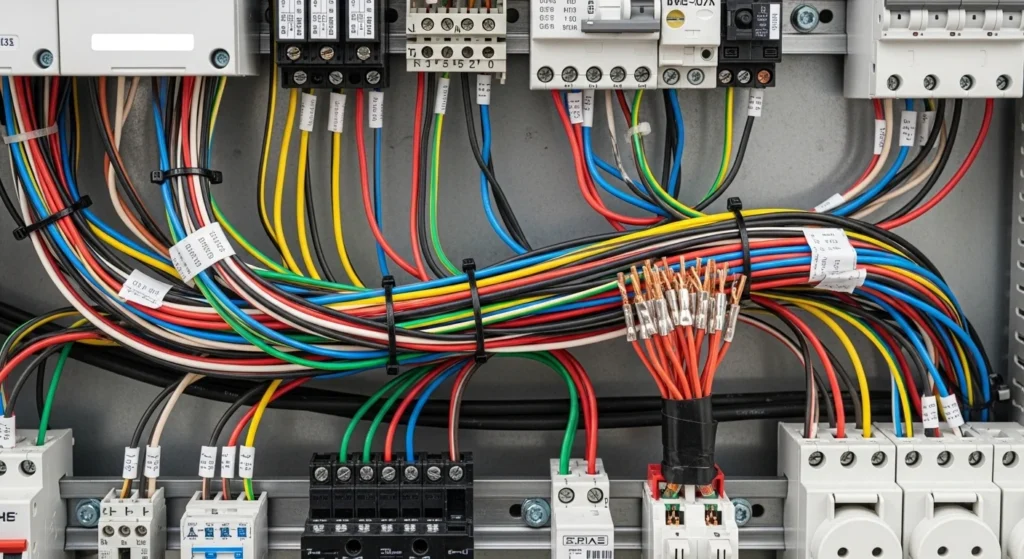
A complete wiring system may include wires or cables, switches, sockets, circuit breakers, distribution boards, grounding conductors, and other protective devices.
The purpose of electrical wiring is to provide controlled and reliable electrical connections between the power source and electrical equipment.
Simple Explanation
In simple words, electrical wiring is the network of wires and electrical components that carries electricity from the power supply to electrical devices such as lights, fans, outlets, motors, and appliances.
A properly designed wiring system allows electrical power to reach different parts of a building while providing appropriate protection against faults and excessive current.
Practical Example
In a house, electricity enters through the main service and reaches the distribution board. From the distribution board, separate circuits supply different rooms and loads.
For example:
- One circuit may supply lighting.
- Another may supply general-purpose outlets.
- A dedicated circuit may supply an air conditioner.
- Another circuit may supply a water heater or other high-power appliance.
Switches, sockets, protective devices, and grounding conductors are installed as part of the overall electrical installation.
Electrical Wiring Working Principle
The electrical wiring working principle is based on providing a controlled path for electric current between the power source and electrical loads.
When an electrical circuit is correctly connected and a load is switched on, a complete circuit allows current to flow through the conductors and operate the connected device.
Step-by-Step Explanation
1. Power Generation
Electrical energy is generated at power stations or produced by other sources such as generators and renewable energy systems.
2. Electricity Transmission and Distribution
Electricity is transmitted and distributed through electrical networks until it reaches homes, commercial buildings, industrial facilities, and other users.
3. Main Electrical Supply
The incoming electrical supply enters the building through the service equipment and reaches the main distribution or electrical panel.
4. Circuit Distribution
The distribution board divides the incoming supply into individual circuits for lighting, sockets, appliances, machinery, and other loads.
5. Electrical Wiring Network
Conductors carry electrical power from the distribution equipment to switches, outlets, lighting points, appliances, and other electrical loads.
6. Load Operation
When a switch or control device completes the appropriate circuit, electrical current flows through the load, allowing it to operate.
7. Protection During Faults
Protective devices such as circuit breakers and fuses are used to disconnect circuits when excessive current or certain fault conditions occur. Conductors must be appropriately selected and protected for the loads they serve.
Simple Analogy
Electrical wiring can be compared to a water distribution system:
- The power source is similar to a water supply.
- Electrical wires are similar to pipes.
- Switches are similar to valves that control flow.
- Electrical loads are similar to equipment that uses the supplied water.
- Protective devices provide a form of protection when abnormal conditions occur.
This analogy helps beginners understand the basic concept, although electricity and water systems operate according to different physical principles.
Types of Electrical Wiring
Electrical wiring can be classified according to the method used to support, protect, and route electrical conductors.
The most commonly discussed wiring methods include cleat wiring, batten wiring, casing and capping wiring, and conduit wiring.
Cleat Wiring
Cleat wiring is a simple wiring method in which insulated conductors are supported on insulating cleats.
It is generally associated with temporary or short-term installations rather than permanent modern building wiring.
Features:
- Simple installation
- Relatively low initial cost
- Easy inspection and modification
- Suitable for temporary wiring applications
Batten Wiring
In batten wiring, insulated cables are fixed to wooden or other suitable battens using clips or similar fittings.
Features:
- Simple installation
- Relatively neat appearance
- Easy access for maintenance
- Suitable for certain small or traditional installations
Casing and Capping Wiring
In casing and capping wiring, electrical wires are placed inside a casing and covered with a protective cap.
The casing provides an organized route for the conductors, while the cap helps protect them from external contact and physical damage.
Features:
- Organized wiring layout
- Better mechanical protection than exposed wiring
- Easy inspection and maintenance
- Can be used in certain residential and commercial installations
Conduit Wiring
Conduit wiring is a widely used wiring method in which electrical conductors are installed inside protective conduits.
Conduits may be made from materials such as PVC or metal, depending on the application and installation requirements.
There are two common arrangements:
Surface Conduit Wiring
In surface conduit wiring, the conduit is installed on the visible surface of a wall, ceiling, or other structure.
Advantages include:
- Easier access for inspection
- Easier modification
- Convenient maintenance
Concealed Conduit Wiring
In concealed conduit wiring, conduits are installed within walls, ceilings, or other building structures.
Advantages include:
- Clean appearance
- Better protection from physical contact
- Suitable for many modern building installations
The appropriate wiring method depends on the building structure, environment, electrical load, local requirements, and applicable safety standards.
Main Components of Electrical Wiring
A complete electrical wiring system contains several components that work together to distribute and control electrical power.
Electrical Wires and Cables
Electrical wires and cables provide conductive paths for electrical current.
They are selected according to factors such as:
- Electrical load
- Current-carrying capacity
- Voltage
- Installation method
- Environmental conditions
- Applicable electrical requirements
Conductors must have sufficient capacity for the intended load and must be properly protected against overcurrent.
Switches
Switches control the connection of electrical loads.
They are commonly used to:
- Turn lights on and off
- Control appliances
- Operate electrical equipment
- Control different circuits
Circuit Breakers
Circuit breakers are protective devices designed to interrupt electrical circuits when specified abnormal current conditions occur.
They help protect conductors and equipment from excessive current and short-circuit conditions.
Proper overcurrent protection is an important part of wiring design.
Distribution Board
A distribution board, also called an electrical panel in many installations, receives electrical power and distributes it to individual circuits.
It may contain:
- Circuit breakers
- Main switching devices
- Busbars
- Neutral connections
- Grounding connections
- Other protective equipment
Electrical Sockets
Electrical sockets, also called receptacles or outlets, provide connection points for electrical appliances and equipment.
They must be correctly rated and installed according to the electrical system and applicable requirements.
Earthing and Grounding
Earthing and grounding are important parts of electrical safety.
A grounding system provides a low-resistance path for fault current and helps reduce dangerous voltage conditions. Proper equipment grounding can also provide a path that allows protective devices to operate when faults occur.
Grounding paths should be properly installed and maintained. A broken or missing grounding path can increase the risk of electric shock and other electrical hazards.
Advantages of Electrical Wiring
A properly designed and installed electrical wiring system provides several benefits.
Electrical wiring advantages include:
- Safe distribution of electrical power
- Reliable operation of electrical equipment
- Organized electrical installation
- Better electrical safety
- Easier maintenance and troubleshooting
- Support for modern electrical appliances
- Flexible distribution of power to different circuits
Proper design and installation are essential because wiring performance depends on correct conductor sizing, protection, connections, and installation methods.
Disadvantages and Limitations of Electrical Wiring
Although electrical wiring is essential, it also has some limitations.
Electrical wiring disadvantages and limitations include:
- Improper installation can create electrical hazards
- Wiring requires inspection and maintenance
- Damaged insulation can create leakage or fault conditions
- Large installations can require significant installation costs
- Incorrect wire sizing can cause overheating
- Old or damaged wiring may require replacement
These problems can be reduced through proper design, suitable materials, appropriate protection, regular inspection, and qualified installation practices.
Electrical Wiring Applications
Electrical wiring is used in almost every type of building and electrical infrastructure.
Home Applications
Residential electrical wiring is used for:
- Lighting systems
- Electrical outlets
- Ceiling fans
- Air conditioners
- Refrigerators
- Washing machines
- Water heaters
- Other household appliances
Industrial Applications
Industrial wiring is used for:
- Motors
- Motor control systems
- Industrial machinery
- Control panels
- Production equipment
- Power distribution systems
Industrial installations may require specialized wiring methods, protection systems, and equipment depending on the voltage, load, environment, and applicable standards.
Commercial Applications
Commercial electrical wiring is used in:
- Offices
- Shopping centers
- Schools
- Hospitals
- Hotels
- Warehouses
- Other commercial buildings
Modern Technology Applications
Modern electrical wiring also supports:
- Smart homes
- Data centers
- Renewable energy systems
- Electric vehicle charging systems
- Building automation
- Energy management systems
These applications show why electrical wiring remains an important part of modern infrastructure.
Electrical Wiring vs Electrical Installation
Electrical wiring and electrical installation are related terms, but they do not mean exactly the same thing.
Electrical wiring mainly refers to the conductors, cables, and associated connections used to distribute electrical power.
Electrical installation is a broader term that can include wiring as well as distribution equipment, switches, sockets, protective devices, grounding systems, control equipment, and other electrical components installed in a building or facility.
For example, installing a complete electrical system in a house may involve:
- Main electrical panel
- Circuit breakers
- Wiring and cables
- Switches
- Electrical outlets
- Lighting points
- Grounding system
- Protective devices
Therefore, electrical wiring can be considered an important part of a complete electrical installation.
Electrical Wiring vs Electrical Cabling
| Feature | Electrical Wiring | Electrical Cabling |
|---|---|---|
| Definition | Arrangement of conductors and connections used in an electrical system | One or more insulated conductors assembled as a cable |
| Main purpose | Distribute and connect electrical power | Carry electrical power or signals |
| Common use | Building electrical systems | Power, communication, control, and data systems |
| Example | House wiring | Power cable or network cable |
| Main focus | Complete electrical connections and circuits | The cable or group of conductors |
The exact meaning of wiring and cabling can vary by industry and context, but both are important parts of electrical systems.
Electrical Wiring Selection Guide
Selecting the correct wiring method and conductor is important for electrical safety and reliable operation.
Tips for Beginners
- Determine the expected electrical load.
- Select conductors with suitable current-carrying capacity.
- Use appropriate insulation for the installation environment.
- Choose suitable wiring methods for the building.
- Install appropriate overcurrent protection.
- Provide proper grounding where required.
- Follow applicable electrical codes and safety requirements.
- Use qualified professionals for electrical work that requires specialized knowledge.
Electrical conductors and equipment should be protected according to their ability to safely carry the expected current.
Important Factors
Before selecting a wiring system, consider:
- Electrical load
- Voltage level
- Current requirements
- Building structure
- Installation location
- Temperature
- Moisture
- Mechanical protection
- Maintenance requirements
- Applicable electrical standards
Choosing the correct wiring method at the design stage can improve safety, reliability, and long-term maintenance.
Common Electrical Wiring Problems and Solutions
Electrical wiring can develop problems because of overloading, loose connections, damaged insulation, incorrect installation, environmental conditions, or aging components.
Why Do Electrical Wires Overheat?
Electrical wires can overheat when they carry more current than they are designed to handle or when poor connections create excessive resistance.
Possible solutions:
- Check the circuit load.
- Use conductors with appropriate current capacity.
- Avoid overloading outlets and circuits.
- Inspect connections for signs of damage or overheating.
- Ensure appropriate overcurrent protection is installed.
What Causes Short Circuits in Wiring?
A short circuit can occur when conductors that should remain electrically separated come into unintended contact or when insulation fails.
Possible solutions:
- Inspect damaged wiring.
- Replace defective insulation or conductors.
- Check connections and terminals.
- Identify and correct the underlying fault before restoring the circuit.
Why Do Lights Flicker?
Flickering lights can have several causes, including loose connections, defective lamps, incompatible equipment, voltage fluctuations, or problems elsewhere in the electrical system.
Possible solution:
Have the circuit inspected to identify the actual cause rather than simply replacing the light source.
How Can Wiring Problems Be Prevented?
Common preventive measures include:
- Regular visual inspection
- Proper grounding
- Correct conductor sizing
- Suitable circuit protection
- Good-quality electrical components
- Properly secured connections
- Avoiding circuit overload
- Prompt replacement of damaged components
Electrical systems should be inspected and maintained by appropriately qualified persons when specialized electrical work is required.
Electrical Wiring Safety
Electrical wiring must be designed, installed, and maintained carefully because faults can result in shock, burns, fire, equipment damage, or other hazards.
Important safety practices include:
- Use correctly rated conductors and equipment.
- Provide appropriate overcurrent protection.
- Maintain a continuous and effective grounding path.
- Do not use damaged electrical cables or equipment.
- Avoid overloading circuits.
- Ensure electrical connections are secure.
- Keep electrical equipment away from unsuitable environmental conditions.
- Follow applicable electrical codes and regulations.
Grounding is particularly important because a properly designed grounding path can help control fault current and reduce dangerous voltage conditions.
Electrical work involving energized systems should only be performed by appropriately trained and qualified personnel following applicable safety procedures.
Frequently Asked Questions About Electrical Wiring
What Is Electrical Wiring?
Electrical wiring is the arrangement of electrical conductors, cables, and associated components used to distribute electrical power to different loads and equipment.
What Are the Main Types of Electrical Wiring?
Commonly discussed wiring methods include cleat wiring, batten wiring, casing and capping wiring, surface conduit wiring, and concealed conduit wiring.
What Is the Difference Between Electrical Wiring and Electrical Installation?
Electrical wiring mainly refers to conductors and their connections, while electrical installation is a broader term that can include wiring, distribution equipment, switches, sockets, protective devices, grounding, and other electrical equipment.
Which Wiring Is Commonly Used in Modern Buildings?
Conduit-based wiring is widely used in many modern building installations because conductors can be protected inside PVC or metal conduits. The appropriate method depends on the building, environment, local requirements, and design.
Why Is Proper Electrical Wiring Important?
Proper electrical wiring helps distribute electrical power safely and reliably while reducing the risk of faults, overheating, equipment damage, and electrical hazards.
What Causes Electrical Wiring to Overheat?
Overloading, undersized conductors, loose connections, damaged components, and poor installation practices can contribute to overheating.
Why Is Grounding Important in Electrical Wiring?
Grounding provides a path for fault current and helps reduce dangerous voltage conditions. Proper grounding can also help protective devices operate during certain fault conditions.
Future Trends in Electrical Wiring
Electrical wiring continues to develop as buildings become more connected, automated, and energy efficient.
Smart Wiring Systems
Smart buildings use sensors, controllers, automation equipment, and connected electrical devices to improve control and energy management.
Energy-Efficient Electrical Systems
Modern electrical installations increasingly support energy-efficient lighting, appliances, motors, and renewable energy technologies.
Fire-Resistant and Improved Cable Materials
Cable technology continues to develop with materials and construction methods designed for different temperature, environmental, and fire-performance requirements.
Renewable Energy Integration
Electrical wiring systems increasingly need to accommodate solar power systems, battery storage, electric vehicle charging, and other distributed energy technologies.
Integrated Electrical Infrastructure
Future buildings are expected to combine power distribution with automation, communication, monitoring, and energy-management technologies.
These developments are changing the way electrical systems are designed and maintained while increasing the importance of proper electrical installation practices.
Conclusion
Electrical wiring is one of the most important elements of any electrical system. It ensures that electrical power is distributed safely from the source to various devices and equipment. Proper wiring allows homes, offices, and industries to operate electrical appliances efficiently and safely.
In this article, we explained what electrical wiring is, the electrical wiring working principle, different types of wiring systems, major components, and real-world electrical wiring applications. We also discussed the advantages and disadvantages of electrical wiring to provide a balanced understanding of the topic.
For electrical students, engineers, and technicians, learning about electrical wiring is essential because it forms the foundation of electrical installation and maintenance work. A well-designed wiring system improves safety, reliability, and energy efficiency.
By understanding the principles of electrical wiring and following proper installation practices, professionals can create electrical systems that are safe, durable, and capable of supportingmodern technology. check kro artical ko