
When two words look almost the same, even strong English writers can mix them up. Allusion vs illusion is a common example. Both words sound similar, but they have completely different meanings.
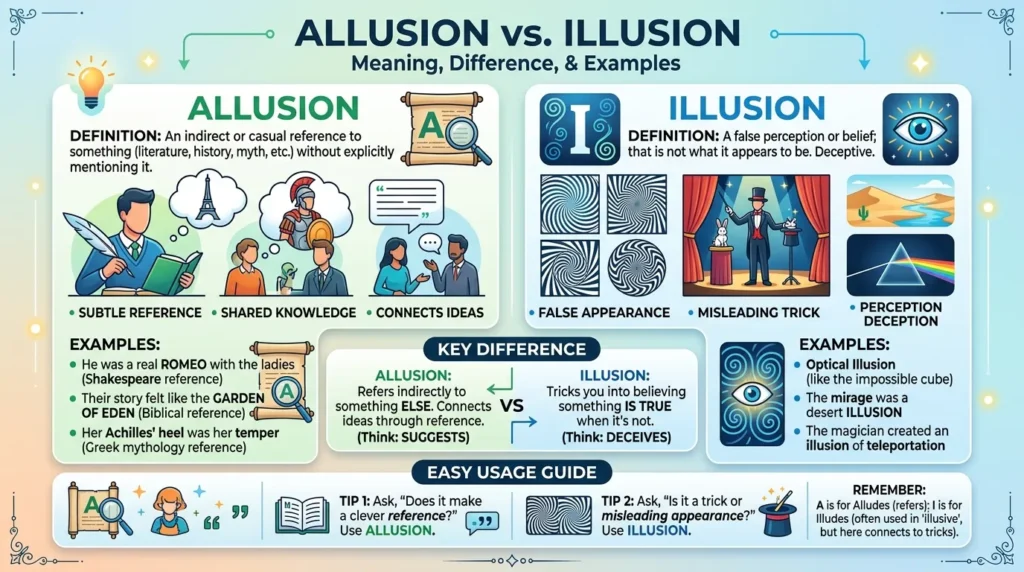
An allusion is an indirect reference to a person, event, book, place, or idea. An illusion is something that appears real but is actually false or misleading. For example, “The writer made an allusion to Shakespeare” means the writer indirectly referred to Shakespeare. “The magician created an illusion” means the magician made something appear different from reality.
People often search for allusion vs illusion because the words differ by only one letter and have similar pronunciation. This can make spelling and usage confusing, especially in essays, emails, literature, and everyday writing.
This guide explains the difference in simple English. You will learn their meanings, origins, spelling, common mistakes, everyday examples, usage patterns, and practical tips for remembering which word to use.
Allusion vs Illusion – Quick Answer
The easiest way to remember the difference is:
- Allusion = an indirect reference
- Illusion = a false appearance or misleading idea
Allusion
An allusion is an indirect mention of something without explaining it fully.
Example:
The author made an allusion to Greek mythology.
This means the author indirectly referred to Greek mythology.
Illusion
An illusion is something that looks or feels real but is not actually what it seems.
Example:
The magician created an amazing illusion.
Here, the magician made something appear real even though it was not.
Allusion vs Illusion Comparison
| Word | Meaning | Example |
|---|---|---|
| Allusion | An indirect reference | The poem contains an allusion to war. |
| Illusion | A false or misleading appearance | The magician created an illusion. |
Easy Memory Trick
Think of:
Allusion → Alludes to something
Illusion → Looks real but isn’t
If someone alludes to something, they refer to it indirectly.
If something is an illusion, it tricks your perception or creates a false impression.
The Origin of Allusion vs Illusion
Although allusion and illusion have different meanings, their histories help explain why they look and sound so similar.
Origin of Allusion
The word allusion comes from the Latin word alludere, meaning “to play with” or “to refer to.”
It developed through French and later entered English.
The idea behind the modern word is an indirect reference. Instead of directly naming something, a writer or speaker hints at it.
For example:
Her courage was an allusion to the famous hero.
The sentence suggests a connection to the hero without directly explaining every detail.
Origin of Illusion
The word illusion comes from the Latin illusio, related to illudere, meaning “to mock,” “to deceive,” or “to make fun of.”
It entered English through French and developed into its modern meaning of a false appearance or mistaken belief.
For example:
The bright lights created an illusion of a larger room.
The room did not actually become larger. It only appeared larger.
Why Do They Look Similar?
Both words developed from Latin roots related to forms of ludere, meaning “to play.”
Over time, the words entered English with different meanings and spellings.
This shared historical background helps explain why allusion and illusion look so similar today.
British English vs American English Spelling
Unlike some spelling differences between British and American English, allusion and illusion do not change spelling between these varieties of English.
The same spellings are used in:
- American English
- British English
- Canadian English
- Australian English
- Other major forms of English
The important difference is meaning, not regional spelling.
Comparison Table
| Word | American English | British English | Meaning |
|---|---|---|---|
| Allusion | Allusion | Allusion | Indirect reference |
| Illusion | Illusion | Illusion | False appearance |
Examples in Both Varieties
American English:
The novel contains an allusion to ancient Rome.
British English:
The novel contains an allusion to ancient Rome.
There is no spelling change.
Likewise:
American English:
The magician created an illusion.
British English:
The magician created an illusion.
Again, the spelling remains the same.
Which Spelling Should You Use?
You do not need to choose between an American and British spelling for these words. Both allusion and illusion are spelled the same in major English varieties.
The real choice depends on what you mean.
Use Allusion When You Mean a Reference
Use allusion when someone indirectly refers to something.
Examples:
- The speech included an allusion to history.
- The author made an allusion to the Bible.
- Her comment was an allusion to the previous meeting.
Use Illusion When You Mean False Appearance
Use illusion when something appears real but is not.
Examples:
- The mirror created an illusion of space.
- The magician performed an illusion.
- Wealth can sometimes create an illusion of happiness.
Advice for Students
If you are writing an essay, remember:
Allusion = literary or indirect reference
Illusion = false appearance
This simple distinction will help prevent many spelling and vocabulary errors.
Common Mistakes with Allusion vs Illusion
Because these words look similar, they are often used incorrectly.
Mistake 1: Using Illusion for a Reference
Incorrect:
The author made an illusion to Shakespeare.
Correct:
The author made an allusion to Shakespeare.
The author is making a reference, so allusion is correct.
Mistake 2: Using Allusion for a False Appearance
Incorrect:
The magician created an allusion.
Correct:
The magician created an illusion.
The magician is creating something that appears real but is not, so illusion is correct.
Mistake 3: Confusing Allusion with Elusion
Allusion and elusion are also different words.
- Allusion = indirect reference
- Elusion = the act of avoiding or escaping something
Example:
The writer made an allusion to the famous novel.
The suspect’s elusion of the police lasted several days.
Mistake 4: Thinking Allusion Means Mention
An allusion is usually more than a simple direct mention.
Direct mention:
The writer mentioned Shakespeare.
Allusion:
The writer compared the character to Shakespeare’s famous tragic heroes.
The second example indirectly connects the character to another literary idea.
Allusion vs Illusion in Everyday Examples
Understanding these words becomes easier when you see them in real situations.
In Emails
Allusion:
Your comment seemed to be an allusion to our earlier discussion.
This means the person indirectly referred to the earlier discussion.
Illusion:
The report gives the illusion that the project is complete.
This means the report creates a false impression that the project is finished.
In News Writing
Allusion:
The politician’s speech contained an allusion to the country’s history.
The speech indirectly referred to historical events.
Illusion:
Experts warned that the strong economic figures could create an illusion of stability.
The figures may make the situation appear more stable than it really is.
In Social Media
Allusion:
Was that an allusion to the movie we watched last night?
The person is asking whether the post indirectly referred to the movie.
Illusion:
Social media can sometimes create an illusion of a perfect life.
The online image may not reflect reality.
In Formal Writing
Allusion:
The poem contains several allusions to classical literature.
Illusion:
The study examines how advertising can create an illusion of unlimited choice.
Both words work well in formal writing, but their meanings are completely different.
In Literature
Allusion is especially common in literary analysis.
Authors may make allusions to:
- Historical events
- Religious stories
- Famous people
- Mythology
- Other books
- Movies
- Cultural traditions
An allusion allows the writer to communicate an idea without explaining every detail.
Example:
The character’s journey is an allusion to the story of Odysseus.
In Magic and Entertainment
Illusion is common when discussing:
- Magic
- Visual effects
- Optical tricks
- Stage performances
- Special effects
Example:
The performer used mirrors to create an illusion of disappearing.
Allusion vs Illusion – Google Trends & Usage Data
Search interest for allusion vs illusion usually comes from people trying to understand the difference between the two words rather than choosing between regional spellings.
The two terms also appear in different contexts.
Allusion Usage
The word allusion is common in:
- Literature
- English classes
- Academic writing
- Literary criticism
- Essays
- Poetry analysis
Students often search for this word when studying literary devices.
Illusion Usage
The word illusion has a much wider everyday use.
It appears in discussions about:
- Magic
- Psychology
- Visual perception
- Advertising
- Movies
- Art
- Social media
- Everyday beliefs
Because illusion has many general uses, it typically appears in a broader range of contexts.
Search Intent
People searching for allusion vs illusion usually want one of three things:
- The meaning of each word
- The correct spelling
- Examples showing the difference
The most useful way to understand search popularity is therefore by context, not simply by comparing the number of searches for each word.
Allusion vs Illusion: Side-by-Side Comparison
| Feature | Allusion | Illusion |
|---|---|---|
| Basic meaning | Indirect reference | False appearance |
| Verb form | Allude | — |
| Common context | Literature and writing | Magic, perception, everyday ideas |
| Example | An allusion to Shakespeare | An illusion created by mirrors |
| Related idea | Reference | Deception or mistaken perception |
| Common phrase | Literary allusion | Optical illusion |
| Spelling in US English | Allusion | Illusion |
| Spelling in UK English | Allusion | Illusion |
Quick Rule
If someone refers to something indirectly → allusion.
If something appears real but is not → illusion.
FAQs About Allusion vs Illusion
1. What is the main difference between allusion and illusion?
Allusion means an indirect reference to something. Illusion means a false appearance, perception, or belief.
2. Is it an allusion or an illusion to Shakespeare?
It is an allusion to Shakespeare because you are referring to Shakespeare indirectly.
3. Is a magic trick an allusion or an illusion?
A magic trick is usually an illusion because it creates a false appearance.
4. What is an example of an allusion?
The writer made an allusion to Romeo and Juliet.
The writer indirectly refers to the famous story.
5. What is an example of an illusion?
The painting creates an illusion of depth.
The painting makes something appear deeper than it really is.
6. Do British and American English spell these words differently?
No. Allusion and illusion have the same spelling in British and American English.
7. How can I remember the difference?
Remember:
Allusion = alludes to something.
Illusion = looks real but is not real.
This is one of the easiest ways to separate the two words.
Conclusion
Understanding allusion vs illusion is simple once you focus on meaning instead of spelling. The words look similar, but they describe two very different ideas.
Allusion means an indirect reference. Writers often use allusions to connect their work with famous people, books, historical events, myths, or cultural ideas. Illusion, on the other hand, means a false appearance, perception, or belief. Magic tricks, optical effects, and misleading impressions can all involve illusions.
Neither word has a different spelling in British or American English, so the main challenge is choosing the correct word for the situation. When you mean a reference, use allusion. When you mean something that seems real but is not, use illusion.
The easiest memory trick is: allusion alludes to something, while an illusion creates a false impression. With this simple rule and the examples above, you can use both words confidently in academic, professional, and everyday writing.