
A large city at night. Thousands of homes are glowing with lights, factories are running heavy machines, hospitals are operating life-saving equipment, and data centers are processing information. Have you ever wondered where all this electricity comes from? In many countries, a major portion of this power is produced by thermal power plants.
Understanding what is thermal power is essential for electrical students, engineers, technicians, and beginners. Thermal power generation is one of the oldest and most widely used methods of producing electricity. Even with the growth of renewable energy, thermal power plants still play a critical role in national power systems.
In this article, you will learn what is thermal power, the thermal power working principle, types of thermal power plants, main components, thermal power applications, and thermal power advantages and disadvantages. We will also discuss the difference between thermal power and other generation methods, practical issues, and future trends.
2. Thermal Power?
Clear Definition
Thermal power is one of the most widely used methods of generating electricity in the world. It refers to the process of producing electrical energy by converting heat energy into mechanical energy and then into electricity. This process usually takes place in a thermal power plant, where fuels such as coal, natural gas, oil, or other combustible materials are burned to produce heat. The heat energy generated from burning these fuels is used to convert water into high-pressure steam. This steam plays a very important role in the electricity generation process because it is used to rotate a turbine. The rotating turbine is connected to a generator, and when the turbine spins, the generator converts mechanical energy into electrical energy. This electricity is then transmitted through power lines to homes, industries, offices, hospitals, and many other places where electrical power is needed.
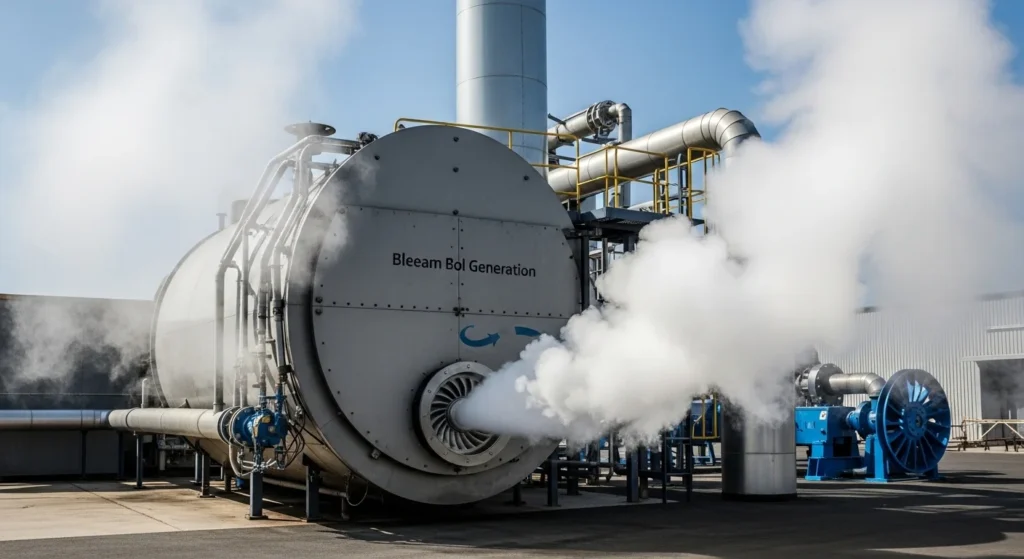
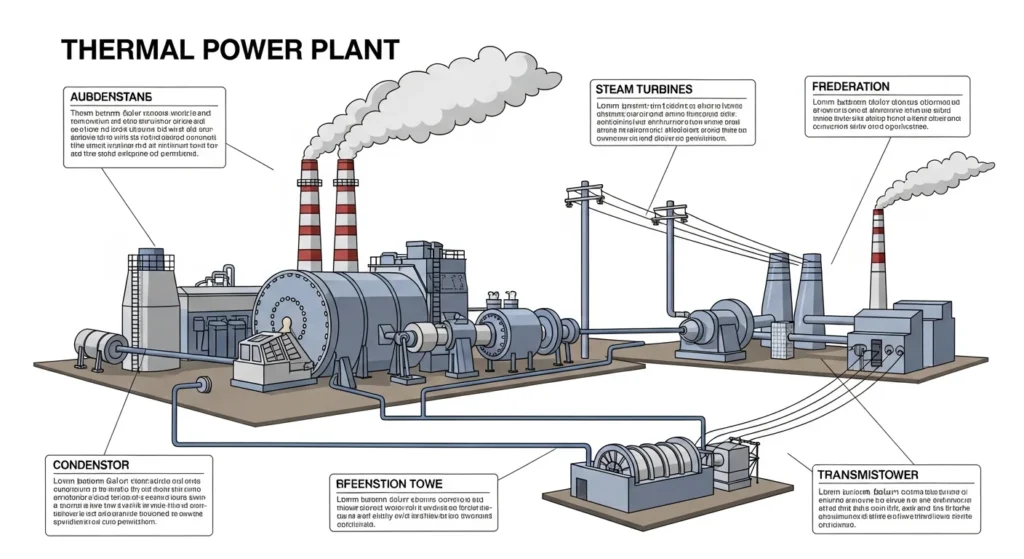
The basic working principle of thermal power generation is based on energy conversion. First, chemical energy stored in fuels like coal or gas is converted into heat energy during the combustion process. Then this heat energy is used to produce steam in a boiler. The boiler is a large closed vessel where water is heated to create high-pressure steam. Once the steam is produced, it is directed toward the steam turbine. The steam turbine contains blades that rotate when steam passes over them. As the turbine blades spin, mechanical energy is produced. This mechanical energy is transferred to the generator through a shaft connection. The generator uses electromagnetic induction to convert mechanical energy into electrical energy. After the steam passes through the turbine, it is cooled in a condenser and converted back into water. This water is then reused in the boiler, creating a continuous cycle of steam generation and power production.
Thermal power plants contain several important components that help perform this process efficiently. The boiler is responsible for producing steam by heating water. The steam turbine converts the energy of steam into rotational motion. The generator produces electricity from this rotational motion. The condenser cools the used steam and converts it back into water so it can be reused. Cooling towers are also used in many thermal power plants to remove excess heat from the system. In addition, chimneys or stacks are installed to release the exhaust gases produced during fuel combustion into the atmosphere. All these components work together to ensure that electricity is generated efficiently and continuously.
Thermal power plants have many advantages that make them important for electricity production. One major advantage is that they can generate large amounts of electricity, making them suitable for supplying power to large cities and industries. Another advantage is that thermal power plants can operate continuously for long periods, providing a stable and reliable power supply. The technology used in thermal power generation is also well developed and widely understood by engineers and technicians. In many regions, fuel sources such as coal or natural gas are easily available, which makes thermal power generation practical and convenient. Because of these benefits, many countries still depend heavily on thermal power plants for their electricity needs.
However, thermal power plants also have some disadvantages. One of the main disadvantages is environmental pollution caused by burning fossil fuels. The combustion process releases gases such as carbon dioxide, sulfur dioxide, and nitrogen oxides into the atmosphere. These gases contribute to air pollution and climate change. Thermal power plants also require a large amount of water for steam production and cooling systems, which can sometimes create water management challenges. In addition, the mining and transportation of fuels such as coal can cause environmental damage. For these reasons, many countries are now focusing on improving the efficiency of thermal power plants and reducing their environmental impact.
Despite these challenges, thermal power continues to play a very important role in global electricity generation. Modern technologies are being developed to make thermal power plants cleaner and more efficient. For example, advanced boilers, better turbines, and pollution control equipment can reduce emissions and improve overall efficiency. Some plants are also using carbon capture technology to prevent carbon dioxide from entering the atmosphere. In the future, thermal power plants may operate alongside renewable energy sources such as solar and wind power to create a balanced and reliable energy system. By combining improved technology with better environmental management, thermal power can continue to provide electricity while reducing its impact on the environment.
Simple Explanation
In a thermal power plant:
- Fuel is burned to produce heat.
- Heat converts water into steam.
- Steam rotates a turbine.
- The turbine drives a generator to produce electricity.
Practical Example
In a coal-based power plant:
- Coal is burned in a boiler.
- Steam is produced.
- Steam spins a turbine.
- The generator produces electricity.
This entire process explains what is thermal power in simple terms.
3. Thermal Power Working Principle
The thermal power working principle is based on energy conversion in stages.
A thermal power plant is a system that generates electricity by using heat energy. In simple words, it converts heat produced by burning fuel into electrical energy. This is one of the most common methods of producing electricity in the world, especially in large cities and industries.
The thermal power working principle is based on a basic energy conversion process. First, fuel such as coal, natural gas, or oil is burned in a furnace. This burning produces a large amount of heat energy. This heat is used to boil water in a boiler, turning it into high-pressure steam.
This high-pressure steam is then directed towards a turbine. The steam hits the blades of the turbine with high force and makes it rotate. This rotation is the key step in electricity generation. The turbine is connected to a generator. When the turbine rotates, it also rotates the generator, which converts mechanical energy into electrical energy.
After passing through the turbine, the steam is cooled down in a condenser and converted back into water. This water is then sent again to the boiler to repeat the cycle. This continuous process is known as the Rankine cycle.
👉 Simple flow of thermal power working:
Fuel → Heat → Water → Steam → Turbine → Generator → Electricity
Thermal power plants are widely used because they can produce large amounts of electricity continuously. They are very important for industries, homes, and commercial areas. However, they also have some disadvantages, such as air pollution due to burning of fossil fuels and high fuel costs.
In conclusion, the thermal power working principle is a simple energy conversion system where heat energy is converted into electrical energy using steam and turbines. It plays a major role in global electricity production and supports modern life and industrial development.
Step-by-Step Process
- Fuel Combustion
- Coal, gas, or oil is burned in a boiler.
- Heat energy is produced.
- Steam Generation
- Water is heated and converted into high-pressure steam.
- Turbine Rotation
- Steam strikes turbine blades.
- Turbine starts rotating.
- Electricity Generation
- Turbine shaft is connected to a generator.
- Generator converts mechanical energy into electrical energy.
- Condensation
- Steam is cooled and converted back into water.
- Water is reused in the cycle.
Easy Analogy
Think of a pressure cooker:
- Heat produces steam.
- Steam creates pressure.
- Pressure can move something.
In thermal power plants, steam pressure moves a turbine instead of lifting a cooker lid.
4. Types / Classification of Thermal Power Plants
Thermal power plants are classified based on fuel and technology.
Coal-Fired Thermal Power Plant
- Uses coal as fuel.
- Most common worldwide.
- Suitable for large-scale power generation.
Gas-Fired Thermal Power Plant
- Uses natural gas.
- Cleaner than coal.
- Faster startup time.
Oil-Fired Thermal Power Plant
- Uses diesel or heavy oil.
- Usually used as backup plants.
Combined Cycle Power Plant
- Uses gas turbine and steam turbine.
- Higher efficiency.
- Less fuel consumption.
Nuclear Thermal Power Plant
- Uses nuclear reaction for heat.
- No fossil fuel combustion.
- High energy output.
5. Main Components of Thermal Power Plant
Understanding components helps clarify the thermal power working principle.
1. Boiler
- Burns fuel.
- Produces steam.
2. Turbine
- Converts steam energy into mechanical energy.
- Rotates at high speed.
3. Generator
- Converts mechanical energy into electrical energy.
- Produces AC power.
4. Condenser
- Cools steam.
- Converts steam back into water.
5. Cooling System
- Maintains temperature.
- Prevents overheating.
6. Transformer
- Increases voltage for transmission.
Each component plays a vital role in energy conversion.
6. Thermal Power Advantages and Disadvantages
Advantages
- Large-scale power generation
- Reliable and continuous supply
- Suitable for base load demand
- Technology is well-developed
- Can operate in all weather conditions
Real-World Benefits
- Supports national grid stability
- Provides electricity to large cities
- Easy to integrate with existing infrastructure
Disadvantages / Limitations
- Air pollution (in fossil fuel plants)
- High fuel consumption
- Environmental impact
- High maintenance cost
- Water requirement is high
Understanding thermal power advantages and disadvantages is important for system planning.
7. Thermal Power Applications
Thermal power applications are mainly in large-scale electricity generation.
Home Applications
- Supplies electricity to homes through national grid.
- Powers lighting, fans, appliances.
Industrial Applications
- Runs heavy machinery.
- Supports manufacturing plants.
- Provides stable power for production lines.
Modern Technology Applications
- Data centers.
- Metro rail systems.
- Smart cities.
- Electric vehicle charging networks.
Thermal power plants form the backbone of many power systems.
8. Comparison Section
Difference Between Thermal Power and Hydropower
| Feature | Thermal Power | Hydropower |
|---|---|---|
| Energy Source | Fuel combustion | Water flow |
| Pollution | Higher (fossil fuels) | Very low |
| Fuel Cost | Required | Not required |
| Location | Flexible | River required |
| Efficiency | Moderate | High |
Difference Between Thermal Power and Solar Power
| Feature | Thermal Power | Solar Power |
|---|---|---|
| Weather Dependency | No | Yes |
| Fuel | Required | Sunlight |
| Initial Cost | Moderate | High |
| Pollution | Yes (coal/gas) | No direct pollution |
The difference between thermal power and renewable energy lies mainly in fuel usage and environmental impact.
9. Selection Guide
Choosing the right thermal power system depends on:
1. Fuel Availability
- Coal available → Coal plant
- Natural gas available → Gas plant
2. Environmental Regulations
- Strict laws → Combined cycle or cleaner technology
3. Power Requirement
- High base load → Large coal or nuclear plant
4. Budget
- Initial investment
- Fuel cost
- Maintenance cost
For beginners, focus on understanding plant capacity (MW) and efficiency.
10. Common Problems & Solutions (FAQs)
Q1: Why is efficiency low in thermal plants?
Reason:
- Heat losses.
- Mechanical losses.
Solution:
- Use combined cycle systems.
- Improve insulation.
Q2: Why does turbine vibration occur?
Reason:
- Imbalance.
- Bearing issues.
Solution:
- Regular maintenance.
- Proper alignment.
Q3: Why is water consumption high?
Reason:
- Steam cycle.
- Cooling requirement.
Solution:
- Use cooling towers.
- Recycle water.
Q4: Can thermal power plants run without fuel?
No. Except nuclear plants, most thermal plants require continuous fuel supply.
11. Future Trends
The thermal power industry is evolving.
1. Cleaner Technologies
- Low emission boilers.
- Carbon capture systems.
2. Supercritical & Ultra-Supercritical Plants
- Higher efficiency.
- Reduced fuel usage.
3. Hybrid Systems
- Solar + thermal integration.
- Renewable backup support.
4. Digital Monitoring
- Smart sensors.
- Remote plant management.
Future thermal power systems aim to be more efficient and environmentally friendly.
12. Conclusion
Understanding what is thermal power is essential for anyone studying electrical engineering. Thermal power generation converts heat energy into electrical energy using steam turbines and generators. The thermal power working principle is based on energy conversion stages: heat to mechanical to electrical.
Despite environmental concerns, thermal power applications remain critical in supplying base load electricity worldwide. Knowing thermal power advantages and disadvantages helps engineers design better systems. By learning the difference between thermal power and other generation methods, you can make informed technical decisions.
As an electrical student or technician, mastering thermal power fundamentals will strengthen your understanding of large-scale power systems and grid operations.