
Imagine a large city during peak summer where millions of homes, offices, factories, and hospitals are using electricity at the same time. If the power transmission system is weak or outdated, voltage drops, blackouts, and equipment failures can happen quickly. To avoid these problems, modern electrical networks now use Smart Transmission Systems that monitor, control, and improve power flow automatically. These systems help deliver electricity safely, efficiently, and reliably over long distances.
In today’s world, electricity demand is increasing rapidly because of electric vehicles, renewable energy, smart homes, and industrial automation. Traditional transmission systems are no longer enough to handle modern energy requirements. Smart Transmission Systems solve these challenges by using sensors, communication networks, automation, and digital monitoring technologies.
Understanding Smart Transmission Systems is very important for electrical students, engineers, and technicians because these systems are becoming a major part of modern power grids. In this article, you will learn the Smart Transmission Systems working principle, types, components, advantages, disadvantages, applications, comparison with traditional systems, troubleshooting methods, and future developments in smart electrical transmission technology.
What Are Smart Transmission Systems?
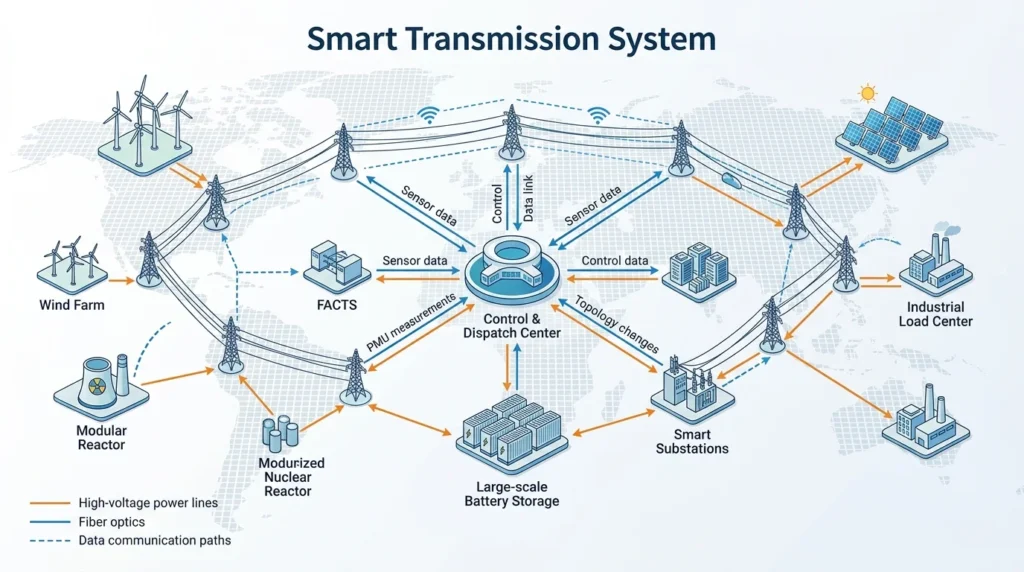
Smart Transmission Systems are advanced electrical power transmission networks that use digital technologies, sensors, automation, and communication systems to monitor and control electricity flow efficiently.
These systems improve:
- Power reliability
- Energy efficiency
- Grid stability
- Fault detection
Unlike traditional transmission systems, smart systems can automatically respond to changing electrical conditions and reduce power losses.
Simple Definition
A Smart Transmission System is an intelligent electrical transmission network that uses modern technology to manage and optimize power transfer safely and efficiently.
Practical Example
If a transmission line becomes overloaded during high electricity demand, a Smart Transmission System can automatically redirect power through another route to prevent blackouts.
Smart Transmission Systems Working Principle
The Smart Transmission Systems working principle is based on continuous monitoring, communication, and automatic control of electrical power flow.
Step-by-Step Working Process
Step 1: Power Generation
Electricity is generated at:
- Thermal power plants
- Hydropower stations
- Solar farms
- Wind farms
Power generation electrical engineering ka ek fundamental process hai jisme different energy sources ko use karke electricity produce ki jati hai. Yeh process modern duniya ki backbone hai kyun ke har industry, home, transport system aur communication network electricity par depend karta hai. Power generation ka main purpose yeh hota hai ke mechanical, chemical, nuclear ya renewable energy ko electrical energy mein convert kiya jaye.
Electricity generate karne ke liye different types of power plants use kiye jate hain. Thermal power plants fossil fuels jaise coal, oil aur gas ko burn karke heat energy produce karte hain. Yeh heat water ko steam mein convert karti hai jo turbines ko rotate karti hai aur generator electricity produce karta hai. Hydroelectric power plants pani ki kinetic energy use karte hain jisse turbines move karte hain. Nuclear power plants atomic reactions se energy generate karte hain jabke renewable sources jaise solar aur wind energy natural resources ko use karke clean electricity produce karte hain.
Power generation ka basic principle electromagnetic induction par based hota hai. Jab koi conductor magnetic field ke andar rotate karta hai to us mein voltage induce hota hai jo electricity ke form mein output deta hai. Is process mein generator sab se important role play karta hai.
Aaj ke modern world mein power generation systems ko zyada efficient aur environment-friendly banaya ja raha hai. Renewable energy sources ka use barh raha hai taake pollution aur carbon emissions ko reduce kiya ja sake. Smart grids aur advanced technologies bhi power generation ko more reliable aur stable bana rahi hain.
Power generation ke bina modern life possible nahi hai. Yeh industry development, economic growth aur daily human activities ko support karti hai. Jaise jaise technology advance ho rahi hai, power generation systems bhi zyada efficient, sustainable aur intelligent ban rahe hain taake future energy demands ko pura kiya ja sake.
Step 2: Voltage Step-Up
Transformers increase voltage levels for long-distance transmission.
Higher voltage reduces:
- Current flow
- Power losses
Voltage step-up electrical engineering ka ek important concept hai jisme low voltage electrical energy ko high voltage mein convert kiya jata hai. Is process ko “step-up transformation” bhi kehte hain aur yeh mainly transformer ke through kiya jata hai. Step-up voltage ka main purpose yeh hota hai ke electricity ko long distance tak efficiently transmit kiya ja sake bina zyada energy loss ke.
Jab electricity power plants mein generate hoti hai to uska voltage relatively low hota hai. Agar is low voltage ko direct long distance par send kiya jaye to energy loss (I²R loss) bohat zyada hota hai. Is problem ko solve karne ke liye step-up transformer use hota hai jo voltage ko increase karta hai aur current ko decrease karta hai. Is se transmission lines mein power loss kam ho jata hai aur efficiency barh jati hai.
Step-up transformer mein primary winding ki turns kam hoti hain jabke secondary winding ki turns zyada hoti hain. Is ratio ki wajah se output voltage input voltage se zyada hota hai. Yeh principle electromagnetic induction par based hota hai jahan changing magnetic field voltage induce karta hai.
Voltage step-up ka use power transmission systems, industrial applications, and electrical grids mein bohat common hai. High-voltage transmission lines electricity ko hundreds of kilometers door tak safely pohanchati hain. Phir substations mein voltage ko step-down karke homes aur businesses ko supply kiya jata hai.
Is technology ka sab se bara advantage yeh hai ke yeh energy loss ko minimize karti hai aur large-scale power distribution ko possible banati hai. Is ke ilawa renewable energy systems jaise solar inverters aur wind turbines mein bhi step-up voltage ka use hota hai taake generated power grid compatible ban sake.
Voltage step-up modern electrical systems ki backbone hai jo efficient energy transfer aur stable power supply ko ensure karti hai.
Step 3: Real-Time Monitoring
Sensors and monitoring devices collect information about:
- Voltage
- Current
- Frequency
- Temperature
- Load conditions
Real-time monitoring ek modern technology-based system hai jo kisi bhi process, machine, network ya environment ko continuously live track karta hai. Is system ka main purpose yeh hota hai ke data ko usi waqt collect, analyze aur display kiya jaye jab woh generate ho raha ho, taake immediate action liya ja sake. Aaj ke digital aur industrial world mein real-time monitoring ka use bohat zyada ho raha hai, especially IT systems, healthcare, manufacturing plants, traffic systems aur smart cities mein.
Real-time monitoring systems sensors, software aur communication networks par based hote hain. Yeh sensors continuously data collect karte hain, phir yeh data central system ya cloud platform par send hota hai jahan usay instantly analyze kiya jata hai. Agar kisi system mein koi fault, delay ya abnormal activity detect hoti hai to alert generate ho jata hai. Is tarah problems ko early stage par control kiya ja sakta hai.
Is technology ka sab se bara advantage yeh hai ke yeh decision making ko fast aur accurate banati hai. For example, hospitals mein patient ki heart rate aur blood pressure real-time monitor kiya jata hai, jabke industries mein machines ki performance track ki jati hai taake breakdown se pehle warning mil jaye.
Real-time monitoring ko do types mein divide kiya jata hai: active monitoring aur passive monitoring. Active monitoring mein system automatically actions leta hai, jabke passive monitoring sirf data observe aur record karta hai.
Aaj kal smart systems aur IoT (Internet of Things) devices ki wajah se real-time monitoring aur bhi advanced ho gayi hai. Yeh systems data ko seconds mein process karte hain aur remote access bhi allow karte hain. Is wajah se businesses apni efficiency improve kar sakte hain aur risks ko reduce kar sakte hain.
Real-time monitoring modern technology ka ek essential part ban chuka hai jo safety, performance aur reliability ko enhance karta hai.
Step 4: Data Communication
The collected data is sent to:
- Control centers
- Grid management systems
Communication happens through:
- Fiber optics
- Wireless networks
- Smart communication protocols
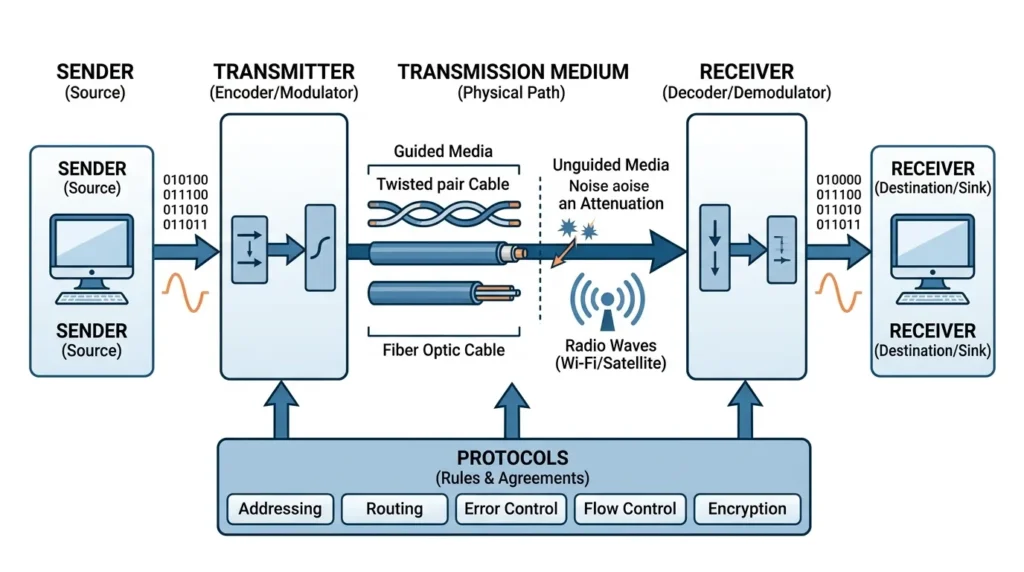
Data communication ek aisa process hai jisme information ya data ko ek device se doosre device tak transfer kiya jata hai, chahe wo local area network ho ya duniya ke kisi bhi kone mein internet ke zariye connection ho. Aaj ke digital world mein data communication har field ki basic need ban chuka hai, jaise education, business, healthcare, banking aur social media. Is system ki madad se computers, mobiles, servers aur other digital devices ek dusre se connect ho kar information share karte hain.
Data communication system ke main components mein sender, receiver, transmission medium aur communication protocol shamil hote hain. Sender wo device hota hai jo data send karta hai, jabke receiver wo hota hai jo data receive karta hai. Transmission medium wired ya wireless ho sakta hai, jaise fiber optic cables, copper cables, Wi-Fi ya satellite signals. Protocol rules ka set hota hai jo ensure karta hai ke data sahi tareeke se aur error-free transfer ho.
Data communication ko different types mein divide kiya jata hai, jaise simplex, half-duplex aur full-duplex communication. Simplex mein data sirf ek direction mein jata hai, half-duplex mein dono directions mein communication hota hai lekin ek waqt par sirf ek side active hoti hai, jabke full-duplex mein dono sides simultaneously data send aur receive kar sakti hain. Internet aur mobile networks mostly full-duplex systems use karte hain.
Is technology ka use modern life mein bohat important hai. Emails, video calls, online classes, cloud storage aur social media platforms sab data communication par depend karte hain. Is system ki wajah se information sharing fast, reliable aur efficient ho gayi hai. Businesses apni operations globally manage kar sakte hain aur log real-time communication kar sakte hain.
Data communication ne duniya ko ek global village bana diya hai jahan information seconds mein ek jagah se doosri jagah pohanch jati hai. Jaise jaise technology advance ho rahi hai, data communication systems bhi zyada fast, secure aur intelligent ban rahe hain, jo future digital world ki backbone sabit ho rahe hain.
Step 5: Automatic Control
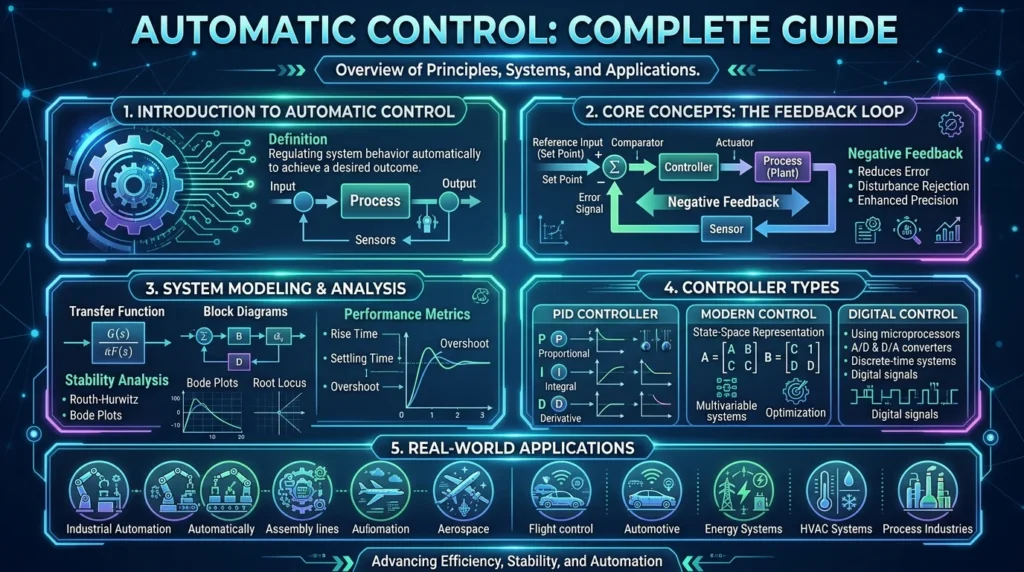
Smart systems automatically:
- Adjust power flow
- Detect faults
- Isolate damaged sections
- Maintain grid stability
Automatic control engineering ka aik important concept hai jo machines, systems aur processes ko bina human intervention ke control karta hai. Is system mein sensors, controllers aur actuators ka use hota hai jo mil kar kisi bhi process ko automatically monitor aur regulate karte hain. Automatic control ka main purpose yeh hota hai ke system desired output ko maintain kare, chahe input ya environment mein changes kyun na hon. Aaj ke modern world mein automatic control har jagah use hota hai, jaise air conditioning systems, washing machines, elevators, industrial robots aur power plants.
Automatic control system mein pehle sensors system ki real condition ko measure karte hain, phir controller us data ko compare karta hai set value (reference value) ke sath. Agar koi difference hota hai to controller signal generate karta hai jo actuator ko activate karta hai. Actuator system ko adjust karke output ko correct karta hai. Is process ko feedback control system kehte hain.
Automatic control ko do main types mein divide kiya jata hai: open-loop control aur closed-loop control. Open-loop system mein feedback nahi hota, jabke closed-loop system mein feedback hota hai jo system ko accurate banata hai. Closed-loop systems zyada reliable aur efficient hote hain kyun ke yeh continuously output ko monitor karte rehte hain.
Is technology ka use industrial automation mein bohat zyada hota hai jahan machines continuously production process ko control karti hain. Is ke ilawa automotive industry mein cruise control, medical equipment, robotics aur smart home systems mein bhi automatic control ka use hota hai. Is system ki wajah se human error kam hota hai, efficiency barhti hai aur time aur energy dono save hoti hain.
Automatic control modern engineering ka backbone ban chuka hai. Jaise jaise technology advance ho rahi hai, waise waise control systems aur bhi intelligent aur adaptive ho rahe hain, jisse future mein fully autonomous systems ka concept aur strong hota ja raha hai.
Step 6: Power Distribution
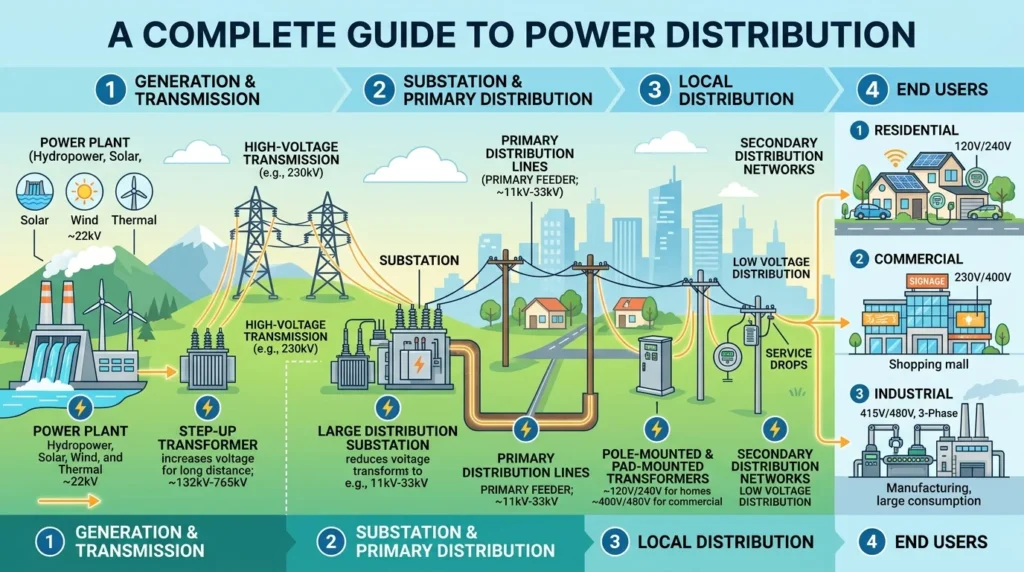
Electricity safely reaches:
- Homes
- Industries
- Commercial buildings
Power distribution electrical power system ka bohat aham hissa hai jo generated electricity ko consumers tak safely aur efficiently pohanchata hai. Jab electricity power plants mein generate hoti hai to usay pehle transmission lines ke zariye lambi doori tak high voltage par bheja jata hai. Is ke baad substations mein voltage ko kam karke distribution network ke through gharon, offices, factories aur commercial buildings tak supply kiya jata hai. Power distribution system mein distribution transformers, feeders, distributors, service mains, circuit breakers aur protective devices shamil hote hain jo electrical energy ki reliable supply ko ensure karte hain. Distribution network ka basic maqsad yeh hota hai ke har consumer ko required voltage aur frequency par electricity mil sake. Aaj kal modern distribution systems mein automation aur smart grid technologies ka istemal bhi kiya jata hai jisse faults ko jaldi detect karna aur power losses ko kam karna mumkin hota hai. Power distribution ko aam tor par do qisamon mein divide kiya jata hai: primary distribution aur secondary distribution. Primary distribution medium voltage level par hoti hai jabke secondary distribution low voltage level par consumers ko direct supply provide karti hai. Ek effective power distribution system voltage regulation ko maintain karta hai aur overloads ya short circuits se system ko protect karta hai. Urban areas mein underground distribution systems zyada use hote hain jabke rural areas mein overhead distribution lines common hain kyun ke inki installation cost kam hoti hai. Reliable power distribution economic growth, industrial production aur daily life ke liye bohat zaroori hai. Agar distribution system efficient na ho to voltage drops, power interruptions aur energy losses paida ho sakte hain. Isi liye electrical engineers power distribution networks ko design aur maintain karte hain taake consumers ko continuous, safe aur high-quality electricity supply milti rahe.
Types of Smart Transmission Systems
Different Smart Transmission Systems are used based on grid requirements and technologies.
Smart AC Transmission Systems
These systems improve traditional AC transmission networks.
Features
- Automated voltage control
- Real-time monitoring
- Smart switching systems
Applications
- National power grids
- Urban electricity networks
Smart HVDC Transmission Systems
HVDC means High Voltage Direct Current transmission.
Features
- Long-distance transmission
- Lower transmission losses
- Better efficiency
Advantages
- Ideal for renewable energy integration
- Stable long-distance power transfer
Flexible AC Transmission Systems (FACTS)
FACTS devices improve transmission system performance.
Functions
- Voltage stabilization
- Reactive power control
- Improved power quality
Common FACTS Devices
- STATCOM
- SVC
- UPFC
Smart Grid Integrated Transmission Systems
These systems combine transmission networks with smart grids.
Benefits
- Two-way communication
- Renewable energy management
- Smart load balancing
Main Components of Smart Transmission Systems
Several important components work together in Smart Transmission Systems.
Smart Sensors
Sensors monitor:
- Voltage
- Current
- Temperature
- Fault conditions
Function
Provide real-time system information.
Transformers
Transformers increase or decrease voltage levels.
Importance
Help reduce transmission losses.
Transmission Lines
These lines carry electricity over long distances.
Modern Features
- High-capacity conductors
- Improved insulation
- Smart monitoring systems
Communication Systems
Communication systems transfer data between equipment and control centers.
Examples
- Fiber optic cables
- Wireless communication
- SCADA systems
Control Centers
Control rooms manage:
- Grid performance
- Fault detection
- Power balancing
Circuit Breakers
Smart circuit breakers automatically disconnect faulty sections.
Benefits
- Protect equipment
- Improve safety
Advantages of Smart Transmission Systems
Smart Transmission Systems advantages and disadvantages are important topics for engineering students.
Advantages
Improved Efficiency
Smart systems reduce:
- Power losses
- Energy waste
Better Reliability
Automatic fault management reduces:
- Blackouts
- System failures
Faster Fault Detection
Problems are detected quickly using sensors and digital monitoring.
Renewable Energy Support
Smart systems easily integrate:
- Solar energy
- Wind power
- Battery storage systems
Reduced Maintenance Costs
Predictive maintenance lowers repair expenses.
Improved Grid Stability
Automatic balancing improves voltage and frequency control.
Disadvantages and Limitations
Despite many benefits, Smart Transmission Systems also have some limitations.
High Installation Cost
Modern equipment and communication systems are expensive.
Complex Technology
Operation requires:
- Skilled engineers
- Technical training
Cybersecurity Risks
Digital systems may face:
- Hacking threats
- Data security issues
Maintenance Challenges
Advanced systems need specialized maintenance tools.
Dependence on Communication Networks
If communication fails, system performance may decrease.
Smart Transmission Systems Applications
Smart Transmission Systems applications are growing rapidly worldwide.
Residential Applications
Used in:
- Smart cities
- Smart homes
- Residential power grids
Benefits
- Stable electricity supply
- Better energy management
Industrial Applications
Industries use smart transmission for:
- Heavy machinery
- Automation systems
- Continuous production
Renewable Energy Systems
Smart systems support:
- Solar farms
- Wind turbines
- Hybrid energy systems
Electric Vehicle Charging Networks
Modern EV charging stations need:
- Stable smart grids
- Efficient transmission systems
Railway Electrification
Smart transmission improves:
- Electric train operations
- Energy efficiency
Difference Between Smart Transmission Systems and Traditional Transmission Systems
| Feature | Smart Transmission Systems | Traditional Transmission Systems |
|---|---|---|
| Monitoring | Real-time digital monitoring | Manual monitoring |
| Fault Detection | Automatic | Slower manual detection |
| Efficiency | High | Moderate |
| Renewable Integration | Excellent | Limited |
| Communication | Two-way communication | Minimal communication |
| Maintenance | Predictive maintenance | Reactive maintenance |
Selection Guide for Smart Transmission Systems
Choosing the right Smart Transmission System depends on several factors.
Voltage Level
Select systems based on:
- Transmission distance
- Power demand
Load Requirements
Large industrial areas need:
- High-capacity smart systems
Communication Infrastructure
Reliable communication networks are essential.
Safety Features
Choose systems with:
- Automatic fault protection
- Smart circuit breakers
Budget Considerations
Advanced systems cost more initially but reduce long-term expenses.
Future Expansion
Always select systems that allow:
- Future upgrades
- Renewable integration
Common Problems and Solutions
Why Does Voltage Fluctuation Occur?
Causes
- Overloaded lines
- Poor voltage control
Solution
Use:
- Smart voltage regulators
- FACTS devices
Why Do Transmission Losses Increase?
Causes
- Old conductors
- High current flow
Solution
Install:
- High-efficiency conductors
- Smart monitoring systems
Why Does Communication Failure Happen?
Causes
- Fiber optic damage
- Software issues
Solution
Regularly inspect:
- Communication equipment
- Network systems
Why Do Smart Sensors Fail?
Causes
- Harsh weather
- Power surges
Solution
Use:
- Surge protection
- Weather-resistant devices
Future Trends in Smart Transmission Systems
The future of Smart Transmission Systems looks highly advanced and intelligent.
Artificial Intelligence Integration
AI systems will help:
- Predict faults
- Optimize power flow
- Improve automation
Renewable Energy Expansion
Future smart grids will support:
- More solar energy
- Large wind farms
- Energy storage systems
Smart Cities Development
Modern cities will rely heavily on:
- Intelligent electrical infrastructure
- Digital power management
Advanced Cybersecurity
New systems will include:
- Stronger protection
- Encrypted communication
Wireless Smart Monitoring
Future transmission systems may use:
- IoT sensors
- Wireless monitoring devices
Importance of Learning Smart Transmission Systems
Electrical students and engineers should understand these systems because they are becoming essential in modern electrical engineering.
Career Benefits
Knowledge of smart transmission helps in:
- Power system engineering
- Grid automation jobs
- Renewable energy projects
Technical Benefits
Understanding smart systems improves:
- Troubleshooting skills
- Modern engineering knowledge
Conclusion
Smart Transmission Systems are transforming the electrical power industry by making electricity transmission more efficient, reliable, and intelligent. These systems use advanced monitoring, communication, automation, and control technologies to reduce power losses, improve grid stability, and support renewable energy integration.
Although Smart Transmission Systems have higher installation costs and technical complexity, their long-term benefits are much greater than traditional transmission methods. They are becoming essential for smart cities, electric vehicles, industrial automation, and modern renewable energy networks.
For electrical students, engineers, and technicians, learning Smart Transmission Systems is extremely important because future electrical grids will depend heavily on intelligent technologies and digital power management systems.