
Imagine you open an electrical control panel in a factory after a few months of operation. Instead of clean components, you find dust, dirt, and tiny particles covering sensitive equipment. This buildup can cause overheating, reduce efficiency, and even lead to equipment failure. This is where an Air Filter becomes essential.
In electrical and industrial environments, air is constantly moving through panels, cooling systems, and machines. If this air is not filtered, harmful particles can damage components, block airflow, and reduce system life. An air filter helps maintain clean airflow, ensuring proper cooling and safe operation.
Understanding air filters is important for electrical students, engineers, and technicians because they directly impact system performance and reliability. In this article, you will learn what an air filter is, its working principle, types, components, advantages, limitations, applications, and how to choose the right one. This knowledge will help you design and maintain efficient systems.
Air Filter
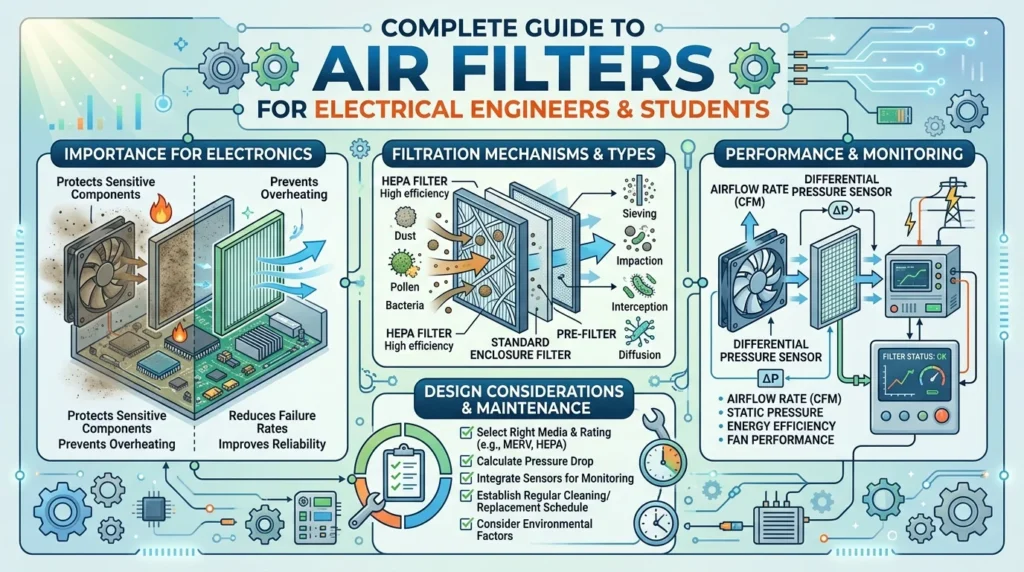
An air filter is a very important device used to clean air by removing dust, dirt, smoke, and other harmful particles before the air enters a machine, room, or system. It is commonly used in electrical panels, air conditioners, generators, cars, factories, and ventilation systems to ensure that only clean air flows inside. The main purpose of an air filter is to protect equipment and improve air quality for better performance and safety.
In simple words, an air filter works like a mask for machines. Just like a mask stops dust and harmful particles from entering our body, an air filter stops dust from entering machines and systems. Without an air filter, dust can easily enter electrical equipment and cause overheating, damage, or failure. This is why air filters are very important in industrial and electrical environments.
The working of an air filter is very simple. When air passes through the filter, the filter material traps dust and particles while allowing clean air to pass through. This process can happen in different ways such as mechanical trapping, electrostatic attraction, or absorption depending on the type of filter used. Some filters are made of paper or fiber, while others use advanced materials like activated carbon or HEPA layers for better filtration.
Air filters are available in different types such as mechanical filters, HEPA filters, carbon filters, and electrostatic filters. Each type is used for different purposes based on air quality requirements. For example, HEPA filters are used in hospitals and clean rooms because they can remove very small particles, while carbon filters are used to remove bad smell and gases.
The main advantages of air filters include better air quality, protection of machines, improved efficiency, and reduced maintenance costs. However, they need regular cleaning or replacement to work properly. If a filter becomes clogged, it can reduce airflow and affect system performance.
Overall, air filters play a very important role in modern life by keeping air clean and protecting both humans and machines.
What is Air Filter?
An Air Filter is a device used to remove dust, dirt, and other particles from air before it enters a system or environment.
Simple Explanation
It acts like a barrier that allows clean air to pass while trapping unwanted particles.
Practical Example
In an electrical panel, an air filter is installed near ventilation fans. It cleans incoming air, preventing dust from entering and damaging internal components.
Air Filter Working Principle
The air filter working principle is based on trapping particles while allowing clean air to flow through.
Step-by-Step Working
- Air enters the filter
- Filter media captures dust and particles
- Clean air passes through
- Contaminants remain trapped in the filter
Methods of Filtration
- Mechanical filtration (blocking particles)
- Electrostatic attraction (charging particles)
- Absorption (capturing gases and odors)
Easy Analogy
Think of it like a sieve used in the kitchen—it allows fine material to pass while stopping larger particles.
Types / Classification of Air Filter
Mechanical Air Filter
- Uses physical barrier
- Common in HVAC systems
- Affordable and simple
HEPA Air Filter
- High Efficiency Particulate Air filter
- Removes very fine particles
- Used in hospitals and clean rooms
Activated Carbon Filter
- Removes odors and gases
- Uses carbon material
- Common in air purifiers
Electrostatic Air Filter
- Uses electric charge to attract particles
- Reusable in some cases
- High efficiency
Panel Air Filter
- Flat and compact design
- Used in electrical panels
- Easy to install and replace
Main Components of Air Filter
Filter Media
- Main filtering material
- Traps dust and particles
Frame
- Holds the filter in shape
- Provides support
Protective Mesh
- Protects filter media
- Increases durability
Seal or Gasket
- Prevents air leakage
- Ensures proper fitting
Advantages of Air Filter
Understanding air filter advantages and disadvantages is important.
Advantages
- Improves air quality
- Protects electrical equipment
- Enhances cooling efficiency
- Reduces maintenance costs
- Increases system lifespan
- Easy to install and replace
Disadvantages / Limitations
- Requires regular cleaning or replacement
- Can restrict airflow if clogged
- Initial cost for high-quality filters
- Efficiency depends on type
- Needs proper selection for best results
Air Filter Applications
The air filter applications are widely seen in different fields.
Electrical Applications
- Control panels
- Switchgear systems
- Cooling units
Industrial Applications
- Factories and machines
- Compressors and turbines
- Manufacturing plants
Home and Commercial Use
- Air conditioners
- Air purifiers
- Ventilation systems
Modern Technology
- Data centers
- Clean rooms
- Smart HVAC systems
Comparison Section
Difference Between HEPA Filter and Normal Air Filter
| Feature | HEPA Filter | Normal Filter |
|---|---|---|
| Efficiency | Very High | Medium |
| Particle Size | Very small particles | Larger particles |
| Cost | Higher | Lower |
| Usage | Hospitals, labs | Homes, panels |
| Maintenance | Moderate | Easy |
Selection Guide
Choosing the right air filter is very important.
Key Factors
- Type of application
- Required filtration level
- Airflow capacity
- Environment conditions
- Size and compatibility
Tips for Beginners
- Select filter based on dust level
- Use HEPA for high precision areas
- Ensure proper fitting
- Replace filters regularly
Common Problems & Solutions
1. Reduced Airflow
Cause: Clogged filter
Solution: Clean or replace filter
2. Dust Inside System
Cause: Poor sealing
Solution: Check gasket and installation
3. Frequent Replacement
Cause: High dust environment
Solution: Use higher-grade filter
4. Noise in System
Cause: Blocked airflow
Solution: Inspect and clean filter
Future Trends
Smart Air Filters
- Sensors for dust monitoring
- Automatic alerts
Eco-Friendly Filters
- Reusable materials
- Reduced waste
Advanced Filtration
- Nanotechnology filters
- Higher efficiency
Integration with Automation
- Connected to HVAC systems
- Real-time monitoring
Conclusion
An Air Filter is a simple yet essential component in electrical and industrial systems. It ensures clean airflow, protects equipment, and improves system performance. From basic mechanical filters to advanced HEPA and smart filters, each type serves a specific purpose.
In this guide, you learned about the air filter working principle, types, components, applications, and selection methods. Understanding these concepts helps you maintain efficient and reliable systems.
As technology evolves, air filters are becoming smarter and more efficient. For students and engineers, mastering this topic is important for designing safe and high-performance systems in modern industries.