
Imagine you have just bought a new electric kettle or laptop charger. You bring it home, plug it into the wall, switch it on, and it starts working immediately. Have you ever wondered what makes this simple action possible? The answer is the electrical socket, one of the most important yet often overlooked components of every electrical system.
Whether in homes, offices, factories, hospitals, or commercial buildings, electrical sockets provide a safe and convenient way to connect electrical appliances to the power supply. A properly selected and installed socket not only powers your devices but also helps prevent electric shocks, overheating, and electrical fires.
Understanding what is socket, its working principle, types, components, applications, and safety features is essential for electrical students, engineers, technicians, and beginners. This knowledge also helps homeowners make better decisions when choosing electrical accessories.
In this guide, you’ll learn how sockets work, their different types, where they are used, their advantages and disadvantages, common problems, selection tips, and future trends in socket technology.
What is Socket?
An electrical socket is a device installed on a wall, floor, or electrical panel that allows electrical appliances to connect safely to the electrical power supply through a plug.
In simple words, a socket acts as a connection point between the electrical wiring inside a building and an electrical appliance.
When the plug is inserted into the socket, metal contacts inside the socket touch the plug pins, allowing electricity to flow from the power source to the appliance.
Simple Example
Think of a socket as a fuel station for electrical devices.
- The electrical wiring supplies electricity.
- The socket provides the connection point.
- The plug collects electricity.
- The appliance uses the electrical energy.
Without a socket, safely connecting most household electrical devices would not be practical.
Socket Working Principle
The socket working principle is based on creating a secure electrical connection between the power supply and an electrical appliance.
Instead of directly connecting wires every time, the socket allows quick, safe, and reusable connections.
Step 1: Electrical Supply Reaches the Socket
Electricity travels through insulated wires from the distribution board to the socket.
Normally, the socket receives:
- Live wire
- Neutral wire
- Earth wire (in grounded sockets)
Step 2: Plug is Inserted
When the plug enters the socket:
- Plug pins align with socket contacts.
- Spring-loaded metal contacts hold the plug firmly.
- Good contact minimizes resistance.
Step 3: Electrical Circuit Completes
Once connected:
- Current flows from the live terminal.
- Electricity passes through the appliance.
- Current returns through the neutral wire.
- The earth wire provides safety if a fault occurs.
Step 4: Appliance Operates
The electrical appliance converts electrical energy into:
- Heat
- Light
- Motion
- Sound
- Mechanical work
depending on its design.
Simple Analogy
Imagine a water pipe system.
- Electricity = Water
- Wires = Water pipes
- Socket = Water tap
- Plug = Hose connector
- Appliance = Garden sprinkler
When everything is connected correctly, electricity flows smoothly just as water flows through connected pipes.
Types of Electrical Sockets
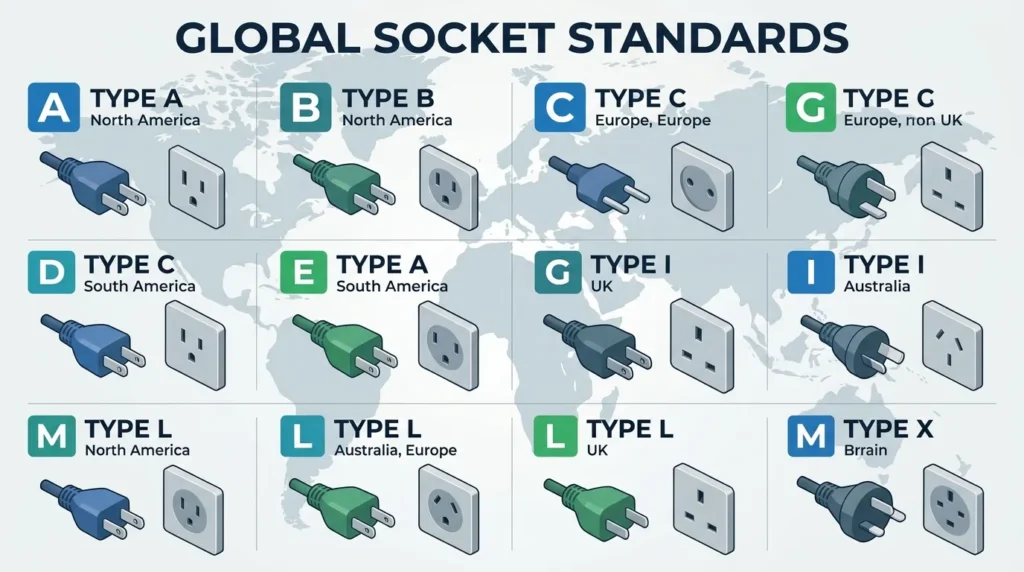
Different countries and applications require different socket designs. Each type is built for specific voltage, current, and safety requirements.
1. Two-Pin Socket
A two-pin socket has two contact holes for live and neutral connections.
Features
- No earth connection
- Compact design
- Used for low-power appliances
Common Applications
- Phone chargers
- Small lamps
- Table fans
- Radios
2. Three-Pin Socket
A three-pin socket includes:
- Live terminal
- Neutral terminal
- Earth terminal
This is the safest and most common household socket.
Applications
- Refrigerators
- Washing machines
- Computers
- Air conditioners
- Microwave ovens
3. Universal Socket
Universal sockets accept several plug types from different countries.
Advantages
- Supports multiple plug designs
- Convenient for travelers
- Common in hotels and airports
4. Industrial Socket
Industrial sockets are designed for heavy electrical loads.
Features
- High current capacity
- Strong insulation
- Weather-resistant construction
- Locking mechanism
Applications
- Factories
- Construction sites
- Industrial machinery
5. Weatherproof Socket
Weatherproof sockets protect against:
- Rain
- Dust
- Moisture
- Outdoor environments
They usually include protective covers and sealed housings.
6. Smart Socket
Smart sockets use modern electronics to provide advanced control.
Features
- Wi-Fi connectivity
- Mobile app control
- Timer settings
- Energy monitoring
- Voice assistant support
These sockets are becoming increasingly popular in smart homes.
Main Components of a Socket
Understanding the internal parts helps explain how sockets provide safe and reliable electrical connections.
Socket Body
The outer housing protects internal parts from physical damage and accidental contact.
It is usually made from flame-resistant plastic or durable insulating materials.
Contact Terminals
Metal terminals connect the building wiring to the socket contacts.
They provide secure electrical connections.
Contact Springs
Spring contacts grip the plug pins tightly.
This ensures:
- Low resistance
- Stable current flow
- Reduced heating
Earth Terminal
The earth terminal provides a safe path for fault current.
It significantly reduces the risk of electric shock.
Face Plate
The face plate covers the front of the socket and provides a neat appearance while protecting internal components.
Mounting Box
The mounting box holds the socket securely inside the wall.
Terminal Screws
These screws firmly secure electrical wires to the socket terminals.
Loose screws may cause overheating and electrical failures.
Advantages of Socket
Electrical sockets provide many practical benefits in everyday life.
- Safe electrical connection for appliances
- Easy plug-and-play operation
- Quick installation and replacement
- Supports various electrical devices
- Reduces direct wire handling
- Improves electrical safety with grounding
- Available in different current ratings
- Compatible with modern safety devices
- Long service life
- Suitable for residential, commercial, and industrial use
Socket Advantages and Disadvantages
Every electrical device has strengths and limitations.
Advantages
- Easy to use
- Reliable electrical connection
- Low maintenance
- Affordable
- Wide availability
- Supports grounding protection
- Compatible with circuit breakers and RCD protection
Disadvantages
- Poor-quality sockets wear out quickly
- Loose contacts may cause overheating
- Incorrect installation increases electrical hazards
- Not all sockets support high-power equipment
- Different countries use different socket standards
- Damaged sockets can become fire hazards
Socket Applications
The wide range of socket applications makes them essential in every electrical installation.
Home Applications
Sockets power many household appliances, including:
- Television
- Refrigerator
- Washing machine
- Microwave
- Vacuum cleaner
- Laptop
- Mobile charger
- Electric iron
- Kitchen appliances
Commercial Buildings
Offices use sockets for:
- Computers
- Printers
- Networking equipment
- Conference systems
- Air conditioning
- Lighting equipment
Industrial Applications
Factories require heavy-duty sockets for:
- Electric motors
- Welding machines
- Compressors
- Pumps
- Industrial tools
- CNC machines
Healthcare Facilities
Hospitals use specialized sockets for:
- Medical equipment
- Diagnostic machines
- Ventilators
- Patient monitoring systems
Smart Homes
Modern homes use smart sockets for:
- Remote switching
- Energy management
- Voice control
- Home automation
Difference Between Socket and Plug
Many beginners confuse plugs and sockets.
| Feature | Socket | Plug |
|---|---|---|
| Purpose | Receives electrical connection | Connects appliance to socket |
| Installation | Fixed on wall | Attached to appliance cable |
| Movement | Stationary | Portable |
| Power Source | Connected to wiring | Connected to appliance |
| Safety | Provides protected connection | Carries power to appliance |
This explains the difference between plug and socket, one of the most common beginner questions.
Selection Guide
Choosing the correct socket improves safety, reliability, and convenience.
Check Current Rating
Choose the socket according to the appliance load.
Examples:
- 5A socket for small appliances
- 13A or 15A socket for higher loads
- Higher ratings for industrial equipment
Verify Voltage Rating
Ensure the socket matches your country’s electrical supply voltage.
Consider Safety Features
Look for:
- Earth connection
- Child safety shutters
- Fire-resistant materials
- Quality certification
Indoor or Outdoor Use
Use weatherproof sockets outdoors.
Indoor sockets should not be exposed to moisture.
Choose Good Quality Materials
Certified sockets last longer and provide better safety.
Avoid very cheap products with poor insulation.
Think About Future Needs
Smart homes may benefit from:
- USB charging sockets
- Smart Wi-Fi sockets
- Surge-protected sockets
Common Problems & Solutions
Why is the socket getting hot?
Possible causes
- Loose terminals
- Overloaded circuit
- Poor contact
- Damaged socket
Solution
Tighten connections or replace the socket.
Why is there no power?
Possible causes
- Tripped breaker
- Faulty wiring
- Loose connection
Solution
Check the breaker and inspect wiring safely.
Why does the plug feel loose?
Cause
The internal spring contacts have worn out.
Solution
Replace the socket.
Why are sparks visible when plugging in?
Cause
Small sparks may occur briefly, but continuous sparking indicates poor contacts or overloaded equipment.
Solution
Disconnect power and inspect the socket.
Why is the breaker tripping?
Possible causes
- Short circuit
- Faulty appliance
- Damaged socket
- Earth leakage
Solution
Identify the faulty equipment before resetting the breaker.
Can a socket wear out?
Yes.
Frequent plugging and unplugging gradually weakens the internal contacts.
Replacing old sockets improves both safety and performance.
Future Trends in Socket Technology
Electrical sockets continue to evolve with modern technology.
Some exciting developments include:
Smart Wi-Fi Sockets
Users can control appliances remotely using smartphones.
USB Integrated Sockets
Many modern sockets include USB charging ports for phones and tablets.
Energy Monitoring
Smart sockets can measure:
- Voltage
- Current
- Power consumption
- Electricity costs
Touch-Control Sockets
Capacitive touch technology is replacing traditional switches in premium installations.
IoT Integration
Future sockets will communicate directly with smart home systems for automated energy management.
Enhanced Safety Features
New designs include:
- Arc fault detection
- Better child protection
- Improved surge protection
- Fire-resistant materials
As homes become smarter and more energy-efficient, socket technology will continue to improve.
Conclusion
Electrical sockets are one of the most essential components of every electrical installation. They provide a safe, reliable, and convenient connection between electrical appliances and the power supply. Understanding what is socket, its working principle, different types, components, socket applications, and socket advantages and disadvantages helps students, technicians, engineers, and homeowners make informed decisions. Selecting the correct socket based on voltage, current rating, safety features, and intended application improves both performance and electrical safety. As technology advances, smart sockets with energy monitoring, remote control, and enhanced protection are becoming increasingly common. A solid understanding of electrical sockets forms an important foundation for anyone learning electrical engineering or working with modern electrical systems.