
Imagine you are driving a car. When you press the accelerator lightly, the car speeds up even though you are using very little force. This happens because a small control action is used to manage a larger mechanical output. In electrical systems, a similar idea is used through a device called a relay.
A relay is one of the most important switching devices in electrical engineering. It allows a low-power signal to control a high-power circuit safely and efficiently. Without relays, automation systems, motor protection circuits, and many industrial control systems would not work properly.
Understanding what is a relay is essential for electrical students, engineers, technicians, and beginners. This component is widely used in protection systems and automation panels.
In this article, I will explain relay working principle, types of relays, relay applications, advantages and disadvantages, and selection guidelines in simple language.
What is a Relay?
A relay is an electromagnetic switching device that uses a small electrical signal to control a larger electrical load.
Simple Explanation
- Relay acts like an electrically controlled switch.
- It allows circuit isolation between control and load side.
- A low-power circuit controls a high-power circuit.
Practical Example
In motor control systems, a small control signal from a PLC can operate a relay, and that relay can start or stop a large motor.
So, when we ask what is a relay, remember this simple idea:
Relay is a safe electrical switching interface.
Relay Working Principle
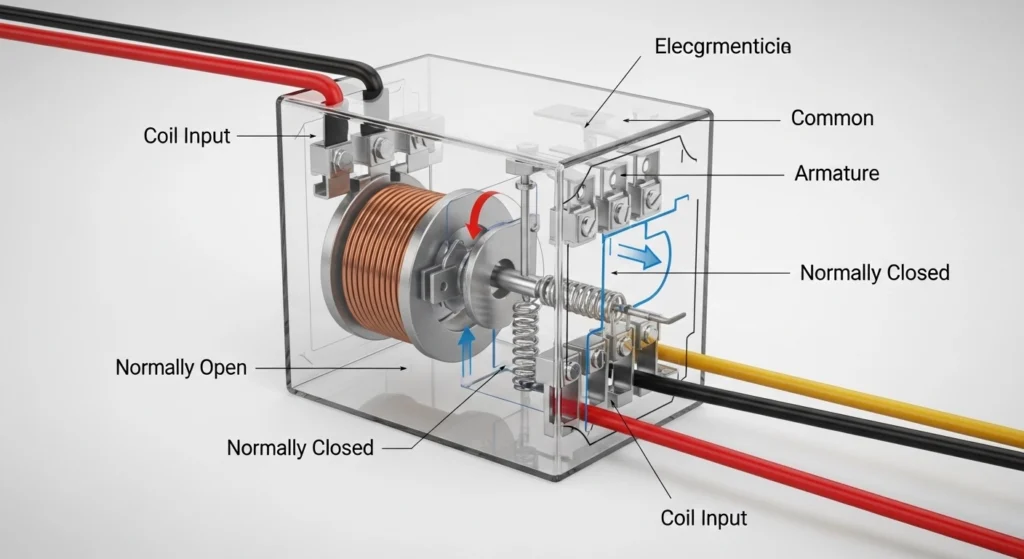
The relay working principle is based on electromagnetic force.
Let’s explain step-by-step.
Step 1: Apply Control Signal
- When voltage is applied to relay coil, current flows.
Step 2: Magnetic Field Generation
- Current passing through coil creates magnetic field.
Step 3: Armature Movement
- Magnetic force pulls the armature.
Step 4: Contact Switching
- Contacts either open or close circuit.
Step 5: Load Control
- High-power circuit is controlled safely.
Simple Analogy
Think of relay like a door lock system:
- Small key movement (control signal)
- Controls big door movement (load circuit)
That is relay working principle in simple words.
Types of Relays
Relays are classified based on construction and application.
Electromagnetic Relay
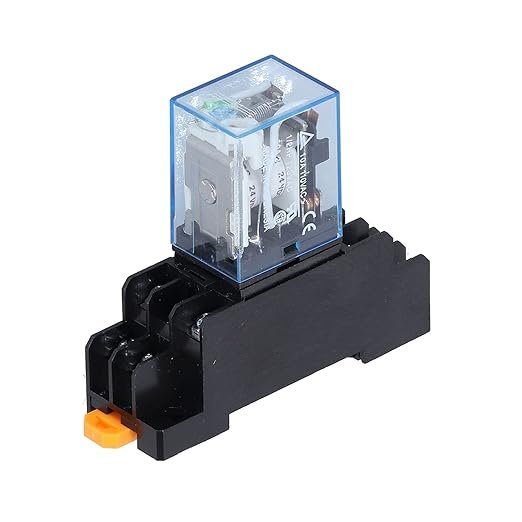
An electromagnetic relay is an electrical switching device used to control a high-power circuit using a low-power signal. It works on the principle of electromagnetism, where an electric current creates a magnetic field that activates a mechanical switch. Electromagnetic relays are widely used in protection systems, automation, control panels, and industrial electrical circuits because they provide safe and reliable switching between control and power circuits.
The working principle of an electromagnetic relay is based on Electromagnetism. When a small current flows through the relay coil, it generates a magnetic field. This magnetic field attracts a movable iron armature towards the coil, which changes the position of the contacts. As a result, the circuit is either opened or closed depending on the design (normally open or normally closed). When the current is removed, the magnetic field disappears, and a spring returns the armature to its original position.
An electromagnetic relay consists of key parts such as a coil, core, armature, spring, and contact points. The coil acts as an electromagnet, while the armature is the moving part that operates the contacts. The contacts are responsible for switching the external circuit. The spring helps return the armature when the coil is de-energized.
One of the main advantages of an electromagnetic relay is its ability to control high-voltage or high-current circuits using a small control signal. It provides electrical isolation between control and power circuits, ensuring safety. It is also simple, cost-effective, and reliable for many applications. However, it has moving parts, which can wear out over time, and it may produce noise during operation.
Overall, an electromagnetic relay is an essential device in electrical engineering. It is widely used for protection, automation, and control systems due to its simple operation, reliability, and safety features.
- Most common type.
- Works using coil magnetism.
- Used in basic control circuits.
Solid State Relay (SSR)
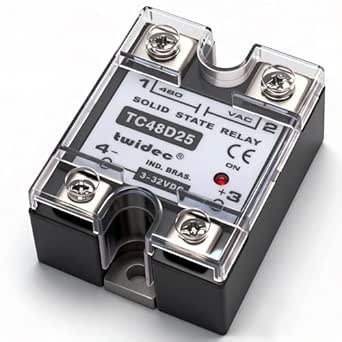
A Solid State Relay (SSR) is an electronic switching device used to control electrical loads without any moving parts. Unlike traditional electromagnetic relays, an SSR uses semiconductor components such as thyristors, triacs, or transistors to perform switching operations. It is widely used in industrial automation, heating systems, motor control, and electronic circuits because it offers fast switching, high reliability, and silent operation.
The working principle of a Solid State Relay is based on Electromagnetism and semiconductor switching. When a small input voltage is applied to the control terminal, it activates an internal opto-isolator. This opto-isolator transfers the signal using light, which then triggers the semiconductor switch on the output side. As a result, the load circuit is turned ON or OFF without any physical contact movement. This makes the operation very fast and efficient.
A Solid State Relay consists of key components such as an input control circuit, opto-isolator, semiconductor switching device, and output terminals. The opto-isolator provides electrical isolation between the control circuit and the load circuit, ensuring safety. The semiconductor device handles the switching of high voltage or current loads.
One of the main advantages of SSRs is their fast switching speed and long service life because there are no mechanical parts to wear out. They operate silently and produce very little electrical noise. SSRs are also highly reliable and suitable for frequent switching applications. However, they generate heat during operation and may require proper heat sinks. They are also more expensive than traditional relays.
Overall, a Solid State Relay is a modern and efficient switching device used in advanced electrical and electronic systems. Its speed, durability, and reliability make it ideal for automation and industrial control applications.
- No moving parts.
- Uses semiconductor switching.
- High-speed operation.
- Long life.
Solid state relays are becoming popular in modern automation systems.
Thermal Relay
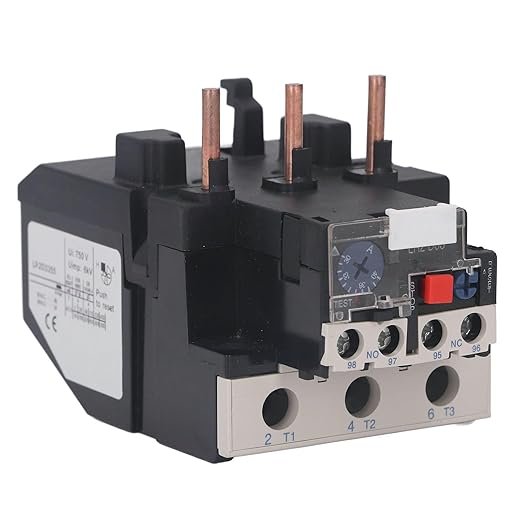
A Thermal Relay is an electrical protection device used to protect motors and electrical equipment from overheating caused by overload conditions. It works by sensing excess current and disconnecting the circuit when the temperature rises beyond a safe limit. Thermal relays are commonly used in motor control centers, industrial machines, pumps, and compressors to ensure safe and reliable operation.
The working principle of a Thermal Relay is based on the heating effect of electric current, which is related to Joule Heating. When excessive current flows through the circuit for a long time, it generates heat in a bimetallic strip inside the relay. This strip is made of two different metals with different expansion rates. When heated, it bends due to unequal expansion. This bending action triggers the mechanical mechanism, which opens the contacts and stops the current flow, protecting the equipment from damage.
A thermal relay consists of key parts such as a bimetallic strip, heating coil, contact system, adjustment knob, and reset mechanism. The bimetallic strip is the main sensing element, while the heating coil carries the load current. The adjustment knob allows setting the overload protection level according to the motor rating.
One of the main advantages of a thermal relay is its simple design and reliable overload protection. It is cost-effective and easy to install. It protects motors from long-term overload conditions, increasing their lifespan. However, it is not suitable for very fast fault detection like short circuits, and it may take some time to operate because it depends on heat buildup.
Overall, a thermal relay is an important protective device in electrical systems. It ensures safe motor operation by preventing overheating and is widely used in industrial and commercial applications for reliable overload protection.
- Used for motor protection.
- Works based on temperature rise.
Reed Relay
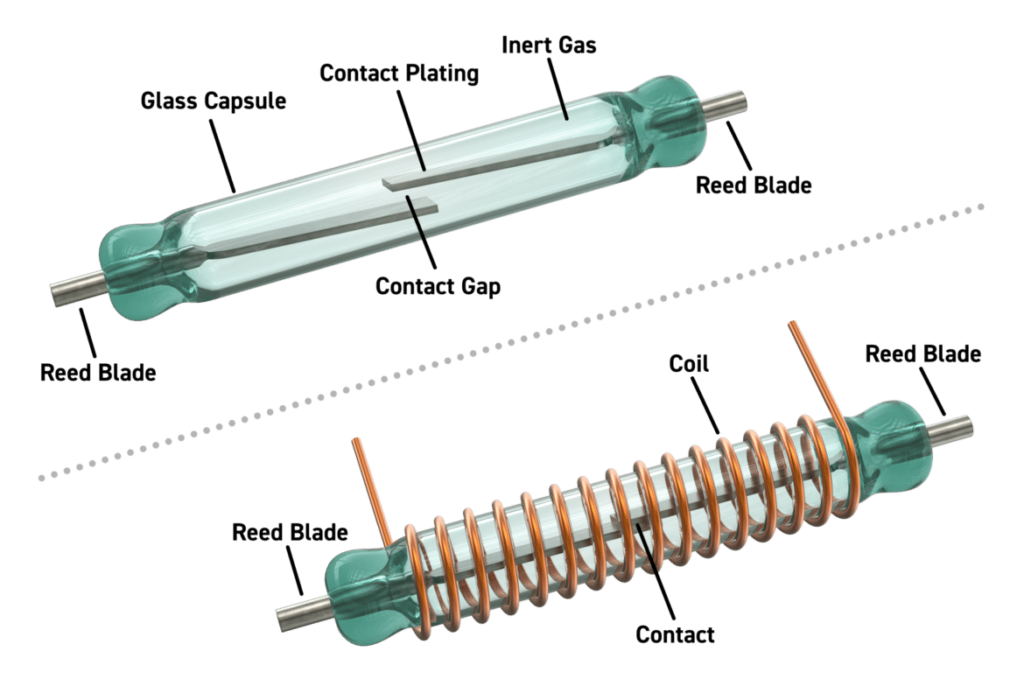
A Reed Relay is a type of electromagnetic switching device that uses a small glass-encapsulated reed switch to control electrical circuits. It is designed for fast, reliable, and low-power switching applications. Reed relays are widely used in communication systems, measurement instruments, medical equipment, and electronic control circuits due to their high speed and long service life.
The working principle of a Reed Relay is based on Electromagnetism. When a small current flows through the coil of the relay, it creates a magnetic field. This magnetic field causes two thin metal reeds inside a sealed glass tube to attract each other and close the circuit. When the current is removed, the magnetic field disappears, and the reeds separate due to their natural elasticity, opening the circuit again. This switching action happens very quickly and with high precision.
A Reed Relay consists of key components such as a coil, reed switch, glass capsule, and contact leads. The reed switch is made of ferromagnetic material and is enclosed in a vacuum or inert gas-filled glass tube to prevent oxidation and improve reliability. The coil surrounds the glass capsule and generates the magnetic field needed for operation.
One of the main advantages of a Reed Relay is its fast switching speed and high sensitivity. It requires very low operating power and provides excellent insulation between input and output circuits. It also has a long operational life because there is no physical wear like in mechanical relays. However, it is suitable only for low to medium current applications and may not handle heavy loads.
Overall, a Reed Relay is a compact and highly efficient switching device used in modern electronic systems. Its speed, reliability, and precision make it ideal for sensitive and high-frequency control applications.
- Uses magnetic reed contacts.
- Very small size.
- Used in communication circuits.
Time Delay Relay
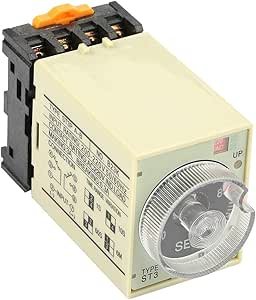
A Time Delay Relay is an electrical control device used to delay the opening or closing of contacts for a specific period of time after receiving a signal. It is widely used in industrial automation, motor control circuits, elevators, pumps, and sequential control systems where timing operations are required. This relay helps in controlling electrical devices in a planned and safe manner by introducing a controlled time delay.
The working principle of a Time Delay Relay is based on Electromagnetism along with timing mechanisms. When the relay receives an input signal, it does not immediately switch the output. Instead, it starts a timing process using electronic circuits, pneumatic systems, or thermal elements depending on the type of relay. After the preset time is completed, the relay activates or deactivates its contacts. This delay ensures proper sequencing of operations in electrical systems.
There are different types of time delay relays such as ON-delay relay, OFF-delay relay, and interval timer relay. In an ON-delay relay, the output activates after a set delay when power is applied. In an OFF-delay relay, the output remains ON for a set time after the input signal is removed. In interval timers, the relay activates for a fixed time period and then turns OFF automatically.
A Time Delay Relay consists of key components such as coil, timing circuit, control contacts, adjustment knob, and power supply terminals. Modern relays often use digital timers for more accurate and adjustable time settings. The adjustment knob allows users to set the required delay according to application needs.
One of the main advantages of a Time Delay Relay is that it improves system control and coordination between different electrical devices. It prevents sudden switching, reduces mechanical stress on equipment, and enhances safety. However, it may increase system complexity and requires proper setting of timing values for correct operation.
Overall, a Time Delay Relay is an essential device in modern electrical and automation systems. Its ability to control timing sequences makes it highly useful in industrial processes, motor control, and automated electrical operations.
- Provides delayed switching.
- Used in sequential control systems.
Understanding difference between electromagnetic relay and solid state relay is important for design selection.
Main Components of a Relay
Coil
- Produces magnetic field.
- Acts as control element.
Armature
- Mechanical moving part.
- Connected to contacts.
Contacts
There are three main contact types:
- Normally Open (NO)
- Normally Closed (NC)
- Common (COM)
Spring
- Returns armature to original position.
Each part plays an important role in switching operation.
Advantages of Relay
Here are relay advantages and disadvantages.
Advantages
- Allows safe isolation between circuits
- Low power control requirement
- Simple design
- Low cost
- Suitable for automation systems
- Easy installation
- Reliable switching
Real-world benefit: Relays protect operators from high-voltage circuits.
Disadvantages / Limitations
- Mechanical wear in moving parts
- Switching speed is slower than semiconductor devices
- Contact arcing may occur
- Noise generation during operation
- Limited lifespan for mechanical relays
Engineers must select relay type based on application.
Relay Applications
Relay applications are very wide.
Home Applications
- Refrigerator protection
- Automatic lighting
- Stabilizer circuits
- Pump control
Industrial Applications
- Motor control panels
- PLC automation
- Conveyor systems
- Protection circuits
Communication Systems
- Signal switching
- Network routing
Modern Technology
- Smart home automation
- Electric vehicle control systems
- Renewable energy protection
Relays are essential in modern control engineering.
Comparison Section
Difference Between Relay and Contactors
| Feature | Relay | Contactor |
| Load Capacity | Low to medium | High |
| Size | Small | Large |
| Main Use | Control circuits | Motor switching |
| Switching Speed | Moderate | Moderate |
| Cost | Low | Higher |
This comparison helps beginners understand selection.
Selection Guide
When selecting relay:
- Check coil voltage rating
- Check contact current rating
- Choose proper contact type
- Consider switching speed
- Check environmental conditions
Beginner Tips
- Always use protection fuse.
- Do not exceed contact current rating.
- Use heat protection if required.
- Read datasheet carefully.
Common Problems & Solutions
Why does relay not operate?
Cause:
- Low control voltage
- Coil damage
Solution:
- Measure coil voltage
- Replace relay if damaged
Why do relay contacts burn?
Cause:
- High load current
- Electrical arc formation
Solution:
- Use snubber circuits
- Select proper contact rating
How to test relay?
- Check coil resistance using multimeter
- Test contact continuity
Future Trends
Relay technology is evolving.
Solid State Relay Growth
- Faster switching
- No mechanical wear
- Longer life
Smart Control Systems
- Microcontroller-based switching
- IoT-connected protection systems
Renewable Energy Integration
Relays are widely used in:
- Solar inverter protection
- Wind energy systems
Future relays will be more intelligent and efficient.
Conclusion
A relay is a very important switching device in electrical and automation systems. It allows low-power signals to control high-power circuits safely and efficiently. Understanding what is a relay is essential for anyone studying electrical engineering.
We discussed relay working principle, types of relays, relay applications, and relay advantages and disadvantages. You also learned how to select the right relay and solve common problems.
As a beginner, focus on practical circuit testing and relay behavior under load conditions. Strong knowledge of relays will help you design reliable control and protection systems.
Relay technology continues to play a major role in modern automation and smart electrical networks.
Keep learning and practice circuit experiments.