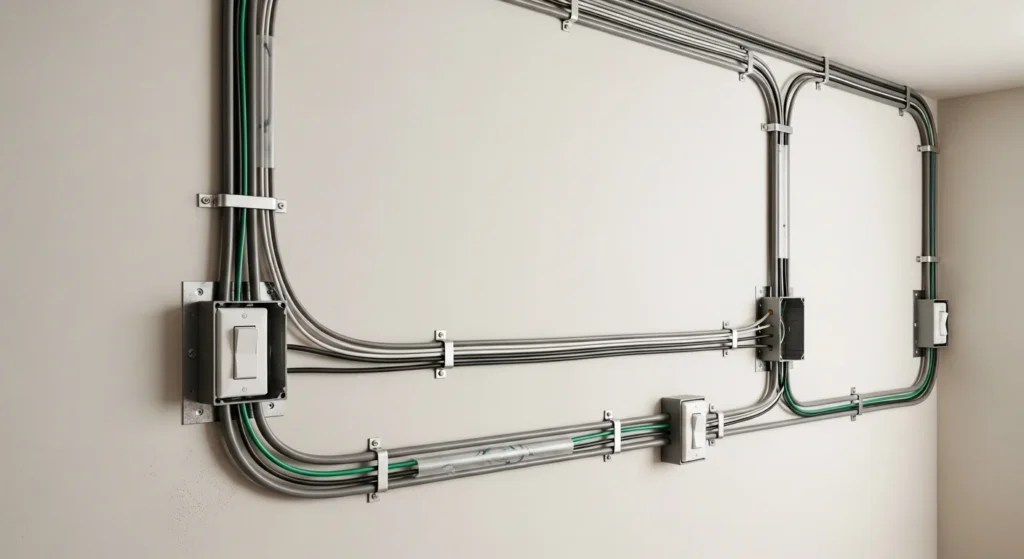

Imagine entering a house where electrical wires run neatly inside plastic or metal pipes mounted on the walls. The wires are protected, organized, and easy to inspect. This type of electrical installation is commonly known as Surface Conduit Wiring in Houses.
In many homes, especially during renovations or temporary installations, electricians prefer surface conduit wiring because it is easy to install, maintain, and modify. Instead of hiding wires inside walls, this method uses conduits fixed on the wall surface to carry electrical cables safely.
Understanding Surface Conduit Wiring in Houses is important for electrical students, engineers, technicians, and beginners who want to learn practical wiring methods used in residential buildings. It helps ensure electrical safety, proper installation, and long-term durability of the electrical system.
In this article, you will learn the surface conduit wiring working principle, different types of conduit systems, major components, advantages and disadvantages, applications in houses, comparison with concealed wiring, troubleshooting tips, and future trends in electrical wiring technology. Surface Wiring
Surface wiring is a method of electrical installation in which wires or cables are installed on the surface of walls, ceilings, or other structures instead of being hidden inside them. In this system, the wires are clearly visible and are fixed using clips, casing, conduit pipes, or trunking. Surface wiring is commonly used in houses, shops, workshops, and temporary electrical installations where breaking the walls for concealed wiring is not practical. The main purpose of surface wiring is to provide an easy and quick way to distribute electricity while keeping the wiring accessible for inspection and maintenance.
The working principle of surface wiring is simple. Electrical power is supplied from the main distribution board, and insulated cables carry the current to switches, sockets, lights, and other electrical devices. The wires are mounted along the wall surface using protective materials such as PVC casing, conduits, or clips to prevent mechanical damage and ensure safety. Because the wires are visible, electricians can easily locate faults, repair damaged cables, or modify the wiring when necessary.
Surface wiring has several advantages. It is easy to install, requires less labor, and costs less compared to concealed wiring systems. It is also easier to inspect and repair because the wires are not hidden inside walls. However, surface wiring also has some limitations. The visible wires may affect the appearance of a room, and the cables can be exposed to dust, moisture, or accidental damage if they are not properly protected.
Despite these disadvantages, surface wiring is still widely used in many electrical installations, especially in locations where flexibility, low cost, and quick installation are important. Proper installation and good quality materials can improve the safety and durability of surface wiring systems.
2. What is Surface Conduit Wiring in Houses?
Surface Conduit Wiring in Houses is an electrical wiring system where insulated electrical wires are placed inside protective conduits that are mounted on the surface of walls or ceilings.
Clear Definition
Surface conduit wiring is a method of electrical installation where conduits (pipes) are fixed externally on walls or ceilings, and electrical wires run inside them.
Simple Explanation
Instead of hiding wires inside the wall structure, this wiring system places protective pipes on the wall surface. These pipes carry electrical cables safely from one point to another.
Practical Example
For example, when a house is renovated and new electrical connections are required, electricians may install surface conduits on the wall to avoid breaking the existing walls.
This method is widely used in workshops, garages, temporary houses, and some residential buildings.
3. Surface Conduit Wiring Working Principle
The surface conduit wiring working principle is simple and focuses on protecting electrical wires while allowing easy installation and maintenance.
Step-by-Step Working Process
- Electrical power enters the distribution board
Electricity is supplied from the main distribution board of the house. - Wires are placed inside conduits
Insulated electrical wires are inserted into plastic or metal conduits. - Conduits are mounted on wall surfaces
The conduits are fixed using clamps or saddles. - Wires connect to switches and sockets
Electrical cables travel through the conduits to supply power to switches, lights, and outlets. - Protection and insulation
The conduit protects wires from mechanical damage, moisture, and environmental factors.
Simple Analogy
Think of conduits like protective tunnels for electrical wires. Just as a tunnel protects vehicles from external conditions, conduits protect electrical cables.
4. Types / Classification
There are several types of Surface Conduit Wiring in Houses, depending on the material and installation method.
PVC Conduit Wiring
PVC conduits are made from plastic materials and are widely used in residential wiring.
Features
- Lightweight
- Corrosion-resistant
- Easy to install
- Affordable
PVC conduits are commonly used in houses and small buildings.
Metal Conduit Wiring
Metal conduits are made from steel or aluminum.
Features
- Strong and durable
- High mechanical protection
- Suitable for industrial environments
These conduits are often used in workshops and factories.
Flexible Conduit Wiring
Flexible conduits are bendable pipes used where wiring paths are complex.
Features
- Easy to bend around obstacles
- Used for machines or equipment
- Provides moderate protection
Flexible conduits are often used in equipment connections.
5. Main Components
A proper surface conduit wiring system includes several important components.
Conduit Pipes
Conduit pipes protect electrical wires from damage and environmental exposure.
Electrical Wires
Insulated wires carry electrical current from the power source to electrical devices.
Junction Boxes
Junction boxes connect multiple wires safely and distribute electricity to different circuits.
Saddles or Clamps
These are used to fix conduits firmly to walls or ceilings.
Bends and Elbows
These fittings help change the direction of conduit pipes.
Switches and Sockets
Switches control electrical devices, while sockets provide connection points for appliances.
6. Surface Conduit Wiring Advantages
The surface conduit wiring advantages and disadvantages should be understood before selecting this wiring method.
Advantages
- Easy installation without breaking walls
- Simple maintenance and repair
- Wires are easy to inspect
- Suitable for renovations
- Flexible for future modifications
- Provides mechanical protection for wires
Real-World Benefits
Electricians can easily add new circuits or modify wiring without damaging the building structure.
7. Disadvantages / Limitations
Although surface conduit wiring has many benefits, it also has some limitations.
Disadvantages
- Visible conduits may affect interior appearance
- Dust accumulation around conduits
- Slightly less aesthetic than concealed wiring
- Improper installation may lead to loose conduits
- Requires proper planning to avoid clutter
Despite these limitations, it remains a popular wiring system for practical installations.
8. Surface Conduit Wiring Applications
The surface conduit wiring applications cover various residential and industrial environments.
Residential Houses
Used in houses where concealed wiring is not possible or during renovations.
Workshops and Garages
Provides strong protection for wires in mechanical environments.
Commercial Buildings
Used in shops, offices, and small businesses.
Industrial Facilities
Metal conduit wiring protects electrical cables in factories.
Temporary Installations
Used for temporary electrical setups during construction projects.
9. Comparison Section
Understanding the difference between surface conduit wiring and concealed conduit wiring helps electricians choose the best system.
| Feature | Surface Conduit Wiring | Concealed Conduit Wiring |
|---|---|---|
| Installation | Mounted on wall surface | Installed inside walls |
| Maintenance | Easy to repair | Difficult to repair |
| Appearance | Visible conduits | Hidden wiring |
| Cost | Lower installation cost | Higher installation cost |
| Flexibility | Easy modification | Difficult modification |
Both wiring systems have advantages depending on the building design and installation requirements.
10. Selection Guide
Choosing the right surface conduit wiring system requires careful consideration.
Important Factors
- Type of building
- Environmental conditions
- Budget
- Safety requirements
- Ease of maintenance
Tips for Beginners
- Use PVC conduits for residential installations.
- Use metal conduits in high-risk environments.
- Plan conduit routes before installation.
- Follow electrical safety standards.
- Ensure proper grounding and insulation.
Proper planning ensures a safe and reliable electrical system.
11. Common Problems & Solutions
Q1: Why do conduits become loose?
This happens when clamps or saddles are not installed properly.
Solution: Tighten or replace the clamps.
Q2: Why do wires get damaged inside conduits?
Sharp bends or poor installation can damage insulation.
Solution: Use smooth conduit bends and proper wiring techniques.
Q3: Why do junction boxes overheat?
Overloading circuits can cause overheating.
Solution: Avoid connecting too many devices to one circuit.
Q4: Why is electricity not reaching outlets?
Loose connections or damaged wires may interrupt the circuit.
Solution: Check connections inside junction boxes.
12. Future Trends
Electrical wiring technology continues to evolve with modern building requirements.
Smart Home Wiring
Modern homes integrate conduits with smart electrical systems.
Fire-Resistant Conduits
Advanced materials improve fire safety in electrical wiring.
Modular Electrical Systems
Future installations may allow easier upgrades and modifications.
Sustainable Electrical Materials
Eco-friendly conduit materials are becoming more common.
These innovations will improve electrical safety and installation efficiency.
13. Conclusion
Surface Conduit Wiring in Houses is a practical and widely used electrical wiring method that provides protection, accessibility, and flexibility. By installing conduits on the surface of walls or ceilings, electricians can easily route electrical wires while ensuring safety and durability.
This wiring system is particularly useful in renovations, temporary installations, workshops, and buildings where concealed wiring is difficult. Although it may not be as visually appealing as concealed wiring, its advantages in maintenance and modification make it highly practical.
For electrical students and beginners, understanding the surface conduit wiring working principle, applications, and advantages and disadvantages is essential for developing strong electrical installation skills. With proper installation techniques and safety standards, surface conduit wiring can provide a reliable and efficient electrical system for residential buildings.