
Imagine a situation where the electricity suddenly goes out in your home during a hot summer evening. Lights turn off, fans stop working, and important appliances like refrigerators and routers shut down. In such situations, many households and small businesses rely on generators to restore power quickly. One of the most common solutions used in homes and small offices is a single phase generator.
Single phase generators are widely used because they are simple, reliable, and suitable for small to medium electrical loads. These generators provide power to everyday appliances such as lights, fans, televisions, computers, and small motors. For electricians, technicians, and engineering students, understanding single phase generator types is essential for selecting the right power solution.
Different types of single phase generators are designed for different applications. Some are portable and ideal for homes, while others are used in small commercial facilities or construction sites.
In this article, you will learn what a single phase generator is, the single phase generator working principle, different types, key components, advantages and disadvantages, applications, and how to choose the right generator for specific electrical needs.
2. What is Single Phase Generator Types?
A single phase generator is an electrical machine that converts mechanical energy into electrical energy and produces a single alternating current (AC) output.
In simple terms, it generates electricity that flows through one alternating voltage waveform.
Simple Explanation
Unlike three phase systems that produce three separate electrical waves, a single phase generator produces only one electrical wave. This makes it suitable for smaller electrical loads.
Practical Example
Many homes use small portable generators during power outages. These generators power lights, fans, refrigerators, and televisions. These are typical examples of single phase generators in daily life.
Understanding single phase generator types and applications helps technicians choose the correct generator for residential or light commercial power needs.
3. Working Principle
The single phase generator working principle is based on electromagnetic induction, which is the fundamental principle used in most electrical generators.
Step-by-Step Working Process
- A mechanical source such as an engine or turbine rotates the generator shaft.
- The rotor inside the generator creates a rotating magnetic field.
- This magnetic field cuts through the stator windings.
- The movement of the magnetic field induces voltage in the stator coil.
- A single alternating current is produced at the generator output.
Simple Analogy
Imagine moving a magnet near a copper wire. The movement of the magnetic field can create electricity in the wire.
In the same way, a rotating magnetic field inside a generator creates electrical energy.
This process explains how the single phase generator working principle produces usable electrical power.
4. Types / Classification
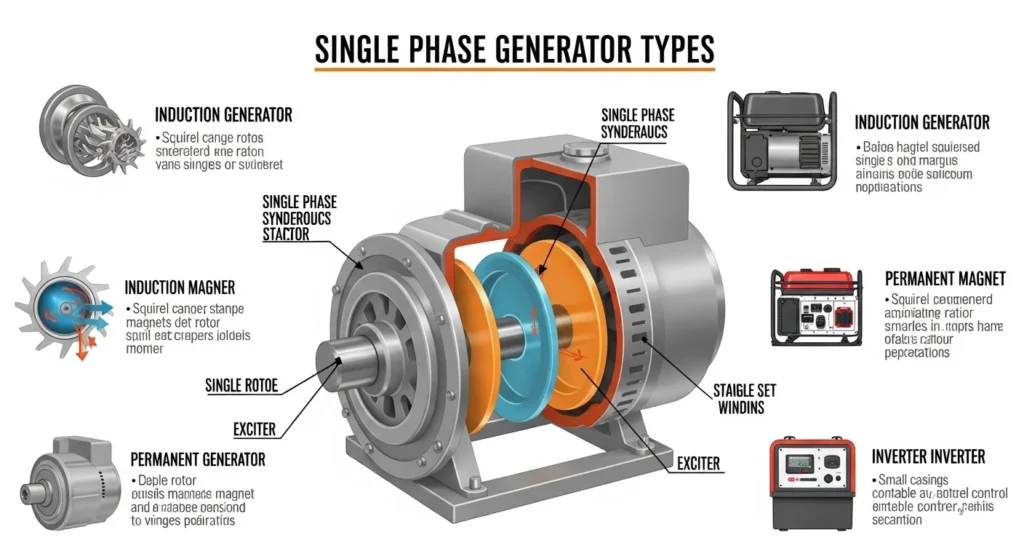
There are several single phase generator types, each designed for different uses and power capacities.
Portable Single Phase Generator: Features, Working, Applications, and Benefits
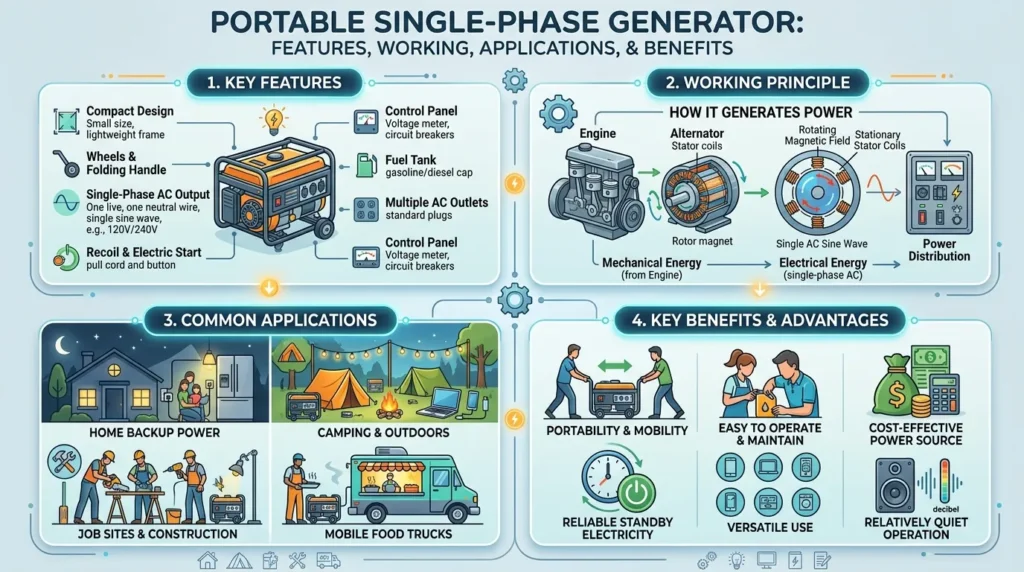
A portable single phase generator is a compact and mobile power generation device designed to provide electricity in areas where grid power is unavailable or during power outages. It is widely used in homes, small businesses, construction sites, and outdoor activities due to its ease of transportation, simple operation, and reliable performance. Unlike large industrial generators, portable single phase generators are designed for low to medium power requirements, making them ideal for running essential electrical appliances such as lights, fans, refrigerators, small tools, and communication devices. Their portability allows users to move them easily from one location to another, making them a practical solution for temporary and emergency power needs.
The working principle of a portable single phase generator is based on electromagnetic induction. The engine, which is powered by fuel such as gasoline or diesel, rotates the rotor inside the generator. As the rotor spins, it creates a magnetic field that interacts with the stator windings, producing alternating current (AC) electricity. This electrical output is then regulated by a voltage regulator to ensure stable and safe power delivery. The cooling system helps maintain optimal temperature during operation, preventing overheating and ensuring long-term durability.
Portable single phase generators are available in various sizes and power capacities, allowing users to choose a model based on their specific requirements. Smaller units are suitable for household use, while slightly larger models can support small commercial operations or outdoor events. Many modern portable generators come with additional features such as fuel efficiency systems, noise reduction technology, and automatic voltage regulation (AVR) for improved performance and user convenience.
These generators have a wide range of applications. In residential settings, they provide backup power during electricity failures. In construction sites, they are used to operate small tools and lighting systems. For outdoor events such as weddings, parties, and exhibitions, they supply electricity for sound systems and lighting equipment. Small businesses also rely on portable generators to ensure uninterrupted operations during power cuts.
One of the main advantages of portable single phase generators is their flexibility and ease of use. They can be quickly started, easily transported, and operated with minimal technical knowledge. However, proper safety measures such as correct grounding, load management, and regular maintenance are essential to ensure safe and efficient operation. Overall, portable single phase generators are a reliable and practical power solution for both emergency and everyday use.
Portable generators are small and easy to move.
Features:
- Lightweight design
- Gasoline-powered engine
- Used for home backup power
These generators are commonly used during power outages.
Inverter Single Phase Generator: Advanced Power Solution for Clean and Efficient Electricity
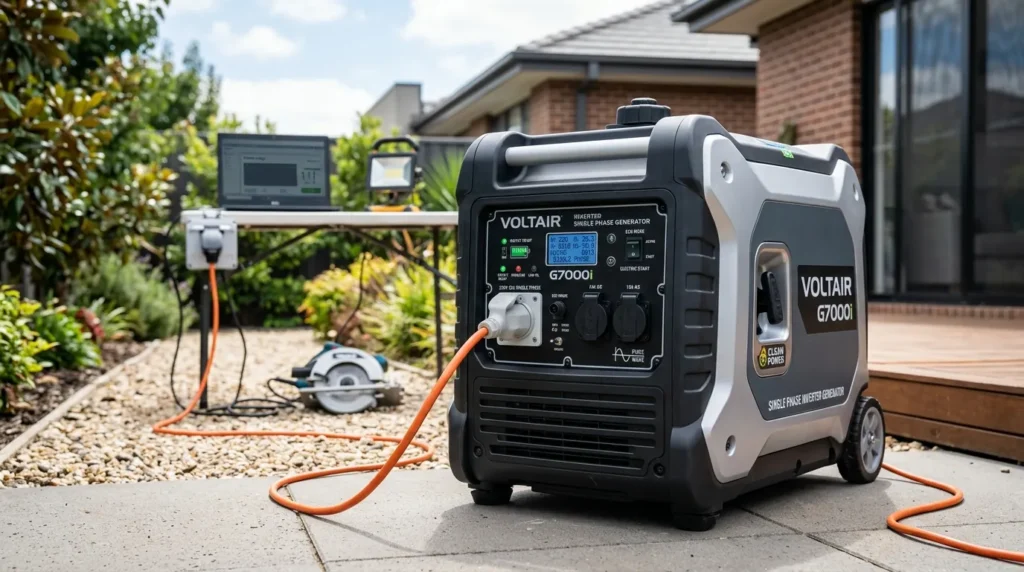
An inverter single phase generator is a modern and highly efficient power generation system designed to produce stable, clean, and reliable electricity for sensitive and everyday electrical devices. It uses advanced inverter technology to regulate voltage and frequency, making it different from traditional generators. Instead of directly supplying raw AC power, it converts mechanical energy into high-frequency AC, then into DC, and finally back into a stable AC output. This multi-step conversion process ensures smooth and consistent electricity, which is safe for electronic appliances such as laptops, televisions, smartphones, routers, and medical equipment.
The working principle of an inverter single phase generator is based on three key stages. First, the engine burns fuel such as gasoline to produce mechanical energy. This energy rotates the alternator, generating AC electricity. In the second stage, this AC power is converted into DC power using a rectifier. In the final stage, the inverter module converts the DC power back into clean AC electricity with precise control of voltage and frequency. This process eliminates fluctuations and delivers high-quality power output suitable for sensitive devices.
One of the most important features of inverter generators is their intelligent engine speed control. Unlike conventional generators that run at constant speed, inverter generators adjust their engine speed according to the load demand. When power usage is low, the engine runs slower, reducing fuel consumption and noise. When demand increases, the engine automatically increases speed to meet the required load. This makes inverter generators highly fuel-efficient and environmentally friendly.
Inverter single phase generators are widely used in residential homes, outdoor activities, and small businesses. In homes, they provide backup power during outages and safely run electronic devices. In camping, travel, and outdoor events, they offer portable and quiet power solutions. Small offices and shops also use them to protect sensitive equipment and maintain uninterrupted operations. Additionally, they are ideal for medical equipment where stable power is essential.
The main advantages of inverter single phase generators include quiet operation, high fuel efficiency, compact and lightweight design, and clean power output. They also provide better protection for sensitive electronics compared to traditional generators. However, they are generally more expensive and may have lower maximum power output.
Overall, inverter single phase generators are a smart and reliable choice for users who need safe, efficient, and portable electricity with modern technology and superior performance.
Inverter generators use modern electronics to produce clean and stable electricity.
Features:
- Stable voltage output
- Quiet operation
- Fuel efficient
These generators are ideal for sensitive devices such as laptops and mobile chargers.
Diesel Single Phase Generator: Working Principle, Features, Applications, and Advantages
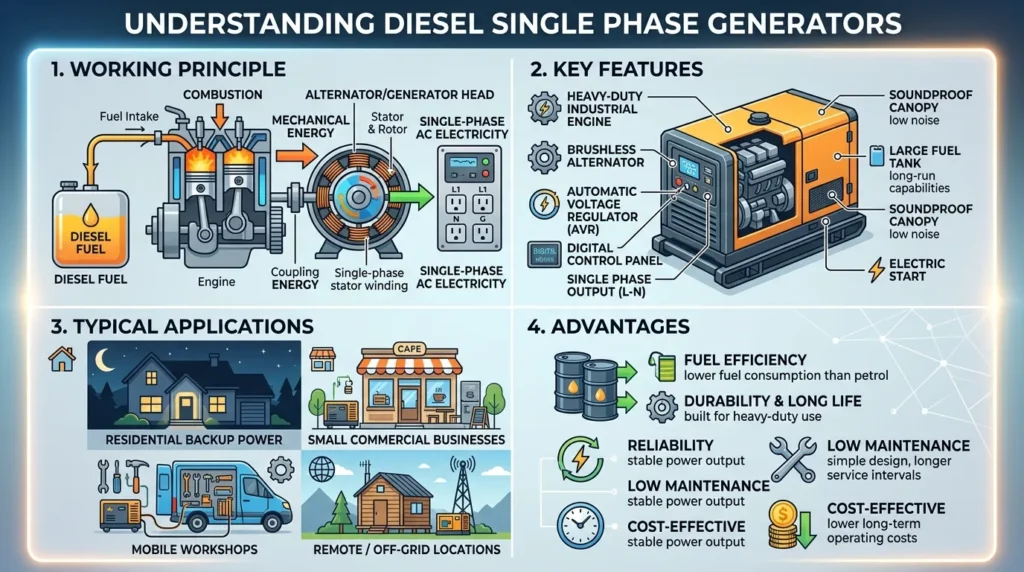
A diesel single phase generator is a reliable and powerful electricity-generating system that uses diesel fuel to produce electrical energy for homes, small businesses, and industrial applications. It is widely known for its durability, fuel efficiency, and ability to deliver consistent power output for long periods. Unlike gasoline generators, diesel generators are designed for heavy-duty use and are often preferred in environments where continuous and stable power supply is required.
The working principle of a diesel single phase generator is based on the conversion of chemical energy into mechanical energy and then into electrical energy. The diesel engine burns fuel inside the combustion chamber, creating high-pressure gases that move the pistons. This mechanical movement rotates the crankshaft, which is connected to the alternator. The alternator then converts this mechanical energy into electrical energy through electromagnetic induction. The output is regulated to produce a stable single-phase AC supply suitable for various electrical loads.
One of the key features of diesel single phase generators is their high fuel efficiency. Diesel fuel contains more energy per liter compared to gasoline, allowing the generator to run for longer durations with lower fuel consumption. These generators are also known for their strong build quality and long operational life, making them suitable for continuous and demanding usage. Many modern diesel generators come with advanced features such as automatic start systems, digital control panels, overload protection, and noise reduction technology.
Diesel single phase generators are commonly used in residential backup systems, small industries, construction sites, hospitals, and commercial buildings. They are especially useful in areas with frequent or long power outages because they can operate for extended hours without interruption. In industrial environments, they are used to power machinery, lighting systems, and essential equipment. In commercial settings, they help maintain business operations during electricity failures, preventing financial losses.
The main advantages of diesel single phase generators include excellent fuel efficiency, high durability, strong performance under heavy loads, and lower maintenance requirements compared to gasoline generators. However, they tend to be heavier, produce more noise, and have higher initial purchase costs.
Overall, diesel single phase generators are a dependable and efficient power solution for users who require long-lasting, stable, and cost-effective electricity supply in both residential and industrial environments.
Diesel generators are widely used for continuous operation.
Features:
- High durability
- Lower fuel consumption for long usage
- Suitable for small commercial facilities
They are commonly used in small shops and workshops.
Gasoline Single Phase Generator: Working Principle, Features, Applications, and Advantages
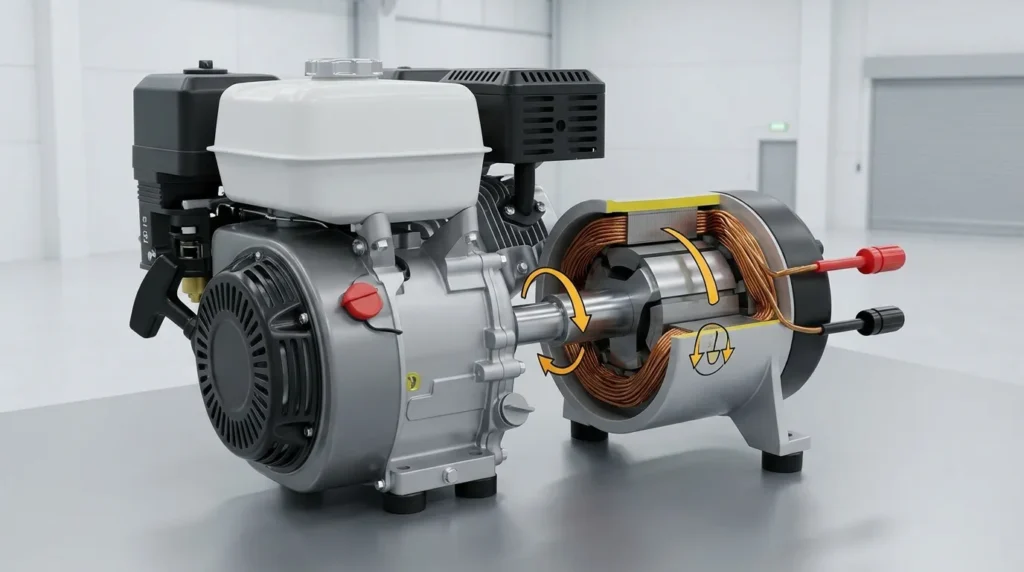
A gasoline single phase generator is a compact and widely used power generation system that runs on petrol (gasoline) to produce electricity for residential, commercial, and light industrial applications. It is known for its affordability, easy starting system, and portability, making it one of the most common types of generators used for backup power during electricity outages. These generators are suitable for low to medium power requirements and are ideal for running household appliances, small tools, lighting systems, and electronic devices.
The working principle of a gasoline single phase generator is based on the conversion of fuel energy into electrical energy. The engine burns gasoline in the combustion chamber, producing mechanical energy in the form of rotational motion. This motion turns the crankshaft, which is connected to the alternator. The alternator then converts mechanical energy into electrical energy through electromagnetic induction. The generated electricity is regulated to provide a stable single-phase AC output suitable for various electrical loads.
One of the main features of gasoline generators is their simple design and ease of operation. They are generally lightweight compared to diesel generators, which makes them easy to transport and store. Most modern gasoline generators come with features such as recoil or electric start systems, fuel gauges, overload protection, and automatic voltage regulation (AVR) to ensure stable performance and safety of connected devices.
Gasoline single phase generators are commonly used in homes for backup power during outages, powering essential appliances such as fans, lights, refrigerators, and televisions. They are also widely used in small shops, offices, and outdoor events where temporary and portable power is needed. Additionally, they are useful in construction sites for operating small tools and lighting systems where grid electricity is not available.
The advantages of gasoline generators include lower initial cost, easy availability of fuel, lightweight design, and simple maintenance. They are also quieter compared to some heavy-duty diesel generators, making them suitable for residential use. However, they have certain limitations such as higher fuel consumption, shorter running time, and lower efficiency for continuous heavy loads.
Overall, gasoline single phase generators are a practical and cost-effective solution for users who need reliable and portable backup power for everyday applications and emergency situations.
Gasoline generators are very common for home use.
Features:
- Easy to start
- Affordable price
- Suitable for light loads
They are widely used for residential backup power.
Standby Single Phase Generator: Working, Features, Applications, and Benefits
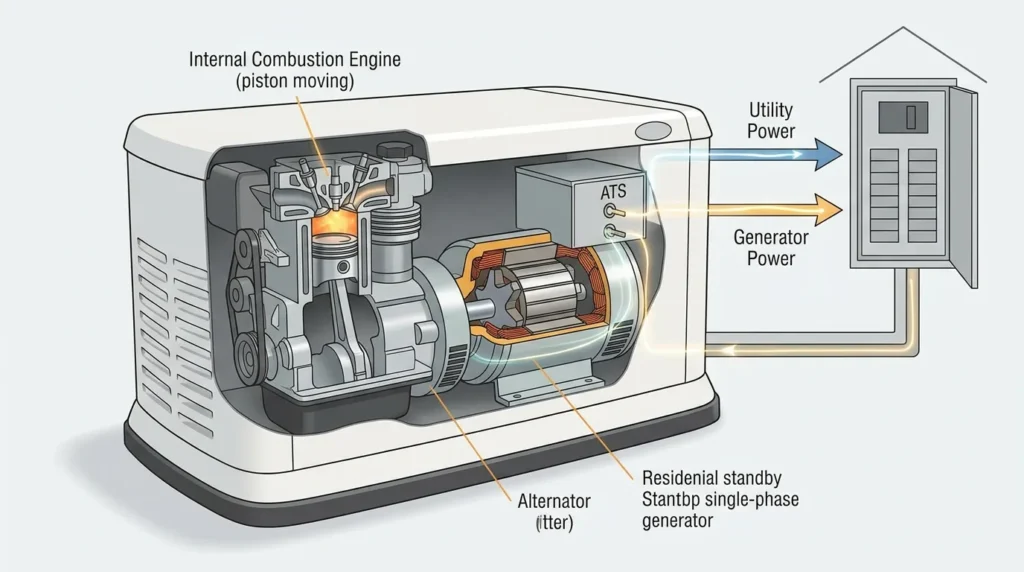
A standby single phase generator is a backup power system designed to automatically supply electricity when the main power source fails. It is commonly installed in homes, small businesses, offices, and essential service facilities to ensure uninterrupted power supply during outages. Unlike portable generators, standby generators are permanently installed and connected to the electrical system, allowing them to start automatically within seconds of a power failure. This makes them highly reliable for critical applications where continuous electricity is essential.
The working principle of a standby single phase generator involves an automatic transfer system. When the main utility power is available, the generator remains in standby mode while continuously monitoring the power supply. As soon as a power outage is detected, the automatic transfer switch (ATS) disconnects the main supply and signals the generator to start. The engine then begins producing mechanical energy, which is converted into electrical energy by the alternator. Once stable power is generated, it is supplied to the connected electrical load. When utility power returns, the system automatically switches back and shuts down the generator.
One of the key features of standby generators is their automatic operation, which eliminates the need for manual intervention during power failures. They are typically powered by diesel or gasoline engines, although some modern systems may also use natural gas. These generators are designed for high reliability, long operational life, and consistent performance. Many models include advanced features such as digital control panels, self-diagnostic systems, overload protection, and noise reduction enclosures.
Standby single phase generators are widely used in residential buildings to maintain essential services such as lighting, refrigeration, air conditioning, and security systems. In commercial settings, they help businesses continue operations during outages, preventing financial losses and downtime. They are also used in critical facilities such as hospitals, data centers, and communication systems where even a short power interruption can cause serious problems.
The main advantages of standby generators include automatic operation, fast response time, high reliability, and continuous power supply during outages. They provide peace of mind by ensuring that essential systems remain operational without manual effort. However, they are generally more expensive to install and require regular maintenance to ensure proper functioning.
Overall, standby single phase generators are an essential backup power solution for users who require uninterrupted electricity and high levels of reliability in both residential and commercial environments.
Standby generators automatically start when the main power supply fails.
Features:
- Automatic operation
- Permanent installation
- Reliable backup system
These generators are commonly used in homes and small offices.
5. Main Components of a Single Phase Generator
A single phase generator is made up of several key components that work together to convert mechanical energy into electrical energy. Each part has a specific role in ensuring smooth, efficient, and safe power generation. Understanding these components helps in better operation, maintenance, and troubleshooting of the generator.
Stator
The stator is the stationary outer part of the generator. It contains a set of coil windings where electrical energy is produced. When the rotor rotates inside the stator, it induces an electromagnetic field in the windings, which generates electricity. The quality and condition of the stator windings directly affect the generator’s output efficiency and voltage stability.
Rotor
The rotor is the rotating component of the generator. It produces a magnetic field when it spins inside the stator. This magnetic interaction between the rotor and stator is the fundamental principle behind electricity generation. The rotor must be properly balanced and maintained to ensure smooth rotation and consistent power output.
Engine
The engine is the primary source of mechanical energy in a single phase generator. It converts fuel energy into rotational motion, which drives the rotor. Depending on the model, generators may use gasoline or diesel engines. The performance of the engine directly influences the overall efficiency and power output of the generator.
Fuel System
The fuel system is responsible for supplying the required fuel (gasoline or diesel) to the engine. It includes components such as the fuel tank, fuel lines, filter, and carburetor or fuel injector. A clean and well-maintained fuel system ensures smooth engine operation and prevents issues like clogging or fuel starvation.
Voltage Regulator
The voltage regulator plays a crucial role in maintaining a stable output voltage. It automatically adjusts the electrical output to prevent fluctuations that could damage connected appliances. A properly functioning voltage regulator ensures safe and consistent power delivery.
Cooling System
The cooling system prevents the generator from overheating during continuous operation. It may include air cooling fans, ventilation openings, or liquid cooling systems depending on the generator type. Proper cooling ensures long engine life and reliable performance, especially during heavy or prolonged use.
6. Advantages
Understanding single phase generator advantages and disadvantages helps users evaluate generator performance.
Advantages
- Simple and easy to operate
- Lower cost compared to three phase generators
- Ideal for home and small business use
- Portable models are available
- Suitable for light electrical loads
- Easy maintenance
Because of these advantages, single phase generators are widely used in residential environments.
7. Disadvantages / Limitations
Despite their benefits, single phase generators also have some limitations.
Disadvantages
- Limited power output
- Not suitable for heavy industrial machines
- Less efficient for large loads
- Voltage fluctuations may occur with overload
These limitations make them less suitable for large factories or heavy industrial systems.
8. Applications of Single Phase Generator
Single phase generators are widely used in situations where a reliable and portable power supply is required. They are especially suitable for low to medium power demands and are commonly found in residential, commercial, and temporary power setups. Due to their simple design, cost-effectiveness, and ease of operation, these generators play an important role in providing backup electricity during power outages and in off-grid locations.
Residential Applications
In homes, single phase generators are primarily used as backup power sources during electricity failures. They help maintain essential household operations such as lighting systems, fans, refrigerators, and other basic electrical appliances. In areas with frequent power cuts, these generators ensure comfort and convenience by keeping daily activities uninterrupted.
Small Commercial Applications
Single phase generators are also widely used in small businesses such as retail shops, restaurants, and small offices. They provide backup power to run essential equipment like lighting, billing systems, computers, and cooling devices. This ensures smooth business operations even during unexpected power outages, reducing downtime and financial losses.
Construction Sites
On construction sites, portable single phase generators are commonly used to power small tools and equipment. They are especially useful in locations where grid electricity is not available. These generators help operate drills, grinders, lighting systems, and other light machinery, making construction work more efficient and continuous.
Outdoor Events
Single phase generators are also essential for outdoor events such as weddings, concerts, exhibitions, and public gatherings. They provide reliable electricity for lighting systems, sound equipment, stage setups, and other event requirements. Their portability and ease of setup make them ideal for temporary power needs in open spaces.
Overall, single phase generators are versatile power solutions that support a wide range of applications in residential, commercial, construction, and event-based environments. Their ability to deliver stable and portable electricity makes them highly valuable in both emergency and planned power usage scenarios.
9. Comparison Section
Many beginners ask about the difference between single phase and three phase generators.
| Feature | Single Phase Generator | Three Phase Generator |
|---|---|---|
| Power Capacity | Lower | Higher |
| Efficiency | Moderate | High |
| Applications | Homes and small businesses | Large industries |
| Cost | Lower | Higher |
| Installation | Simple | More complex |
This comparison helps users choose the correct generator for their electrical needs.
10. Selection Guide for Single Phase Generator
Choosing the correct single phase generator is an important decision that directly affects performance, safety, and long-term reliability. A properly selected generator ensures smooth power supply, prevents overload issues, and improves energy efficiency. Before purchasing a generator, users should carefully evaluate their power requirements, usage environment, and budget.
Important Factors
When selecting a single phase generator, several key factors should be considered. The most important is the total electrical load, which refers to the combined wattage of all appliances that will run on the generator. Understanding the type of appliances used is also essential, as sensitive devices like computers, televisions, and medical equipment require stable voltage output.
Another major consideration is the fuel type, which is usually gasoline or diesel. Gasoline generators are generally more affordable and suitable for light to medium usage, while diesel generators are more fuel-efficient and better suited for heavy or continuous operation. Portability requirements should also be evaluated, especially if the generator needs to be moved frequently between locations. Finally, the budget plays a crucial role in determining the overall quality, capacity, and features of the generator.
Tips for Beginners
For beginners, selecting the right generator can be simplified by following a few practical guidelines. First, always calculate the total wattage of all appliances you plan to use simultaneously. This helps determine the minimum power capacity required. Second, it is recommended to choose a generator with slightly higher capacity than your calculated load to ensure safe operation and to handle unexpected power demands.
Additionally, beginners should select models that include automatic voltage regulation (AVR), as it helps maintain stable output voltage and protects sensitive devices from damage. It is also important to ensure that the generator includes basic safety features such as overload protection, low-oil shutdown, and proper grounding systems.
Final Recommendation
Proper selection of a single phase generator ensures efficient performance, reduced maintenance issues, and a reliable power supply during outages. By carefully analyzing power needs, fuel options, and safety features, users can choose a generator that delivers long-lasting and stable performance for both home and small business applications.
11. Common Problems & Solutions (Single Phase Generator)
Understanding common generator problems and their solutions is important for safe operation, reliable performance, and long equipment life. Most issues occur due to improper maintenance, overloading, or faulty components. Identifying the cause early helps prevent major breakdowns and costly repairs.
Q1: Why does the generator fail to start?
A generator may fail to start due to several reasons such as low fuel level, weak or discharged battery, clogged fuel lines, or ignition system issues. In some cases, old or contaminated fuel can also prevent proper engine starting.
Solution:
Check the fuel tank and refill if necessary. Inspect the battery condition and charge or replace it if weak. Ensure that fuel lines are clean and free from blockage. Regular maintenance and using fresh fuel can help prevent starting issues.
Q2: Why does the generator produce unstable voltage?
Unstable or fluctuating voltage usually occurs when the automatic voltage regulator (AVR) is faulty or not functioning properly. It may also happen due to irregular engine speed or poor load distribution.
Solution:
Inspect the voltage regulator and replace it if damaged. Ensure the generator is running at a stable RPM. Avoid sudden load changes and distribute electrical load evenly to maintain consistent output voltage.
Q3: Why does the generator overheat?
Generator overheating is commonly caused by excessive load, poor ventilation, low engine oil levels, or prolonged continuous operation without breaks. Dust buildup around cooling components can also reduce heat dissipation.
Solution:
Reduce the electrical load to within the rated capacity of the generator. Ensure proper airflow and ventilation around the unit. Check and maintain adequate engine oil levels. Clean air filters and cooling components regularly to improve heat management.
Q4: Why is the generator producing unusual noise?
Unusual noise may indicate loose components, worn-out engine parts, misalignment, or internal mechanical wear. It can also result from insufficient lubrication or damaged bearings.
Solution:
Inspect all external and internal components for looseness or damage. Tighten any loose parts and ensure proper lubrication of moving components. If the noise persists, perform a detailed mechanical inspection or consult a qualified technician for repair.
Regular inspection and timely maintenance are essential to keep a single phase generator operating efficiently, safely, and reliably over the long term.
12. Future Trends in Single Phase Generator Technology
Modern single phase generator technology is continuously evolving to meet the increasing demand for reliable, efficient, and environmentally friendly power solutions. With advancements in engineering and digital systems, generators are becoming smarter, more fuel-efficient, and better integrated with renewable energy sources. These improvements are helping both residential and industrial users achieve stable power supply with lower operational costs and reduced environmental impact.
Smart Generators
One of the most significant advancements in generator technology is the development of smart generators. These modern systems are equipped with digital control panels, LCD displays, and advanced monitoring features that allow users to track performance in real time. Some smart generators also include remote monitoring and automatic alert systems, enabling users to check fuel levels, load conditions, maintenance status, and output performance from a distance. This technology improves convenience, reduces downtime, and enhances overall operational efficiency.
Hybrid Power Systems
Another important trend is the integration of hybrid power systems. Many modern single phase generators are now designed to work alongside renewable energy sources such as solar panels. In these hybrid systems, solar energy is used as the primary source during the day, while the generator acts as a backup during low sunlight conditions or high power demand. This combination helps reduce fuel consumption, lower electricity costs, and minimize environmental pollution, making power generation more sustainable.
Improved Fuel Efficiency
Fuel efficiency is a key focus area in modern generator design. Manufacturers are developing advanced engine technologies that consume less fuel while delivering higher output performance. These improvements not only reduce operating costs but also help in lowering carbon emissions. Features such as optimized combustion systems, automatic idle control, and energy-efficient alternators contribute to better fuel utilization and smoother performance.
Overall, these future trends are transforming single phase generators into more intelligent, efficient, and eco-friendly power solutions. With continued innovation, generators will become even more reliable and better suited to meet the growing energy needs of homes, businesses, and industries.
13. Conclusion
Single phase generators play an important role in providing reliable backup power for homes, small businesses, and portable electrical systems. Their simple design, easy operation, and affordable cost make them a popular choice for residential electricity needs.
Understanding single phase generator types, the single phase generator working principle, and their applications helps electricians and technicians select the right generator for different situations. While these generators are not suitable for heavy industrial loads, they perform extremely well in smaller power systems.
With improvements in generator technology, modern single phase generators are becoming more efficient, quieter, and more reliable. For students and professionals entering the electrical field, learning about generator systems is an important step toward understanding modern power generation and distribution.