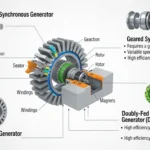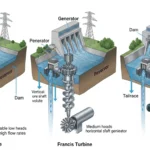

Imagine electricity traveling from a power station to your home through long transmission lines. The power plant generates thousands of kilowatts of energy, but by the time electricity reaches your house, a small portion of that energy has already been lost along the way. This loss happens because electrical conductors, wires, and equipment are not perfectly efficient.
These energy losses may seem small, but in large power systems they can result in significant wasted energy and increased operational costs. For power companies and electrical engineers, understanding how and why these losses occur is extremely important.
This is where the power loss formula becomes useful. Engineers use this formula to calculate how much electrical power is lost in transmission lines, cables, transformers, and electrical circuits.
For electrical students, technicians, and engineers, learning the power loss formula is essential for designing efficient electrical systems. It helps reduce energy waste, improve system performance, and ensure safe operation of electrical equipment.
In this article, you will learn the power loss formula, its working principle, different types of power losses, real-world power loss formula applications, and the power loss formula advantages and disadvantages. The goal is to explain this important concept clearly and practically.
What Is the Power Loss Formula?
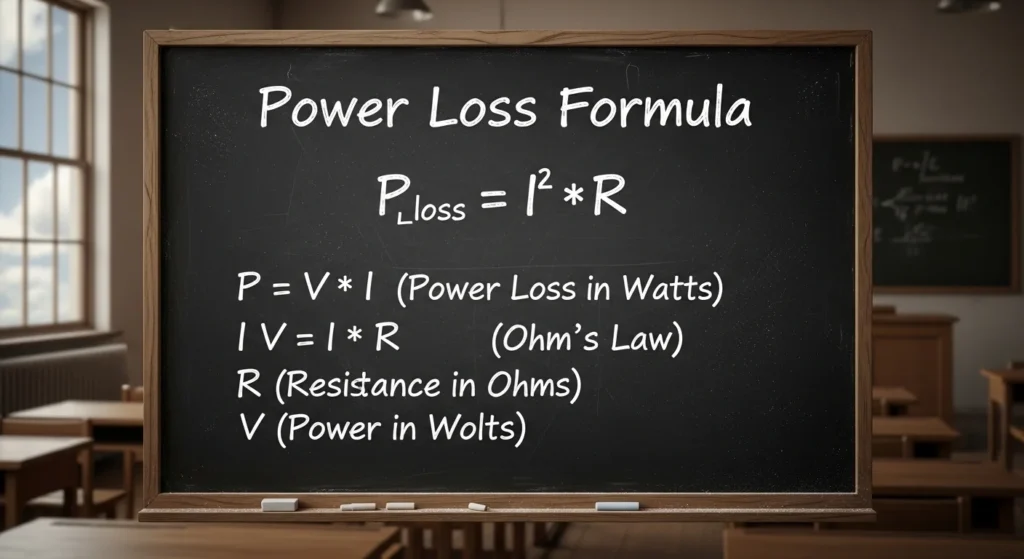
The most common formula for power loss in electrical circuits is:
P=I2R
Where:
- P = Power loss (Watts)
- I = Current (Amperes)
- R = Resistance (Ohms)
This formula shows that power loss increases with the square of the current. That means if current doubles, the power loss becomes four times greater.
Other Power Loss Formulas
Power loss can also be calculated using other electrical relationships.
Using Voltage and Current
P=VI
Where:
- P = Power (Watts)
- V = Voltage (Volts)
- I = Current (Amperes)
Using Voltage and Resistance
P=RV2
Where:
- P = Power (Watts)
- V = Voltage (Volts)
- R = Resistance (Ohms)
Example of Power Loss
Suppose:
- Current = 10 A
- Resistance = 2 Ω
Using the formula:
Power Loss = I2R
= 102×2
= 100×2
= 200 Watts
So 200 W power is lost as heat in the conductor.
Why Power Loss is Important
Power loss is important in electrical engineering because it affects:
- Transmission line efficiency
- Energy consumption
- Heating of wires
- Electrical system performance
Engineers try to reduce power loss by:
- Using high voltage transmission
- Using low resistance conductors
- Reducing current in long transmission lines
✅ Simple Rule:
Higher current → More power loss
Lower resistance → Less power loss
The power loss formula is a mathematical equation used to calculate how much electrical power is lost in a circuit due to resistance.
The most common formula used to calculate power loss is:
Power Loss (P) = I²R
Where:
- P = Power loss (Watts)
- I = Current flowing through the conductor (Amperes)
- R = Resistance of the conductor (Ohms)
This formula shows that power loss increases with the square of the current flowing through a conductor.
Simple Explanation
Whenever electric current flows through a wire, the wire’s resistance converts a small portion of electrical energy into heat. This heat represents energy that is lost from the system.
Practical Example
Suppose a transmission line carries 10 amps of current and has 2 ohms resistance.
Using the power loss formula:
P = I²R
P = (10)² × 2
P = 100 × 2
P = 200 Watts
This means 200 watts of energy are lost as heat in the conductor.
3. Power Loss Formula Working Principle
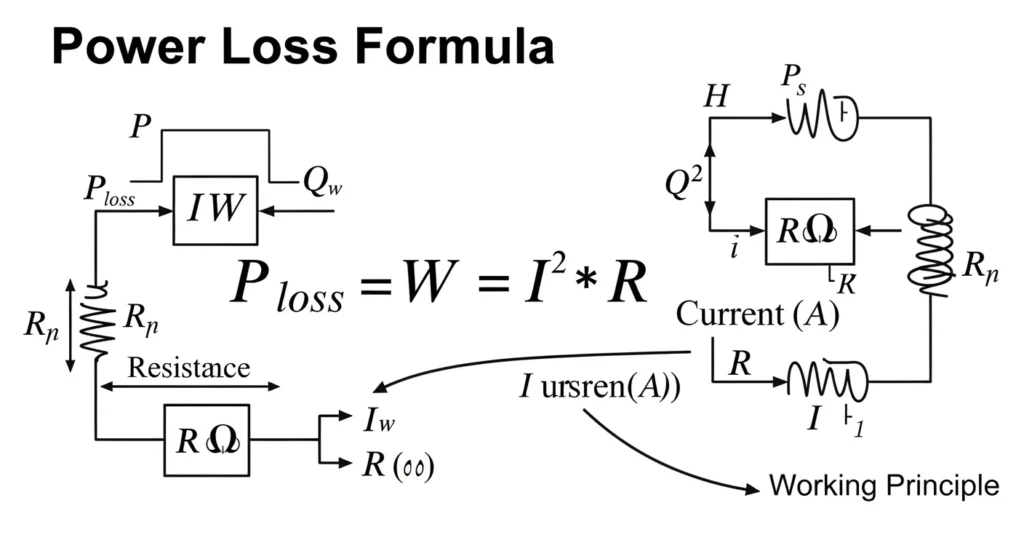
The power loss formula working principle is based on the relationship between current, resistance, and heat generation.Power Loss Formula Working Principle is an important concept in electrical engineering that explains how energy is lost in electrical systems, especially in wires and transmission lines. Whenever electric current flows through a conductor, some amount of energy is converted into heat due to the resistance of the material. This loss of energy is called power loss, and it reduces the overall efficiency of the system.
The basic formula used to calculate power loss is based on Joule’s Law of heating:
P = I^2 R
In this formula, P represents power loss in watts, I is the current flowing through the conductor in amperes, and R is the resistance of the conductor in ohms. This equation clearly shows that power loss is directly proportional to the square of the current. This means that even a small increase in current can cause a large increase in power loss.
The working principle behind this formula is simple. When current flows through a conductor, electrons collide with atoms inside the material. These collisions produce heat energy, which is lost to the surroundings. This heat generation is unavoidable in practical systems, but it can be minimized by proper design. For example, using conductors with low resistance or reducing the current can help decrease power loss.
Another important formula related to power loss in terms of voltage is:
[
P = \frac{V^2}{R}
]
Here, V represents voltage. This form of the equation is useful in certain circuit calculations. In power transmission systems, engineers often increase the voltage and reduce the current to minimize losses, because lower current results in lower ( I^2R ) losses.
In practical applications, power loss occurs in transmission lines, transformers, motors, and electrical appliances. For example, long-distance power lines experience significant losses due to resistance, which is why high-voltage transmission is used. Similarly, in household wiring, poor quality cables or loose connections can increase resistance and cause more power loss.
Understanding the working principle of the power loss formula helps engineers design efficient electrical systems. By reducing resistance, controlling current, and using proper materials, power losses can be minimized, leading to better performance, energy savings, and improved system reliability.
When electric current flows through a conductor, electrons move through the material. As these electrons move, they collide with atoms inside the conductor.
These collisions create heat energy, which results in power loss.
Power Loss vs Voltage Drop
Power loss and voltage drop are related electrical concepts, but they describe different effects.
Power loss represents the electrical power converted into heat because of conductor resistance. It is commonly calculated using:
P_loss = I²R
Voltage drop represents the reduction in voltage that occurs as current flows through a conductor with resistance. It can be calculated using:
V_drop = IR
The two are related because:
P_loss = I × V_drop
Example
Suppose a cable carries 10 A and has a resistance of 2 Ω.
Voltage drop:
V_drop = IR
V_drop = 10 × 2 = 20 V
Power loss:
P_loss = I²R
P_loss = 10² × 2 = 200 W
Therefore, the cable has a 20 V voltage drop and dissipates 200 W of power as heat.
Reducing conductor resistance helps reduce both voltage drop and resistive power loss.
Power Loss in Electrical Conductors: Step-by-Step Mechanism Explained
Power loss in an electrical conductor mainly occurs due to the conversion of electrical energy into heat energy when current flows through a material that has resistance. This process is gradual and can be clearly understood through the following steps:
You can make the heading more SEO-friendly and future-proof by adding the year and making it more descriptive.
Step-by-Step Power Loss Process in Electrical Systems (2026 Guide)
1. Electric Current Begins to Flow
Power loss starts when an electrical current flows through a conductor such as a copper or aluminum wire. The applied voltage creates an electric field that forces free electrons to move from one atom to another, allowing electrical energy to travel through the circuit.
2. Conductor Resistance Opposes Current
Every electrical conductor has a certain amount of resistance, even highly conductive materials like copper. This resistance opposes the movement of electrons and prevents all electrical energy from reaching the load efficiently.
3. Electrons Collide with Atoms
As electrons move through the conductor, they constantly collide with atoms, ions, and imperfections within the material. These collisions slow down the electron flow and increase energy consumption inside the conductor.
4. Electrical Energy Converts into Heat
The energy lost during these collisions is transformed into thermal energy (heat). The conductor becomes warmer as atomic vibrations increase, especially when large currents flow or the conductor has higher resistance.
5. Heat Causes Power Loss (I²R Loss)
The heat generated inside the conductor represents electrical power that is no longer available to the connected equipment. This phenomenon is known as power loss or I²R loss, because it is directly proportional to the square of the current (I²) multiplied by the conductor resistance (R). As current increases, power loss rises rapidly, making efficient conductor selection and system design essential for reducing energy waste.
Simple Flow Diagram of Power Loss
Electric Current
      ↓
Resistance in Conductor
      ↓
Electron Collisions
      ↓
Heat Generation
      ↓
Power Loss (I²R Loss)
Key Idea
In simple terms, the higher the current and resistance, the greater the power loss, because more electrical energy is converted into heat inside the conductor.
If you want, I can also add the formula derivation (P = I²R, P = V²/R) with a clear diagram for exams and notes.
Simple Analogy
Imagine water flowing through a narrow pipe. Friction between water and the pipe walls reduces the water pressure. Similarly, resistance in electrical conductors reduces electrical energy.
Power Loss vs Energy Loss
Power loss and energy loss are related but they are not exactly the same.
Power loss represents the rate at which electrical power is dissipated, and it is measured in watts (W) or kilowatts (kW).
Energy loss represents the total amount of energy lost over a period of time and is commonly measured in watt-hours (Wh) or kilowatt-hours (kWh).
The relationship can be expressed as:
Energy Loss = Power Loss × Time
For example, if a conductor continuously loses 200 W for 5 hours:
Energy Loss = 200 × 5
Energy Loss = 1,000 Wh
Therefore:
Energy Loss = 1 kWh
This distinction is important because electrical utilities usually calculate the economic impact of losses in terms of energy, such as kWh, rather than power alone.
Simple Difference
| Feature | Power Loss | Energy Loss |
|---|---|---|
| Meaning | Rate of energy dissipation | Total energy dissipated |
| Unit | W or kW | Wh or kWh |
| Depends on | Current and resistance | Power loss and time |
| Example | 200 W | 1 kWh over 5 hours |
4. Types / Classification of Power Loss
Power losses in electrical systems can be classified into different categories depending on how and where the energy is wasted. These losses reduce the efficiency of electrical equipment and increase operating costs. Understanding the various types of power loss helps engineers identify problems and apply suitable methods to minimize energy wastage. Proper analysis of these losses is essential for designing efficient and reliable electrical systems.
Resistive Loss (I²R Loss)
Resistive loss, also known as copper loss, is the most common form of power loss in electrical circuits. It occurs because conductors have resistance that opposes the flow of electric current. As current passes through wires and transmission lines, part of the electrical energy is converted into heat. The amount of resistive loss is calculated using the formula P = I²R, showing that losses increase rapidly as current increases.
Characteristics
- Occurs in wires and transmission lines.
- Directly related to current flow.
- Produces heat in conductors.
- Calculated using the power loss formula.
Core Loss
Core loss occurs in transformers, generators, and other electrical machines that use magnetic cores. These losses arise due to repeated magnetization and demagnetization of the iron core during AC operation. Unlike copper losses, core losses exist even when the equipment is operating without load. They generate heat and reduce the overall efficiency of electrical machines.
Types of Core Loss
Hysteresis Loss
Hysteresis loss occurs because magnetic materials resist changes in magnetization. Energy is consumed during each cycle as the magnetic domains continuously realign themselves. This loss depends on the type of core material and operating frequency.
Eddy Current Loss
Eddy current loss is caused by small circulating currents induced within the iron core. These currents generate unwanted heat and waste energy. Laminated cores are commonly used to reduce this type of loss.
Dielectric Loss
Dielectric loss occurs in insulating materials used in cables, capacitors, transformers, and high-voltage equipment. Although insulators are designed to prevent current flow, a small amount of energy is dissipated as heat when subjected to alternating electric fields. Dielectric losses become more significant at higher voltages and frequencies. Proper insulation selection helps minimize these losses.
Mechanical Loss
Mechanical losses occur in rotating electrical machines such as motors and generators. These losses are associated with the movement of mechanical parts rather than electrical resistance. Mechanical losses reduce machine efficiency and contribute to heating and wear over time. Regular maintenance is essential to keep these losses under control.
Types of Mechanical Loss
Friction Loss
Friction loss occurs due to contact between moving parts such as bearings, brushes, and shafts. Poor lubrication or worn components can increase friction and reduce machine performance.
Windage Loss
Windage loss results from air resistance encountered by rotating components. High-speed machines experience greater windage losses because of increased turbulence and drag.
Power Loss Formula Derivation
The power loss formula can be derived from the basic electrical power relationship and Ohm’s Law. This derivation helps explain why resistive power loss is proportional to the square of current.
The basic electrical power formula is:
P = VI
According to Ohm’s Law:
V = IR
Substituting V = IR into the power equation:
P = I × IR
Therefore:
P = I²R
This gives the standard resistive power loss formula:
Power Loss = I²R
Where:
- P = Power loss in watts (W)
- I = Current in amperes (A)
- R = Resistance in ohms (Ω)
Derivation Using Ohm’s Law
The same formula can also be expressed in terms of voltage and resistance.
Starting with:
P = VI
From Ohm’s Law:
I = V/R
Substituting this into the power equation:
P = V × V/R
Therefore:
P = V²/R
So, the three commonly related electrical power equations are:
- P = VI
- P = I²R
- P = V²/R
For calculating resistive power loss, the most commonly used form is P = I²R.
Why Is the I²R Formula Important?
The squared current term is especially important in power transmission. If the current increases by two times, the resistive power loss increases by four times, assuming resistance remains constant.
For example:
- 1× current → 1× loss
- 2× current → 4× loss
- 3× current → 9× loss
- 4× current → 16× loss
This is why electrical power systems use high transmission voltages to deliver the required power with lower current.
5. Main Components Affecting Power Loss
Several factors influence the amount of power loss in electrical systems. These factors determine how efficiently electricity can be transmitted and utilized. Understanding them enables engineers to improve performance, reduce energy waste, and enhance system reliability. Proper component selection plays a vital role in minimizing losses.
Current (I)
Current has the greatest impact on resistive power loss because the loss varies with the square of current. Even a small increase in current can significantly increase heat generation and energy wastage. Therefore, engineers often reduce current levels by using higher transmission voltages. Controlling current helps improve efficiency and extend equipment life.
Resistance (R)
Resistance represents the opposition offered by a conductor to the flow of current. It depends on the conductor material, length, cross-sectional area, and temperature. Higher resistance leads to greater energy losses and voltage drops. Selecting conductors with low resistance is essential for efficient electrical systems.
Conductor Length
Longer conductors have higher resistance because electrons must travel through a greater distance. As conductor length increases, power losses and voltage drops also increase. Engineers attempt to optimize system layouts to reduce unnecessary cable lengths. This helps improve overall efficiency and lower operating costs.
Conductor Material
The material used for conductors greatly influences power loss. Copper and aluminum are commonly used because they offer low resistance and good conductivity. Copper provides excellent performance, while aluminum is lighter and more economical for transmission applications. Choosing the right material ensures an effective balance between efficiency and cost.
Temperature
Temperature affects the resistance of conductors directly. As temperature rises, conductor resistance increases, causing greater power losses. Excessive heating can also damage insulation and shorten equipment lifespan. Proper cooling and ventilation systems help maintain safe operating temperatures and improve efficiency.
6. Advantages of Using the Power Loss Formula
The power loss formula is a valuable tool in electrical engineering because it allows engineers to estimate energy losses accurately. It supports the design of efficient electrical systems and helps identify areas where improvements can be made. By understanding how losses occur, organizations can reduce waste and lower costs. The formula is widely used in both academic studies and practical applications.
Advantages
- Helps calculate energy loss accurately.
- Assists in designing efficient systems.
- Improves energy management.
- Reduces electricity waste.
- Optimizes transmission line design.
- Useful for troubleshooting circuits.
7. Disadvantages / Limitations
Although the power loss formula is highly useful, it has certain limitations. It mainly focuses on resistive losses and assumes that resistance remains constant. In reality, electrical systems involve many additional factors that influence efficiency. Engineers often use advanced analytical methods alongside this formula for more accurate results.
Limitations
- Mainly applies to resistive losses.
- Assumes constant resistance.
- Does not directly include reactive power effects.
- Real systems involve additional losses.
- Advanced systems require detailed analysis.
Power Loss Formula for Three-Phase Systems
Three-phase electrical systems are widely used for power generation, transmission, and industrial equipment. In a balanced three-phase system, the total resistive power loss in the three conductors can be calculated using:
P_loss = 3I²R
Where:
- P_loss = Total three-phase power loss (W)
- I = Current in each phase (A)
- R = Resistance of each conductor (Ω)
For example, if each conductor carries 20 A and has a resistance of 0.5 Ω:
P_loss = 3 × (20)² × 0.5
P_loss = 3 × 400 × 0.5
P_loss = 600 W
Therefore, the total resistive power loss is 600 watts.
Why Three-Phase Power Loss Matters
Three-phase power loss calculations are important when designing:
- Industrial power systems
- Three-phase motors
- Distribution networks
- Transmission lines
- Industrial cables
- Electrical substations
Engineers use these calculations to select suitable conductor sizes, estimate heating, and improve overall system efficiency.
8. Power Loss Formula Applications
The power loss formula has numerous practical applications in electrical engineering. It is used to estimate energy losses, improve system efficiency, and optimize equipment design. Engineers rely on these calculations to ensure safe and economical operation. Its applications extend across power generation, transmission, distribution, and renewable energy systems.
Transmission Lines
Power utilities use the formula to estimate losses during electricity transmission over long distances. These calculations help determine conductor sizes and transmission voltages that minimize energy waste. Reducing transmission losses improves the efficiency of the power grid and lowers operating costs.
Electrical Wiring
Electrical engineers use power loss calculations when designing residential, commercial, and industrial wiring systems. The formula helps select appropriate conductor sizes and ensures that voltage drops remain within acceptable limits. This results in safer and more efficient installations.
Transformer Design
Transformer designers apply the formula to evaluate winding losses and improve transformer performance. Understanding these losses allows manufacturers to enhance efficiency and reduce heat generation. Efficient transformer design contributes to lower energy consumption and increased reliability.
Motor Systems
Power loss calculations are important for improving the efficiency of electric motors used in industries. Engineers use them to identify overload conditions, select suitable motor ratings, and optimize operating performance. This reduces operating costs and increases equipment lifespan.
Renewable Energy Systems
Wind farms and solar power plants use power loss calculations to optimize power delivery from generation sources to consumers. These calculations assist in selecting cables, designing layouts, and maximizing energy output. Efficient renewable energy systems provide greater sustainability and economic benefits.
9. Comparison Section
Difference Between Power Loss Formula and Power Formula
| Feature | Power Loss Formula | Power Formula |
|---|---|---|
| Purpose | Calculates energy loss | Calculates electrical power |
| Equation | P = I²R | P = VI |
| Application | Transmission lines and conductors | General electrical systems |
| Output | Heat loss | Useful electrical power |
Understanding the difference between power formula and power loss formula is important for electrical calculations.
10. Selection Guide
When designing electrical systems, engineers must minimize power loss.10. Methods to Reduce Power Loss
Reducing power loss is one of the main goals of electrical engineers because it improves system efficiency, lowers operating costs, and minimizes energy wastage. Excessive losses not only waste electricity but also generate heat that can damage equipment and reduce its lifespan. By applying suitable techniques, power systems can deliver electricity more effectively and economically.
Use Low-Resistance Conductors
One of the simplest ways to reduce power loss is by using conductors with low electrical resistance. Materials such as copper and aluminum are widely used because they allow electric current to flow more easily. Lower resistance means less energy is converted into heat as current passes through the conductor. Copper is especially preferred in many electrical installations because of its excellent conductivity and durability, while aluminum is often used in transmission lines due to its lighter weight and lower cost.
Benefits
- Reduces I²R losses.
- Improves system efficiency.
- Minimizes heat generation.
- Increases equipment reliability.
- Lowers long-term energy costs.
Increase Voltage
Increasing transmission voltage is one of the most effective methods of reducing power loss in electrical systems. Since power loss depends on the square of current, transmitting electricity at higher voltages allows the same amount of power to be delivered with much lower current. Lower current significantly decreases resistive losses in transmission lines.
This is why electricity generated at power stations is stepped up to very high voltages before being transmitted over long distances and then stepped down near consumers for safe use.
Benefits
- Reduces current flow.
- Minimizes transmission losses.
- Improves transmission efficiency.
- Allows long-distance power delivery.
- Reduces conductor heating.
Reduce Transmission Distance
The resistance of a conductor increases with its length. Therefore, longer transmission lines result in greater power losses. Reducing the distance electricity travels can significantly improve efficiency and reduce wasted energy.
Although long-distance transmission is sometimes unavoidable, engineers optimize network layouts and strategically place substations to minimize unnecessary line lengths.
Benefits
- Reduces conductor resistance.
- Minimizes voltage drops.
- Improves energy efficiency.
- Lowers operating costs.
- Enhances power quality.
Use Proper Conductor Size
Selecting conductors with the correct cross-sectional area is essential for efficient power transmission. Larger conductors have lower resistance because they provide a greater path for electron flow. As resistance decreases, power losses are reduced.
While larger conductors may cost more initially, they often result in substantial savings over time due to improved efficiency and lower energy losses.
Benefits
- Decreases resistance.
- Reduces heat generation.
- Improves system performance.
- Enhances safety.
- Extends equipment lifespan.
These techniques collectively help improve the efficiency of electrical systems and ensure that electricity reaches consumers with minimal losses.
11. Common Problems & Solutions
Understanding common issues related to power loss helps engineers, technicians, and students diagnose problems and implement effective solutions. Many of these problems occur regularly in electrical systems and can often be prevented through proper design and maintenance.
Q1: Why Does Power Loss Increase with Current?
Explanation
Power loss caused by resistance follows the formula:
[
P = I^2R
]
This means that current has a squared effect on power loss. Even a small increase in current can lead to a much larger increase in energy loss. For example, if the current doubles, the power loss becomes four times greater.
Solution
- Reduce unnecessary current flow.
- Increase transmission voltage.
- Balance electrical loads properly.
- Avoid overloading circuits.
- Use appropriately sized conductors.
Controlling current levels is one of the most effective ways to improve efficiency.
Q2: How Can Power Loss Be Reduced?
Explanation
Power loss cannot be completely eliminated, but it can be minimized through proper engineering practices. Reducing losses improves efficiency, decreases electricity costs, and extends equipment life.
Solution
- Use high-voltage transmission systems.
- Install thicker conductors where required.
- Choose low-resistance materials such as copper.
- Reduce transmission distances when possible.
- Perform regular maintenance.
- Ensure proper cooling and ventilation.
Applying these methods significantly improves system performance.
Q3: Why Are High Voltages Used in Electrical Power Transmission?
Explanation
Electrical transmission lines are designed to carry large amounts of power over long distances. According to the power equation:
Power (P) = Voltage (V) × Current (I)
For the same amount of power, increasing the transmission voltage reduces the current flowing through the conductor. Since power loss in transmission lines is directly proportional to the square of the current (I²R loss), lowering the current significantly reduces energy loss.
Using high voltage not only minimizes resistive heating but also improves the overall efficiency of the power system. This is why electrical utilities transmit electricity at voltages ranging from 66 kV to over 765 kV, depending on the transmission distance and system requirements.
Solution
Power transmission systems use transformers to optimize efficiency by:
- Stepping up the voltage at power generation stations.
- Reducing transmission current to minimize I²R losses.
- Increasing transmission efficiency over long distances.
- Lowering installation and operating costs.
- Stepping down the voltage near consumers for safe residential, commercial, and industrial use.
Using high-voltage transmission is one of the most effective methods for reducing power loss and ensuring reliable electricity delivery.
Q4: Why Do Electrical Wires Heat Up During Operation?
Explanation
Electrical wires heat up because every conductor has some amount of electrical resistance. As electric current flows through the conductor, resistance opposes the movement of electrons and converts part of the electrical energy into heat. This phenomenon is known as the heating effect of electric current or Joule heating.
The amount of heat produced depends on:
- Current flowing through the wire
- Conductor resistance
- Operating time
According to Joule’s Law:
Heat Produced = I²Rt
When excessive current flows through a wire, the generated heat increases rapidly. Overheating can damage cable insulation, reduce equipment life, trip protective devices, and even cause electrical fires if not properly controlled.
Solution
The following practices help prevent excessive wire heating:
- Select conductors with the correct current-carrying capacity.
- Avoid overloading electrical circuits.
- Tighten loose terminals and electrical connections.
- Use high-quality, low-resistance conductors.
- Provide adequate ventilation around electrical equipment.
- Replace damaged, aging, or undersized cables.
- Perform regular inspection, testing, and preventive maintenance.
Proper wire sizing and routine maintenance improve safety, increase equipment lifespan, and reduce unnecessary power losses.
Conclusion: Why Reducing Power Loss Is Important
Reducing power loss is essential for building safe, reliable, cost-effective, and energy-efficient electrical systems. Since electrical losses increase with conductor resistance and current, engineers use practical techniques such as high-voltage transmission, low-resistance conductors, proper cable sizing, efficient transformers, and regular system maintenance to minimize wasted energy.
Modern technologies—including smart grids, HVDC transmission, advanced conductor materials, artificial intelligence, and renewable energy integration—are further improving electrical efficiency and reducing transmission and distribution losses worldwide.
By understanding the causes of power loss and applying proven engineering solutions, students, technicians, and electrical engineers can design systems that deliver maximum power with minimum energy waste. This not only lowers operating costs and improves system reliability but also supports sustainable energy use and the development of smarter electrical power networks for the future.
12. Future Trends in Power Loss Reduction (2026): Emerging Technologies Shaping Energy-Efficient Electrical Systems
As global electricity demand continues to grow, reducing power losses has become one of the biggest priorities in modern electrical engineering. Power companies, industries, and researchers are developing advanced technologies that improve transmission efficiency, minimize energy wastage, and enhance the reliability of electrical networks. From smart grids and artificial intelligence to superconductors and renewable energy integration, these innovations are transforming how electricity is generated, transmitted, distributed, and consumed.
The future of power loss reduction focuses on creating smarter, more efficient, and environmentally friendly electrical systems that deliver maximum power with minimum energy loss.
Smart Power Grids and Intelligent Energy Management
Smart power grids are replacing traditional electrical networks with intelligent systems that use digital communication, sensors, and real-time monitoring. These grids continuously analyze electricity demand and automatically adjust power flow to reduce transmission and distribution losses.
Key benefits include:
- Real-time fault detection
- Automatic load balancing
- Improved voltage regulation
- Reduced transmission losses
- Better integration of renewable energy
- Higher overall grid reliability
As smart grid technology expands worldwide, it will play a major role in minimizing energy waste and improving power quality.
High Voltage Direct Current (HVDC) Transmission Systems
High Voltage Direct Current (HVDC) technology has become one of the most effective solutions for long-distance electricity transmission. Unlike conventional AC transmission, HVDC systems experience lower electrical losses, especially over hundreds or thousands of kilometers.
Advantages of HVDC include:
- Lower I²R (copper) losses
- Reduced transmission costs
- Improved efficiency over long distances
- Better performance for underwater and underground cables
- Easier connection of renewable energy plants
Many countries are investing heavily in HVDC infrastructure to build more efficient national and international power networks.
Superconducting Power Cables
Superconductors represent one of the most exciting future technologies in electrical engineering. These materials have nearly zero electrical resistance when cooled below their critical temperature, allowing electricity to flow with almost no energy loss.
Potential applications include:
- High-capacity power transmission
- Urban underground power networks
- Medical equipment
- Scientific research facilities
- Future smart cities
Although cooling costs currently limit widespread adoption, ongoing research is making superconducting technology more practical and affordable.
Advanced Conductor Materials
Researchers continue developing next-generation conductor materials with lower electrical resistance and higher mechanical strength.
Examples include:
- High-temperature low-sag (HTLS) conductors
- Advanced aluminum alloys
- Carbon nanotube conductors
- Graphene-based materials
- Nano-engineered conductors
These advanced materials reduce heat generation, improve current-carrying capacity, and increase transmission efficiency without requiring major infrastructure changes.
Energy-Efficient Power Electronics
Modern power electronics have dramatically improved electrical efficiency across industrial, commercial, and renewable energy systems.
New technologies include:
- Silicon Carbide (SiC) semiconductors
- Gallium Nitride (GaN) devices
- High-efficiency IGBTs
- Advanced MOSFETs
- Smart inverters
These devices reduce switching losses, improve power conversion efficiency, generate less heat, and enhance the performance of applications such as electric vehicles, solar inverters, industrial motor drives, and battery storage systems.
Renewable Energy Integration and Distributed Generation
The growing adoption of renewable energy is helping reduce overall power losses by generating electricity closer to where it is consumed.
Examples include:
- Solar photovoltaic systems
- Wind farms
- Battery energy storage systems
- Microgrids
- Hybrid renewable power systems
Distributed generation reduces the need for long transmission lines, decreases transmission losses, and improves the reliability of local electrical networks.
Artificial Intelligence (AI) and Predictive Analytics
Artificial Intelligence is becoming an essential tool for managing modern electrical power systems. AI continuously analyzes system data to improve efficiency and reduce unnecessary energy losses.
AI applications include:
- Predictive maintenance
- Load forecasting
- Fault detection
- Automatic voltage optimization
- Demand response management
- Energy consumption analysis
By identifying potential problems before failures occur, AI helps utilities reduce downtime, extend equipment life, and improve overall system efficiency.
Internet of Things (IoT) for Smart Electrical Networks
IoT technology connects electrical equipment through smart sensors and communication networks, allowing engineers to monitor system performance remotely.
Benefits include:
- Real-time equipment monitoring
- Instant fault alerts
- Remote maintenance
- Improved energy management
- Reduced operational costs
- Faster troubleshooting
IoT-enabled electrical systems help minimize energy waste while improving reliability and safety.
Smart Transformers and Digital Substations
Future substations are becoming fully digital, using intelligent transformers equipped with advanced monitoring and communication capabilities.
These technologies provide:
- Automatic voltage regulation
- Continuous condition monitoring
- Remote diagnostics
- Improved fault isolation
- Higher system efficiency
- Reduced maintenance requirements
Digital substations support the development of highly automated and energy-efficient smart grids.
Energy Storage Systems
Modern battery storage technologies are helping balance electricity supply and demand while reducing transmission losses.
Common energy storage solutions include:
- Lithium-ion batteries
- Flow batteries
- Grid-scale battery systems
- Pumped hydro storage
- Hydrogen energy storage
These systems store excess electricity during low-demand periods and supply it when demand increases, improving overall grid efficiency.
Sustainable and Green Electrical Infrastructure
Future electrical systems are increasingly focused on sustainability by using environmentally friendly materials and energy-efficient technologies.
Key developments include:
- Eco-friendly insulating materials
- Low-loss transformers
- High-efficiency motors
- Green substations
- Carbon-neutral power systems
- Smart energy management platforms
These innovations support global efforts to reduce carbon emissions while maximizing electrical efficiency.
The Future of Power Loss Reduction
The future of power loss reduction lies in the combination of smart grids, HVDC transmission, superconducting technologies, artificial intelligence, IoT, advanced conductor materials, renewable energy integration, and energy storage systems. Together, these innovations are creating electrical networks that are more efficient, reliable, intelligent, and environmentally sustainable.
As these technologies continue to evolve, they will significantly reduce transmission and distribution losses, lower operating costs, improve power quality, and help meet the world’s growing energy demands while supporting a cleaner and more sustainable future.
13. Conclusion
The power loss formula is one of the most important concepts in electrical engineering. It helps engineers calculate the amount of electrical energy lost due to resistance in conductors and electrical systems.
In this article, we explored the power loss formula working principle, different types of power losses, practical power loss formula applications, and the power loss formula advantages and disadvantages. We also discussed ways to reduce energy losses and improve electrical system efficiency.
For electrical students, engineers, and technicians, understanding power loss calculations is essential for designing efficient power transmission systems. As electrical networks continue to expand worldwide, minimizing energy loss will remain a key challenge for engineers.
Learning and applying the power loss formula is an important step toward building more efficient and sustainable electrical systems.