
Imagine a large dam where water flows rapidly through huge pipes toward powerful turbines. As the water rushes through the turbines, massive machines begin to rotate, generating electricity that powers thousands of homes and industries. This process is happening every day in hydroelectric power plants around the world.
Hydropower is one of the oldest and most reliable sources of renewable energy. Many countries rely on hydroelectric plants to generate clean electricity without burning fossil fuels. At the heart of these power plants are hydroelectric generators, which convert mechanical energy from water-driven turbines into electrical power.
Understanding hydroelectric generator types is essential for electrical students, engineers, and technicians who want to work in power generation and renewable energy systems. Different generators are used depending on water flow, turbine design, and plant capacity.
In this article, you will learn about hydroelectric generator types, their working principle, key components, advantages and disadvantages, and real-world hydroelectric generator applications. We will also compare generator designs and provide practical guidance for selecting the right generator.
By the end of this article, you will have a clear understanding of how hydroelectric generators work and why they are critical in modern power systems.
2. What is a Hydroelectric Generator?
A hydroelectric generator is an electrical machine that converts mechanical energy from water-driven turbines into electrical energy.
In simple terms, moving water rotates a turbine. The turbine is connected to a generator. As the generator rotates, it produces electricity using electromagnetic induction.
Hydroelectric generators are designed to operate continuously for long periods while maintaining high efficiency. They are usually installed in power plants built near dams, rivers, or waterfalls.
Practical Example
Consider a large dam storing water at a high elevation. When the dam releases water, the flowing water spins large turbines connected to generators. These generators produce electricity that is transmitted through power lines to cities and towns.
This process allows natural water flow to be converted into useful electrical power.
3. How Does a Hydroelectric Generator Work? (Working Principle Explained)
A hydroelectric generator works on the principle of electromagnetic induction, which states that electricity is produced when a conductor moves through a magnetic field. In a hydroelectric power plant, the energy of flowing or falling water is first converted into mechanical energy by a turbine. The rotating turbine then drives the generator’s rotor, creating a moving magnetic field. This changing magnetic field induces an electric current in the stator windings, producing electrical energy that can be supplied to homes, industries, and businesses. This process is highly efficient, environmentally friendly, and forms the foundation of modern hydropower generation.
Step-by-Step Working Process of a Hydroelectric Generator
1. Water Storage
Water is collected in a reservoir behind a dam, where it stores potential energy. The height of the water determines the amount of energy available for power generation.
2. Water Flows Through the Penstock
When electricity is needed, water is released from the reservoir and flows through large pipes called penstocks. As the water moves downward, its potential energy is converted into kinetic energy.
3. Turbine Rotation
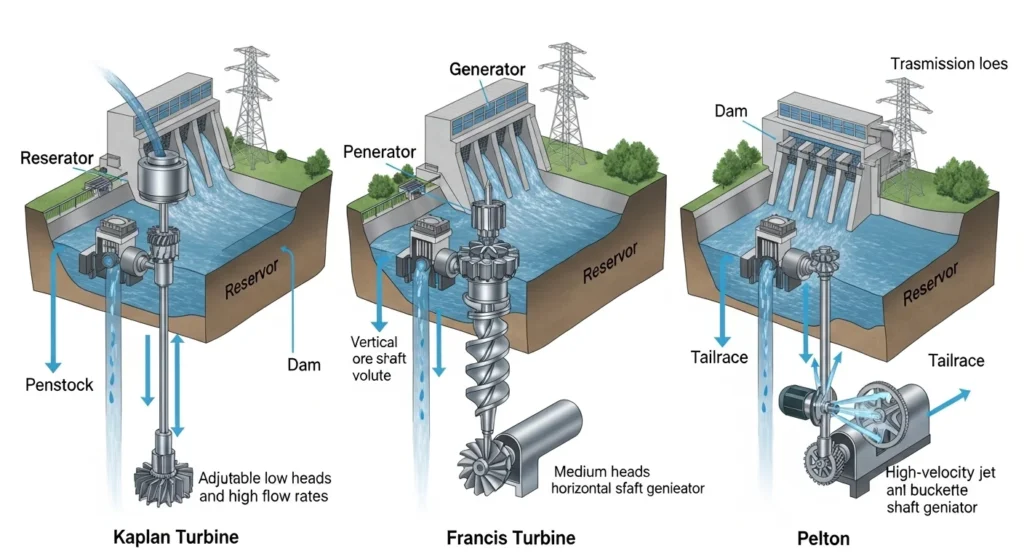
The high-speed flowing water strikes the blades of a hydraulic turbine, causing it to rotate. Different turbine types are used depending on the water head and flow rate.
4. Generator Rotor Spins
The turbine shaft is directly connected to the generator rotor. As the turbine rotates, it drives the rotor at high speed inside the generator.
5. Electromagnetic Induction
The rotating rotor contains powerful magnets or electromagnets that create a rotating magnetic field. As this magnetic field moves past the stationary stator windings, it induces an alternating voltage according to Faraday’s Law of Electromagnetic Induction.
6. Electricity Generation
The induced voltage produces alternating current (AC) in the stator windings. This electrical energy is the primary output of the hydroelectric generator.
7. Voltage Transformation
The generated electricity passes through a step-up transformer, which increases the voltage for efficient long-distance transmission while minimizing power losses.
8. Power Transmission
Finally, the high-voltage electricity is transmitted through power lines to substations, where it is distributed to residential, commercial, and industrial consumers.
Working Principle Summary
The working principle of a hydroelectric generator involves converting the potential energy of stored water into kinetic energy, then into mechanical energy through a turbine, and finally into electrical energy using electromagnetic induction. This efficient energy conversion process makes hydroelectric generators one of the most reliable and sustainable sources of renewable electricity.
Simple Analogy
Think of a water wheel used in old mills. Flowing water spins the wheel to grind grain. In hydroelectric plants, water spins turbines to generate electricity instead.
4. Types / Classification of Hydroelectric Generators
There are several hydroelectric generator types used in modern power plants.
Synchronous Hydroelectric Generator
A synchronous hydroelectric generator is the most widely used type of generator in hydroelectric power plants because it produces a stable and constant supply of alternating current (AC) electricity. It operates at a speed that is synchronized with the frequency of the electrical power grid, typically 50 Hz or 60 Hz, depending on the country’s electrical standards. The generator consists of two main parts: the rotor, which rotates and creates a magnetic field, and the stator, which contains stationary windings where electricity is generated. When flowing water turns the hydraulic turbine, the turbine shaft rotates the generator rotor. As the rotor spins inside the stator, its magnetic field continuously cuts across the stator windings, inducing an alternating voltage through the principle of electromagnetic induction. This generated electricity is then sent to transformers, where the voltage is increased for efficient transmission through the power grid. Synchronous generators are highly efficient, reliable, and capable of maintaining precise voltage and frequency, making them ideal for supplying electricity to residential, commercial, and industrial consumers. They can also provide reactive power support, which helps stabilize the electrical grid and improve overall power quality. Due to their excellent efficiency, long service life, and ability to handle large power outputs, synchronous generators are commonly installed in large hydroelectric stations, including dam-based, pumped-storage, and run-of-river power plants. Modern synchronous hydroelectric generators are equipped with advanced excitation systems, automatic voltage regulators (AVRs), and digital monitoring technologies that enhance performance, reduce maintenance requirements, and improve operational safety. Their robust construction enables them to operate continuously under demanding environmental conditions while delivering consistent electrical output. Because of these advantages, synchronous generators remain the preferred choice for most hydropower facilities worldwide, playing a vital role in renewable energy production and ensuring a dependable supply of clean electricity for modern power systems.
Induction Hydroelectric Generator
An induction hydroelectric generator, also known as an asynchronous generator, is commonly used in small and micro-hydroelectric power plants where the power output is relatively low and the system design needs to be simple and cost-effective. Unlike a synchronous generator, an induction generator does not require a separate excitation system to produce electricity. Instead, it relies on the electrical grid or external capacitors to supply the magnetic field necessary for power generation. In a hydroelectric system, flowing water rotates the turbine, which is connected to the generator shaft. When the rotor spins at a speed slightly higher than its synchronous speed, the generator converts mechanical energy into electrical energy through electromagnetic induction. This design makes induction generators easy to install, operate, and maintain, making them a popular choice for rural electrification projects, remote hydropower stations, and renewable energy applications. They feature a rugged construction with fewer components, resulting in lower installation and maintenance costs compared to synchronous generators. Additionally, induction generators offer good reliability, can tolerate varying mechanical loads, and require less complex control equipment. However, they have some limitations. Since they consume reactive power, they generally need to remain connected to the electrical grid or use capacitor banks to provide the required magnetizing current. They also provide less precise voltage and frequency control, making them less suitable for large standalone power systems. Despite these limitations, induction hydroelectric generators remain an efficient and economical solution for small-scale hydropower projects where simplicity, durability, and affordability are the primary requirements. Their ability to generate clean renewable energy with minimal maintenance has made them an important component of distributed hydroelectric power generation around the world.
Permanent Magnet Hydroelectric Generator
A permanent magnet hydroelectric generator (PMG) is a modern type of generator that uses high-strength permanent magnets instead of traditional field windings and excitation systems to create the magnetic field required for electricity generation. In a hydroelectric power system, flowing or falling water rotates the turbine, which is directly connected to the generator rotor. As the rotor fitted with permanent magnets spins inside the stator, it creates a rotating magnetic field that induces an alternating current (AC) in the stator windings through the principle of electromagnetic induction. Because the magnetic field is produced by permanent magnets, the generator does not require external electrical excitation, resulting in lower energy losses and higher overall efficiency. Permanent magnet generators are well known for their compact design, lightweight construction, and excellent performance, especially in applications where space is limited. They require minimal maintenance because they eliminate components such as slip rings, brushes, and excitation systems that are commonly found in conventional generators. These generators also provide reliable performance over a wide range of operating speeds, making them suitable for variable-speed hydroelectric systems. Due to their high efficiency and dependable operation, permanent magnet generators are widely used in micro-hydropower plants, small hydroelectric stations, off-grid renewable energy systems, remote rural electrification projects, and portable hydropower installations. Although permanent magnet generators generally have a higher initial manufacturing cost because of the use of rare-earth magnets, their lower maintenance requirements, improved efficiency, and longer service life often make them a cost-effective solution over time. As renewable energy technologies continue to advance, permanent magnet hydroelectric generators are becoming an increasingly popular choice for modern hydropower systems that demand high efficiency, reliability, and sustainable electricity generation.
Brushless Hydroelectric Generator
A brushless hydroelectric generator is an advanced type of generator that eliminates the need for carbon brushes and slip rings, making it more reliable, efficient, and easier to maintain than conventional brushed generators. In a hydroelectric power plant, flowing water rotates a hydraulic turbine, which is connected to the generator shaft. As the shaft turns, the brushless generator produces electricity through electromagnetic induction using a rotating magnetic field. Instead of transferring electrical current through brushes and slip rings, it uses a brushless excitation system with an exciter and rotating rectifier assembly to supply the rotor with the required magnetic field. This innovative design reduces mechanical wear, minimizes electrical losses, and significantly lowers maintenance requirements. Brushless hydroelectric generators are known for their long operating life, high efficiency, and dependable performance, even under continuous heavy-duty operation. Since there are no brushes to replace or clean, the risk of sparking, friction, and component failure is greatly reduced, making these generators ideal for demanding environments where reliability is essential. They also provide stable voltage output, improved operational safety, and excellent performance under varying load conditions. Due to these advantages, brushless generators are widely installed in large hydroelectric power plants, medium-scale hydropower stations, pumped-storage facilities, and other renewable energy systems that require uninterrupted electricity generation. Although their initial cost may be higher than that of traditional brushed generators, the savings in maintenance, reduced downtime, and extended service life make them a cost-effective investment over the long term. Modern brushless hydroelectric generators are often integrated with automatic voltage regulators (AVRs), digital monitoring systems, and advanced protection controls to optimize performance and ensure stable power delivery. Their durability, efficiency, and low maintenance requirements have made brushless generators the preferred choice for many modern hydroelectric installations around the world.
Vertical Shaft Hydroelectric Generator
A vertical shaft hydroelectric generator is one of the most commonly used generator designs in large hydroelectric power plants, particularly those built with dams and high-capacity hydraulic turbines. In this configuration, the generator shaft is positioned vertically and directly connected to the turbine located below it. As water flows through the turbine, it rotates the vertical shaft, causing the generator rotor to spin inside the stator and produce electricity through electromagnetic induction. The vertical arrangement allows the generator to efficiently handle the large mechanical forces generated by high-power turbines while maintaining smooth and stable operation. This design also provides excellent load distribution, reducing stress on bearings and other mechanical components, which improves reliability and extends the generator’s service life. Another major advantage of vertical shaft generators is their efficient cooling system, which helps maintain optimal operating temperatures during continuous power generation. Their compact vertical layout also saves floor space within the powerhouse, making them ideal for large hydroelectric installations where equipment must be arranged efficiently. Vertical shaft hydroelectric generators are capable of producing very high electrical outputs with excellent efficiency and stable performance, making them the preferred choice for large-scale renewable energy projects. They are widely used with Francis, Kaplan, and other large hydraulic turbines in major dam-based power stations around the world. Although the installation and maintenance of vertical shaft generators require specialized equipment and higher initial investment, their long operational life, superior mechanical stability, and ability to support high-capacity power generation make them highly economical over the long term. Modern vertical shaft generators are also equipped with advanced monitoring systems, automatic voltage regulators, and protective control technologies that enhance safety, improve efficiency, and ensure reliable electricity generation for national power grids.
5. Main Components of a Hydroelectric Generator
A hydroelectric generator consists of several essential components that work together to convert the mechanical energy of flowing water into electrical energy. Each part has a specific function that ensures efficient, reliable, and continuous power generation. From creating the magnetic field to transmitting mechanical motion and regulating system performance, these components play a vital role in the operation of every hydroelectric power plant.
Rotor
The rotor is the rotating component of the hydroelectric generator. It is connected directly to the turbine shaft and spins as the turbine rotates. The rotor carries electromagnets or permanent magnets that produce a rotating magnetic field. As this magnetic field moves past the stator windings, it induces an electric current through electromagnetic induction, making the rotor one of the most important parts of the generator.
Stator
The stator is the stationary outer part of the generator that contains insulated copper windings. When the rotor’s magnetic field rotates inside the stator, it induces an alternating current (AC) in these windings. The stator is responsible for generating the electrical output that is later transmitted to the power grid. It is designed to withstand high electrical loads while maintaining efficient energy conversion.
Generator Shaft
The generator shaft is the mechanical link between the hydraulic turbine and the generator rotor. It transfers the rotational energy produced by the turbine directly to the rotor. A strong and precisely aligned shaft ensures smooth operation, minimizes vibration, and improves the overall efficiency and reliability of the hydroelectric generator.
Excitation System
The excitation system supplies the magnetic field required for electricity generation in synchronous generators. It provides controlled direct current (DC) to the rotor windings, allowing the generator to maintain stable voltage under varying load conditions. Modern excitation systems include automatic controls that improve efficiency, voltage regulation, and overall generator performance.
Cooling System
During operation, hydroelectric generators produce heat due to electrical and mechanical losses. The cooling system removes this excess heat to prevent overheating and protect critical components such as the rotor, stator, and bearings. Depending on the generator size, cooling may be achieved using air, water, hydrogen, or a combination of cooling methods, ensuring safe and efficient long-term operation.
Control and Protection System
The control and protection system continuously monitors important operating parameters such as generator speed, voltage, current, frequency, temperature, and power output. It automatically adjusts operating conditions to maintain stable performance and activates protective devices if abnormal conditions, faults, or overloads occur. This system enhances operational safety, improves reliability, and helps maximize the lifespan of the hydroelectric generator.
Component Summary
All of these components work together to ensure that a hydroelectric generator operates safely, efficiently, and reliably. The rotor creates the magnetic field, the stator generates electricity, the shaft transfers mechanical energy, the excitation system regulates voltage, the cooling system prevents overheating, and the control system monitors and protects the entire power generation process. Together, they form the foundation of modern hydroelectric power generation.
6. Advantages of Hydroelectric Generators
Hydroelectric generators provide many benefits.
- Renewable and clean energy source
- High energy conversion efficiency
- Low operating cost after installation
- Long service life
- No fuel required during operation
- Low environmental pollution compared to fossil fuels
These advantages make hydropower one of the most reliable renewable energy sources.
7. Disadvantages / Limitations
Despite their advantages, hydroelectric systems also have limitations.
- High construction cost for dams
- Environmental impact on rivers and ecosystems
- Dependence on water availability
- Limited suitable locations for hydro plants
- Possible displacement of communities near dams
Understanding hydroelectric generator advantages and disadvantages helps engineers design better systems.
8. Applications of Hydroelectric Generators
Hydroelectric generators are widely used in modern power systems to produce clean, renewable, and reliable electricity. They are installed in projects of various sizes, ranging from large hydroelectric dams that supply national power grids to small off-grid systems serving remote communities. Their high efficiency, long service life, and low operating costs make them an essential part of sustainable energy infrastructure around the world.
Large Hydroelectric Power Plants
Large hydroelectric power plants use high-capacity generators to convert the energy of flowing water into electricity on a massive scale. These generators are typically installed in dam-based power stations and supply electricity to national and regional power grids. They provide a stable source of renewable energy capable of meeting the electricity demands of millions of homes, businesses, and industries.
Small and Micro Hydropower Systems
Hydroelectric generators are also widely used in small and micro-hydropower projects built on rivers, streams, and canals. These systems generate electricity for villages, farms, schools, and small businesses where large power plants are not practical. Their compact design, low environmental impact, and cost-effective operation make them an excellent solution for decentralized renewable energy generation.
Industrial Power Supply
Many industries rely on hydroelectric generators for a continuous and dependable electricity supply. Manufacturing plants, mining operations, processing facilities, and other energy-intensive industries benefit from the stable power output and lower operating costs offered by hydropower. In some locations, industries operate their own hydroelectric systems to reduce dependence on conventional energy sources.
Electricity for Remote Communities
Hydroelectric generators play an important role in providing electricity to remote and isolated communities that have limited or no access to the national power grid. Small hydropower installations can supply reliable power for homes, healthcare centers, schools, communication systems, and local businesses, improving living standards while reducing the need for diesel generators and fossil fuels.
Pumped Storage Hydropower Plants
In pumped storage hydropower systems, hydroelectric generators perform a dual function by supporting both electricity generation and energy storage. During periods of low electricity demand, excess power is used to pump water to an upper reservoir. When electricity demand increases, the stored water is released to drive the turbines and generators, supplying additional power to the grid. This process improves grid stability, supports renewable energy integration, and helps balance electricity supply and demand.
Renewable Energy Integration
Hydroelectric generators are increasingly used alongside solar and wind power systems to improve the reliability of renewable energy networks. Since hydropower can quickly respond to changes in electricity demand, it helps compensate for the variable output of solar panels and wind turbines, ensuring a stable and continuous electricity supply.
Application Summary
Hydroelectric generators are essential for a wide range of applications, including large power stations, small hydropower projects, industrial facilities, remote electrification, pumped storage plants, and renewable energy integration. Their ability to generate clean, efficient, and dependable electricity makes them one of the most important technologies for sustainable power generation worldwide.
9. Comparison Section
Difference Between Synchronous Generator and Induction Generator
| Feature | Synchronous Generator | Induction Generator |
|---|---|---|
| Speed | Constant speed | Variable speed |
| Grid Requirement | Can operate independently | Requires grid connection |
| Efficiency | Higher | Moderate |
| Complexity | More complex | Simpler design |
| Cost | Higher | Lower |
Understanding the difference between synchronous generator and induction generator helps engineers select suitable generators.
10. How to Choose the Right Hydroelectric Generator
Selecting the right hydroelectric generator is essential for achieving maximum efficiency, reliable performance, and long-term cost savings. The ideal generator depends on several technical and economic factors, including the available water resources, turbine design, required power output, maintenance needs, and project budget. Carefully evaluating these factors helps engineers choose a generator that delivers stable electricity generation while minimizing operating costs.
Water Flow Rate and Head
The water flow rate and hydraulic head are the most important factors when selecting a hydroelectric generator. These determine how much mechanical energy the turbine can produce and directly influence the generator’s size and power rating. High-flow, high-head sites generally require larger generators, while low-flow or small-stream projects are better suited to compact generators designed for micro-hydropower systems.
Turbine Compatibility
The generator must be compatible with the type of hydraulic turbine used in the power plant. Different turbines, such as Francis, Kaplan, and Pelton turbines, operate at different speeds and power levels. Selecting a generator that matches the turbine’s operating characteristics ensures efficient energy conversion and reliable long-term operation.
Required Power Capacity
The required electrical output is another critical consideration. Large hydroelectric power stations typically use high-capacity synchronous generators capable of supplying electricity to national power grids. Smaller projects may use induction or permanent magnet generators, depending on their power requirements and operating conditions.
Efficiency and Performance
A high-efficiency generator converts more mechanical energy into electrical energy while reducing energy losses. Choosing a generator with excellent efficiency improves overall plant performance, lowers operating costs, and increases electricity production throughout its service life.
Maintenance and Reliability
Maintenance requirements should also be considered when selecting a generator. Modern brushless and permanent magnet generators require less maintenance because they have fewer wearing components. Choosing a reliable generator with a long operational life reduces downtime, maintenance expenses, and unexpected equipment failures.
Installation and Operating Costs
The project budget should include not only the initial purchase and installation costs but also long-term operating and maintenance expenses. Although some generators have higher upfront costs, their greater efficiency, lower maintenance requirements, and longer service life often make them more economical over time.
Grid Connection Requirements
Another important factor is whether the hydroelectric system will operate as a grid-connected or standalone (off-grid) installation. Grid-connected projects often use synchronous or induction generators, while remote off-grid systems commonly use permanent magnet generators with appropriate power electronics for stable electricity supply.
Selection Summary
Choosing the right hydroelectric generator requires evaluating water flow, hydraulic head, turbine compatibility, power capacity, efficiency, maintenance needs, grid connection, and overall project budget. By carefully considering these factors, engineers can select the most suitable generator to ensure safe, efficient, and reliable hydroelectric power generation for many years.
11. Common Hydroelectric Generator Problems and Solutions
Although hydroelectric generators are highly reliable and designed for long-term operation, they can occasionally experience technical issues that affect efficiency and power generation. Most of these problems are caused by mechanical wear, electrical faults, inadequate maintenance, or changes in water flow conditions. Regular inspections, preventive maintenance, and timely repairs help ensure safe operation and extend the generator’s service life. Below are some of the most common hydroelectric generator problems and their practical solutions.
Q1: Why Does a Hydroelectric Generator Overheat?
A hydroelectric generator may overheat due to excessive electrical load, poor ventilation, cooling system failure, blocked air passages, or prolonged operation under abnormal conditions. High temperatures can damage insulation, reduce efficiency, and shorten the lifespan of generator components.
Solution:
Inspect the cooling system, clean ventilation passages, monitor operating temperatures, and reduce the electrical load if necessary. Regular maintenance of cooling fans, water-cooling systems, and temperature sensors helps prevent overheating.
Q2: Why Does the Generator Produce Unstable Voltage?
Unstable voltage is usually caused by problems in the excitation system, automatic voltage regulator (AVR), fluctuating turbine speed, or electrical faults within the generator. Voltage instability can affect connected equipment and reduce the quality of the power supply.
Solution:
Inspect the excitation system, test the automatic voltage regulator, verify turbine speed stability, and check electrical connections. Proper calibration and routine testing of control equipment help maintain a stable output voltage.
Q3: Why Is the Generator Making Unusual Noise or Vibrations?
Abnormal noise or excessive vibration may result from worn bearings, shaft misalignment, loose mechanical components, rotor imbalance, or inadequate lubrication. Ignoring these issues can lead to severe mechanical damage.
Solution:
Perform routine inspections, lubricate moving parts, tighten loose components, replace worn bearings, and check shaft alignment. Regular vibration analysis and predictive maintenance can identify potential problems before they become serious.
Q4: Why Does the Power Output Fluctuate?
Power output fluctuations are commonly caused by changes in water flow, unstable turbine operation, varying electrical loads, or faults in the generator control system. Inconsistent power generation can reduce overall plant efficiency and affect grid stability.
Solution:
Maintain a consistent water supply whenever possible, optimize turbine control, inspect the governor system, and ensure the generator’s control and protection systems are functioning correctly. Modern automation and monitoring systems help stabilize power output under changing operating conditions.
Problem-Solving Summary
Most hydroelectric generator problems can be prevented through regular maintenance, continuous monitoring, proper cooling, timely replacement of worn components, and effective control systems. By addressing issues early and following recommended maintenance practices, operators can improve reliability, maximize efficiency, and ensure uninterrupted renewable electricity generation.
12. Future Trends in Hydroelectric Generators
Hydroelectric generator technology is continuously evolving to meet the growing demand for clean, efficient, and sustainable energy. Modern innovations focus on improving generator performance, increasing operational reliability, reducing environmental impact, and integrating hydropower with other renewable energy sources. As governments and industries invest more in renewable energy, hydroelectric generators are expected to become smarter, more efficient, and better suited for future power systems.
Smart Hydroelectric Power Plants
Modern hydroelectric power plants are increasingly adopting digital monitoring systems, artificial intelligence (AI), Internet of Things (IoT) sensors, and automated control technologies. These smart systems continuously monitor generator performance, water flow, temperature, vibration, and electrical output in real time. Predictive maintenance and automated fault detection help reduce downtime, improve efficiency, and extend the lifespan of hydroelectric generators.
Growth of Small and Micro Hydropower
The demand for small and micro-hydropower systems is rapidly increasing, particularly in rural and remote areas where access to the electrical grid is limited. Compact hydroelectric generators are becoming more affordable, efficient, and easier to install, making them an attractive solution for providing clean electricity to homes, farms, schools, and small businesses while supporting sustainable rural development.
Advanced Generator Materials
Researchers are developing high-performance magnetic materials, lightweight alloys, improved insulation systems, and advanced cooling technologies to enhance hydroelectric generator performance. These innovations improve electrical efficiency, reduce energy losses, increase durability, and lower maintenance requirements, enabling generators to operate more reliably for longer periods.
Hybrid Renewable Energy Systems
Future energy systems will increasingly combine hydropower with solar and wind energy to create reliable hybrid renewable power plants. Since hydroelectric generators can respond quickly to changes in electricity demand, they help balance the variable output of solar panels and wind turbines, improving grid stability and ensuring a continuous supply of renewable electricity.
Eco-Friendly Hydropower Technologies
Environmental sustainability is becoming a major focus in hydroelectric power development. New technologies are being introduced to minimize the impact of hydropower projects on rivers, aquatic ecosystems, and wildlife. Innovations such as fish-friendly turbines, improved water management systems, sediment control technologies, and environmentally responsible dam designs help reduce ecological disruption while maintaining efficient power generation.
Digital Automation and Remote Monitoring
Advanced automation and cloud-based monitoring systems allow operators to supervise hydroelectric generators from remote locations. Real-time performance analysis, automated diagnostics, and predictive maintenance reduce operating costs, improve safety, and enable faster responses to equipment faults, making hydroelectric plants more efficient and reliable.
Future Outlook
The future of hydroelectric generators lies in smart technologies, advanced materials, hybrid renewable energy integration, digital automation, and environmentally sustainable designs. These advancements will improve efficiency, reduce maintenance costs, enhance grid reliability, and support the global transition toward cleaner and more sustainable energy systems. As renewable energy demand continues to grow, hydroelectric generators will remain a vital component of the world’s low-carbon electricity infrastructure.
13. Conclusion
Hydroelectric generators play a vital role in modern power generation systems. They convert the energy of flowing water into electrical power that can supply homes, industries, and entire cities.
In this article, we explored different hydroelectric generator types, their working principle, main components, advantages and disadvantages, and real-world hydroelectric generator applications. We also compared generator designs and provided guidance on selecting the right generator.
For electrical students, engineers, and technicians, understanding hydroelectric generators is an important step toward working in renewable energy and power engineering.
As global demand for clean energy continues to grow, hydroelectric generators will remain one of the most reliable and sustainable sources of electricity.