
Imagine a city where electricity generated at a power station travels hundreds of kilometers before reaching homes, factories, hospitals, and offices. During this journey, some electrical power is lost because of resistance, heat, leakage, and poor transmission conditions. If these losses become too high, consumers receive less useful power, energy costs increase, and the overall electrical system becomes inefficient. This is where line efficiency becomes extremely important.
Line efficiency is one of the most critical concepts in electrical power transmission and distribution systems. It helps engineers determine how effectively electrical energy is delivered from the source to the load. High line efficiency means lower power losses, better voltage regulation, reduced operating costs, and improved system reliability.
Understanding line efficiency is essential for electrical students, engineers, technicians, and beginners because it directly affects the performance of transmission lines, distribution networks, and industrial electrical systems. In this article, you will learn the line efficiency working principle, types of line efficiency, main components affecting efficiency, advantages and disadvantages, applications, troubleshooting methods, future trends, and practical selection guidance. The article explains the topic in simple and easy English for better understanding.
What is Line Efficiency?
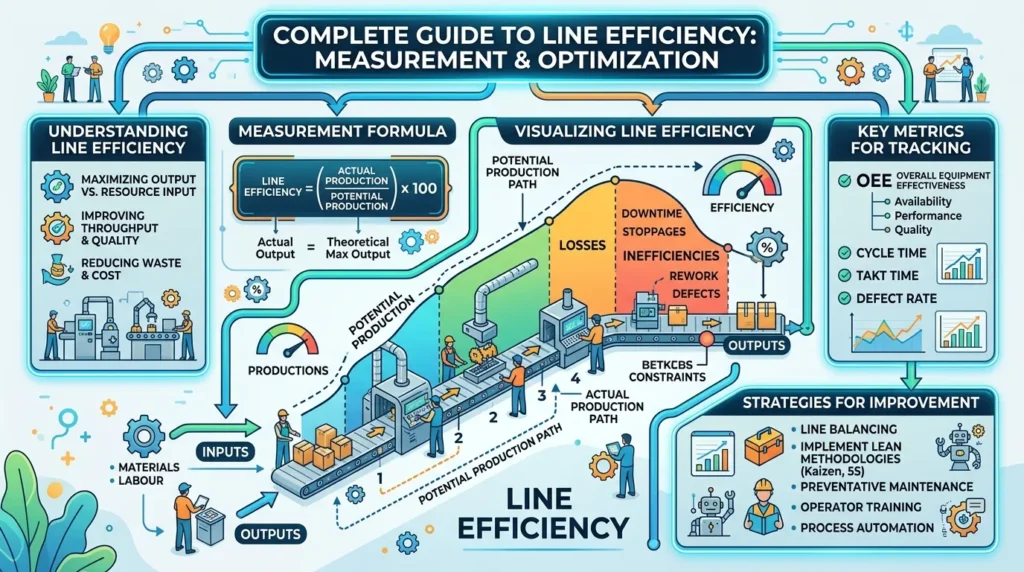
Line efficiency refers to the ability of an electrical transmission or distribution line to deliver maximum electrical power from the sending end to the receiving end with minimum power loss.
In simple words, it shows how much input power successfully reaches the load or consumer.
The formula for line efficiency is:
\eta = \frac{P_{receiving}}{P_{sending}} \times 100
Where:
- η = Line Efficiency
- P receiving = Power received at load side
- P sending = Power supplied from source side
For example, if a transmission line sends 100 kW of power and the receiving end gets 92 kW, then the line efficiency is 92%.
High line efficiency means less energy waste and better system performance.
Working Principle of Line Efficiency
The line efficiency working principle is based on reducing electrical losses during power transmission.
Electric current flows through conductors such as copper or aluminum wires. Every conductor has some resistance. When current passes through resistance, heat is produced, causing power loss.
The power loss formula is:
P_{loss} = I^2R
Where:
- I = Current flowing through line
- R = Resistance of conductor
Step-by-Step Working Process
- Electrical energy is generated at a power station.
- Voltage is increased using transformers for long-distance transmission.
- Power travels through transmission lines.
- Some energy is lost as heat due to conductor resistance.
- Remaining power reaches substations and consumers.
- Efficiency is calculated by comparing sending power and receiving power.
Easy Analogy
Think of water flowing through a long pipe. If the pipe has leaks or friction, some water is lost before reaching the destination. Similarly, electrical lines lose some energy before delivering it to consumers.
Factors Affecting Line Efficiency
- Line resistance
- Current level
- Transmission voltage
- Length of transmission line
- Power factor
- Conductor material
- Weather conditions
Introduction to Transmission Line Efficiency
Transmission line efficiency is one of the most important concepts in electrical power systems. It indicates how effectively electrical energy is delivered from the generating station to the receiving end without excessive losses. During the transmission and distribution of electricity, a portion of the generated power is lost due to factors such as conductor resistance, reactive power, leakage currents, and environmental conditions. The higher the efficiency of a transmission line, the smaller the power losses and the more economical the power system becomes.
Transmission line efficiency is usually expressed as a percentage and compares the power received at the load end with the power sent from the source.
Definition of Transmission Line Efficiency
Transmission line efficiency is defined as the ratio of receiving-end power to sending-end power.
The mathematical expression is:
\eta = \frac{P_{Receiving}}{P_{Sending}} \times 100%
Where:
- η = Transmission line efficiency
- PReceiving = Power received at the load end
- PSending = Power supplied from the generating station
A higher percentage indicates better system performance and lower transmission losses.
1. Transmission Line Efficiency
Transmission line efficiency refers to the efficiency of high-voltage transmission systems that carry electricity over long distances from power generating stations to substations.
These transmission networks form the backbone of the electrical power system and are designed to transport large amounts of electrical energy with minimum losses.
Operating Voltage Levels
Transmission lines commonly operate at:
- 132 kV
- 220 kV
- 400 kV
- 500 kV
- 765 kV and above
Factors Affecting Transmission Efficiency
Several factors influence transmission efficiency, including:
- Conductor resistance
- Current magnitude
- Power factor
- Reactive power flow
- Corona losses
- Line length
- Weather conditions
- Quality of insulation
Importance
Improving transmission efficiency:
- Reduces power losses
- Lowers operating costs
- Improves voltage regulation
- Enhances system reliability
- Reduces environmental impact.
2. Distribution Line Efficiency
Distribution line efficiency refers to the efficiency of electrical networks that deliver power from substations directly to consumers.
These systems supply electricity to:
- Residential areas
- Commercial buildings
- Industrial facilities
- Agricultural loads
Typical Operating Voltages
Distribution systems generally operate at:
- 11 kV
- 22 kV
- 33 kV
- 415 V (three-phase)
- 230 V (single-phase)
Factors Affecting Distribution Efficiency
Distribution losses are influenced by:
- Transformer losses
- Overloaded feeders
- Poor power factor
- Long distribution routes
- Unbalanced loads
- Illegal connections
Importance
Higher distribution efficiency results in:
- Lower electricity wastage
- Better voltage quality
- Improved consumer satisfaction
- Reduced utility expenses.
3. AC Line Efficiency
AC line efficiency relates to the performance of alternating current transmission systems, which are widely used throughout the world.
Unlike DC systems, AC transmission involves both real and reactive power components.
Characteristics of AC Lines
AC efficiency depends on:
- Resistance (R)
- Inductance (L)
- Capacitance (C)
- Power factor
- Frequency
Role of Reactive Power
Reactive power does not perform useful work but increases current flow, resulting in higher losses.
Low power factor causes:
- Increased conductor losses
- Greater voltage drops
- Reduced transmission efficiency.
Methods to Improve AC Efficiency
Utilities improve AC line efficiency by using:
- Power factor correction capacitors
- Shunt reactors
- Series compensation
- FACTS devices
- High-voltage transmission.
4. DC Line Efficiency
DC line efficiency refers to the efficiency of direct current transmission systems.
Since DC systems do not involve frequency-related effects, their analysis is comparatively simpler.
Characteristics of DC Transmission
DC efficiency mainly depends on:
- Conductor resistance
- Current magnitude
- Converter station performance
Advantages of DC Efficiency
HVDC systems offer:
- Lower line losses
- No reactive power flow
- No skin effect
- Better stability
- Efficient underwater transmission.
HVDC Applications
HVDC is commonly used for:
- Very long-distance transmission
- Submarine cable links
- Interconnecting different AC networks
- Bulk power transfer.
5. Short Transmission Line Efficiency
Short transmission lines have relatively small electrical losses because of their limited length.
Length Range
Short transmission lines generally operate below:
- 80 km
Voltage Range
Typically up to:
- 20 kV to 69 kV
Characteristics
For short lines:
- Capacitance effects are negligible.
- Resistance and inductive reactance dominate.
- Voltage regulation is relatively simple.
Efficiency
Due to smaller losses, short lines usually exhibit high efficiency.
6. Medium Transmission Line Efficiency
Medium transmission lines operate over moderate distances and require more detailed analysis.
Length Range
Medium lines generally extend from:
- 80 km to 250 km
Characteristics
In these systems:
- Line capacitance becomes significant.
- Voltage regulation becomes more complex.
- Reactive power effects increase.
Modeling Methods
Medium lines are commonly analyzed using:
- Nominal π (Pi) method
- Nominal T method.
Efficiency Improvement Methods
Utilities improve medium-line efficiency through:
- Reactive power compensation
- Improved conductor sizing
- Better voltage control.
7. Long Transmission Line Efficiency
Long transmission lines transport power across very large distances and require advanced engineering techniques.
Length Range
Long transmission lines operate above:
- 250 km
Characteristics
Long lines experience:
- Significant capacitance effects
- Greater reactive power flow
- Higher voltage fluctuations
- Increased stability concerns.
Challenges
Major challenges include:
- Voltage instability
- Ferranti effect
- High charging currents
- Increased system complexity.
Compensation Techniques
Efficiency is improved using:
- Series capacitors
- Shunt reactors
- Static VAR compensators (SVC)
- STATCOM systems
- Flexible AC Transmission Systems (FACTS).
Factors Affecting Transmission Line Efficiency
Several common factors influence the efficiency of all transmission systems:
- Conductor resistance
- Load current
- Operating voltage
- Power factor
- Temperature
- Corona losses
- Leakage currents
- Transmission distance
- Conductor material.
Methods to Improve Transmission Line Efficiency
Power engineers use several techniques to enhance efficiency:
- Increasing transmission voltage.
- Using low-resistance conductors.
- Improving power factor.
- Reducing reactive power flow.
- Employing HVDC transmission where appropriate.
- Using compensation equipment.
- Performing regular maintenance.
- Balancing system loads.
Importance of High Transmission Efficiency
High transmission efficiency provides numerous benefits, including:
- Reduced power losses.
- Lower electricity generation requirements.
- Improved system reliability.
- Better voltage regulation.
- Reduced operating costs.
- Enhanced energy conservation.
- Improved overall power system performance.
Transmission line efficiency plays a vital role in the effective operation of modern electrical power systems. Whether in high-voltage transmission networks, local distribution systems, AC and DC lines, or short, medium, and long transmission lines, maintaining high efficiency ensures that the maximum amount of generated electrical energy reaches consumers with minimal losses. By understanding the factors affecting efficiency and implementing suitable improvement techniques, power utilities can provide reliable, economical, and sustainable electricity to meet the growing demands of society.
Main Components Affecting Line Efficiency
Conductors
Conductors carry electrical current through transmission lines.
Copper and aluminum are commonly used because they have low resistance.
Transformers
Transformers increase or decrease voltage levels.
Higher transmission voltage improves line efficiency by reducing current.
Insulators
Insulators prevent current leakage from conductors to towers or ground.
Good insulation improves efficiency and safety.
Transmission Towers
Transmission towers support conductors safely over long distances.
Proper tower spacing reduces line sag and mechanical stress.
Capacitors
Capacitors improve power factor and reduce reactive power losses.
This increases overall line efficiency.
Circuit Breakers
Circuit breakers protect transmission systems from faults and overloads.
Efficient protection reduces equipment damage and downtime.
Reactive Power Compensation Devices
Devices such as STATCOM and SVC improve voltage stability and transmission efficiency.
Advantages of Line Efficiency
Reduced Power Losses
High line efficiency minimizes energy wastage during transmission.
Better Voltage Regulation
Efficient lines maintain stable voltage at consumer ends.
Lower Operating Costs
Reduced losses lower electricity production and transmission costs.
Improved System Reliability
Efficient systems experience fewer breakdowns and overheating issues.
Increased Power Delivery
More useful electrical power reaches consumers.
Environmental Benefits
Lower power losses reduce fuel consumption and carbon emissions.
Better Industrial Performance
Industries receive stable voltage and reliable power supply.
Disadvantages / Limitations
High Initial Cost
Improving line efficiency often requires expensive equipment and advanced technology.
Complex Design
Efficient transmission systems require careful engineering and planning.
Maintenance Requirements
Transmission systems need regular inspection and maintenance.
Weather Effects
Rain, wind, temperature, and pollution can reduce efficiency.
Reactive Power Problems
AC systems suffer from reactive power losses.
Corona Losses
High-voltage transmission lines may experience corona discharge losses.
Long-Distance Challenges
Very long transmission lines experience voltage drops and stability problems.
Applications of Line Efficiency
Power Transmission Networks
Line efficiency is essential in national grid systems.
Industrial Power Systems
Industries require efficient electrical supply for machines and motors.
Renewable Energy Systems
Solar and wind farms use efficient transmission systems to deliver electricity.
Smart Grids
Modern smart grids monitor and improve line efficiency automatically.
Railway Electrification
Electric railway systems depend on efficient power transmission.
Urban Distribution Systems
Cities require efficient distribution networks for stable electricity supply.
Rural Electrification
Efficient lines help deliver power to remote areas economically.
Comparison Section
Difference Between AC and DC Line Efficiency
| Feature | AC Transmission | DC Transmission |
|---|---|---|
| Current Type | Alternating Current | Direct Current |
| Reactive Power | Present | Absent |
| Power Losses | Higher | Lower |
| Efficiency for Long Distance | Moderate | Very High |
| Equipment Complexity | Lower | Higher |
| Voltage Conversion | Easier | More Complex |
| Best Use | General distribution | Long-distance transmission |
| Maintenance | Moderate | Specialized |
Selection Guide
Choosing the right transmission system is important for maintaining good line efficiency.
For Short Distances
- Use AC transmission systems
- Lower installation cost
- Simple maintenance
For Long Distances
- HVDC systems are more efficient
- Lower transmission losses
- Better stability
For Industrial Areas
- Use high-quality conductors
- Install power factor correction systems
- Ensure proper grounding
For Beginners
- Focus on voltage level selection
- Learn loss calculation methods
- Understand conductor sizing basics
Common Problems & Solutions
Why are transmission losses increasing?
Possible causes:
- Overloaded lines
- Poor conductor quality
- High resistance
Solution:
- Upgrade conductors
- Reduce line loading
- Improve cooling
Why is voltage dropping at the receiving end?
Possible causes:
- Long transmission distance
- High current flow
- Reactive power losses
Solution:
- Increase transmission voltage
- Use capacitor banks
- Improve power factor
What causes overheating in transmission lines?
Possible causes:
- Excess current
- Loose connections
- Poor maintenance
Solution:
- Regular inspection
- Proper conductor sizing
- Tighten connections
How can power factor affect line efficiency?
Low power factor increases current flow and losses.
Solution:
- Install capacitors
- Use synchronous condensers
- Improve load management
Future Trends in Line Efficiency
The future of line efficiency is focused on smart, reliable, and energy-saving technologies.
Smart Grid Technology
Smart grids use sensors and automation to monitor transmission performance in real time.
High Voltage DC Transmission
HVDC systems are becoming more popular for long-distance power transfer.
Superconducting Conductors
Future conductors may have nearly zero resistance, greatly improving efficiency.
AI-Based Monitoring
Artificial intelligence helps predict faults and optimize transmission systems.
Renewable Energy Integration
Modern grids are being designed to efficiently handle solar and wind energy.
Advanced Insulation Materials
New insulation technologies reduce leakage and improve safety.
Flexible AC Transmission Systems (FACTS)
FACTS devices improve stability and efficiency in modern power networks.
Conclusion
Line efficiency is one of the most important concepts in electrical power systems because it determines how effectively electrical energy reaches consumers. High line efficiency means lower power losses, better voltage regulation, reduced operating costs, and improved system reliability. Understanding the line efficiency working principle helps students, technicians, and engineers design better transmission and distribution systems.
Different factors such as conductor resistance, transmission voltage, power factor, and line length directly affect efficiency. Modern technologies like HVDC transmission, smart grids, and reactive power compensation are improving power system performance worldwide.
For beginners and professionals alike, learning about line efficiency applications, advantages and disadvantages, and troubleshooting methods is essential for building strong knowledge in electrical engineering. Efficient power transmission is the foundation of modern industries, smart cities, and future energy systems.