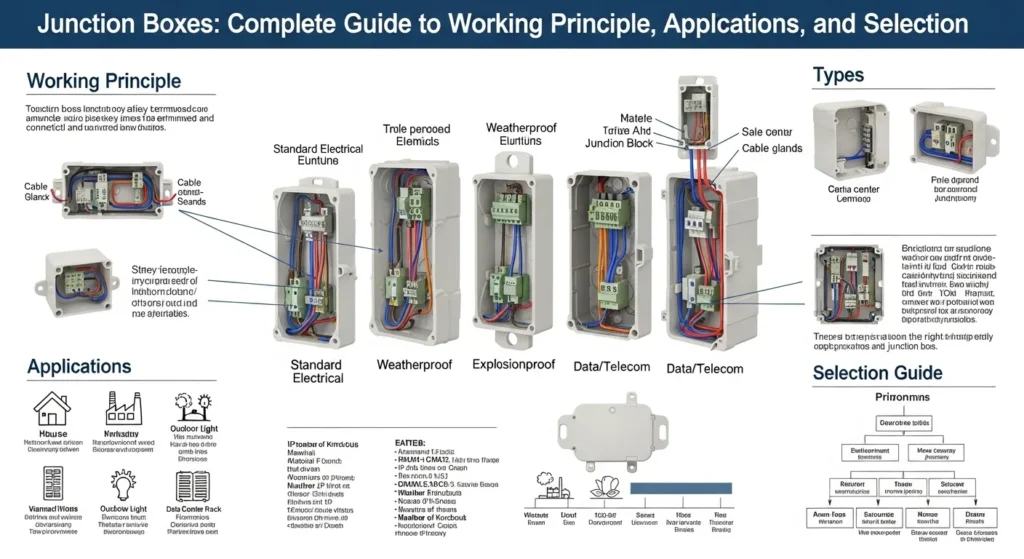

Imagine you are wiring a house, and multiple electrical wires need to be connected safely and neatly in one place. If you simply twist them together and leave them exposed, it would be dangerous and unprofessional. Instead, electricians use a junction box to organize and protect these connections.
A junction box is a very important part of any electrical installation system. It ensures safety, improves organization, and makes maintenance easier. Without junction boxes, electrical wiring would be messy, unsafe, and difficult to repair.
In this article, you will learn everything about junction boxes, including their definition, junction box working principle, types, components, applications, advantages and disadvantages, selection guide, and common problems. This guide is written in simple language so that beginners, students, and technicians can understand it easily while still gaining professional knowledge.
What is Junction Box?
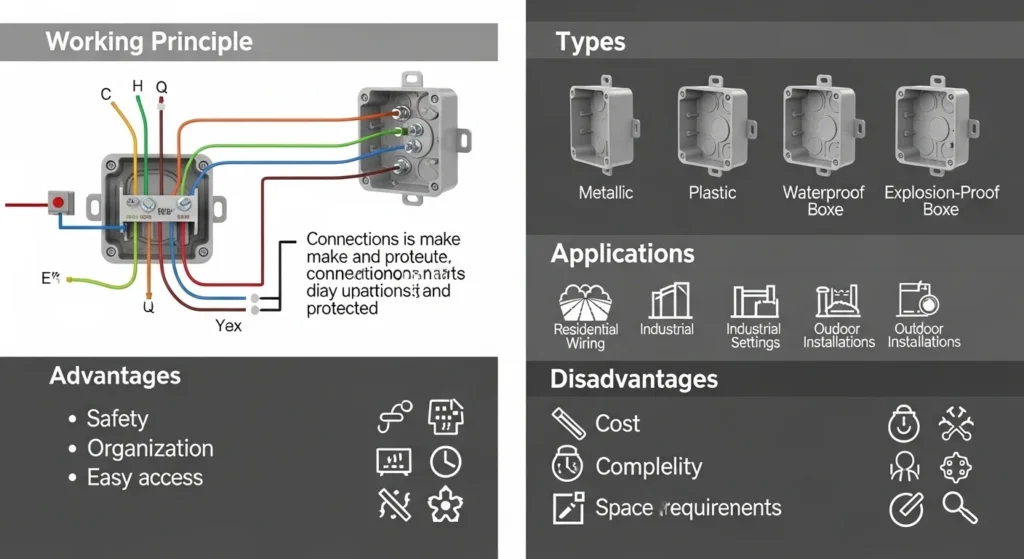
A junction box is an electrical enclosure used to safely house wire connections and protect them from external damage.A junction box is an essential component in any electrical wiring system, used to safely connect and protect electrical wires. In simple terms, it is a protective enclosure where multiple wires meet and are joined together. Instead of leaving wire connections exposed, which can be dangerous, all connections are placed inside a junction box to reduce the risk of electric shock, short circuits, and fire hazards. Junction boxes are commonly made from plastic or metal, depending on the application. Plastic boxes are lightweight and corrosion-resistant, making them ideal for home use, while metal boxes are stronger and more suitable for industrial environments where durability is important.
The main purpose of a junction box is to organize wiring and provide safety. When electrical wires are connected inside the box, connectors or terminals are used to ensure a firm and secure connection. The box is then closed with a cover to prevent dust, moisture, and accidental contact with live wires. This makes maintenance easier because electricians can quickly access the connections when needed without disturbing the entire wiring system.
Junction boxes are widely used in homes, offices, and industries. In residential wiring, they are used for lighting circuits, switch connections, and power distribution. In industrial settings, they play a key role in control panels and machine wiring systems. Modern applications also include solar energy systems, CCTV installations, and smart home technologies.
One of the biggest advantages of a junction box is improved safety and neat wiring management. It reduces clutter and helps in troubleshooting electrical problems efficiently. However, proper installation is very important. If wires are overcrowded or loosely connected inside the box, it can lead to overheating or electrical faults. Overall, a junction box is a simple yet vital device that ensures safe, organized, and reliable electrical connections in any system.
Simple Explanation
In simple terms:
- It is a protective box for electrical wire joints
- It keeps connections safe and organized
- It prevents direct exposure of wires
Practical Example
For example, in home wiring:
- Wires from switches, lights, and sockets are joined inside a junction box
- This makes the system safe and easy to manage
Junction Box Working Principle
The junction box working principle is based on safe electrical connection and insulation protection.
Step-by-Step Working
- Wire Entry
Electrical wires enter the box through openings or conduits. - Connection Point Formation
Wires are joined using connectors or terminals. - Insulation Protection
The box prevents accidental contact with live wires. - Enclosure Closing
A cover is fixed to protect the internal connections. - Safety and Distribution
Electricity is safely distributed to different circuits.
Simple Analogy
Think of a junction box like a traffic junction:
- Multiple roads meet at one point
- Traffic is organized and controlled
- Movement becomes safe and smooth
Types of Junction Boxes
Junction boxes are available in different types depending on material and usage.
Plastic Junction Box
- Lightweight and non-conductive
- Used in home wiring
- Resistant to corrosion
Metal Junction Box
- Made of steel or aluminum
- Strong and durable
- Used in industrial systems
PVC Junction Box
- Cost-effective
- Easy to install
- Common in residential buildings
Weatherproof Junction Box
- Designed for outdoor use
- Protects against rain and dust
- Used in outdoor lighting systems
Industrial Junction Box
- Heavy-duty design
- Used in factories and plants
- Handles high electrical loads
Main Components of Junction Box
Understanding components helps in proper installation.
Enclosure Body
- Main structure of the box
- Provides protection
Terminal Blocks
- Used for connecting wires
- Ensures proper electrical contact
Cover Plate
- Seals the box
- Prevents dust and moisture entry
Cable Glands
- Allow safe entry of wires
- Prevent wire damage
Mounting Screws
- Hold components firmly
- Ensure stability
Junction Box Advantages
The junction box advantages and disadvantages highlight its importance.
Advantages
- Provides electrical safety
- Organizes wire connections
- Protects from dust and moisture
- Reduces risk of short circuits
- Easy maintenance and repair
- Improves system reliability
Junction Box Disadvantages / Limitations
Disadvantages
- Requires proper installation
- Improper sealing may cause faults
- Takes extra space in wiring systems
- Can increase initial installation cost
- Needs regular inspection in industrial use
Junction Box Applications
The junction box applications are found in almost every electrical system.
Home Applications
- Ceiling fan wiring
- Light and switch connections
- Socket distribution
Industrial Applications
- Machine wiring
- Control panels
- Power distribution systems
Outdoor Applications
- Street lighting systems
- Garden lighting
- Solar installations
Modern Technology Uses
- Smart home systems
- CCTV installations
- Communication networks
Comparison: Junction Box vs Open Wiring
Understanding the difference between junction box and open wiring is important.
| Feature | Junction Box | Open Wiring |
|---|---|---|
| Safety | High | Low |
| Protection | Fully enclosed | Exposed |
| Maintenance | Easy | Difficult |
| Appearance | Neat | Messy |
| Risk of Fault | Low | High |
Selection Guide
Choosing the right junction box is important for safety and durability.
Key Factors
- Material Type
Choose plastic for homes, metal for industries - Size
Should accommodate all wires comfortably - Environmental Conditions
Use weatherproof boxes outdoors - Load Capacity
Match with electrical system requirements - Safety Standards
Ensure proper insulation and certification
Beginner Tips
- Never overload a junction box
- Always use proper connectors
- Ensure tight sealing
- Choose quality materials
Common Problems & Solutions
Q1: Why is the junction box overheating?
Solution:
- Check loose connections
- Reduce load
- Ensure proper wire size
Q2: Why is there a burning smell?
Solution:
- Possible short circuit
- Turn off power immediately
- Inspect wiring
Q3: Why is moisture inside the box?
Solution:
- Improve sealing
- Use weatherproof box outdoors
Q4: Why do wires become loose?
Solution:
- Tighten terminals
- Use proper connectors
Future Trends in Junction Boxes
Junction boxes are evolving with modern electrical systems.
New Developments
- Smart junction boxes with sensors
- Fire-resistant materials
- Waterproof advanced sealing systems
- Compact modular designs
Industry Direction
- Integration with smart grids
- Improved safety standards
- Eco-friendly materials
- Better durability and heat resistance
Conclusion
A junction box is a vital part of any electrical system that ensures safety, organization, and proper distribution of electrical connections. Understanding the junction box working principle, types, and applications helps in building safe and efficient wiring systems.
Although it may seem like a simple component, its role in preventing electrical hazards and improving maintenance is extremely important. From homes to industries, junction boxes are used everywhere to ensure safe electrical connections.
For students and beginners, learning about junction boxes builds a strong foundation in electrical wiring systems. With proper installation and maintenance, junction boxes ensure long-lasting safety and reliability in any electrical setup.