
Imagine you are at home during a hot summer evening when suddenly the electricity goes out. The lights turn off, fans stop working, and important appliances such as refrigerators and internet routers shut down. In many areas, power outages can last from a few minutes to several hours. This situation can cause discomfort, food spoilage, and disruption of daily activities. To solve this problem, many homeowners install a Home Backup Generator.
A home backup generator is designed to provide electricity to a house when the main power supply fails. It acts as a reliable emergency power source that keeps essential appliances running during outages. Modern backup generators can automatically start when a power failure occurs and supply electricity until the main power returns.
For electrical students, technicians, and beginners, understanding the Home Backup Generator working principle is important because it shows how residential power backup systems operate. These systems are becoming increasingly popular due to frequent power interruptions and the growing use of electronic devices in homes.
In this article, you will learn what a home backup generator is, how it works, the different types available, and common Home Backup Generator applications. We will also discuss the Home Backup Generator advantages and disadvantages, selection tips, troubleshooting methods, and future trends in residential backup power systems.
What Is a Home Backup Generator?
A home backup generator is a device that converts energy from a fuel source into electrical power and supplies that electricity to household circuits when the main utility power fails.
Depending on the system, a generator may start automatically when an outage is detected or require manual startup.
Common residential generator types include:
- Standby generators
- Whole house generators
- Portable generators
- Inverter generators
- Home standby generators
A permanently installed whole house generator is typically connected to the home’s electrical system through a transfer switch, allowing it to supply selected circuits or, when properly sized, much of the entire home.
How Does a Home Backup Generator Work?
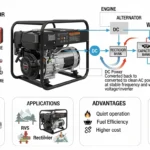
The basic home backup generator working principle is straightforward: the system detects a utility power failure, starts the generator, and transfers electrical power to the home.
1. Power Monitoring
The generator system continuously monitors the home’s utility power supply.
2. Power Failure Detection
When the utility electricity goes out, the generator’s control system detects the interruption.
3. Generator Startup
With an automatic standby generator, the engine starts automatically after the system detects the outage.
Portable generators generally require the homeowner to start the unit manually unless they have a compatible automatic-start system.
4. Electricity Generation
The generator’s engine converts energy from its fuel source into mechanical energy. An alternator then converts that mechanical energy into electrical energy.
5. Power Transfer
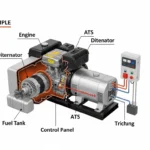
An automatic transfer switch (ATS) disconnects the home from the utility supply and connects the generator to the appropriate household circuits.
This helps prevent generator electricity from feeding back into utility power lines.
6. Power Supply to Appliances
The generator supplies electricity to the circuits connected to the backup system.
Depending on the generator’s capacity and installation, it may power essential loads such as:
- Refrigerators and freezers
- Lights
- Wi-Fi routers and networking equipment
- Security systems
- Heating systems
- Air conditioning
- Sump pumps
- Garage doors
- Medical equipment
- Selected kitchen appliances
7. Utility Power Restoration
When utility power returns and remains stable, the transfer switch moves the home’s electrical supply back to the utility.
The generator then shuts down automatically after its normal cooldown period.
What Is a Whole House Generator?
A whole house generator is a permanently installed standby generator designed to provide backup electricity to a large portion or potentially all of a home’s electrical loads, depending on its capacity and installation.
Unlike a portable generator, a whole-house standby system is normally installed outside the home and connected to the home’s electrical panel through a transfer switch.
The generator’s required size depends on the home’s electrical demand and which appliances or systems need backup power.
Standby Generator vs. Portable Generator
The two common categories of residential backup generators are standby generators and portable generators.
| Feature | Standby Generator | Portable Generator |
|---|---|---|
| Startup | Usually automatic | Usually manual |
| Installation | Permanently installed | Portable |
| Fuel options | Commonly natural gas or propane; model-dependent | Commonly gasoline or other fuels depending on model |
| Transfer switch | Typically used | Usually requires a different connection method |
| Convenience | Designed for automatic backup | Requires setup during an outage |
| Typical use | Extended residential backup | Temporary or portable backup |
The right option depends on the home’s electrical requirements, budget, fuel availability, installation conditions, and local regulations.
What Can a Home Backup Generator Power?
A generator can power different household appliances depending on its wattage capacity and the electrical load connected to it.
For example, a properly sized residential generator may provide backup power for:
- Lights
- Refrigerator
- Freezer
- Internet router
- Television
- Security cameras
- Heating equipment
- Air conditioning
- Sump pump
- Garage door opener
- Selected kitchen appliances
High-power appliances such as central air conditioners, electric water heaters, electric ranges, and large HVAC equipment can significantly increase the generator capacity required.
Why Do Homowners Use Backup Generators?
A backup generator for a house can help maintain essential electrical services during an outage.
Common reasons homeowners install generators include:
- Protecting food in refrigerators and freezers
- Maintaining heating or cooling during extreme weather
- Keeping internet and communication equipment operational
- Supporting home security systems
- Preventing disruption to essential household equipment
- Maintaining sump pumps during heavy rain
- Providing greater convenience during extended power outages
Simple Example
Imagine a severe storm causes a neighborhood power outage.
The utility electricity stops, and an automatic standby generator detects the loss of power. The generator starts its engine, the transfer switch moves the selected household circuits to generator power, and essential appliances begin operating from the generator.
When utility electricity returns, the transfer switch reconnects the home to the grid and the generator shuts down.
Simple Analogy
A home backup generator works like an emergency power source for your house.
Instead of storing electricity like a battery, a fuel-powered generator produces electricity when it is needed. When utility power fails, the generator can provide electricity to connected household circuits until normal power is restored.
A home backup generator provides an alternative source of electricity when the utility grid fails. Automatic standby and whole-house generator systems can detect outages, start the engine, transfer electrical loads, and restore backup power with minimal homeowner involvement.
Before installing a residential generator, homeowners should consider the required generator size, fuel type, electrical loads, transfer-switch configuration, installation requirements, ventilation, maintenance, and applicable local codes.
For homeowners searching for the best home backup generator, the most important consideration is not simply generator size or price—it is whether the system is properly sized and installed for the home’s specific electrical requirements.
Types of Home Backup Generators
There are several types of home backup generators, and each type is designed for different power needs, budgets, and operating conditions. The most common options for homeowners include portable generators, standby generators, inverter generators, and solar hybrid backup systems.
Choosing the right backup generator for a home depends on factors such as the amount of power needed, fuel availability, installation requirements, budget, noise level, and whether automatic backup power is required.
1. Portable Home Backup Generator
A portable home backup generator is a movable generator that can be used to provide temporary electricity during a power outage. These generators are generally less expensive than permanently installed standby systems and can be stored when they are not needed.
Key Features
- Portable and easy to move
- Generally lower upfront cost
- Usually requires manual startup
- Can power selected appliances and circuits
- Available with different fuel types depending on the model
- Suitable for temporary emergency power
Portable generators are commonly used to operate essential appliances such as refrigerators, lights, small appliances, and communication equipment during an outage.
Important: Portable fuel-powered generators must be operated outdoors in a properly ventilated location and away from doors, windows, and vents because their exhaust can contain carbon monoxide.
2. Standby Home Backup Generator
A standby home generator, also called a home standby generator, is a permanently installed backup power system designed to provide electricity when the utility power goes out.
These generators are typically installed outside the home and connected to the home’s electrical system through a transfer switch. Many residential standby generators can start automatically when an outage is detected.
Key Features
- Automatic operation
- Permanently installed
- Higher power capacity than many portable units
- Connected to the home’s electrical system
- Can support selected circuits or larger portions of the home
- Designed for convenient backup power during extended outages
A properly sized standby generator for a home can provide backup electricity for important loads such as refrigerators, lighting, HVAC equipment, sump pumps, security systems, and internet equipment.
3. Inverter Home Backup Generator
An inverter generator is a type of portable generator that produces electricity using an inverter-based electrical system. Inverter generators are designed to provide a stable electrical output and are often quieter and more fuel-efficient than conventional portable generators of comparable use.
Key Features
- Quieter operation
- Generally more fuel efficient
- Compact and portable
- Produces stable electrical power
- Useful for sensitive electronic equipment
- Suitable for smaller household loads and temporary backup
Because of their stable electrical output and relatively quiet operation, inverter generators can be useful for powering devices such as laptops, televisions, networking equipment, and other electronics.
However, the generator should still be operated according to the manufacturer’s instructions and within its rated capacity.
4. Solar Hybrid Backup Generator System
A solar hybrid backup power system combines multiple energy sources, such as solar panels, batteries, and a fuel-powered generator. Depending on the system design, solar energy and battery storage can supply some household loads while the generator provides additional backup power when needed.
Key Features
- Can integrate solar energy
- Battery storage can provide backup power
- Can reduce generator runtime and fuel consumption
- Provides multiple sources of backup electricity
- Useful for homes looking for a combination of renewable energy and conventional backup power
A solar hybrid system can be particularly useful when homeowners want to combine solar panels, battery backup, and generator power rather than relying exclusively on a fuel-powered generator.
Portable vs. Standby vs. Inverter vs. Solar Hybrid Generators
| Generator Type | Main Advantage | Typical Operation | Best Suited For |
|---|---|---|---|
| Portable Generator | Lower cost and mobility | Usually manual | Temporary emergency power |
| Standby Generator | Automatic backup | Automatic | Whole-home or selected-circuit backup |
| Inverter Generator | Quiet and stable power | Usually manual | Electronics and smaller loads |
| Solar Hybrid System | Multiple energy sources | Automatic/manual depending on system | Solar + battery + generator backup |
Which Type of Home Backup Generator Is Right for You?
The best type of home backup generator depends on your specific power requirements.
- Choose a portable generator if you need a movable and relatively affordable source of temporary emergency power.
- Consider a standby generator if you want an automatically activated system connected to your home’s electrical system.
- Consider an inverter generator if portability, lower noise, and stable electrical output are important.
- Consider a solar hybrid backup system if you want to combine solar energy and battery storage with generator backup.
Before purchasing a generator, calculate the electrical loads you want to operate and check local installation, fuel-storage, ventilation, and electrical-code requirements. For permanently installed systems, professional installation is generally recommended.
The main types of home backup generators include portable, standby, inverter, and solar hybrid systems. Each option has different advantages in terms of power capacity, portability, automation, fuel use, noise, and installation requirements.
Understanding these differences can help homeowners choose a backup generator for their home that matches their electrical needs, budget, and preferred method of backup power.
Main Components, Advantages, and Disadvantages of a Home Backup Generator
A home backup generator consists of several important components that work together to produce electricity and safely deliver it to the home’s electrical system. Understanding these home generator components can help homeowners understand how a backup generator operates and what maintenance it requires.
The exact components can vary depending on whether the system is a portable generator, standby generator, inverter generator, or hybrid backup system.
1. Engine
The engine is the primary mechanical power source in a fuel-powered generator.
Function
The engine converts energy from fuel into mechanical energy and drives the generator’s alternator.
Common generator fuels include gasoline, diesel, propane, and natural gas, depending on the generator type and model.
2. Alternator
The alternator, also called the generator head, converts the mechanical energy produced by the engine into electrical energy.
Function
It generates the electrical power that can be supplied to connected household loads.
The alternator is one of the most important standby generator components because it is responsible for producing the electricity used by appliances and electrical circuits.
3. Fuel System
The fuel system supplies the engine with the fuel required for operation.
Depending on the generator, the fuel system may use gasoline, diesel, propane, or natural gas.
Function
- Stores or receives the fuel
- Delivers fuel to the engine
- Supports continuous generator operation
For permanently installed standby generators, propane and natural gas are common fuel options, while portable generators often use gasoline.
4. Transfer Switch
A transfer switch connects the generator to the home’s electrical system and manages the transition between utility power and generator power.
Function
- Disconnects the home from utility power when required
- Connects designated electrical loads to the generator
- Transfers the home back to utility power when normal electricity is restored
An automatic transfer switch (ATS) can perform this process automatically on compatible standby generator systems.
A properly installed transfer switch also helps prevent dangerous electrical backfeeding into utility lines.
5. Control Panel
The control panel is the interface used to monitor and control the generator.
Function
Depending on the generator model, the control panel may display or monitor:
- Generator status
- Voltage
- Frequency
- Operating hours
- Fault or warning codes
- Maintenance information
- Electrical load
Automatic standby generators can also use the control system to detect utility power loss and initiate the startup sequence.
6. Cooling System
Generator engines produce heat while operating. The cooling system helps keep the engine within its designed operating temperature range.
Function
- Removes excess heat
- Helps prevent overheating
- Maintains proper engine operating temperature
- Supports reliable generator operation
Depending on the generator design, cooling may use air cooling or liquid cooling.
7. Exhaust System
The exhaust system directs combustion gases away from the engine.
Function
- Routes engine exhaust safely away from the generator
- Helps control exhaust gases
- Reduces exposure to harmful combustion products
Proper exhaust ventilation is especially important for fuel-powered generators because generator exhaust can contain carbon monoxide (CO).
8. Battery and Starting System
Many automatic standby generators use a battery-powered starting system.
Function
The starting system provides the electrical power required to crank and start the generator engine.
The battery and charging system must be maintained properly so the generator can start when an outage occurs.
Home Backup Generator Advantages
Understanding the advantages and disadvantages of a home backup generator can help homeowners determine whether a generator is appropriate for their property.
Key Advantages
1. Provides Backup Power During Outages
A home generator can provide electricity when utility power is unavailable, helping maintain selected household circuits or, with an appropriately sized system, a larger portion of the home.
2. Protects Refrigerated and Frozen Food
Backup electricity can keep refrigerators and freezers operating during an extended power outage, helping reduce the risk of food spoilage.
3. Supports Essential Home Appliances
Depending on the generator’s capacity, it can provide power to important equipment such as:
- Refrigerators
- Lights
- Heating and cooling systems
- Sump pumps
- Security systems
- Internet equipment
- Medical equipment
- Selected kitchen appliances
4. Improves Comfort During Emergencies
Backup electricity can help homeowners maintain essential heating, cooling, lighting, and communication equipment during severe weather and other emergencies.
5. Automatic Backup With Standby Generators
A properly installed automatic standby generator can detect a utility outage, start automatically, and transfer selected electrical loads to generator power.
This can reduce the need for homeowners to manually set up a generator during an emergency.
6. Provides Backup During Severe Weather
Generators can be useful during outages associated with storms, hurricanes, winter weather, and other events that interrupt utility service.
Home Backup Generator Disadvantages and Limitations
Although a home backup generator can provide valuable emergency power, it also has costs and limitations that homeowners should consider.
1. Initial Cost
Purchasing and installing a permanently installed standby generator can require a significant upfront investment. Costs may include the generator, transfer switch, electrical work, fuel-system work, permits, and professional installation.
2. Fuel Requirements
Fuel-powered generators need an adequate fuel supply to continue operating during an extended outage.
Fuel availability and storage requirements should be considered before choosing a generator.
3. Regular Maintenance
Generators require periodic maintenance to remain ready for an emergency.
Depending on the model, maintenance may include:
- Oil and filter service
- Battery inspection
- Spark plug service
- Air-filter replacement
- Fuel-system checks
- Cooling-system inspection
- Regular operational testing
Following the manufacturer’s maintenance schedule is important for reliable operation.
4. Noise
Generators produce mechanical and exhaust noise while operating. Noise levels vary considerably between models, so homeowners should consider the generator’s location and manufacturer-rated sound level.
5. Installation Requirements
A permanently installed generator requires appropriate space, electrical connections, fuel supply, ventilation, and compliance with applicable building and electrical codes.
Professional installation is recommended for standby generator systems.
6. Generator Capacity Is Limited
A generator cannot necessarily power every appliance in a home at the same time. The generator must be correctly sized for the electrical loads it is expected to support.
Large loads such as central air conditioning, electric water heaters, electric ranges, and other high-wattage equipment can significantly increase the required generator capacity.
Home Backup Generator Pros and Cons at a Glance
| Advantages | Disadvantages |
|---|---|
| Provides backup electricity | Higher upfront cost for many standby systems |
| Can protect refrigerated food | Requires fuel |
| Supports essential appliances | Requires regular maintenance |
| Can improve comfort during outages | Produces operating noise |
| Automatic operation is available | Requires proper installation |
| Useful during severe weather | Generator capacity is limited |
A home backup generator relies on several components—including the engine, alternator, fuel system, transfer switch, control panel, cooling system, exhaust system, and starting system—to produce and safely deliver backup electricity.
The main benefits include backup power during outages, support for essential appliances, and automatic operation with compatible standby systems. However, homeowners should also consider installation costs, fuel requirements, maintenance, noise, and generator capacity before choosing a system.
Selecting the correct generator size and having the system installed according to applicable electrical and safety requirements are essential for dependable home backup power.
Home Backup Generator Applications, Selection Guide, Problems, and Future Trends
Home Backup Generator Applications
A home backup generator can provide reliable electricity for many residential applications during a utility power outage. Depending on the generator’s capacity and installation, it can support essential appliances, home technology, communication equipment, security systems, and other critical electrical loads.
Residential Houses
The primary application of a home backup generator is providing backup electricity to residential properties during power outages.
Depending on the generator’s size, homeowners may use backup power for:
- Refrigerators and freezers
- Lights
- Heating and cooling systems
- Sump pumps
- Kitchen appliances
- Garage doors
- Essential electrical circuits
A properly sized whole house generator can provide backup power to a larger portion of the home’s electrical system.
Smart Homes
Modern smart homes depend on connected devices, home automation equipment, Wi-Fi networks, and security systems.
A backup generator can help keep essential smart-home equipment operating during an outage, including:
- Smart security devices
- Wi-Fi routers
- Home automation hubs
- Smart thermostats
- Connected cameras
- Smart locks
Home Offices
A backup generator for a home office can help maintain power for computers, monitors, networking equipment, printers, and other essential office devices.
This can be particularly useful for homeowners who work remotely and need reliable electricity during extended power outages.
Home Security Systems
Backup power can help keep important security equipment operating during a utility outage.
Depending on the system, a generator may support:
- Security cameras
- Alarm systems
- Motion sensors
- Network equipment
- Access-control systems
Keeping these systems powered can help maintain normal security monitoring during an outage.
Emergency Lighting
Power failures can leave homes without normal lighting. A home backup generator can provide electricity to connected lighting circuits, allowing homeowners to maintain essential lighting throughout the outage.
Home Backup Generator vs. Portable Generator
Understanding the difference between a home backup generator and a portable generator can help homeowners choose an appropriate backup power solution.
The term “home backup generator” can describe several residential generator systems, including permanently installed standby generators. A portable generator, by contrast, is designed to be moved and typically requires manual setup and operation.
| Feature | Home Standby Generator | Portable Generator |
|---|---|---|
| Installation | Permanently installed | Portable |
| Operation | Usually automatic | Usually manual |
| Transfer Switch | Typically used | Depends on connection method |
| Power Capacity | Available in higher-capacity configurations | Typically smaller, model-dependent |
| Convenience | High | Moderate |
| Mobility | Fixed location | Can be moved |
| Upfront Cost | Generally higher | Generally lower |
| Best For | Automatic residential backup | Temporary emergency power |
Key Difference
The main difference is how the generator is installed and operated.
A permanently installed standby generator is connected to the home’s electrical system and can automatically provide backup power when utility electricity fails.
A portable generator is designed to be moved and generally requires the homeowner to start it, connect appropriate equipment, and manage its operation during the outage.
Portable generators also require special attention to outdoor placement, ventilation, carbon monoxide safety, and electrical connections.
How to Choose a Home Backup Generator
Choosing the right home backup generator requires consideration of electrical requirements, fuel availability, installation conditions, operating noise, and budget.
Determine Your Power Requirements
Start by identifying the appliances and electrical systems you want to operate during an outage.
Consider:
- Running watts
- Starting or surge watts
- Total electrical load
- Essential versus nonessential appliances
Large electrical loads such as central air conditioners, electric water heaters, electric ranges, and other high-wattage equipment can significantly affect the required generator size.
Choose the Right Fuel Type
Residential generators can use different fuel sources depending on the model.
Common options include:
- Natural gas
- Propane
- Gasoline
- Diesel
Fuel availability, storage requirements, operating time, and local regulations should be considered when selecting a generator.
Consider Noise Level
Generator noise can be an important consideration in residential neighborhoods.
Check the manufacturer’s published noise rating and consider the generator’s installation location before purchasing a system.
Consider Automatic Operation
If convenience is a priority, an automatic standby generator can monitor utility power and start when an outage is detected.
This eliminates much of the manual setup required with a typical portable generator.
Compare the Total Cost
The purchase price is only one part of the cost of owning a generator.
Homeowners should also consider:
- Installation
- Transfer switch
- Electrical work
- Fuel
- Routine maintenance
- Replacement parts
- Permits and applicable local requirements
Home Backup Generator Safety Tips for Beginners
Proper installation and operation are essential for safe generator use.
Use Generators Outdoors
Fuel-powered portable generators should always be operated outdoors in a suitable location away from doors, windows, vents, and other openings because engine exhaust can contain carbon monoxide.
Follow Electrical Safety Requirements
A portable generator should never be connected directly to a home’s electrical wiring using an unsafe connection method.
A properly installed transfer switch or another approved connection method should be used when connecting a generator to household circuits.
Follow the Manufacturer’s Instructions
Always follow the generator manufacturer’s instructions for:
- Installation
- Fuel
- Startup
- Shutdown
- Maintenance
- Electrical connections
- Storage
Common Home Backup Generator Problems and Solutions
Even a properly maintained generator can experience problems. Understanding common issues can help homeowners identify when professional service may be required.
Why Does a Home Generator Fail to Start?
Possible causes include:
- Empty or inadequate fuel supply
- Weak or discharged starting battery
- Faulty starter system
- Engine-related problems
- Maintenance issues
- Control-system fault
Possible solution: Check the fuel supply, battery condition, warning indicators, and maintenance status according to the manufacturer’s instructions. If the generator still does not start, professional service may be required.
Why Is the Generator Producing Low Voltage?
Possible causes may include:
- Excessive electrical load
- Generator malfunction
- Voltage-regulation problems
- Electrical connection issues
Possible solution: Disconnect unnecessary loads and check the generator’s control panel for warning or fault codes. Persistent voltage problems should be inspected by a qualified technician.
Why Does the Generator Shut Down Automatically?
Automatic shutdown can be a safety feature rather than a failure.
Possible causes include:
- Low engine oil
- High engine temperature
- Overload
- Low fuel pressure
- Electrical fault
- Other protective-system alerts
Possible solution: Check the generator’s display or fault code and follow the manufacturer’s troubleshooting procedure. Do not bypass safety shutdown features.
Why Is the Generator Noisy?
Generator noise can result from:
- Normal engine operation
- Engine or equipment vibration
- Improper mounting
- Poor installation location
- Mechanical problems
Possible solution: Make sure the generator is installed on a suitable, stable surface and maintained according to the manufacturer’s requirements. Sound-reducing solutions should be compatible with the generator and must not restrict required ventilation.
Future Trends in Home Backup Generator Technology
Residential backup power technology continues to evolve as homeowners look for greater reliability, automation, efficiency, and integration with renewable energy.
Smart Generator Monitoring
Modern generator systems increasingly offer remote monitoring features. Depending on the manufacturer and model, homeowners may be able to monitor generator status, maintenance alerts, and system information through a mobile application or connected platform.
Solar and Generator Integration
Some residential backup systems can combine solar panels, battery storage, and a fuel-powered generator.
This approach can provide multiple sources of backup power and may reduce generator runtime when solar energy and battery capacity are available.
Battery Energy Storage
Home battery systems are becoming an increasingly important part of residential backup power.
A battery can provide electricity without running a fuel-powered engine, while a generator can provide additional backup capacity when the battery is depleted or when longer-duration backup is required.
More Efficient and Lower-Emission Systems
Generator manufacturers continue to develop systems designed to improve fuel efficiency, emissions performance, monitoring, and overall operation.
Future residential backup systems are likely to increasingly combine generators, batteries, solar power, smart controls, and home energy-management technology.
A home backup generator can support residential homes, home offices, smart-home equipment, security systems, emergency lighting, and other essential electrical loads during a power outage.
Conclusion
A Home Backup Generator is an essential power solution that provides electricity during unexpected power outages. It helps maintain comfort, safety, and normal daily activities in residential environments.
Understanding the Home Backup Generator working principle helps electrical students and technicians learn how modern residential power systems operate. These generators supply electricity to important appliances such as lights, refrigerators, internet routers, and security systems.
Although backup generators require installation costs and regular maintenance, their benefits during emergencies make them extremely valuable. As technology advances, home backup generators will become smarter, more efficient, and better integrated with renewable energy systems.