
Imagine walking into your home and switching on the lights. Instantly, the room becomes bright. You plug in a charger, start a fan, or turn on the television, and everything works smoothly. Behind these everyday actions is an essential system known as electrical wiring.
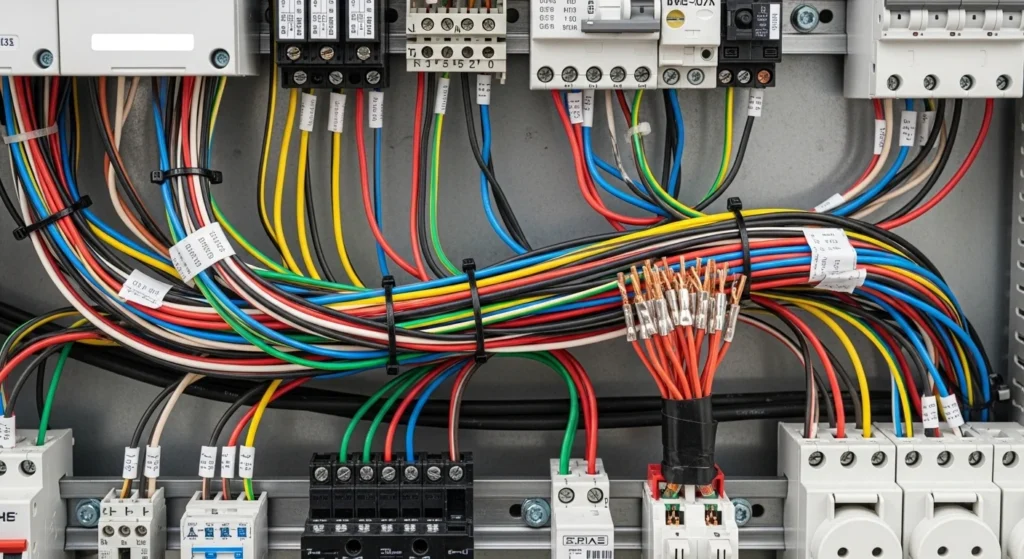
Electrical wiring forms the backbone of any electrical installation. It allows electricity to travel safely from the power source to electrical devices such as lights, fans, appliances, and machines. Without proper wiring, electricity cannot be distributed efficiently or safely.
For electrical students, engineers, technicians, and beginners, understanding electrical wiring is a fundamental step in learning electrical engineering and electrical installation practices. Poor wiring can lead to electrical failures, equipment damage, and even fire hazards.
In this article, you will learn what electrical wiring is, the electrical wiring working principle, different wiring types, major components, advantages and disadvantages, and real-world electrical wiring applications. This guide explains the concept in simple language so beginners can easily understand how electrical wiring systems work in homes, buildings, and industries.
2. What is Electrical Wiring?
Definition
Electrical wiring refers to the system of electrical conductors, cables, and devices used to distribute electrical power from a source to various electrical equipment and appliances.
It includes wires, switches, circuit breakers, sockets, and protective devices that allow electricity to flow safely through a building.
Simple Explanation
In simple words, electrical wiring is the network of wires that carries electricity from the main power supply to electrical devices such as lights, fans, and appliances.
A well-designed wiring system ensures that electrical power reaches every part of a building safely and efficiently.
Practical Example
In a house, electricity enters through the main distribution board. From there, wires distribute electricity to different rooms. Each room has switches, lights, sockets, and appliances connected through electrical wiring.
This system allows users to control electricity safely and conveniently.
3. Electrical Wiring Working Principle
The electrical wiring working principle is based on the safe transmission of electric current through conductors from the power source to electrical loads.
Step-by-Step Explanation
- Power Generation
Electricity is generated at a power plant and transmitted through power lines.
- Electricity Distribution
Electric power reaches homes and buildings through distribution networks.
- Main Distribution Board
Electricity enters the building and is distributed through the main electrical panel.
- Electrical Wiring Network
Wires carry electrical current from the distribution board to switches, outlets, and appliances.
- Electrical Load Operation
When a switch is turned on, the circuit is completed and electricity flows to the device.
Simple Analogy
Electrical wiring can be compared to a water supply system:
- The power source is like a water pump.
- Wires are like pipes carrying water.
- Switches are like taps controlling the flow.
- Electrical devices are like machines using the water.
4. Types of Electrical Wiring
Electrical wiring systems are classified based on installation methods and safety requirements.
Cleat Wiring
Cleat wiring is a temporary wiring method where insulated wires are supported by porcelain cleats.
Features:
- Simple installation
- Low cost
- Used for temporary electrical connections
Batten Wiring
In batten wiring, insulated wires are fixed on wooden battens using clips.
Features:
- Suitable for small installations
- Neat appearance
- Easy maintenance
Casing and Capping Wiring
In this method, wires are placed inside wooden or plastic casing and covered with a protective cap.
Features:
- Protects wires from damage
- Organized wiring layout
- Used in residential installations
Conduit Wiring
Conduit wiring is a modern and widely used wiring method where wires are placed inside PVC or metal pipes.
Types include:
- Surface conduit wiring
- Concealed conduit wiring
Features:
- High safety
- Long life
- Better protection
Conduit wiring is commonly used in homes, offices, and industries.
5. Main Components of Electrical Wiring
Several components are essential for a proper electrical wiring system.
Electrical Wires and Cables
Wires are conductors that carry electrical current.
Functions:
- Transmit electricity
- Connect electrical devices
Switches
Switches control the flow of electricity in a circuit.
Functions:
- Turn devices on or off
- Control lighting and appliances
Circuit Breakers
Circuit breakers protect wiring systems from overloads and short circuits.
Functions:
- Automatically disconnect faulty circuits
- Prevent electrical damage
Distribution Board
The distribution board distributes electricity to different circuits within a building.
Functions:
- Central power control
- Safety protection
Electrical Sockets
Sockets provide connection points for electrical appliances.
Functions:
- Supply power to devices
- Allow easy plug connections
6. Advantages of Electrical Wiring
A well-designed electrical wiring system provides many benefits.
Electrical wiring advantages include:
- Safe distribution of electrical power
- Reliable operation of electrical devices
- Organized electrical installation
- Improved electrical safety
- Easy maintenance and troubleshooting
- Supports modern electrical appliances
Proper wiring is essential for safe and efficient electrical systems.
7. Disadvantages / Limitations
Although electrical wiring is necessary, it also has some limitations.
Electrical wiring disadvantages and limitations include:
- Improper installation can cause electrical hazards
- Wiring systems require regular maintenance
- Poor insulation may lead to electrical leakage
- Installation cost may be high in large buildings
Careful design and proper installation can minimize these problems.
8. Electrical Wiring Applications
Electrical wiring has numerous applications in different sectors.
Home Applications
- Lighting systems
- Power outlets
- Home appliances
- Ceiling fans and air conditioners
Industrial Applications
- Factory machinery
- Motor control systems
- Power distribution networks
Commercial Applications
- Office electrical systems
- Shopping centers
- Hospitals and schools
Modern Technology Applications
Electrical wiring is also used in:
- Data centers
- Smart homes
- Renewable energy systems
These electrical wiring applications demonstrate its importance in modern infrastructure.
9. Comparison Section
Difference Between Electrical Wiring and Electrical Cabling
| Feature | Electrical Wiring | Electrical Cabling |
|---|---|---|
| Definition | System of connecting electrical components | Group of insulated conductors |
| Purpose | Distribute electrical power | Carry electrical signals or power |
| Installation | Used in buildings | Used in communication or power systems |
| Example | House wiring | Network cables |
Understanding the difference between electrical wiring and electrical cabling helps technicians choose the correct system.
10. Selection Guide
Selecting the correct wiring system is important for safety and efficiency.
Tips for Beginners
- Choose proper wire size according to load
- Use high-quality insulation materials
- Install protective devices like circuit breakers
- Follow electrical safety standards
Important Factors
- Electrical load requirements
- Building structure
- Environmental conditions
- Safety regulations
Proper planning ensures reliable electrical installations.
11. Common Problems & Solutions
Q1: Why do electrical wires overheat?
Overheating occurs due to excessive electrical load or poor connections.
Solution:
- Use correct wire size
- Avoid overloading circuits
Q2: What causes short circuits in wiring?
Short circuits occur when live and neutral wires touch each other.
Solution:
- Proper insulation
- Correct installation practices
Q3: Why do lights flicker?
Flickering lights may result from loose wiring connections.
Solution:
- Inspect and tighten connections
Q4: How can wiring problems be prevented?
Preventive measures include:
- Regular inspections
- Proper grounding
- Using quality electrical materials
12. Future Trends
Electrical wiring technology is evolving with modern electrical systems.
Smart Wiring Systems
Smart homes use advanced wiring systems connected to automation devices.
Energy-Efficient Electrical Systems
Modern wiring supports energy-saving devices and renewable energy sources.
Fire-Resistant Cables
New wiring materials are designed to resist heat and fire.
Integrated Electrical Infrastructure
Future buildings will integrate electrical wiring with communication networks and smart energy systems.
These innovations will improve electrical safety and efficiency.
13. Conclusion
Electrical wiring is one of the most important elements of any electrical system. It ensures that electrical power is distributed safely from the source to various devices and equipment. Proper wiring allows homes, offices, and industries to operate electrical appliances efficiently and safely.
In this article, we explained what electrical wiring is, the electrical wiring working principle, different types of wiring systems, major components, and real-world electrical wiring applications. We also discussed the advantages and disadvantages of electrical wiring to provide a balanced understanding of the topic.
For electrical students, engineers, and technicians, learning about electrical wiring is essential because it forms the foundation of electrical installation and maintenance work. A well-designed wiring system improves safety, reliability, and energy efficiency.
By understanding the principles of electrical wiring and following proper installation practices, professionals can create electrical systems that are safe, durable, and capable of supporting modern technology.