
Imagine walking into a modern house where you see clean walls, no visible wires, and perfectly placed switches and sockets. Everything looks organized and safe. Behind those smooth walls, a complete electrical wiring system is working silently to power lights, fans, appliances, and other devices. This system is commonly known as Concealed Conduit Wiring in Homes.
In modern residential construction, concealed wiring has become the most preferred method because it provides safety, durability, and a clean interior appearance. Instead of running wires on the wall surface, electricians install conduits inside the walls, ceilings, or floors before plastering. The electrical wires are then pulled through these conduits to supply power throughout the house.
Understanding Concealed Conduit Wiring in Homes is important for electrical students, engineers, technicians, and beginners who want to learn how modern electrical installations are designed. Proper wiring ensures electrical safety, prevents fire hazards, and supports long-term reliability. concealed conduit wiring
In this article, you will learn the concealed conduit wiring working principle, types of concealed conduit systems, main components, advantages and disadvantages, applications, comparison with surface wiring, troubleshooting tips, and future trends in residential electrical wiring.Concealed conduit wiring is a modern electrical wiring system in which electrical wires are placed inside conduit pipes, and these pipes are hidden within the walls, ceilings, or floors of a building. During construction, electricians first install PVC or metal conduit pipes inside the walls before plastering. After that, insulated electrical wires are pulled through these conduits and connected to switches, sockets, lights, and other electrical devices. Once the wall plaster and paint are completed, the wiring becomes completely invisible, and only electrical fittings remain visible. This wiring system provides better protection to the wires from moisture, dust, and mechanical damage, making it safer and more durable. Because of its neat appearance and high level of safety, concealed conduit wiring is widely used in modern homes, offices, commercial buildings, hotels, and hospitals.
2. What is Concealed Conduit Wiring in Homes?
Concealed Conduit Wiring in Homes is an electrical wiring system in which conduits and electrical cables are installed inside the walls, ceilings, or floors of a building.
Clear Definition
Concealed conduit wiring is a method of electrical installation where conduit pipes carrying insulated electrical wires are hidden within the building structure.
Simple Explanation
In this wiring system, electricians place conduit pipes inside the wall during construction. After installation, the walls are plastered, making the wiring invisible from outside.
Practical Example
For example, in newly constructed houses, electricians install PVC conduits inside brick walls before plastering. After the walls are finished, only switches, sockets, and distribution boards remain visible.
This method provides a neat appearance and protects electrical wires from external damage.
3. Concealed Conduit Wiring Working Principle
The concealed conduit wiring working principle focuses on protecting electrical wires while keeping the wiring hidden inside the building structure.
Step-by-Step Working Process
- Planning the wiring layout
Engineers design the electrical layout showing switch points, lighting points, and socket locations. - Cutting wall grooves (chasing)
Grooves are cut inside the walls to place conduit pipes. - Installing conduit pipes
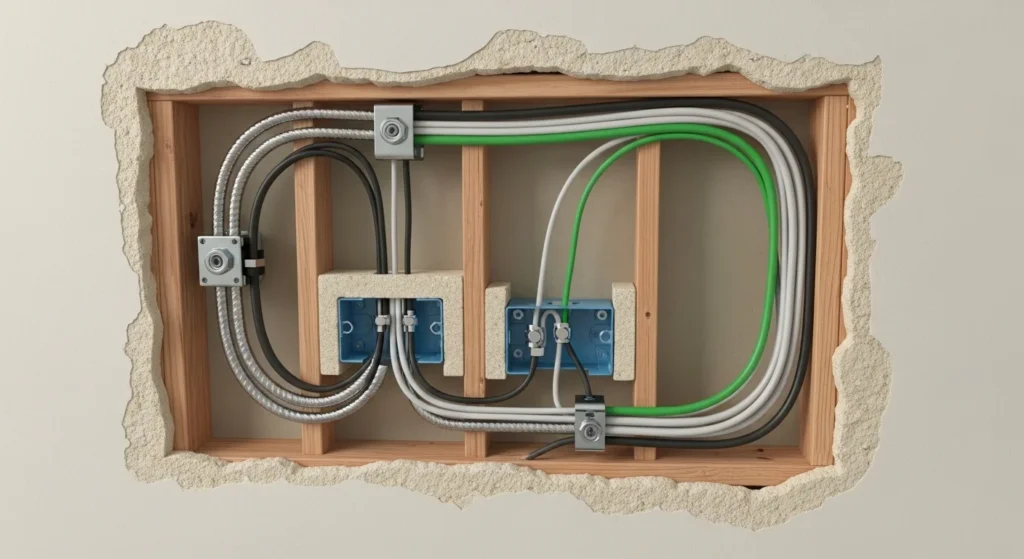
PVC or metal conduits are fixed inside the grooves. - Installing junction boxes
Metal or plastic junction boxes are installed for switchboards and connections. - Plastering the walls
After conduit installation, walls are plastered to hide the wiring. - Pulling electrical wires
Once the structure is complete, electrical wires are pulled through the conduits. - Connecting switches and sockets
Wires are connected to switches, lights, fans, and outlets.
Simple Analogy
Think of concealed wiring like the plumbing pipes inside a house. Water pipes are hidden inside walls, but they still deliver water efficiently. Similarly, concealed conduits carry electricity safely inside the walls.
4. Types / Classification
There are different types of Concealed Conduit Wiring in Homes, mainly based on the type of conduit used.
PVC Concealed Conduit Wiring
PVC conduits are widely used in residential buildings.
Features
- Lightweight material
- Corrosion resistant
- Easy to install
- Affordable cost
PVC conduits are the most common choice for home wiring.
Metal Concealed Conduit Wiring
Metal conduits are made from steel or aluminum.
Features
- Strong and durable
- Provides excellent mechanical protection
- Suitable for high-load electrical systems
Metal conduits are usually used in commercial and industrial buildings.
Flexible Concealed Conduit Wiring
Flexible conduits are used where rigid conduits cannot easily bend.
Features
- Flexible installation
- Suitable for complex wiring paths
- Used for equipment connections
Flexible conduits are sometimes used in modern smart homes.
5. Main Components
A complete concealed conduit wiring system includes several important components.
Conduit Pipes
Conduit pipes protect electrical wires and guide them through walls and ceilings.
Electrical Wires
Insulated copper or aluminum wires carry electricity from the distribution board to electrical devices.
Junction Boxes
Junction boxes provide connection points where multiple wires meet.
Switch Boxes
Switch boxes hold switches and sockets securely in the wall.
Distribution Board (DB)
The distribution board controls the electrical supply to different circuits in the house.
Bends and Connectors
These fittings help change conduit direction and connect conduit sections.
6. Concealed Conduit Wiring Advantages
Understanding concealed conduit wiring advantages and disadvantages is important before choosing this wiring system.
Advantages
- Provides a clean and modern interior appearance
- Protects electrical wires from dust and moisture
- Reduces the risk of accidental damage
- Improves electrical safety
- Long-lasting wiring system
- Suitable for modern residential construction
Real-World Benefits
Most modern houses, apartments, and commercial buildings use concealed wiring because it improves both safety and aesthetics.
7. Disadvantages / Limitations
Although concealed wiring offers many benefits, it also has some limitations.
Disadvantages
- Higher installation cost
- Difficult to repair if a fault occurs
- Requires careful planning before construction
- Wall cutting may weaken structure if done incorrectly
- Modifying wiring later can be challenging
Despite these challenges, concealed wiring remains the most preferred method in modern homes.
8. Concealed Conduit Wiring Applications
The concealed conduit wiring applications extend across various residential and commercial environments.
Residential Homes
Most new houses use concealed wiring for safety and appearance.
Apartments and Buildings
Multi-story residential buildings commonly use concealed conduit systems.
Offices and Commercial Spaces
Modern offices use concealed wiring to maintain a professional look.
Smart Homes
Smart lighting, automation systems, and home security devices use concealed conduit wiring.
Educational and Healthcare Buildings
Hospitals and schools require safe and organized wiring systems.
9. Comparison Section
Understanding the difference between concealed conduit wiring and surface conduit wiring helps electricians choose the correct system.
| Feature | Concealed Conduit Wiring | Surface Conduit Wiring |
|---|---|---|
| Installation | Hidden inside walls | Installed on wall surface |
| Appearance | Clean and aesthetic | Visible conduits |
| Maintenance | Difficult to repair | Easy to repair |
| Installation Cost | Higher | Lower |
| Protection | Excellent protection | Moderate protection |
Both wiring systems are useful depending on the building design and electrical requirements.
10. Selection Guide
Choosing the right concealed conduit wiring system requires careful planning.
Important Factors
- Building design
- Electrical load requirements
- Budget availability
- Safety standards
- Future expansion possibilities
Tips for Beginners
- Always design wiring before construction begins.
- Use high-quality PVC conduits.
- Maintain proper conduit spacing.
- Avoid sharp conduit bends.
- Ensure proper earthing and circuit protection.
Proper planning ensures a safe and efficient electrical system.
11. Common Problems & Solutions
Q1: Why do concealed wires sometimes fail?
Poor insulation or damaged wires during installation can cause failure.
Solution: Use quality wires and proper installation techniques.
Q2: Why do switches stop working?
Loose connections inside switch boxes can cause this problem.
Solution: Check and tighten electrical connections.
Q3: Why does circuit breaker trip frequently?
Overloaded circuits may cause repeated tripping.
Solution: Distribute electrical load across multiple circuits.
Q4: Why are outlets not receiving power?
Faulty wiring or damaged cables may interrupt the circuit.
Solution: Inspect wiring through junction boxes.
12. Future Trends
Electrical wiring technology continues to improve with modern construction methods.
Smart Electrical Systems
Modern homes integrate smart switches, automation systems, and intelligent energy management.
Fire-Resistant Wiring
New materials are improving electrical safety and fire resistance.
Modular Wiring Systems
Future systems may allow easier upgrades without damaging walls.
Sustainable Materials
Environment-friendly conduit materials are being developed.
These innovations will improve safety, efficiency, and reliability in residential electrical systems.
13. Conclusion
Concealed Conduit Wiring in Homes is the most widely used electrical wiring system in modern residential construction. By hiding conduit pipes and electrical cables inside walls and ceilings, this system provides a clean appearance while ensuring safety and protection for electrical wiring.
Although installation costs are higher and repairs can be difficult, the long-term benefits of safety, durability, and aesthetics make concealed wiring the preferred choice for modern homes. Understanding the concealed conduit wiring working principle, applications, and advantages and disadvantages helps electrical students and technicians design safe and reliable electrical installations.
For anyone learning electrical engineering or home wiring systems, mastering concealed conduit wiring is essential. With proper planning, high-quality materials, and correct installation techniques, this wiring method can provide a safe and efficient electrical system for many years.