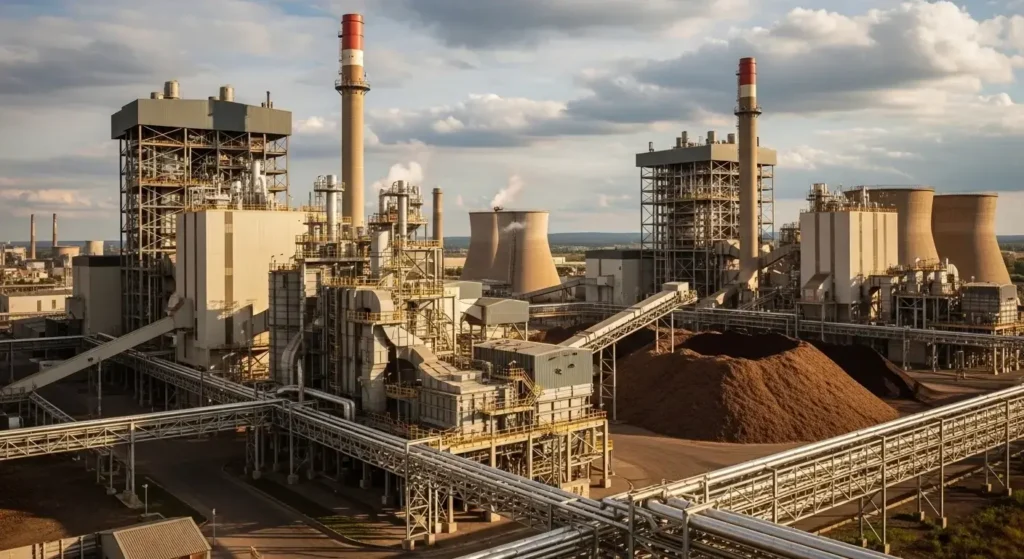

Imagine a sugar mill after the harvesting season. Huge piles of bagasse (sugarcane waste) are lying unused. Instead of burning it in open air or throwing it away, the factory installs a system that converts this waste into electricity. The same agricultural residue now powers machines, lights, and even nearby homes.
This is the practical beauty of a Biomass Power Plant. It converts organic waste into useful electrical energy. In a world facing fuel shortages and environmental problems, biomass energy is becoming increasingly important.
For electrical students and engineers, understanding how a Biomass Power Plant works is essential because it combines power generation, renewable energy, and environmental engineering.
In this complete guide, you will learn the Biomass Power Plant working principle, types, components, advantages and disadvantages, applications, comparison with other power plants, selection guide, troubleshooting tips, and future trends. Let’s explore this renewable energy system in a simple and practical way.
2. What is Biomass Power Plant?
A Biomass Power Plant is a power generation facility that produces electricity by burning or processing organic materials such as wood, agricultural waste, animal waste, or municipal solid waste.
Simple Explanation
Biomass is any material that comes from plants or animals. When this material is burned or converted into gas, it releases heat energy. This heat is used to produce steam, which rotates a turbine connected to a generator.
In simple words:
Organic Waste → Heat → Steam → Turbine → Generator → Electricity
Practical Example
In rice-producing areas, rice husk is often used as fuel in biomass plants. Instead of depending only on coal, the plant uses local agricultural waste to generate electricity.
This makes Biomass Power Plant applications very useful in rural and agricultural regions.
3. Biomass Power Plant Working Principle
The Biomass Power Plant working principle is similar to a thermal power plant, but the fuel is organic material instead of coal.
Let’s understand it step by step:
- Fuel Collection
Biomass such as wood chips, bagasse, or rice husk is collected. - Fuel Feeding
The biomass is fed into a boiler or gasifier. - Combustion or Conversion
- In combustion systems, biomass is burned directly.
- In gasification systems, biomass is converted into combustible gas.
- Steam Generation
Heat from burning biomass converts water into steam. - Turbine Rotation
High-pressure steam rotates the steam turbine. - Electricity Generation
The turbine rotates a generator to produce electricity. - Exhaust and Ash Removal
Flue gases are treated, and ash is collected.
Simple Analogy
Think of it like boiling water in a kettle. When water boils, steam comes out with force. In a biomass plant, that steam force is used to spin a turbine.
This is the core Biomass Power Plant working principle.
4. Types / Classification of Biomass Power Plant
There are several types of biomass power plants based on technology used.
4.1 Direct Combustion Power Plant
- Biomass is burned directly in a boiler.
- Steam is produced and drives a turbine.
- Most common type.
4.2 Gasification Power Plant
- Biomass is converted into producer gas.
- Gas is burned in a gas engine or turbine.
- More efficient than direct combustion.
4.3 Anaerobic Digestion Plant
- Organic waste decomposes without oxygen.
- Produces biogas (mainly methane).
- Biogas runs a generator.
4.4 Co-firing Power Plant
- Biomass is mixed with coal.
- Used in existing thermal plants.
- Reduces coal consumption.
Each type has its own Biomass Power Plant advantages and disadvantages depending on location and fuel availability.
5. Main Components of Biomass Power Plant
A Biomass Power Plant consists of the following main components:
5.1 Fuel Handling System
- Stores and feeds biomass into the boiler.
5.2 Boiler
- Burns biomass to generate heat.
- Converts water into steam.
5.3 Steam Turbine
- Converts steam energy into mechanical energy.
5.4 Generator
- Converts mechanical energy into electrical energy.
5.5 Condenser
- Converts steam back into water.
5.6 Flue Gas Cleaning System
- Removes dust and harmful gases.
5.7 Ash Handling System
- Collects and disposes of ash safely.
Each component must work efficiently for smooth plant operation.
6. Advantages of Biomass Power Plant
Understanding Biomass Power Plant advantages and disadvantages helps in proper decision-making.
Advantages
- Renewable energy source
- Reduces agricultural waste
- Lower carbon emissions compared to coal
- Supports rural economy
- Creates local jobs
- Can operate continuously (not weather-dependent like solar)
- Reduces landfill waste
In simple terms, biomass plants convert waste into wealth.
7. Disadvantages / Limitations
Despite benefits, there are some limitations:
- Fuel collection and transportation cost
- Requires large storage area
- Lower efficiency compared to gas plants
- Emission control required
- Moisture in biomass reduces performance
Proper design and maintenance reduce these challenges.
8. Biomass Power Plant Applications
Biomass Power Plant applications are growing worldwide.
Home and Community
- Rural electrification
- Small community power plants
Industrial
- Sugar mills (using bagasse)
- Paper industries
- Food processing industries
Modern Technology
- Waste-to-energy plants
- Combined heat and power (CHP) systems
- Integration with smart grids
Biomass is especially useful where agricultural waste is easily available.
9. Comparison Section
Difference Between Biomass Power Plant and Thermal Power Plant
| Feature | Biomass Power Plant | Coal Thermal Power Plant |
|---|---|---|
| Fuel Type | Organic waste | Coal |
| Carbon Emission | Lower | Higher |
| Renewable | Yes | No |
| Fuel Cost | Variable | Stable but high |
| Environmental Impact | Moderate | High |
The main difference between biomass power plant and thermal power plant is fuel source and environmental impact.
Biomass is renewable, while coal is non-renewable.
10. Selection Guide
Choosing the right Biomass Power Plant depends on:
- Availability of biomass fuel
- Moisture content
- Plant capacity requirement
- Environmental regulations
- Budget
Tips for Beginners
- Conduct fuel availability study first
- Select proper combustion or gasification method
- Ensure emission control system
- Plan proper storage facility
- Consider maintenance cost
A good feasibility study ensures long-term success.
11. Common Problems & Solutions (FAQs Style)
Q1: Why is plant efficiency low?
Solution: Check fuel moisture level and combustion efficiency.
Q2: Why excessive smoke is produced?
Solution: Improve air-fuel ratio and inspect flue gas system.
Q3: Why turbine vibration occurs?
Solution: Check steam pressure stability and turbine alignment.
Q4: Why ash buildup increases?
Solution: Clean boiler regularly and use proper fuel quality.
Regular monitoring ensures safe operation.
12. Future Trends in Biomass Power Plant
The future of Biomass Power Plant technology is promising.
- Advanced gasification systems
- Improved emission control technology
- Integration with solar hybrid systems
- Smart monitoring systems
- Development of biomass pellets
- Carbon capture integration
With increasing demand for renewable energy, biomass will play a major role in sustainable power generation.
13. Conclusion
A Biomass Power Plant is an effective renewable energy solution that converts organic waste into useful electricity. It works on the simple principle of converting heat energy into mechanical and then electrical energy.
We discussed the Biomass Power Plant working principle, types, components, applications, advantages and disadvantages, comparison with thermal plants, and troubleshooting methods.
As an electrical engineer, understanding biomass technology helps you contribute to sustainable energy development. With proper planning and maintenance, biomass plants can provide reliable, eco-friendly power for many years.
Keep learning renewable technologies — they are the future of power engineering.