
Imagine a hospital during a sudden power outage at night. Life-saving machines, lights, and monitoring equipment must continue working without interruption. At the same time, the environment must remain calm and quiet for patients. In such situations, a normal loud generator is not ideal. This is where silent generators become extremely important.
Silent generators are widely used in homes, offices, hospitals, data centers, and commercial buildings where power backup is needed but noise must be minimal. Traditional generators often produce loud engine noise, vibrations, and exhaust sounds. However, modern silent generators are designed with special enclosures and soundproof technology that significantly reduce noise levels.
For electrical students, engineers, technicians, and beginners, understanding Silent Generator Types is very important. Each type works differently and is suitable for different applications.
In this article, you will learn:
- What silent generators are
- Silent generator working principle
- Different Silent Generator Types
- Main components and functions
- Silent generator advantages and disadvantages
- Silent generator applications
- How to choose the right generator
- Common problems and solutions
- Future trends in generator technology
This guide explains everything in simple and practical language, just like a senior engineer teaching a junior technician.
2. What is a Silent Generator?
A silent generator is a power generator designed to produce electricity while generating very low noise. It uses a soundproof enclosure, vibration isolation, and advanced mufflers to reduce sound levels.
In simple terms, a silent generator is a noise-reduced generator used for backup power supply.
Simple Explanation
A normal generator creates electricity by running an engine that rotates an alternator. However, engines create noise. Silent generators reduce this noise by enclosing the generator inside a specially designed soundproof casing.
Practical Example
Consider a small office building that loses electricity during a power outage. If a loud generator is used, employees cannot work comfortably. Instead, a silent generator can provide electricity quietly without disturbing the working environment.
Typical noise level:
- Normal generator: 90–110 dB
- Silent generator: 50–70 dB
This noise reduction makes silent generators suitable for residential and commercial environments.
3. Silent Generator Working Principle
The silent generator working principle is similar to a normal generator. The main difference is the noise reduction system.
The generator converts mechanical energy into electrical energy.
Step-by-Step Working Process
- Fuel Supply
- Diesel, petrol, or gas fuel is supplied to the engine.
- Engine Operation
- The fuel burns inside the engine and produces mechanical power.
- Alternator Rotation
- The engine rotates the alternator shaft.
- Electricity Generation
- The alternator converts mechanical energy into electrical energy through electromagnetic induction.
- Sound Reduction
- A soundproof canopy absorbs and blocks noise.
- Power Output
- Electricity is supplied to connected loads such as lights, machines, or computers.
Simple Analogy
Think of a silent generator like a car engine inside a soundproof box. The engine still works the same way, but the box prevents loud noise from spreading.
Noise Reduction Features
Silent generators reduce noise using:
- Acoustic insulation
- Anti-vibration mounts
- Advanced exhaust mufflers
- Soundproof metal enclosure
4. Types / Classification of Silent Generators
There are several Silent Generator Types based on fuel, design, and application.
4.1 Diesel Silent Generator
Diesel generators are the most commonly used silent generators.
Features
- Uses diesel fuel
- High power output
- Suitable for industrial applications
Advantages
- Fuel efficient
- Long operating life
- Reliable for heavy loads
Typical Uses
- Hospitals
- Factories
- Large buildings
4.2 Petrol Silent Generator
Petrol generators are usually smaller and portable.
Features
- Uses petrol fuel
- Lightweight
- Easy to start
Advantages
- Portable
- Low initial cost
- Simple operation
Typical Uses
- Homes
- Small shops
- Outdoor events
4.3 Gas Silent Generator
These generators run on natural gas or LPG.
Features
- Cleaner fuel
- Lower emissions
- Quiet operation
Advantages
- Environment friendly
- Lower fuel pollution
- Smooth engine operation
Typical Uses
- Residential areas
- Restaurants
- Hotels
4.4 Inverter Silent Generator
Inverter generators are modern and highly efficient.
Features
- Produces stable electricity
- Uses electronic inverter technology
Advantages
- Clean power output
- Low fuel consumption
- Very quiet operation
Typical Uses
- Sensitive electronics
- Computers
- Medical equipment
4.5 Portable Silent Generator
Portable generators are small and easy to move.
Features
- Compact design
- Wheels for movement
Advantages
- Easy transportation
- Quick installation
- Ideal for temporary use
Typical Uses
- Construction sites
- Camping
- Small homes
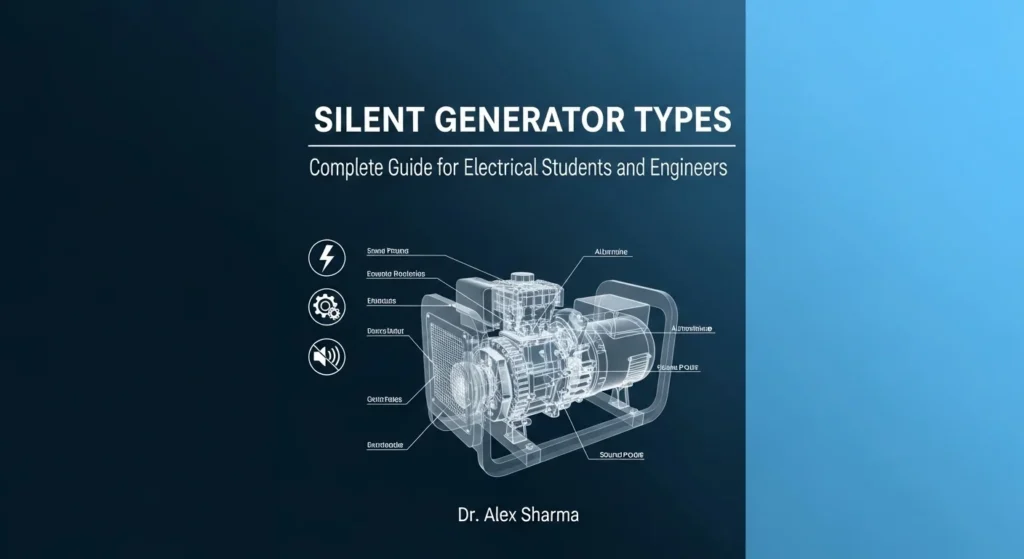
5. Main Components of Silent Generator
Understanding the main parts helps students learn how generators work.
1. Engine
The engine produces mechanical power by burning fuel.
Common fuels include:
- Diesel
- Petrol
- Gas
2. Alternator
The alternator converts mechanical energy into electrical energy.
It contains:
- Rotor
- Stator
- Magnetic field system
3. Fuel System
The fuel system supplies fuel to the engine.
Main parts include:
- Fuel tank
- Fuel pump
- Fuel filter
4. Soundproof Canopy
This is the most important part of silent generators.
Functions:
- Reduces noise
- Protects the generator from weather
- Improves safety
5. Cooling System
Generators produce heat during operation.
Cooling systems include:
- Radiator
- Cooling fan
- Water coolant
6. Control Panel
The control panel manages generator operation.
Functions include:
- Start/stop control
- Voltage monitoring
- Protection systems
6. Silent Generator Advantages
The silent generator advantages and disadvantages must be understood before selection.
Advantages
- Low Noise Operation – Ideal for residential areas
- Reliable Backup Power – Works during power outages
- Fuel Efficient Designs
- Weather Protection – Enclosed canopy protects equipment
- Suitable for Sensitive Locations – Hospitals and offices
- Improved Safety
- Long service life
Silent generators improve comfort while providing dependable electricity.
7. Silent Generator Disadvantages / Limitations
Although useful, silent generators also have some limitations.
Disadvantages
- Higher initial cost
- Regular maintenance required
- Fuel cost can be high
- Limited portability for large units
- Requires proper ventilation
Understanding these limitations helps users make better decisions.
8. Silent Generator Applications
There are many silent generator applications in modern electrical systems.
Home Applications
- Backup power during outages
- Running lights and appliances
- Small residential buildings
Commercial Applications
- Offices
- Shopping malls
- Restaurants
- Hotels
Industrial Applications
- Factories
- Manufacturing plants
- Construction sites
Critical Applications
- Hospitals
- Data centers
- Communication towers
- Laboratories
Silent generators are especially important where noise control and continuous power are required.
9. Comparison: Silent Generator vs Conventional Generator
| Feature | Silent Generator | Conventional Generator |
|---|---|---|
| Noise Level | Very low | Very high |
| Enclosure | Soundproof canopy | Open design |
| Cost | Higher | Lower |
| Applications | Homes, hospitals | Construction sites |
| Comfort | High | Low |
| Maintenance | Moderate | Moderate |
Difference Between Silent Generator and Conventional Generator
The main difference between silent generator and conventional generator is noise control. Silent generators use soundproof enclosures to reduce noise significantly.
10. Selection Guide: How to Choose the Right Silent Generator
Choosing the correct generator depends on several factors.
1. Power Requirement
Calculate total load in kilowatts (kW).
Example loads:
- Lights
- Fans
- Motors
- Air conditioners
2. Fuel Type
Choose fuel based on availability:
- Diesel – best for heavy loads
- Petrol – best for small generators
- Gas – environmentally friendly
3. Noise Level
Check generator noise rating in decibels (dB).
Lower dB means quieter operation.
4. Portability
Portable generators are suitable for temporary use.
Large stationary generators are better for industries.
5. Budget
Consider:
- Initial cost
- Fuel cost
- Maintenance cost
Beginners should start with simple and reliable models.
11. Common Problems & Solutions
Here are practical troubleshooting tips in FAQ style.
1. Generator Not Starting
Possible causes:
- Empty fuel tank
- Dead battery
- Clogged fuel filter
Solution: Check fuel level and battery condition.
2. Low Power Output
Possible reasons:
- Overloaded generator
- Alternator fault
- Engine speed problem
Solution: Reduce load and inspect alternator.
3. Excessive Noise
Possible causes:
- Damaged soundproof enclosure
- Loose bolts
- Worn engine parts
Solution: Tighten components and inspect canopy.
4. Overheating
Reasons include:
- Low coolant
- Blocked radiator
- Overloading
Solution: Check cooling system regularly.
12. Future Trends in Silent Generator Technology
Generator technology is continuously improving.
1. Smart Generators
Modern generators now include:
- Remote monitoring
- Automatic fault detection
- Mobile app control
2. Hybrid Generators
Hybrid systems combine:
- Solar energy
- Battery storage
- Diesel generators
This reduces fuel consumption.
3. Ultra-Low Noise Technology
Manufacturers are developing generators with:
- Advanced acoustic insulation
- Magnetic vibration reduction
4. Eco-Friendly Generators
Future generators will focus on:
- Lower emissions
- Cleaner fuels
- Improved efficiency
These innovations will make silent generators even more reliable and environmentally friendly.
13. Conclusion
Silent generators play a vital role in modern power systems. They provide reliable electricity while keeping noise levels low, making them ideal for homes, offices, hospitals, and commercial buildings.
In this guide, we discussed the Silent Generator Types, including diesel, petrol, gas, inverter, and portable generators. We also explored the silent generator working principle, main components, advantages, disadvantages, and applications.
Understanding these concepts helps electrical students, technicians, and engineers choose the right generator for specific needs. Silent generators are not only useful during power outages but also important for maintaining comfortable environments in noise-sensitive areas.
As technology continues to evolve, silent generators will become more efficient, eco-friendly, and intelligent. Learning about these systems today prepares future engineers for the growing demand for reliable and quiet power solutions.