
Imagine you are working on a construction site or camping in a remote area where there is no electricity available. You still need power to run lights, tools, or charge electronic devices. In such situations, a portable generator becomes extremely useful. It can provide temporary electrical power anytime and anywhere.
Portable generators are widely used for homes, outdoor activities, construction projects, and emergency backup power. When the main electricity supply fails due to storms, maintenance, or grid problems, these generators help keep essential equipment running. However, many beginners think all portable generators are the same. In reality, there are several portable generator types, and each type is designed for different power needs and applications.
Understanding these types is very important for electrical students, engineers, and technicians. Choosing the correct generator type improves efficiency, safety, and reliability of the electrical system.
In this article, you will learn about portable generator types, portable generator working principle, portable generator applications, and portable generator advantages and disadvantages. The goal is to explain this topic in a simple way, just like a senior electrical engineer teaching a junior technician.
2. What is a Portable Generator?
A portable generator is a compact electrical machine that converts mechanical energy into electrical energy and can be easily moved from one location to another.
Simple Explanation
Portable generators use a small engine powered by fuel such as gasoline, diesel, or propane. This engine rotates a generator (alternator) that produces electricity.
Because they are designed with wheels or lightweight frames, portable generators can be transported easily and used wherever temporary power is needed.
Practical Example
For example:
- A homeowner uses a portable generator during a power outage.
- Construction workers use it to operate power tools.
- Outdoor events use generators to run lighting systems and sound equipment.
These generators provide temporary electrical power when the main grid supply is unavailable.
3. Portable Generator Working Principle
The portable generator working principle is based on electromagnetic induction, which converts mechanical energy into electrical energy.
Step-by-Step Explanation
- Fuel Powers the Engine
The generator engine runs on gasoline, diesel, or propane fuel. - Engine Rotates the Alternator
The engine shaft rotates the alternator rotor. - Magnetic Field is Created
As the rotor spins, it creates a rotating magnetic field. - Electricity is Generated
The magnetic field moves across copper windings, producing electric current. - Power is Delivered to Output Sockets
The generated electricity flows to outlets where electrical devices can be connected.
Simple Analogy
Think of a portable generator like a bicycle with a dynamo light. When you pedal the bicycle, mechanical motion creates electricity to power the light.
4. Types / Classification of Portable Generators
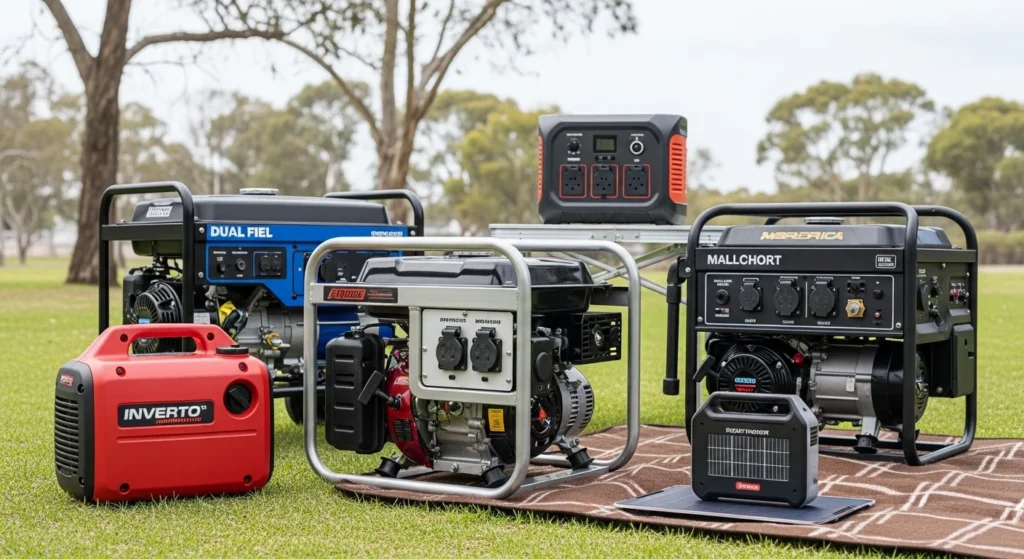
There are several portable generator types, each designed for specific power requirements and operating conditions.
1. Conventional Portable Generators
Conventional generators are the most common type used for general power supply.
Features
- Operate at constant engine speed
- Produce AC electricity directly
- Suitable for heavy loads
Typical Uses
- Construction sites
- Backup power for homes
- Outdoor equipment operation
2. Inverter Portable Generators
Inverter generators are advanced generators that produce stable and clean electrical power.
Features
- Converts AC to DC and back to clean AC
- Produces stable voltage
- Very quiet operation
- Fuel-efficient
Typical Uses
- Laptops and electronics
- Camping equipment
- Sensitive devices
3. Diesel Portable Generators
Diesel portable generators use diesel engines instead of gasoline engines.
Features
- Higher fuel efficiency
- Longer lifespan
- Suitable for heavy loads
Typical Uses
- Construction sites
- Industrial backup power
- Agricultural equipment
4. Gasoline Portable Generators
Gasoline generators are the most widely used portable generators.
Features
- Easy to start
- Lower initial cost
- Lightweight design
Typical Uses
- Home backup power
- Small workshops
- Outdoor events
5. Dual-Fuel Portable Generators
Dual-fuel generators can operate using two types of fuel.
Features
- Run on gasoline or propane
- Flexible fuel choice
- Reliable operation during fuel shortages
Typical Uses
- Emergency power supply
- Residential backup systems
5. Main Components of Portable Generators
Portable generators contain several important components that work together to produce electricity.
Engine
The engine provides mechanical power to rotate the generator.
Alternator
The alternator converts mechanical energy into electrical energy.
Fuel Tank
Stores the fuel required to operate the engine.
Voltage Regulator
Controls output voltage and keeps it stable.
Cooling System
Prevents overheating during operation.
Control Panel
Contains switches, circuit breakers, and power outlets.
Each component plays a critical role in ensuring reliable generator operation.
6. Portable Generator Advantages
Understanding portable generator advantages and disadvantages helps users select the right generator.
Advantages
- Easy to transport and move
- Provides emergency backup power
- Simple to operate
- Affordable compared to standby generators
- Suitable for outdoor activities
- No permanent installation required
Real-World Benefits
Portable generators allow people to continue working even during power outages, making them extremely valuable for homes and businesses.
7. Portable Generator Disadvantages / Limitations
Despite their usefulness, portable generators also have some limitations.
Disadvantages
- Limited power capacity
- Requires regular refueling
- Produces noise during operation
- Emits exhaust gases
- Not suitable for large industrial loads
Proper maintenance and safe operation can minimize many of these issues.
8. Portable Generator Applications
The portable generator applications are very diverse in modern electrical systems.
Home Backup Power
Used during power outages to run refrigerators, lights, and essential appliances.
Construction Sites
Provides electricity for power tools and machinery where grid power is unavailable.
Outdoor Events
Used for lighting, sound systems, and entertainment equipment.
Camping and Outdoor Activities
Provides power for small devices and lighting systems.
Emergency Services
Hospitals, rescue teams, and disaster relief teams rely on portable generators during emergencies.
9. Comparison Section
Understanding the difference between inverter generator and conventional generator helps users choose the right generator.
| Feature | Conventional Generator | Inverter Generator |
|---|---|---|
| Power Quality | Standard AC | Clean and stable AC |
| Noise Level | Higher | Lower |
| Fuel Efficiency | Moderate | High |
| Size | Larger | Compact |
| Suitable For | Heavy loads | Electronics |
Both generators are useful, but inverter generators are better for sensitive electronic devices.
10. Selection Guide
Choosing the right portable generator requires considering several factors.
Important Factors
- Power capacity requirement
- Type of electrical devices
- Fuel availability
- Noise level
- Portability
Tips for Beginners
- Calculate total power demand in watts.
- Choose a generator with 20–30% extra capacity.
- Select inverter generators for electronics.
- Consider fuel efficiency and noise levels.
These factors help ensure safe and reliable generator operation.
11. Common Problems & Solutions
Generator Not Starting
Possible causes:
- Empty fuel tank
- Dead battery
- Clogged fuel filter
Solution: Check fuel level and clean fuel system.
Generator Overheating
Cause:
- Poor ventilation or excessive load.
Solution: Reduce load and ensure proper airflow.
Low Output Voltage
Cause:
- Faulty voltage regulator.
Solution: Inspect regulator and electrical connections.
Excessive Noise
Cause:
- Loose components or engine problems.
Solution: Tighten parts and perform regular maintenance.
12. Future Trends
Portable generator technology continues to improve with modern innovations.
Hybrid Generators
New generators combine fuel engines with battery systems for better efficiency.
Solar Generator Integration
Portable generators may integrate with solar panels for renewable energy support.
Smart Monitoring Systems
Advanced generators include digital monitoring and automatic load control.
Low-Emission Engines
Manufacturers are developing eco-friendly engines with reduced emissions.
These improvements will make portable generators more efficient, quiet, and environmentally friendly.
13. Conclusion
Portable generators are essential machines that provide temporary electrical power in many situations. Understanding portable generator types helps electrical students, engineers, and technicians choose the right generator for specific applications.
Each generator type, such as conventional, inverter, diesel, gasoline, and dual-fuel generators, offers different advantages depending on the required power, efficiency, and usage conditions. Learning the portable generator working principle, portable generator applications, and portable generator advantages and disadvantages is important for designing safe and reliable electrical systems.
For beginners in the electrical field, portable generators provide a practical example of how mechanical energy can be converted into electrical power. By selecting the correct generator type and following proper maintenance practices, users can ensure reliable power supply whenever and wherever it is needed.