
Imagine an old industrial building where electrical wiring must operate safely even in damp and corrosive environments. In such places, ordinary insulated wires may fail quickly due to moisture, chemicals, or mechanical damage. To solve this problem, engineers developed a special wiring method known as the Lead Sheathed Wiring System.
Before modern PVC and conduit wiring became popular, the lead sheathed wiring system was widely used in homes, factories, and underground installations. In this system, insulated electrical wires are covered with a protective lead alloy sheath that protects the cable from moisture, corrosion, and mechanical damage.
Understanding the Lead Sheathed Wiring System Explained is important for electrical students, engineers, technicians, and beginners because it represents an important stage in the evolution of electrical wiring technology. Many older buildings still contain this wiring method, and electricians must understand how it works to maintain or replace it safely.
In this article, you will learn the lead sheathed wiring system working principle, types of lead sheathed wiring, main components, advantages and disadvantages, practical applications, comparison with modern wiring systems, troubleshooting techniques, and future trends in electrical wiring technology.
Lead Sheathed Wiring
Lead sheathed wiring is a type of electrical wiring system in which insulated electrical wires are covered with an outer lead (metal) sheath for protection. This wiring method was commonly used in older electrical installations where extra protection from moisture, chemicals, and mechanical damage was required.
In this system, the electrical conductor is first insulated with rubber or another insulating material. After that, a protective layer of lead alloy is placed around the insulated cable. The lead sheath acts as a strong protective covering that protects the wire from external environmental conditions.
Lead sheathed wiring was widely used in factories, chemical plants, and damp locations because the lead covering prevents moisture from entering the cable and damaging the insulation. The wiring is usually fixed on wooden battens using clips, similar to batten wiring.
Although this wiring system provides strong protection and durability, it is not commonly used in modern electrical installations because it is expensive and the lead material can be affected by corrosion over time. Today, it has mostly been replaced by PVC insulated and conduit wiring systems.
However, understanding lead sheathed wiring is still important for electrical students and technicians because it is a fundamental part of traditional wiring methods and electrical engineering studies.
Details of Lead Sheathed Wiring
Lead sheathed wiring consists of several layers that work together to protect the electrical conductor and ensure safe operation.
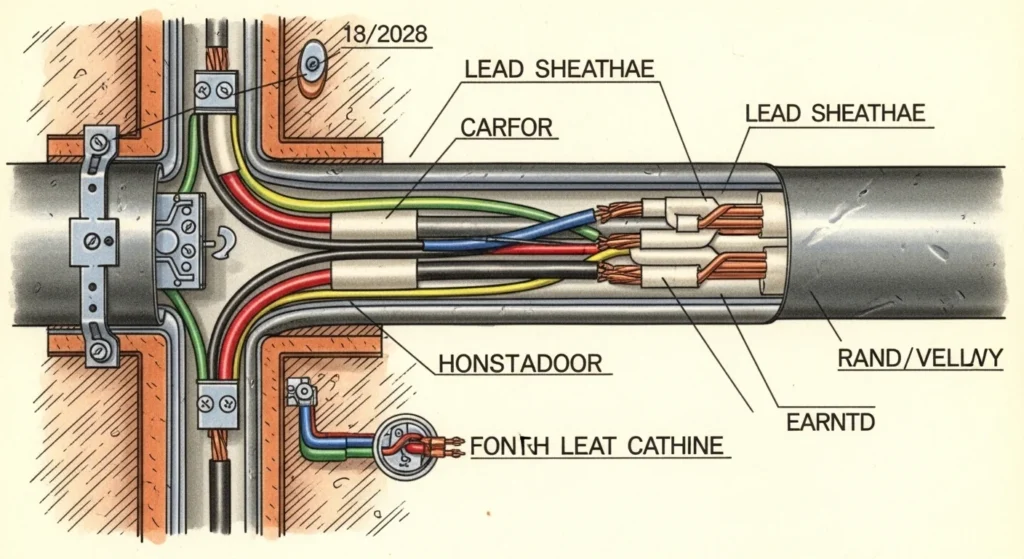
Structure of Lead Sheathed Cable
A lead sheathed cable generally contains the following parts:
1. Conductor
The conductor is usually made of copper or aluminum. It carries the electrical current from the power source to electrical devices.
2. Insulation Layer
The conductor is covered with insulation material such as rubber or vulcanized rubber. This insulation prevents electrical leakage and protects users from electric shock.
3. Lead Sheath (Outer Covering)
The insulated wire is surrounded by a protective layer of lead alloy. This lead sheath protects the cable from moisture, gases, and mechanical damage.
4. Protective Support
The cable is usually mounted on wooden battens using metal clips to keep the wiring properly aligned and supported.
Installation Method
The installation process of lead sheathed wiring generally includes the following steps:
- Wooden battens are fixed on the wall or ceiling using screws.
- Lead sheathed cables are laid along the batten.
- Metal clips are used to hold the cable firmly on the batten.
- The lead sheath is connected to the earth (ground) for safety.
- The wires are connected to switches, sockets, and electrical devices.
Proper earthing of the lead sheath is very important because the outer metal layer can become dangerous if it carries leakage current.
Features of Lead Sheathed Wiring
Lead sheathed wiring has several important characteristics:
- Strong protection against moisture
- Resistant to chemical effects
- Good mechanical strength
- Long service life when properly installed
- Suitable for damp environments
Limitations of Lead Sheathed Wiring
Despite its advantages, this wiring system has some disadvantages:
- Expensive compared to other wiring methods
- Lead can corrode over time
- Installation requires skilled labor
- Not commonly used in modern buildings
Applications
Lead sheathed wiring was commonly used in the following places:
- Damp locations
- Chemical factories
- Industrial areas
- Underground installations
- Older residential buildings
Lead sheathed wiring is an old but important electrical wiring system that provides strong protection to cables using a lead metal covering. It was widely used in environments where moisture and chemicals could damage normal wiring.
Although modern wiring systems such as PVC and conduit wiring have largely replaced it, learning about lead sheathed wiring helps electrical students and technicians understand the development of electrical wiring technology and traditional installation methods.
The Lead Sheathed Wiring System is an electrical wiring method in which insulated conductors are enclosed inside a protective sheath made from lead or lead alloy.
Clear Definition
Lead sheathed wiring is a system where electrical wires are insulated and then covered with a protective lead sheath to protect them from moisture and environmental damage.
Simple Explanation
In this wiring method, electrical cables are first insulated with rubber or other insulating material. After insulation, the wires are covered with a metal sheath made of lead. This lead covering acts as a protective barrier against moisture, chemicals, and mechanical damage.
Practical Example
For example, in older houses located in humid areas, electricians used lead sheathed cables to prevent water from damaging electrical wires. The lead covering ensured that moisture could not reach the conductors.
Although modern wiring systems have replaced this method in many places, it is still important to understand for maintenance and educational purposes.
3. Lead Sheathed Wiring System Working Principle
The lead sheathed wiring system working principle focuses on protecting electrical conductors using a metal sheath while maintaining proper insulation and electrical safety.
Step-by-Step Working Process
- Electrical conductors carry current
Copper or aluminum conductors transmit electrical current from the power source to electrical devices. - Insulation protects the conductors
Each conductor is covered with rubber or insulating material to prevent electrical leakage. - Lead sheath provides protection
A layer of lead or lead alloy is wrapped around the insulated cable. - Lead sheath blocks moisture
The metal covering prevents water, dust, and chemicals from reaching the cable insulation. - Clamps fix cables to surfaces
The cables are mounted on walls or wooden battens using special clips. - Electrical devices receive power
Electricity flows safely through the protected cables to lights, sockets, and appliances.
Simple Analogy
Think of the lead sheath like a waterproof jacket for electrical wires. Just as a jacket protects a person from rain, the lead covering protects wires from moisture and environmental damage.
4. Types / Classification
The Lead Sheathed Wiring System can be classified based on installation method and cable structure.
Single-Core Lead Sheathed Wiring
In this type, each cable contains a single conductor inside the lead sheath.
Features
- Used for simple circuits
- Easy to install
- Suitable for light electrical loads
Multi-Core Lead Sheathed Wiring
Multi-core cables contain two or more insulated conductors inside a single lead sheath.
Features
- Used for multi-phase circuits
- Reduces wiring complexity
- Common in industrial installations
Lead Sheathed Batten Wiring
In this method, lead sheathed cables are fixed on wooden battens using brass clips.
Features
- Strong cable support
- Easy inspection and maintenance
- Suitable for indoor installations
5. Main Components
A typical lead sheathed wiring system includes several important components.
Electrical Conductors
Copper or aluminum conductors carry electrical current through the system.
Insulation Material
Rubber insulation protects conductors from electrical leakage and short circuits.
Lead Sheath
The lead sheath is the most important component of this wiring system. It protects cables from moisture, corrosion, and physical damage.
Wooden Battens
Wooden battens provide support for cables and help organize wiring along walls.
Clips and Fasteners
Clips secure cables to battens or walls to keep them stable.
Junction Boxes
Junction boxes allow safe connections between different wiring circuits.
6. Lead Sheathed Wiring System Advantages
Understanding lead sheathed wiring system advantages and disadvantages helps electricians evaluate its usefulness.
Advantages
- Excellent protection against moisture
- Strong mechanical protection for wires
- Suitable for damp environments
- Long service life in protected conditions
- Resistant to chemical corrosion
- Provides good electrical safety when properly installed
Real-World Benefits
This wiring system was especially useful in areas such as basements, underground installations, and industrial buildings where moisture was a major concern.
7. Disadvantages / Limitations
Despite its benefits, the lead sheathed wiring system has several limitations.
Disadvantages
- Lead material is heavy
- Installation is more complex than modern wiring
- Expensive compared to PVC wiring
- Lead can crack due to mechanical stress
- Environmental concerns due to lead material
- Requires proper earthing of the lead sheath
Because of these disadvantages, modern electrical systems have largely replaced this wiring method.
8. Lead Sheathed Wiring System Applications
The lead sheathed wiring system applications were common in earlier electrical installations.
Residential Buildings
Older homes used this wiring system to protect cables from moisture and environmental damage.
Industrial Facilities
Factories with damp conditions used lead sheathed cables for reliable electrical protection.
Underground Electrical Installations
Underground cables often used lead sheaths to prevent water entry.
Chemical Plants
Lead sheathing protected cables from corrosive chemicals.
Marine Applications
Ships and dock installations sometimes used lead sheathed wiring due to its moisture resistance.
9. Comparison Section
Understanding the difference between lead sheathed wiring and PVC conduit wiring helps explain why modern systems replaced it.
| Feature | Lead Sheathed Wiring | PVC Conduit Wiring |
|---|---|---|
| Protection | High moisture protection | Moderate protection |
| Weight | Heavy | Lightweight |
| Installation | Difficult | Easy |
| Cost | Expensive | Affordable |
| Maintenance | Moderate | Easy |
| Modern Usage | Rare | Widely used |
Today, PVC conduit wiring is more popular because it is safer, lighter, and easier to install.
10. Selection Guide
Although rarely used today, understanding how to select a lead sheathed wiring system is useful for maintenance of older buildings.
Important Factors
- Environmental conditions
- Moisture exposure
- Mechanical protection requirements
- Budget and material availability
- Electrical load requirements
Tips for Beginners
- Always ensure proper earthing of the lead sheath.
- Avoid bending lead cables sharply.
- Use proper clamps for cable support.
- Inspect cables regularly for cracks.
These practices ensure safe operation of older lead sheathed wiring systems.
11. Common Problems & Solutions
Q1: Why does the lead sheath crack?
Mechanical stress or aging can cause cracks in the lead covering.
Solution: Replace damaged cable sections.
Q2: Why does electrical leakage occur?
Damaged insulation inside the lead sheath may cause leakage.
Solution: Inspect insulation and replace faulty cables.
Q3: Why is earthing important in this system?
The lead sheath must be grounded to prevent electric shock.
Solution: Ensure proper earthing connection.
Q4: Why does corrosion occur on lead cables?
Chemical exposure may cause corrosion over time.
Solution: Apply protective coatings or replace cables.
12. Future Trends
Although the Lead Sheathed Wiring System is rarely used today, it played an important role in the development of modern electrical wiring technologies.
Advanced Insulation Materials
Modern cables use high-quality insulation such as PVC and XLPE.
Smart Electrical Systems
Smart homes use advanced wiring and automation systems.
Lightweight Protective Materials
Modern cables use lightweight materials instead of heavy metal sheaths.
Environmentally Friendly Wiring
New wiring systems focus on safe and eco-friendly materials.
These developments have replaced older wiring systems with more efficient and safer technologies.
13. Conclusion
The Lead Sheathed Wiring System was once an important electrical wiring method used in homes, factories, and underground installations. By covering insulated conductors with a protective lead sheath, this system provided excellent protection against moisture, corrosion, and mechanical damage.
Although modern wiring systems such as PVC conduit wiring have largely replaced lead sheathed cables, understanding this system remains valuable for electrical students and technicians. Many older buildings still contain this wiring method, and electricians must know how to maintain or replace it safely.
Learning the lead sheathed wiring system working principle, applications, and advantages and disadvantages helps engineers understand the evolution of electrical wiring technology. This knowledge improves practical skills and prepares professionals to handle both modern and legacy electrical systems.