
Imagine you are working on an electrical panel in a workshop. Suddenly, a wire sparks, and you receive a minor burn on your hand. Your colleague slips while rushing to help and gets a small cut. In such moments, panic can make the situation worse. But if a First Aid Kit is nearby, you can quickly clean the wound, apply medicine, and control the injury.
In electrical and technical fields, small accidents happen often. Cuts, burns, electric shocks, and minor injuries are common risks. That is why understanding the importance of a First Aid Kit is very important for students, engineers, technicians, and beginners.
This topic is important because it helps save time, reduce injury effects, and sometimes even save lives. Knowing how to use a First Aid Kit makes you more confident and responsible at work.
In this article, you will learn what a First Aid Kit is, how it works, its types, main components, advantages, disadvantages, applications, and future trends. This guide is written from practical experience, just like a senior engineer explaining safety basics to juniors.
2. What is a First Aid Kit?
A First Aid Kit is a collection of basic medical supplies used to give immediate treatment in case of injury or sudden illness.
Simple Explanation
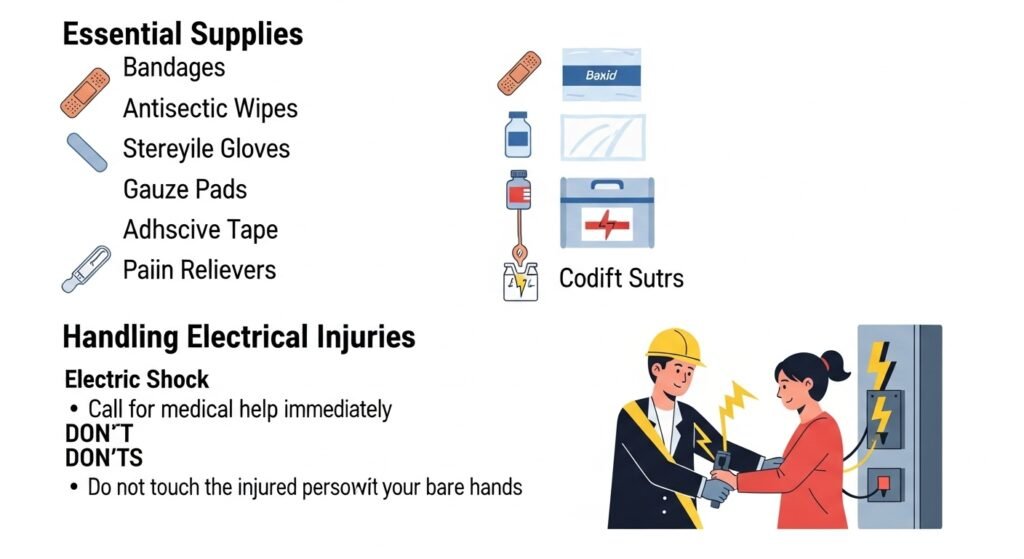
It is a safety box that contains items like bandages, antiseptic, cotton, scissors, and gloves. These items help treat small injuries before professional medical help arrives.
Practical Example
If a technician cuts his finger while stripping a wire, he can use cotton, antiseptic, and a bandage from the First Aid Kit to stop bleeding and prevent infection.
In simple words, a First Aid Kit is the first line of medical support in emergencies.
3. Working Principle of a First Aid Kit
The First Aid Kit working principle is based on providing quick, safe, and simple treatment to reduce injury effects.
Step-by-Step Explanation
The working principle follows these basic steps:
- Identify the injury
- Clean the affected area
- Protect it from infection
- Control pain or bleeding
- Support recovery
Easy Analogy
Think of a First Aid Kit like a “fire extinguisher” for injuries. Just like a fire extinguisher controls fire before it spreads, a First Aid Kit controls injuries before they become serious.
Working Process (Bullet Points)
- Stop bleeding using bandage or gauze
- Clean wounds with antiseptic
- Cover injuries with tape or dressing
- Support injured parts with crepe bandage
- Protect yourself using gloves
This simple system makes first aid effective and reliable.
4. Types / Classification of First Aid Kits
Different working environments need different types of First Aid Kits.
Workplace First Aid Kit
Used in factories, workshops, and electrical sites.
Contains:
- Burn ointment
- Heavy bandages
- Safety gloves
- Eye wash
Best for technicians and engineers.
Home First Aid Kit
Designed for family use.
Contains:
- Basic medicines
- Thermometer
- Bandages
- Pain relief tablets
Useful for daily life injuries.
Industrial First Aid Kit
Used in heavy industries and power plants.
Contains:
- Trauma dressings
- Emergency blankets
- Splints
- CPR masks
Suitable for serious accidents.
Travel First Aid Kit
Small and portable.
Contains:
- Motion sickness tablets
- Small bandages
- Antiseptic wipes
Ideal for field engineers.
Vehicle First Aid Kit
Kept in cars and service vans.
Contains:
- Reflective tape
- Gloves
- Emergency bandages
Helpful during roadside accidents.
5. Main Components of a First Aid Kit
A good First Aid Kit contains important parts that perform specific functions.
Bandages and Dressings
Used to cover wounds and stop bleeding.
Antiseptic Solution/Wipes
Used to clean wounds and prevent infection.
Cotton and Gauze
Used for cleaning and absorbing blood.
Scissors
Used to cut bandages and tape.
Adhesive Tape
Used to fix bandages in place.
Gloves
Protect the helper from infection.
Pain Relief Medicines
Reduce pain and fever.
Burn Cream
Treats minor electrical and heat burns.
CPR Mask
Used during breathing emergencies.
Thermometer
Measures body temperature.
Each component has a specific role in emergency care.
6. Advantages of a First Aid Kit
Here are the main First Aid Kit advantages and disadvantages, starting with advantages.
Advantages (Bullet Points)
- Provides quick emergency treatment
- Reduces risk of infection
- Saves time in emergencies
- Improves workplace safety
- Builds confidence in workers
- Reduces injury severity
- Helps before doctor arrives
- Supports legal safety requirements
Real-World Benefits
In electrical workshops, quick burn treatment can prevent serious skin damage. Immediate bandaging reduces blood loss. This makes workers safer and more productive.
7. Disadvantages / Limitations
Although First Aid Kits are useful, they also have some limitations.
Disadvantages
- Cannot replace professional medical care
- Limited medicines and equipment
- Items can expire
- Needs regular checking
- Requires basic training to use properly
Practical View
A First Aid Kit is for small and medium injuries only. For serious electric shock or deep wounds, hospital treatment is necessary.
8. Applications of First Aid Kit
The First Aid Kit applications are wide and practical.
Home Use
- Treat small cuts
- Handle fever
- Manage burns in kitchen
Educational Institutes
- Student safety
- Lab accidents
- Sports injuries
Industrial Use
- Electrical injuries
- Machine cuts
- Chemical exposure
Construction Sites
- Falls
- Tool injuries
- Head wounds
Modern Technology Sector
- Data centers
- Electronics labs
- Robotics workshops
In every environment where people work, a First Aid Kit is essential.
9. Comparison Section: First Aid Kit vs Medical Emergency Kit
| Feature | First Aid Kit | Medical Emergency Kit |
| Purpose | Basic treatment | Advanced emergency care |
| Equipment | Simple tools | Oxygen, defibrillator |
| Cost | Low | High |
| Training Needed | Basic | Professional |
| Usage Area | Home, workplace | Ambulance, hospital |
Difference Between First Aid Kit and Medical Emergency Kit
The main difference between emergency medical kit and first aid kit is that first aid kits are for minor injuries, while medical kits are for serious life-saving treatment.
10. Selection Guide: How to Choose the Right First Aid Kit
Choosing the right kit is important for safety.
Consider Your Workplace
- Electrical lab → Burn care items
- Factory → Trauma dressings
- Office → Basic kit
Check Quality
- Certified products
- Good packaging
- Clear labels
Size and Portability
- Small kit for travel
- Large kit for workshops
Contents Check
Make sure it contains:
- Bandages
- Antiseptic
- Gloves
- Scissors
- Medicines
Tips for Beginners
- Start with a standard kit
- Learn basic first aid
- Keep it accessible
- Check expiry dates
A well-selected kit saves lives.
11. Common Problems & Solutions (FAQs Style)
Q1: Items are expired. What should I do?
Replace them immediately. Expired medicines are unsafe.
Q2: Bandages are missing. Solution?
Restock the kit and maintain a checklist.
Q3: Kit is locked. Is it safe?
No. It should be easily accessible.
Q4: Workers don’t know how to use it. What to do?
Provide basic first aid training.
Q5: Antiseptic causes irritation. Why?
It may be expired or unsuitable. Use medical-approved products.
Q6: Burn cream not working. Solution?
Seek medical help. Use kit only for minor burns.
Regular checking solves most problems.
12. Future Trends in First Aid Kits
First Aid Kits are becoming smarter and more advanced.
Smart First Aid Kits
- Digital injury guides
- QR code instructions
- App connectivity
IoT-Based Kits
- Expiry alerts
- Stock monitoring
- Automatic reporting
Customized Kits
- Industry-specific designs
- Personalized medicines
Eco-Friendly Materials
- Biodegradable bandages
- Recyclable packaging
AI-Based Guidance
- Voice instructions
- Injury recognition
Future kits will be more intelligent and user-friendly, improving safety standards.
13. Conclusion
A First Aid Kit is not just a box of medical tools. It is a vital safety system for electrical students, engineers, technicians, and beginners. From small cuts to minor burns, it provides immediate care and prevents injuries from becoming serious. Understanding its working principle, components, types, and applications helps you use it effectively.
While it has some limitations, its advantages are far greater. A well-maintained First Aid Kit improves confidence, safety, and responsibility at work. In modern industries, it is no longer optional but a basic requirement.
As a professional, always ensure that your workplace has a complete and updated First Aid Kit. Learning first aid skills is an investment in your own safety and the safety of others. Keep learning, stay prepared, and work responsibly.