
Imagine waking up early on a cold winter morning and turning on the shower expecting warm water. Within seconds, hot water flows from the tap, making your day comfortable. Behind this simple convenience is an important appliance called a water heater.
Water heaters are used in almost every home, hotel, hospital, and industrial facility. They provide hot water for bathing, cleaning, cooking, and many industrial processes. Without a water heater, daily tasks would become difficult, especially in cold weather.
For electrical students, engineers, and technicians, understanding the water heater working mechanism is very important. It helps in installation, troubleshooting, maintenance, and safe operation. Water heaters involve electrical heating elements, thermostats, insulation, and safety devices that must work together correctly.
In this article, you will learn the water heater working principle, its types, components, advantages and disadvantages, practical applications, and troubleshooting methods. The goal is to explain the concept in simple language so beginners and professionals can clearly understand how water heaters operate.
2. What is a Water Heater?
A water heater is an electrical or gas-powered appliance that heats water and stores or delivers it for domestic or industrial use.
In simple words, it is a device that converts electrical energy or fuel energy into heat energy to raise the temperature of water.
Simple Explanation
A water heater contains a heating element or burner that transfers heat to water inside a tank or pipe. Once the water reaches the desired temperature, it is supplied to taps, showers, or appliances.
Practical Example
A common household electric geyser installed in bathrooms is a typical water heater. When switched on, the internal heating element warms the stored water, making it ready for use.
This simple process demonstrates the basic water heater working principle used worldwide.
3. Water Heater Working Principle
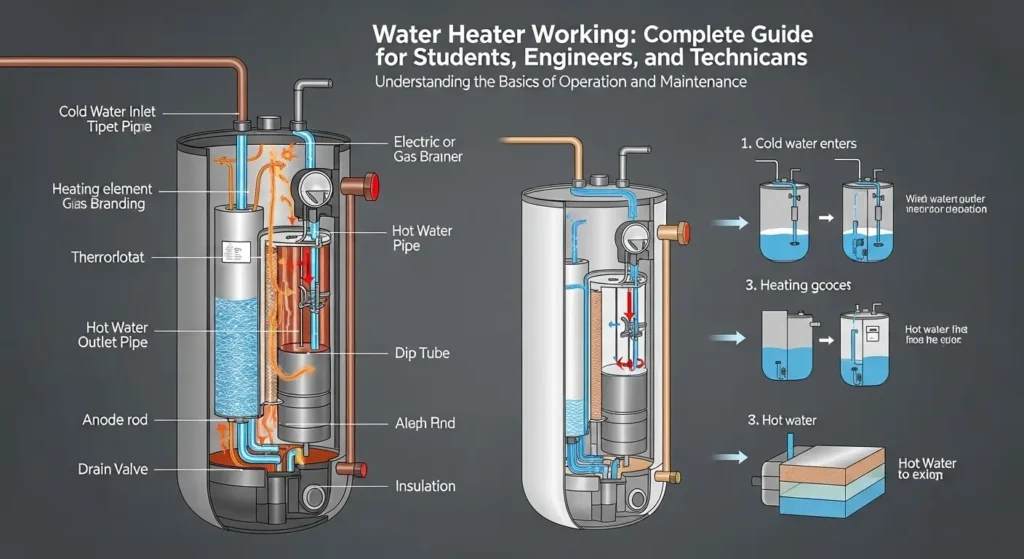
The water heater working principle is based on heat transfer and energy conversion.
Electrical energy or fuel energy is converted into heat energy, which increases the temperature of water.
Step-by-Step Working Process
- Water enters the tank
Cold water enters the heater through an inlet pipe located at the bottom of the tank.
- Heating element activates
When the heater is switched on, the heating element or burner begins producing heat.
- Heat transfer to water
The heating element transfers heat directly to the surrounding water.
- Thermostat monitors temperature
A thermostat continuously measures water temperature and maintains the preset level.
- Hot water rises
Hot water becomes lighter and moves to the top of the tank.
- Hot water supply
When a tap is opened, hot water flows out from the outlet pipe.
- Cold water refill
Fresh cold water enters the tank to replace the used hot water.
Simple Analogy
Think of a water heater like boiling water in a kettle. Heat is applied at the bottom, the water warms up, and the hotter water rises upward.
This is the basic concept behind the water heater working principle.
4. Types of Water Heaters
Water heaters are available in different designs depending on heating method and storage system.
Storage Water Heater
This is the most common type used in homes.
Features
- Contains an insulated storage tank
- Stores hot water for later use
- Usually electric or gas-powered
Advantages
- Simple design
- Reliable hot water supply
Tankless Water Heater
Also known as an instant water heater.
Features
- Heats water instantly
- No storage tank
- Compact design
Advantages
- Energy efficient
- Unlimited hot water
Solar Water Heater
This system uses solar energy to heat water.
Features
- Solar collectors absorb sunlight
- Water is heated naturally
Advantages
- Eco-friendly
- Very low operating cost
Heat Pump Water Heater
This advanced type transfers heat from surrounding air to water.
Features
- Uses heat pump technology
- Highly energy efficient
Applications
- Modern energy-efficient buildings
5. Main Components of a Water Heater
Understanding the components helps technicians diagnose faults easily.
Tank
The tank stores hot water and is usually made from steel with corrosion protection.
Heating Element
The heating element converts electrical energy into heat.
Most electric heaters use immersed resistance heaters.
Thermostat
The thermostat controls the water temperature by switching the heater ON and OFF automatically.
Anode Rod
This rod protects the tank from rust and corrosion.
Inlet and Outlet Pipes
- Cold inlet pipe brings cold water into the tank
- Hot outlet pipe supplies hot water to the system
Insulation Layer
Insulation reduces heat loss and improves efficiency.
Safety Valve
A pressure relief valve prevents excessive pressure buildup inside the tank.
6. Water Heater Advantages and Disadvantages
Understanding water heater advantages and disadvantages helps users choose the right system.
Advantages
- Provides instant hot water
- Improves comfort in daily life
- Simple operation
- Widely available technology
- Suitable for homes and industries
- Improves hygiene and cleaning efficiency
Real-World Benefits
- Comfortable bathing in winter
- Hot water for washing dishes
- Industrial cleaning processes
- Hospital sanitation systems
7. Disadvantages / Limitations
Although useful, water heaters have some limitations.
Limitations
- Consumes electricity or fuel
- Risk of overheating if safety fails
- Requires regular maintenance
- Storage heaters may run out of hot water
- Initial installation cost
Understanding these limitations helps technicians maintain the system properly.
8. Water Heater Applications
The water heater applications extend beyond household use.
Residential Applications
- Bathrooms and showers
- Kitchen washing
- Laundry systems
Commercial Applications
- Hotels and restaurants
- Hospitals
- Apartment buildings
Industrial Applications
- Food processing plants
- Chemical industries
- Textile factories
Modern Technology Uses
- Smart homes
- Solar energy systems
- Energy-efficient buildings
9. Difference Between Storage and Tankless Water Heater
Understanding the difference between storage water heater and tankless water heater helps in selecting the correct system.
| Feature | Storage Water Heater | Tankless Water Heater |
|---|---|---|
| Water Storage | Stores hot water in tank | No storage tank |
| Size | Larger | Compact |
| Hot Water Supply | Limited to tank capacity | Continuous |
| Energy Efficiency | Moderate | Higher |
| Installation Cost | Lower | Higher |
Both systems have their own advantages depending on user requirements.
10. Selection Guide: How to Choose the Right Water Heater
Selecting the correct water heater depends on several factors.
1. Capacity
Choose tank size based on the number of users.
Example:
- 10–15 liters → small use
- 25–50 liters → family use
2. Power Rating
Higher power heaters heat water faster.
Common ratings:
- 1500 W
- 2000 W
- 3000 W
3. Energy Efficiency
Look for energy-efficient models to reduce electricity consumption.
4. Installation Space
Tankless heaters are better for small spaces.
5. Safety Features
Choose heaters with:
- thermostat protection
- pressure relief valve
- automatic cutoff
11. Common Problems & Solutions
Technicians frequently encounter these issues.
Why is the water heater not heating?
Possible causes:
- Faulty heating element
- Broken thermostat
- Power supply problem
Why is hot water running out quickly?
Reasons:
- Small tank size
- Sediment buildup
- Thermostat setting too low
Why is the heater making noise?
Possible issue:
- Mineral deposits inside tank
Solution:
- Flush the tank and clean sediment.
Why is water leaking?
Possible causes:
- Loose pipe connections
- Damaged tank
- Faulty pressure valve
Always inspect connections and replace faulty parts.
12. Future Trends in Water Heater Technology
Water heater technology is continuously improving.
Smart Water Heaters
Modern heaters can be controlled using mobile apps.
Solar Integration
Solar water heaters are becoming popular due to energy savings.
Energy Efficient Heat Pumps
Heat pump water heaters reduce electricity consumption significantly.
IoT-Based Monitoring
Smart sensors can detect faults and monitor energy usage.
These technologies are shaping the future of heating systems.
13. Conclusion
Water heaters play a crucial role in modern homes and industries by providing reliable hot water for daily activities. Understanding the water heater working principle helps electrical students, technicians, and engineers install, maintain, and troubleshoot these systems effectively.
In this guide, we discussed what a water heater is, how it works, its major types, components, advantages and disadvantages, and practical applications. We also explored the difference between storage water heater and tankless water heater, along with useful tips for selecting the right system.
As technology advances, modern water heaters are becoming more energy-efficient, safer, and environmentally friendly. Engineers and technicians who understand these systems will be better prepared to work with future heating technologies.
Learning the fundamentals of water heater systems is an essential step for anyone involved in electrical installation, maintenance, or energy management.