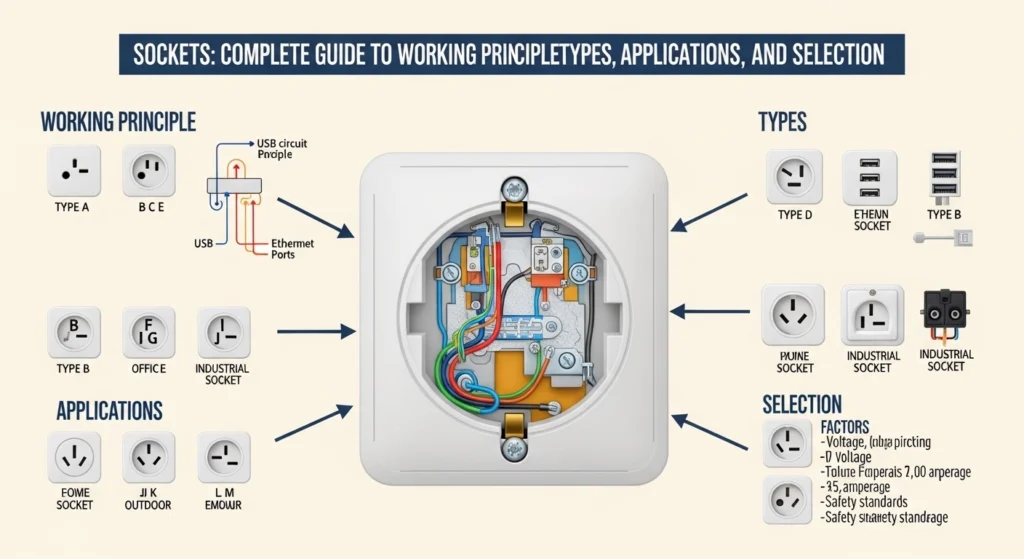

Imagine you come home and want to charge your mobile phone, run a fan, or plug in a washing machine. You simply insert the plug into a wall outlet, and the device starts working instantly. This small but essential component is called a socket. Although it looks simple, it plays a very important role in every electrical system.
Sockets are used in homes, offices, industries, and everywhere electricity is required. They provide a safe and convenient way to connect electrical devices to the power supply. Without sockets, using electrical appliances would be difficult and unsafe.
In this article, you will learn everything about sockets, including their definition, sockets working principle, types, components, sockets applications, advantages and disadvantages, and how to select the right socket. This guide is written in simple language to help students, technicians, and beginners understand clearly.
What is Sockets?
A socket is an electrical device that provides a connection point where a plug can be inserted to supply electricity to an appliance.
Simple Explanation
In simple terms:
- A socket is a power outlet
- It connects electrical devices to the main supply
- It allows safe flow of electricity
Practical Example
For example, when you plug a charger into a wall socket, electrical current flows from the socket to the charger, and your device starts charging.
Sockets Working Principle
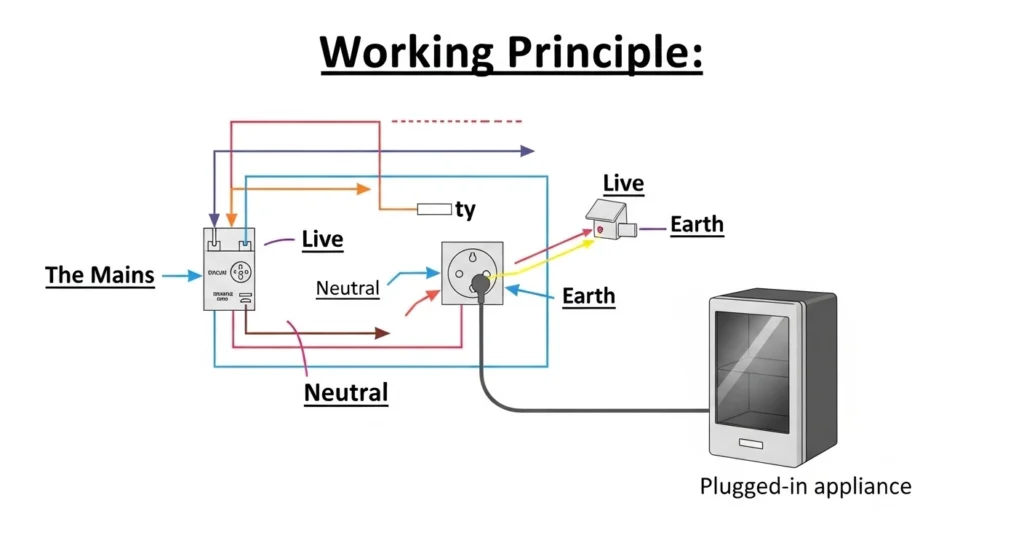
The sockets working principle is based on completing an electrical circuit safely.An electrical socket is a device used to connect electrical appliances to a power supply. It is commonly found in homes, offices, and industries, allowing devices like fans, chargers, refrigerators, and computers to receive electricity safely. Understanding the sockets working principle is important for anyone involved in electrical work, as it helps ensure safe and efficient use of power.
The working principle of a socket is based on providing a secure electrical connection between the power supply and an appliance through a plug. Inside the socket, there are metal contacts connected to the live, neutral, and sometimes earth wires of the electrical system. When a plug is inserted into the socket, the metal pins of the plug come into direct contact with these internal terminals. This connection allows electric current to flow from the power source to the appliance.
In simple terms, the socket acts as a bridge between the electrical supply and the device. The live terminal carries the current to the appliance, the neutral terminal completes the circuit by returning the current, and the earth terminal provides safety by directing any leakage current to the ground. This grounding feature is especially important for preventing electric shocks and protecting sensitive equipment.
Sockets are designed with insulation and protective covers to ensure user safety. Many modern sockets also include safety shutters, which prevent accidental insertion of objects other than proper plugs. This is particularly useful in homes with children.
The efficiency of a socket depends on proper installation and good-quality materials. Loose connections inside a socket can lead to overheating, sparks, or even fire hazards. Therefore, regular inspection and maintenance are important.
Sockets are used in almost every electrical system, from simple home wiring to complex industrial setups. They provide a convenient and flexible way to connect and disconnect devices without direct wiring. Overall, the socket is a simple yet essential component that ensures safe, reliable, and easy access to electrical power in daily life.
Step-by-Step Working
- Power Supply Connection
The socket is connected to the main electrical wiring. - Insertion of Plug
When a plug is inserted, its pins fit into the socket holes. - Contact Formation
Metal contacts inside the socket touch the plug pins. - Current Flow
Electricity flows from the socket to the device. - Device Operation
The connected appliance starts working.
Simple Analogy
Think of a socket like a water tap:
- The wiring is like a pipeline
- The socket is the outlet
- The plug opens the flow
Types of Sockets
Sockets are available in different types based on design, usage, and safety.
Two-Pin Socket
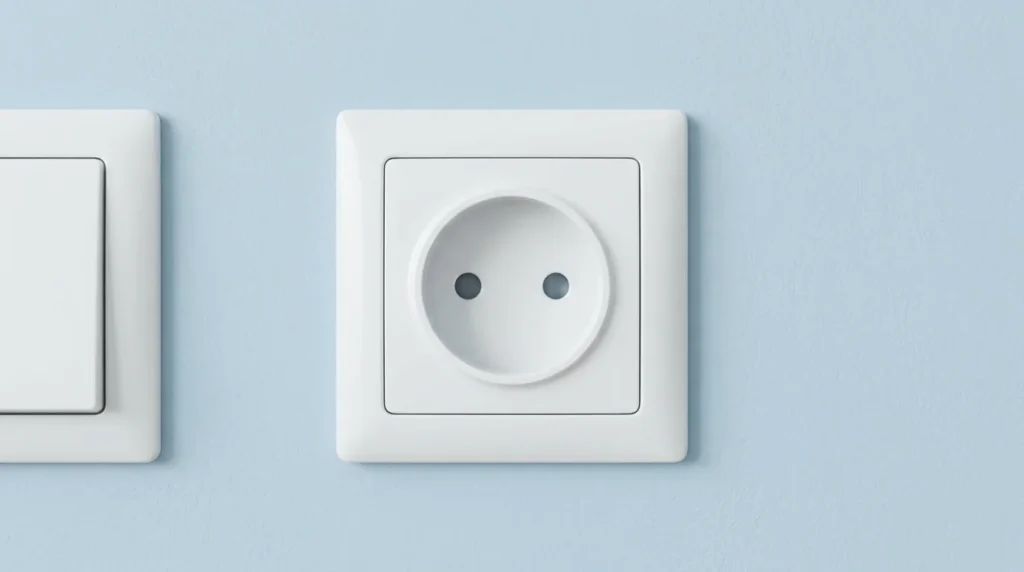
A Two-Pin Socket is a common electrical outlet used to connect low-power electrical appliances to the power supply. It contains two slots or holes designed to accept a two-pin plug. These sockets are mainly used for devices that do not require an earth connection, such as mobile chargers, table lamps, radios, electric shavers, and small household appliances. Two-pin sockets are widely used in homes, offices, hotels, and commercial buildings because of their simple design and easy operation.
The two pins in the socket are connected to the live wire and the neutral wire of the electrical supply. The live wire carries current to the appliance, while the neutral wire completes the electrical circuit. Since there is no earth pin, two-pin sockets are generally used only for double-insulated or low-risk electrical devices. In many countries, these sockets operate on standard household voltages such as 220V or 110V depending on the electrical system.
Two-pin sockets are available in different shapes, sizes, and designs according to international standards. Some sockets are designed for wall mounting, while others are used in extension boards and portable adapters. Modern two-pin sockets are often made from heat-resistant insulating materials to improve electrical safety and durability.
One major advantage of a two-pin socket is its compact size and low cost. It is easy to install and suitable for lightweight appliances. However, its main limitation is the absence of an earthing connection, which reduces protection against electric shock in faulty conditions.
In conclusion, the two-pin socket is a simple and widely used electrical outlet designed for low-power appliances, offering convenient and reliable electrical connections for everyday use.
- Used for low-power devices
- No earthing connection
- Common for mobile chargers
Three-Pin Socket
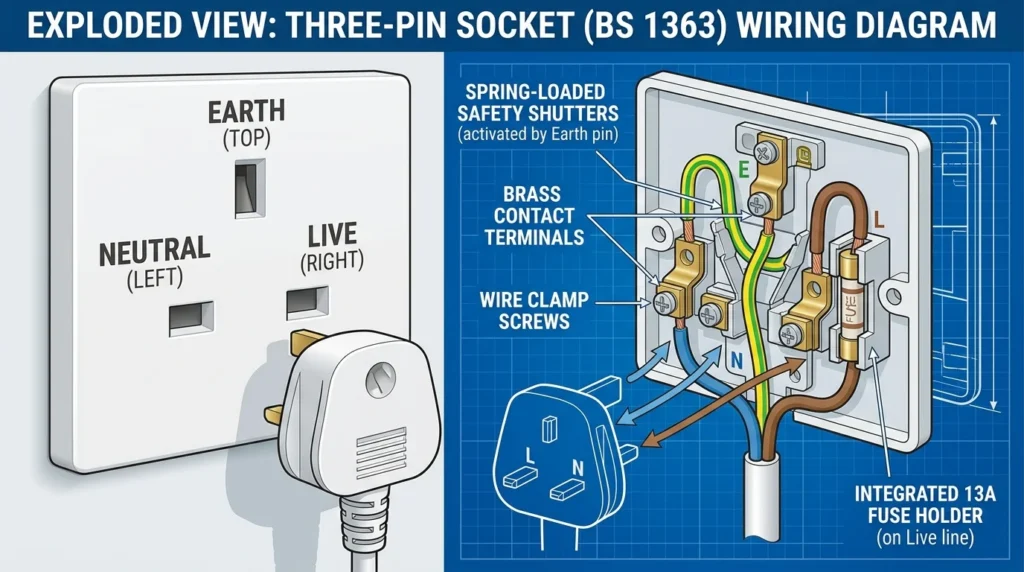
A Three-Pin Socket is a commonly used electrical outlet designed to safely connect electrical appliances to the power supply. It contains three slots for the live, neutral, and earth pins of a plug. Unlike a two-pin socket, the three-pin socket includes an earthing connection, which provides extra protection against electric shock and electrical faults. These sockets are widely used in homes, offices, industries, and commercial buildings for powering various electrical devices.
The three connections inside the socket are:
- Live terminal – supplies electrical current to the appliance
- Neutral terminal – completes the electrical circuit
- Earth terminal – provides safety by directing leakage current to the ground
The earth pin is usually thicker and longer than the other pins. It ensures that the appliance body remains safe in case of insulation failure or internal fault. Three-pin sockets are commonly used for appliances such as refrigerators, washing machines, computers, microwaves, televisions, and electric irons.
Three-pin sockets are made from strong insulating and heat-resistant materials to improve safety and durability. They are available in different voltage and current ratings depending on the application and country standards. Some modern sockets also include switches, surge protection, and child safety shutters.
One major advantage of a three-pin socket is improved electrical safety due to the earthing system. It also supports higher-power appliances compared to two-pin sockets. However, installation is slightly more complex and expensive.
In conclusion, the three-pin socket is an essential electrical outlet that provides safe, reliable, and efficient power connections for modern household and industrial electrical appliances.
- Includes live, neutral, and earth
- Safer for high-power appliances
- Used in homes and offices
Universal Socket
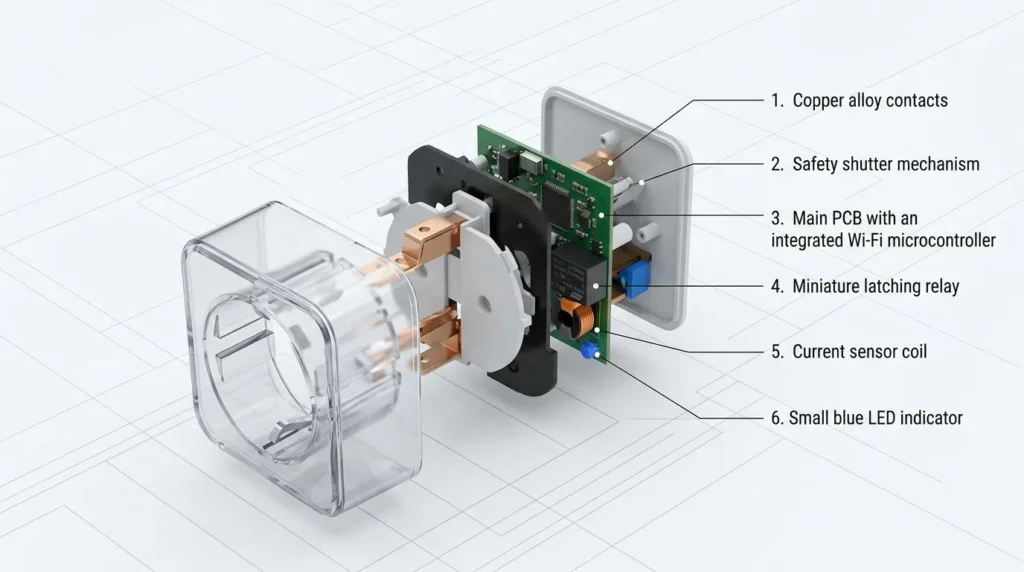
A Universal Socket is a special type of electrical outlet designed to accept different types of plugs from various countries and electrical standards. Unlike standard sockets that support only one plug design, a universal socket can connect two-pin and three-pin plugs of multiple shapes and sizes. Because of its flexibility and convenience, it is widely used in hotels, airports, offices, homes, and international travel locations.
The universal socket is designed with multiple slot patterns that allow compatibility with different plug standards such as US, UK, European, and Asian plugs. It usually supports both two-pin and three-pin connections, including live, neutral, and earth terminals. This makes it suitable for a wide variety of electrical appliances like chargers, laptops, televisions, hair dryers, and travel adapters.
One important feature of a universal socket is its ability to provide convenience for travelers and users with imported electrical devices. Many modern universal sockets also include USB charging ports, surge protection, switches, and child safety shutters for improved functionality and safety.
The socket is generally made from heat-resistant and durable insulating materials to handle continuous electrical use safely. However, users must ensure that the connected appliance matches the correct voltage and frequency of the local power supply because the universal socket itself does not automatically convert voltage.
The main advantage of a universal socket is its versatility, as it eliminates the need for multiple adapters. However, some low-quality universal sockets may provide loose connections or reduced safety if not properly manufactured.
In conclusion, the universal socket is a highly practical and flexible electrical outlet that supports multiple plug types, making it extremely useful for international and modern electrical applications.
- Accepts different plug types
- Suitable for international use
Industrial Socket
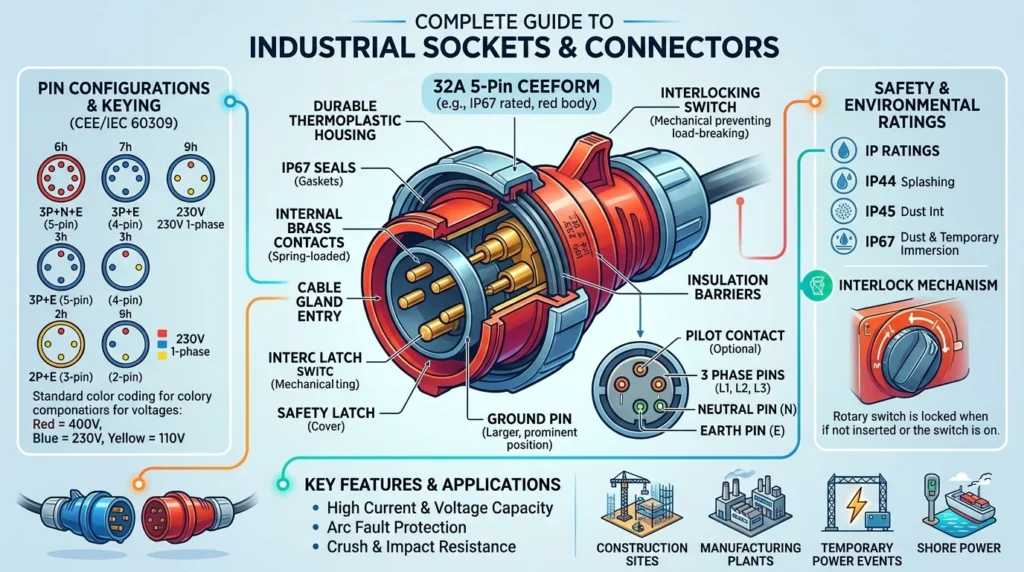
An Industrial Socket is a strong and durable electrical outlet used in factories, industries, workshops, and construction sites to supply power to heavy electrical equipment and machines. Unlike ordinary household sockets, industrial sockets are specially designed to handle high voltage, high current, and tough working conditions. They provide safe and reliable electrical connections for industrial operations where continuous power supply is important.
Industrial sockets are commonly made from high-quality heat-resistant and impact-resistant insulating materials. Many models are waterproof, dustproof, and weatherproof, allowing them to work safely in harsh environments such as outdoor areas, chemical plants, and manufacturing units. These sockets are available in both single-phase and three-phase types depending on the power requirements of the equipment.
A standard industrial socket contains live, neutral, and earth terminals. The earth connection is extremely important because it protects workers and equipment from electric shock during fault conditions. Industrial sockets are usually color-coded according to voltage ratings and frequency standards, which helps technicians quickly identify the correct socket type.
These sockets are widely used for operating motors, welding machines, generators, compressors, pumps, and heavy industrial tools. Their locking system prevents accidental disconnection during operation, improving workplace safety and reliability.
One major advantage of industrial sockets is their ability to safely carry large electrical loads for long periods. They are highly durable and suitable for demanding industrial applications. However, they are larger, more expensive, and require professional installation compared to normal domestic sockets.
In conclusion, industrial sockets are essential heavy-duty electrical outlets that provide safe, secure, and efficient power connections for industrial machinery and high-power electrical systems.
- Heavy-duty design
- Used in factories
- Handles high current loads
Smart Socket
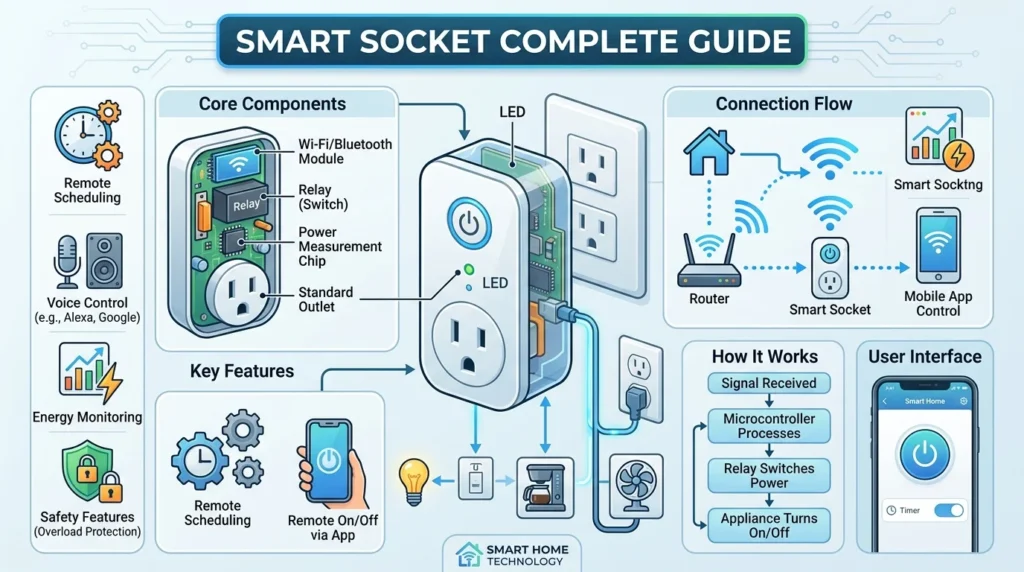
A Smart Socket is an advanced electrical outlet that allows users to control electrical appliances remotely using smartphones, voice assistants, or internet-connected devices. It is a modern development in home automation technology and is widely used in smart homes, offices, and energy management systems. Smart sockets provide convenience, energy efficiency, and improved electrical control compared to traditional sockets.
A smart socket works by connecting to a Wi-Fi or Bluetooth network. Once connected, users can operate the socket through a mobile application or voice commands using smart assistants such as Google Home or Amazon Alexa. Users can switch appliances ON or OFF remotely, set timers, schedule operations, and monitor power consumption in real time.
Smart sockets are commonly used for controlling lights, fans, air conditioners, televisions, coffee machines, chargers, and other household appliances. Many modern smart sockets also include features such as overload protection, energy monitoring, child safety shutters, and automatic shutdown systems for improved safety.
One major advantage of a smart socket is energy saving because users can control devices even when away from home. It also increases convenience and supports automation systems in modern buildings. However, smart sockets depend on internet connectivity and may cost more than ordinary electrical sockets.
These sockets are made from heat-resistant insulating materials and are available in different plug standards for worldwide use. Proper installation and secure network settings are important for safe operation.
In conclusion, a smart socket is a modern and intelligent electrical outlet that improves convenience, automation, energy management, and safety in homes and commercial environments.
- Controlled by mobile apps
- Used in modern smart homes
Main Components of Socket
Understanding components helps in proper installation and maintenance.
Socket Body
- Outer covering
- Made of insulating material
Contact Terminals
- Metal parts inside
- Allow current flow
Live, Neutral, Earth Points
- Provide proper electrical connections
- Ensure safety
Mounting Box
- Holds the socket in place
- Installed inside the wall
Shutter Mechanism
- Prevents accidental contact
- Enhances safety
Sockets Advantages
The sockets advantages and disadvantages help in understanding their importance.
Advantages
- Safe connection for electrical devices
- Easy to use and install
- Prevents direct wire contact
- Supports multiple appliances
- Available in different designs
- Improves electrical safety
Disadvantages / Limitations
Disadvantages
- Can become loose over time
- Risk of shock if damaged
- Limited capacity for high loads
- Requires proper installation
- May overheat if overloaded
Sockets Applications
The sockets applications are found everywhere.
Home Applications
- Charging devices
- Running appliances like fans, TVs
- Kitchen equipment
Industrial Applications
- Operating machines
- Powering heavy tools
- Electrical panels
Modern Technology Uses
- Smart home systems
- Automation devices
- Charging stations
Comparison: Two-Pin vs Three-Pin Socket
Understanding the difference between two-pin and three-pin socket is important.
| Feature | Two-Pin Socket | Three-Pin Socket |
|---|---|---|
| Safety | Low | High |
| Earthing | No | Yes |
| Usage | Light devices | Heavy appliances |
| Risk | Higher | Lower |
| Applications | Chargers | Refrigerators, AC |
Selection Guide
Choosing the right socket is important for safety and performance.
Key Factors to Consider
- Voltage Rating
Ensure it matches supply - Current Capacity
Choose based on appliance load - Material Quality
Use heat-resistant material - Safety Features
Look for shutters and earthing - Type of Application
Home or industrial use
Beginner Tips
- Always choose a three-pin socket for safety
- Avoid cheap quality sockets
- Ensure proper installation by a technician
Common Problems & Solutions
Q1: Why is the socket not working?
A socket may stop working for several electrical or mechanical reasons. Electrical sockets are important parts of home and industrial wiring systems because they supply power to appliances and devices. When a socket fails, connected equipment cannot operate properly. Understanding the possible causes helps users identify the problem safely and quickly.
One common reason for a non-working socket is a tripped circuit breaker or blown fuse. If too many appliances are connected or a short circuit occurs, the protection system automatically disconnects the power supply to prevent electrical damage or fire hazards. Checking the distribution board or fuse box is usually the first troubleshooting step.
Another major cause is loose wiring connections inside the socket. Over time, wires may become loose due to vibration, overheating, or poor installation. Loose connections interrupt the electrical current and may also produce sparks or burning smells. In such cases, the socket should be inspected by a qualified electrician.
A damaged or burnt socket is also a common issue. Continuous overloading, high current, or poor-quality materials can damage internal contacts, preventing proper electrical connection. Signs include black marks, melted plastic, or overheating around the socket area.
Sometimes the problem is caused by a faulty appliance rather than the socket itself. Testing the socket with another working device can help identify the actual fault. In smart homes, power interruptions, Wi-Fi issues, or internal electronic failures may also affect smart sockets.
Moisture, dust, and corrosion can also stop a socket from functioning properly, especially in outdoor or industrial environments. Water exposure may create short circuits and safety hazards.
In conclusion, a socket may not work because of tripped breakers, loose wiring, damaged components, overloaded circuits, or faulty appliances. Proper maintenance and safe electrical inspection are important for reliable socket operation and electrical safety.
Solution:
- Check power supply
- Inspect loose connections
- Replace damaged socket
Q2: Why is the socket heating?
A heating socket is a common electrical problem that should never be ignored because it can lead to electrical damage, appliance failure, or even fire hazards. Electrical sockets normally become slightly warm during use, but excessive heat indicates an issue in the wiring, connection, or connected appliance. Understanding the causes of socket heating helps improve electrical safety and system reliability.
One major reason for socket heating is overloading. When high-power appliances such as heaters, air conditioners, microwaves, or electric irons draw more current than the socket rating, excessive heat is produced. Continuous overloading damages internal contacts and insulation materials inside the socket.
Another common cause is loose wiring connections. If the live, neutral, or earth wires are not tightly connected, electrical resistance increases at the connection point. This resistance generates heat when current flows through the socket. Loose connections may also create sparks and burning smells.
Poor-quality sockets or old damaged sockets can also overheat. Low-quality materials may not handle heavy electrical loads properly. Over time, socket contacts wear out, become corroded, or lose proper grip on the plug pins, increasing resistance and heat generation.
Faulty plugs or damaged appliances may also cause socket heating. A defective appliance can draw excessive current or create short circuits, placing extra stress on the electrical outlet. Moisture, dust, and dirt inside the socket can further increase heating problems and electrical risk.
Using improper extension cords or adapters can also overload the socket and cause overheating. In industrial areas, high-power machinery and continuous operation may produce additional thermal stress on electrical connections.
In conclusion, sockets usually heat because of overloading, loose connections, poor-quality components, damaged appliances, or faulty wiring. Regular inspection, proper electrical installation, and using correctly rated sockets help prevent overheating and improve electrical safety.
Solution:
- Avoid overloading
- Use proper rating
- Tighten connections
Q3: Why do sparks occur?
Sparks occur when electrical current suddenly jumps through the air between two conductors or loose electrical connections. This usually happens when electricity flows across a small gap, producing heat, light, and sometimes a cracking sound. Sparking is common in electrical systems, switches, sockets, plugs, and damaged wiring.
One major reason for sparks is loose connections. When wires inside a socket or switch are not tightly connected, electricity cannot flow smoothly. The current jumps across the gap and creates a spark. Overloaded circuits can also cause sparking because excessive current generates high heat and electrical stress.
Damaged insulation, worn-out wires, or faulty appliances may also produce sparks. In some cases, sparks occur when plugging in appliances because the device immediately draws current from the power source. Small sparks are sometimes normal during switching, but large or continuous sparks are dangerous.
Moisture and dust inside electrical equipment can also increase the risk of sparking by creating unwanted electrical paths. Frequent sparking may lead to overheating, fire hazards, or electrical damage.
In conclusion, sparks occur due to loose connections, overloaded circuits, damaged wiring, or sudden electrical contact. Proper maintenance and safe electrical installation help reduce sparking and improve electrical safety.
Solution:
- Clean contacts
- Replace worn-out socket
Q4: Why is plug loose?
A loose plug is a common electrical problem that occurs when the plug does not fit tightly into the socket. This issue may seem small, but it can create serious electrical hazards such as sparking, overheating, power interruption, or even electrical fire. A properly fitted plug ensures safe and stable electrical current flow between the appliance and the power source.
One major reason for a loose plug is worn-out socket contacts. Over time, repeated insertion and removal of plugs weakens the metal contacts inside the socket. As the contacts lose their grip strength, the plug becomes loose and unstable. Old or poor-quality sockets are more likely to develop this problem.
Another common cause is the use of damaged or bent plug pins. If the plug pins become thin, bent, or broken, they cannot fit securely inside the socket. This creates poor electrical contact and may lead to sparking or intermittent power supply.
Using plugs and sockets of different standards or incorrect sizes can also cause looseness. Some universal sockets may not hold certain plug types firmly, especially low-quality models. In industrial and commercial areas, vibration from heavy machinery may gradually loosen electrical connections.
Loose internal wiring inside the socket can also reduce proper contact pressure. In some cases, overheating damages the socket terminals, making the connection weak. Dust, corrosion, and moisture may further affect socket performance.
A loose plug is dangerous because poor electrical contact increases resistance. Higher resistance generates heat, which may melt the socket, damage appliances, or create fire hazards. Users should avoid forcing plugs into damaged sockets and should replace faulty components immediately.
In conclusion, plugs become loose because of worn sockets, damaged plug pins, poor-quality materials, incorrect plug types, or loose internal connections. Regular inspection and proper electrical maintenance help ensure safe and reliable electrical connections.
Solution:
- Replace old socket
- Check internal contacts
Future Trends in Sockets
Sockets are evolving with modern technology.
New Developments
- Smart sockets with Wi-Fi control
- Energy monitoring sockets
- USB integrated sockets
- Child-safe designs
Industry Direction
- Automation integration
- Energy-efficient designs
- Improved safety standards
Conclusion
Sockets are one of the most basic yet essential components of any electrical system. They provide a safe and convenient way to connect electrical devices to power sources. Understanding the sockets working principle, types, and components helps in proper usage and selection.
Although sockets have some limitations, their advantages make them indispensable in homes and industries. Choosing the right socket with proper safety features is very important to avoid electrical hazards.
For students and beginners, learning about sockets builds a strong foundation in electrical systems. With proper knowledge and safe practices, you can use sockets efficiently and confidently in daily life.