
Think about your monthly electricity bill at home. You may notice that sometimes the bill is higher even when you feel like you used the same number of appliances. For example, running an air conditioner for longer hours or using high-power devices like heaters can significantly increase your bill. This happens because of electrical energy consumption, which is calculated using a specific formula.
Understanding the Electrical Energy Consumption Formula is very important for electrical students, engineers, technicians, and even everyday users. It helps in estimating electricity usage, reducing energy waste, and improving efficiency in homes, industries, and commercial systems.
In this article, you will learn what electrical energy consumption means, its formula, working principle, types of energy usage, applications, advantages, disadvantages, common problems, and future trends. By the end, you will clearly understand how electrical energy is calculated and how it impacts real-life systems like billing and power management.
2. What is Electrical Energy Consumption?
Electrical energy consumption is the total amount of electrical energy used by a device or system over a period of time.
Simple Definition:
It is the measure of how much electrical power is used to perform work over time.
Main Formula:
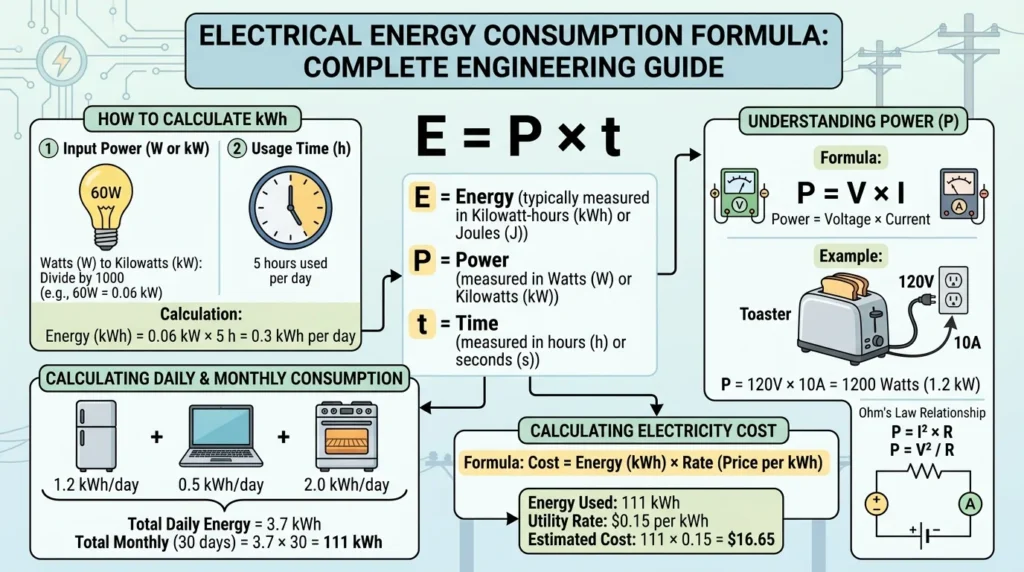
The most common electrical energy consumption formula is:
E = P × t
Where:
- E = Electrical Energy (kWh or Joules)
- P = Power (Watts or kW)
- t = Time (hours or seconds)
Practical Example:
If a 1000W heater runs for 2 hours:
Energy = 1000 × 2 = 2000 Wh = 2 kWh
This is the energy that appears on your electricity bill.
3. Working Principle of Electrical Energy Consumption
The electrical energy consumption working principle is based on how electrical power is used over time in a load.
Step-by-Step Explanation:
- Electrical supply provides voltage and current
- Device converts electrical energy into useful work
- Power is consumed continuously while device runs
- Time of operation increases total energy usage
- Energy meter records total consumption
Simple Analogy:
Think of electricity like water in a tank:
- Power = Water flow rate
- Time = Duration of flow
- Energy = Total water collected
The longer the flow, the more total water (energy) is consumed.
Key Point:
Even a small device can consume large energy if used for long hours.
4. Types of Electrical Energy Consumption
4.1 Residential Energy Consumption
This refers to electricity used in homes.
Examples:
- Lights
- Fans
- Air conditioners
- Refrigerators
4.2 Industrial Energy Consumption
Used in factories and large industries.
Examples:
- Motors
- Machines
- Production lines
- Heavy equipment
4.3 Commercial Energy Consumption
Used in offices, malls, and shops.
Examples:
- Computers
- Lighting systems
- Elevators
- HVAC systems
4.4 Renewable Energy Consumption
Energy used and generated from renewable sources.
Examples:
- Solar panels
- Wind turbines
- Hybrid systems
5. Main Components of Energy Consumption
5.1 Power Rating (P)
Power rating tells how much energy a device consumes per second.
5.2 Time of Usage (t)
The longer the device runs, the higher the energy consumption.
5.3 Voltage and Current
These factors determine how much power a device requires.
5.4 Energy Meter
A device that measures total electricity usage in kWh.
6. Advantages of Electrical Energy Consumption Formula
- Helps calculate electricity bills accurately
- Improves energy management
- Supports cost-saving decisions
- Useful for designing electrical systems
- Helps in load planning for industries
- Reduces energy wastage awareness
7. Disadvantages / Limitations
- Does not show real-time fluctuations
- Depends on accurate power ratings
- Cannot measure power quality issues
- Assumes constant load operation
- May not include system losses
8. Applications of Electrical Energy Consumption
8.1 Home Applications
- Electricity billing
- Appliance usage monitoring
- Energy-saving planning
8.2 Industrial Applications
- Load management
- Energy audits
- Cost control in factories
8.3 Commercial Applications
- Office energy planning
- HVAC system optimization
- Building management systems
8.4 Modern Technology Applications
- Smart meters
- IoT energy tracking
- AI-based energy optimization systems
9. Comparison: Energy Consumption vs Power
| Feature | Electrical Energy Consumption | Electrical Power |
|---|---|---|
| Definition | Total energy used over time | Rate of energy use |
| Formula | E = P × t | P = V × I |
| Unit | kWh or Joules | Watt |
| Depends on time | Yes | No |
| Use | Billing and consumption | Device rating |
10. Selection Guide for Energy Efficiency
When managing energy consumption, consider the following:
- Use energy-efficient appliances
- Check power ratings before buying devices
- Reduce unnecessary usage time
- Use LED lighting instead of bulbs
- Maintain electrical equipment properly
Beginner Tips:
- Always turn off unused devices
- Use timers for heavy appliances
- Prefer inverter-based systems
- Monitor usage with smart meters
11. Common Problems & Solutions
Problem 1: High Electricity Bill
Cause: Excess usage of high-power devices
Solution: Reduce usage time and switch to energy-efficient devices
Problem 2: Energy Loss in System
Cause: Poor wiring or old equipment
Solution: Regular maintenance and system upgrade
Problem 3: Inaccurate Meter Reading
Cause: Faulty or outdated meter
Solution: Replace or recalibrate energy meter
Problem 4: Overloaded Circuits
Cause: Too many devices connected
Solution: Balance electrical load properly
12. Future Trends in Electrical Energy Consumption
The future of energy consumption is moving toward smart and efficient systems.
Key Trends:
- Smart grid technology
- AI-based energy management
- IoT smart meters
- Renewable energy integration
- Energy-efficient smart homes
Future systems will focus on reducing waste and improving real-time monitoring of electricity usage.
13. Conclusion
The Electrical Energy Consumption Formula is a fundamental concept in electrical engineering that helps us understand how electricity is used over time. It plays a key role in calculating energy bills, managing power usage, and improving system efficiency in homes, industries, and commercial buildings.
By using the formula E = P × t, engineers and users can easily estimate energy consumption and take steps to reduce unnecessary usage. This leads to cost savings and better energy management. Whether you are a student or a professional, understanding energy consumption is essential for designing efficient electrical systems and promoting sustainable energy use.
Mastering this concept will help you make smarter decisions in real-world electrical applications and support a more energy-efficient future.