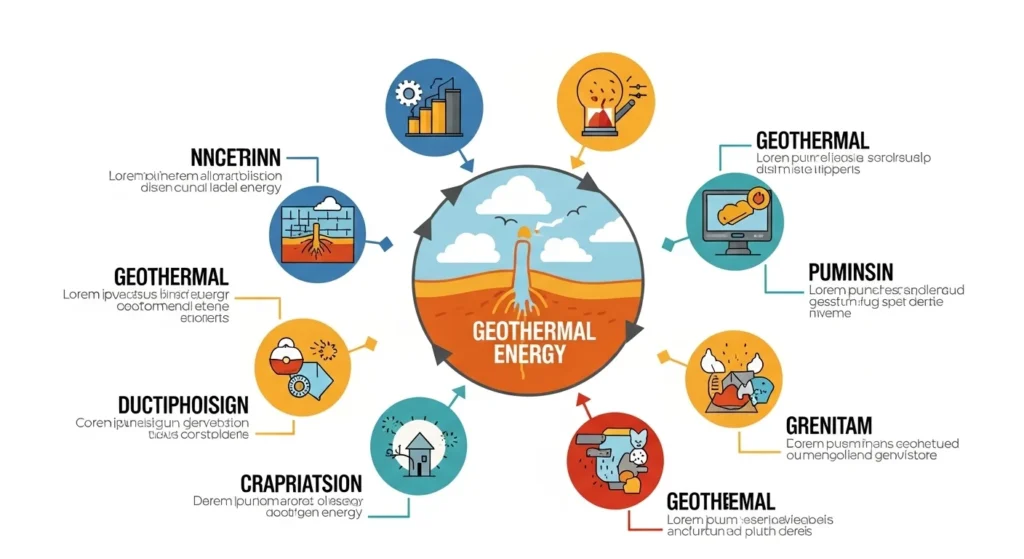

Imagine a power plant that generates electricity not from coal, oil, or gas, but from the natural heat stored deep inside the Earth. In many parts of the world, hot water and steam naturally exist underground due to geothermal activity. Engineers use this heat to produce electricity in a system called a Geothermal Power Plant.
As the demand for clean and renewable energy increases, geothermal power has become an important alternative to traditional fossil fuels. Unlike coal or gas plants, geothermal plants produce electricity with very low carbon emissions and can operate continuously throughout the year.
For electrical students, engineers, and technicians, understanding how a Geothermal Power Plant works is essential. It helps explain how natural heat energy can be converted into electrical power using turbines, generators, and heat exchange systems.
In this article, you will learn the Geothermal Power Plant working principle, its types, major components, real-world Geothermal Power Plant applications, and the Geothermal Power Plant advantages and disadvantages. The goal is to give beginners and junior engineers a clear and practical understanding of this renewable energy technology.
What is a Geothermal Power Plant?
Definition
A Geothermal Power Plant is a power generation facility that uses heat from inside the Earth to produce electricity.
Simple Explanation
Deep inside the Earth, temperatures are extremely high due to molten rock and natural geothermal activity. In certain areas, this heat warms underground water and produces steam. The steam can be used to rotate turbines, which drive electrical generators to produce electricity.
Practical Example
For example, countries located near volcanic regions such as Iceland or Indonesia use geothermal power plants to generate electricity from natural underground steam reservoirs.
This process provides clean, renewable energy with minimal environmental impact.
Geothermal Power Plant Working Principle
The Geothermal Power Plant working principle is based on converting Earth’s internal heat into mechanical energy and then into electrical energy.
The process is similar to other thermal power plants, but instead of burning fuel, geothermal plants use natural underground heat.
Step-by-Step Working Process
- Heat Source from Underground
Hot water or steam reservoirs exist deep underground due to geothermal activity.
- Drilling Wells
Engineers drill deep wells into the Earth to access the geothermal reservoir.
- Steam Extraction
Hot water or steam is brought to the surface through pipes.
- Turbine Rotation
The high-pressure steam rotates a turbine connected to a generator.
- Electricity Generation
The turbine drives a generator that converts mechanical energy into electrical energy.
- Cooling and Re-injection
After the steam is used, the cooled water is pumped back underground to maintain the reservoir.
Simple Analogy
Think of a geothermal plant like a pressure cooker underground. The Earth heats water naturally, producing steam that can be used to spin turbines and generate electricity.
Types of Geothermal Power Plants
Geothermal plants are classified based on how they use geothermal fluids.
Dry Steam Power Plant
This is the oldest and simplest type of geothermal power plant.
Dry steam from underground reservoirs is directly used to rotate turbines.
Features:
- Simple design
- High efficiency
- Used in geothermal-rich areas
Flash Steam Power Plant
This is the most common type of geothermal power plant.
High-pressure hot water from underground is brought to the surface. When pressure drops, the water quickly turns into steam.
This steam then drives the turbine.
Binary Cycle Power Plant
Binary cycle plants are used when geothermal water temperature is moderate.
Instead of using steam directly, geothermal water heats another liquid with a lower boiling point.
This secondary liquid produces vapor that rotates the turbine.
Benefits:
- Suitable for lower temperature resources
- Very low emissions
Main Components of a Geothermal Power Plant
A geothermal power plant contains several important components.
Production Well
Production wells are deep holes drilled into the Earth to bring geothermal steam or hot water to the surface.
Steam Separator
In flash steam plants, the separator separates steam from hot water before it enters the turbine.
Turbine
The turbine converts the energy of high-pressure steam into mechanical rotation.
Generator
The generator converts the mechanical rotation of the turbine into electrical energy.
Condenser
The condenser cools the used steam and converts it back into water.
Injection Well
The cooled water is pumped back underground through injection wells to maintain the geothermal reservoir.
Geothermal Power Plant Advantages
The Geothermal Power Plant advantages and disadvantages are important for engineers to understand.
Advantages
- Renewable and sustainable energy source
- Very low greenhouse gas emissions
- Reliable power generation 24/7
- Small land footprint compared to other plants
- Low operating cost after installation
- Reduces dependence on fossil fuels
Geothermal plants can operate continuously because Earth’s heat is constantly available.
Geothermal Power Plant Disadvantages / Limitations
Despite many benefits, geothermal power also has some limitations.
Disadvantages
- High initial installation cost
- Limited to areas with geothermal resources
- Risk of underground gas release
- Possible land subsidence in some regions
- Drilling wells can be expensive
However, with proper engineering design, many of these issues can be minimized.
Geothermal Power Plant Applications
There are several important Geothermal Power Plant applications in modern energy systems.
Electricity Generation
The primary use is generating electricity for residential, commercial, and industrial use.
District Heating
Geothermal heat can be used to supply hot water and heating systems for cities.
Agricultural Applications
Greenhouses can use geothermal heat to maintain temperature for crop production.
Industrial Heating
Industries can use geothermal heat for drying, processing, and heating operations.
Spa and Tourism
Hot springs heated by geothermal energy are used for tourism and wellness resorts.
Comparison: Geothermal Power Plant vs Solar Power Plant
Understanding the difference between geothermal power plant and solar power plant helps students understand renewable energy technologies.
| Feature | Geothermal Power Plant | Solar Power Plant |
|---|---|---|
| Energy Source | Earth’s internal heat | Sunlight |
| Power Generation | Continuous | Depends on sunlight |
| Land Requirement | Small | Larger area needed |
| Weather Dependency | Very low | High |
| Installation Cost | High | Moderate |
Both technologies play an important role in renewable energy systems.
Selection Guide: When to Use Geothermal Power
Engineers consider several factors before installing a geothermal power plant.
Location
The area must have geothermal activity such as volcanic regions or hot underground reservoirs.
Resource Temperature
Higher temperature geothermal reservoirs are more suitable for electricity generation.
Environmental Impact
Proper environmental assessment is required before drilling wells.
Economic Feasibility
Initial drilling and plant construction costs must be economically viable.
For beginners, it is important to understand that geothermal plants are location-dependent.
Common Problems & Solutions
Problem 1: Declining Steam Pressure
Cause:
Reservoir pressure may decrease over time.
Solution:
Re-inject cooled water back into the geothermal reservoir.
Problem 2: Mineral Scaling in Pipes
Cause:
Minerals dissolved in geothermal water may deposit in pipes.
Solution:
Regular maintenance and chemical treatment.
Problem 3: Corrosion of Equipment
Cause:
Hot geothermal fluids may contain corrosive chemicals.
Solution:
Use corrosion-resistant materials in plant equipment.
Future Trends in Geothermal Energy
The geothermal industry continues to develop with new technologies.
Enhanced Geothermal Systems (EGS)
EGS technology allows engineers to create geothermal reservoirs in areas without natural steam.
Hybrid Renewable Systems
Geothermal plants may be combined with solar or wind energy to create more efficient power systems.
Advanced Drilling Technology
Improved drilling techniques reduce the cost of accessing deep geothermal resources.
Smart Energy Management
Digital monitoring systems help optimize geothermal power plant performance.
These developments may expand geothermal power generation worldwide.
Conclusion
A Geothermal Power Plant is a powerful example of how natural Earth energy can be converted into electricity. By using heat stored deep underground, geothermal plants generate clean, reliable, and renewable power.
Understanding the Geothermal Power Plant working principle, components, and types helps electrical students and engineers learn how renewable energy systems operate. Although geothermal plants require high initial investment and specific geological conditions, they offer long-term benefits such as low emissions and continuous power generation.
The Geothermal Power Plant applications extend beyond electricity generation to heating systems, agriculture, and industrial processes. With technological advancements and improved drilling methods, geothermal energy is expected to play a larger role in future global energy systems.
For beginners and junior engineers, learning about geothermal technology provides valuable insight into the future of sustainable electrical power generation.