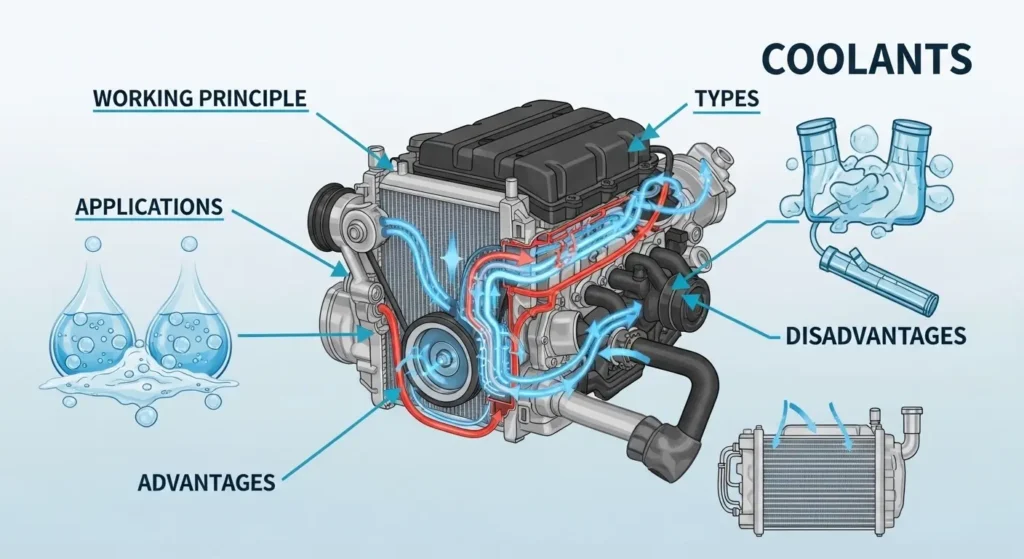

Imagine driving a car on a hot summer day. After some time, the engine temperature begins to rise. Without a proper cooling system, the engine could overheat and stop working. This is where a coolant plays a critical role. A coolant circulates through the engine and removes excess heat, keeping the system at a safe operating temperature.
Cooling systems are essential in many electrical and mechanical systems, including power plants, generators, transformers, vehicles, and industrial machines. Without proper cooling, electrical equipment may overheat, insulation can fail, and components may get permanently damaged.
For electrical students, engineers, and technicians, understanding how cooling systems work is an important part of equipment maintenance and system design. In power plants, transformers, and motors, coolant systems ensure reliable operation and prevent thermal failure.
In this article, you will learn the coolant working principle, types of coolant used in different systems, major components of cooling systems, and coolant applications in modern technology. You will also explore the coolant advantages and disadvantages, troubleshooting tips, and future developments in cooling technology. By the end, you will clearly understand how coolant systems protect machines and improve efficiency in electrical and industrial equipment.
2. What is Coolant?
A coolant is a liquid or gas used to remove heat from machines, engines, electrical equipment, or industrial systems. Its main purpose is to absorb excess heat and carry it away from critical components to maintain a safe operating temperature.
In simple terms, coolant acts like a heat carrier. It flows through a system, absorbs heat from hot parts, and transfers that heat to a radiator, heat exchanger, or cooling tower.
Simple Explanation
When electrical machines or engines operate, they generate heat due to friction, electrical resistance, and energy conversion. If this heat is not removed, the system may overheat and fail.
A coolant circulates through the system and performs three main tasks:
- Absorbs heat from hot components
- Transfers heat to a cooling device
- Maintains safe temperature levels
Practical Example
In a car engine, coolant flows through passages around the engine cylinders. It absorbs heat and carries it to the radiator, where the heat is released into the air.
Similarly, large electrical transformers and generators also use coolant systems to prevent overheating.
3. Coolant Working Principle
The coolant working principle is based on heat transfer. The coolant absorbs heat from hot components and transfers it to another medium where it can be safely released.
Step-by-Step Process
- Heat Generation
Machines such as motors, engines, or reactors generate heat during operation.
- Coolant Circulation
A pump circulates the coolant through pipes or channels around hot components.
- Heat Absorption
The coolant absorbs heat from the system as it flows through it.
- Heat Transfer
The hot coolant moves to a radiator, heat exchanger, or cooling tower.
- Cooling Process
Heat is released to the surrounding air or water.
- Cycle Repeats
The cooled liquid returns to absorb heat again.
Simple Analogy
Think of coolant like sweat in the human body. When the body temperature rises, sweat removes heat from the skin and cools the body. Coolant performs a similar function in machines.
4. Types / Classification of Coolant
Coolants are classified based on their composition and application.
Water-Based Coolant
Water is the most common coolant used in many systems because of its excellent heat absorption capacity.
Features:
- High heat transfer ability
- Low cost
- Easily available
However, pure water can cause corrosion and freezing problems.
Antifreeze Coolant
Imagine driving your car on a cold winter morning or during extremely hot weather. The engine works continuously and produces a large amount of heat. If this heat is not controlled, the engine can overheat and get damaged. This is where antifreeze coolant plays an important role.
Antifreeze coolant is a special liquid used in engines and cooling systems to regulate temperature. It prevents the engine from freezing in cold weather and overheating in hot weather. Without coolant, an engine’s internal parts could expand, crack, or seize due to extreme temperatures.
In automobiles, generators, and industrial engines, the cooling system circulates coolant through the engine block and radiator. This process removes excess heat and keeps the engine working at the correct temperature.
For mechanics, electrical technicians, and engineering students, understanding antifreeze coolant is essential because it directly affects engine efficiency, performance, and lifespan. In this guide, we will explain what antifreeze coolant is, how it works, its types, benefits, and maintenance tips.
2. What is Antifreeze Coolant?
Antifreeze coolant is a liquid mixture used in engine cooling systems to control temperature and protect internal components.
It is usually made from:
- Ethylene glycol or propylene glycol
- Water (distilled)
- Additives for corrosion protection
The coolant circulates through the engine block and radiator to absorb heat from the engine and release it through the radiator.
Main Functions
Antifreeze coolant performs several important tasks:
- Prevents engine overheating
- Stops coolant from freezing in winter
- Protects metal parts from corrosion
- Lubricates the water pump
- Maintains stable engine temperature
3. How Antifreeze Coolant Works
The cooling system works in a continuous cycle:
- The engine produces heat during combustion.
- Coolant absorbs this heat from the engine block.
- The heated coolant flows to the radiator.
- The radiator releases heat into the air.
- The cooled liquid returns to the engine.
This cycle repeats while the engine is running.
Simple Cooling Flow
Engine → Coolant absorbs heat → Radiator cools liquid → Coolant returns to engine
This process keeps the engine temperature within the optimal operating range (about 90°C).
4. Main Components of an Engine Cooling System
Antifreeze coolant works together with several parts:
1. Radiator
Removes heat from the coolant.
2. Water Pump
Circulates coolant through the engine.
3. Thermostat
Controls coolant flow based on engine temperature.
4. Cooling Fan
Helps the radiator release heat.
5. Coolant Reservoir
Stores extra coolant for expansion.
5. Types of Antifreeze Coolant
Different vehicles and machines use different types of coolant.
1. IAT (Inorganic Additive Technology)
Features:
- Traditional coolant
- Usually green color
- Used in older vehicles
Advantages:
- Good corrosion protection
- Low cost
Disadvantages:
- Needs replacement every 2 years
2. OAT (Organic Acid Technology)
Features:
- Long-life coolant
- Usually orange or red color
Advantages:
- Longer service life
- Better corrosion resistance
Disadvantages:
- More expensive
3. HOAT (Hybrid Organic Acid Technology)
Features:
- Combination of IAT and OAT technologies
Advantages:
- Long life
- Strong protection for modern engines
Common colors:
- Yellow
- Pink
- Blue
6. Antifreeze vs Coolant
Many people think these two terms are different, but they are related.
| Term | Meaning |
|---|---|
| Antifreeze | Concentrated chemical (glycol) |
| Coolant | Antifreeze mixed with water |
Typical mixture ratio:
50% antifreeze + 50% distilled water
This mixture provides the best protection for most vehicles.
7. Benefits of Antifreeze Coolant
1. Prevents Engine Overheating
Coolant absorbs excess heat and keeps the engine temperature stable.
2. Protects Against Freezing
In cold climates, coolant prevents water from freezing inside the engine.
3. Prevents Rust and Corrosion
Additives protect metal components like aluminum and steel.
4. Improves Engine Efficiency
A stable temperature improves combustion and fuel efficiency.
5. Increases Engine Life
Proper cooling reduces wear and mechanical damage.
8. Signs of Low or Bad Coolant
Technicians should watch for these warning signs:
- Engine overheating
- Coolant warning light
- Sweet smell from engine
- White smoke from exhaust
- Low coolant level
- Rust-colored coolant
Ignoring these signs can lead to serious engine damage.
9. How to Check Antifreeze Coolant Level
Follow these steps safely:
- Turn off the engine.
- Let the engine cool completely.
- Open the hood.
- Check the coolant reservoir tank.
- Ensure the level is between MIN and MAX marks.
⚠️ Never open the radiator cap when the engine is hot.
10. How to Change Antifreeze Coolant
Coolant should be replaced periodically.
Steps
- Turn off and cool the engine.
- Drain old coolant from the radiator.
- Flush the cooling system with distilled water.
- Add new coolant mixture.
- Start engine and check for leaks.
Recommended change interval:
- Every 2–5 years (depending on coolant type).
11. Coolant Mixture Ratio
The most common ratio is:
| Antifreeze | Water | Protection |
|---|---|---|
| 50% | 50% | Best overall protection |
| 60% | 40% | Extreme cold protection |
| 40% | 60% | Mild climate |
Too much antifreeze can reduce cooling efficiency.
12. Safety Tips When Handling Coolant
- Wear gloves and safety glasses.
- Avoid skin contact.
- Keep away from children and pets.
- Dispose of used coolant properly.
Antifreeze contains ethylene glycol, which is toxic if swallowed.
13. Applications of Antifreeze Coolant
Antifreeze coolant is used in many machines:
- Cars and trucks
- Motorcycles
- Generators
- Industrial engines
- HVAC cooling systems
- Power plants
It is essential for any liquid-cooled engine system.
14. Common Mistakes to Avoid
Technicians often make these mistakes:
❌ Mixing different coolant types
❌ Using tap water instead of distilled water
❌ Ignoring coolant replacement schedule
❌ Overfilling the reservoir
❌ Driving with low coolant
These mistakes can damage the cooling system.
15. Future of Engine Coolants
Modern research is developing:
- Eco-friendly coolants
- Long-life coolants (10+ years)
- Nanofluid coolants for better heat transfer
These technologies will improve engine performance and environmental safety.
Antifreeze coolant is a vital part of any engine cooling system. It prevents overheating, protects against freezing, and keeps engine components safe from corrosion. A properly maintained coolant system improves engine efficiency and extends the life of the machine.
For students, engineers, and technicians, understanding coolant types, functions, and maintenance is important for diagnosing engine problems and ensuring reliable operation.
Regularly checking coolant levels, using the correct mixture, and replacing old coolant on time can prevent costly repairs and keep engines running smoothly for many years.
Features:
- Prevents freezing in cold environments
- Protects against corrosion
- Improves cooling efficiency
These are commonly used in vehicle cooling systems.
Oil-Based Coolant
Oil is used as a coolant in certain electrical equipment.
Examples:
- Transformer oil cooling systems
- Industrial machines
Oil coolants also provide electrical insulation in transformers.
Gas Coolant
Some advanced systems use gas as a coolant.
Examples:
- Nuclear reactors
- High-temperature industrial systems
Gases like Helium or carbon dioxide are sometimes used.
5. Main Components of a Cooling System
A coolant system includes several components that work together to remove heat.
Coolant Pump
The pump circulates coolant throughout the system.
Radiator or Heat Exchanger
This component releases heat from the coolant into the surrounding environment.
Cooling Fan
A fan increases airflow across the radiator to improve heat removal.
Coolant Reservoir
This tank stores extra coolant and maintains proper fluid levels.
Pipes and Channels
Pipes carry coolant to different parts of the system.
6. Advantages
The coolant advantages and disadvantages must be understood for proper system design.
Advantages
- Prevents overheating of machines
- Improves equipment efficiency
- Extends the life of components
- Maintains stable operating temperature
- Protects electrical insulation
- Reduces risk of equipment failure
These benefits make coolant systems essential in modern engineering.
7. Disadvantages / Limitations
Despite its benefits, coolant systems have some limitations.
- Requires regular maintenance
- Coolant leakage can cause damage
- Chemical coolants may be harmful to the environment
- Additional equipment increases system cost
- Poor coolant quality may cause corrosion
Proper monitoring and maintenance are necessary to avoid these issues.
8. Coolant Applications
The coolant applications are widespread across many industries.
Automotive Systems
Car engines use coolant to prevent overheating.
Electrical Transformers
Transformer oil acts as both coolant and insulation.
Power Plants
Cooling systems remove heat from turbines and generators.
Industrial Machinery
Heavy machines require coolant to maintain safe operating temperatures.
Nuclear Power Plants
Coolant removes heat from nuclear reactors to prevent dangerous temperature rises.
9. Comparison Section
Difference Between Coolant and Lubricant
| Feature | Coolant | Lubricant |
|---|---|---|
| Purpose | Removes heat | Reduces friction |
| Main Use | Cooling systems | Mechanical movement |
| Heat Transfer | High | Low |
| Examples | Water, antifreeze | Oil, grease |
Understanding the difference between coolant and lubricant helps technicians select the correct fluid for specific applications.
10. Selection Guide
Choosing the right coolant is important for system performance.
Factors to Consider
Temperature Range
The coolant must work effectively in the expected temperature conditions.
Corrosion Protection
The fluid should prevent rust and corrosion.
Compatibility
The coolant must be compatible with system materials.
Environmental Safety
Modern coolants should minimize environmental impact.
Tips for Beginners
- Always use manufacturer-recommended coolant
- Check coolant levels regularly
- Replace old coolant periodically
- Inspect cooling system for leaks
11. Common Problems & Solutions
Why does coolant level drop?
Possible reasons include leaks, evaporation, or overheating.
Why does the engine or motor overheat?
This may occur due to:
- Low coolant level
- Blocked radiator
- Faulty cooling pump
Why does coolant change color?
This usually indicates contamination or corrosion inside the system.
Regular maintenance helps prevent these issues.
12. Future Trends
Cooling technology is evolving rapidly.
Advanced Coolants
New synthetic coolants offer improved heat transfer and longer life.
Liquid Cooling for Electronics
Modern computers and data centers use liquid cooling systems.
Eco-Friendly Coolants
Researchers are developing environmentally friendly coolant fluids.
Smart Cooling Systems
Sensors and automation help monitor temperature and adjust cooling automatically.
These technologies will make cooling systems more efficient and reliable.
13. Conclusion
Coolant systems play a critical role in protecting machines from overheating. By absorbing and transferring heat away from important components, coolant ensures that engines, electrical equipment, and industrial systems operate safely and efficiently.
In this article, we explored the coolant working principle, types of coolants, major system components, and practical coolant applications in engineering systems. We also discussed the coolant advantages and disadvantages, comparison with similar fluids, troubleshooting tips, and future technology trends.
For electrical students, engineers, and technicians, understanding cooling systems is essential for equipment maintenance and system design. A properly designed coolant system not only prevents overheating but also improves reliability, efficiency, and equipment lifespan.
As technology advances, modern coolant systems will become more efficient, environmentally friendly, and intelligent, supporting the next generation of electrical and industrial systems.