
Imagine you are at home on a hot summer day. The air conditioner, refrigerator, and washing machine are running at the same time. Suddenly, the lights go off. You check the distribution board and see that a switch has tripped. You reset it, and power returns.
That small device that protected your home from possible fire or wire damage is called a circuit breaker. Understanding the circuit breaker working principle is essential for anyone involved in electrical systems.
A circuit breaker is one of the most important safety devices in electrical engineering. It protects wires, equipment, and people from overloads and short circuits. Without it, even a small fault could cause serious damage.
In this article, you will learn the circuit breaker working principle in detail, its types, components, applications, advantages and disadvantages, comparison with similar devices, and how to select the right breaker. As a senior electrical engineer, I consider mastering circuit breakers a basic and essential skill for every technician and student.
2. What is Circuit Breaker Working Principle?
The circuit breaker working principle refers to how a circuit breaker detects abnormal current conditions and automatically interrupts the electrical circuit to prevent damage.
In simple words, a circuit breaker is an automatic switch that turns OFF power when something goes wrong.
Normally, it allows current to flow. But if current becomes too high due to overload or short circuit, it disconnects the supply.
Practical Example
If too many appliances are connected to one circuit, current increases beyond safe limit. The breaker detects this and trips, protecting the wires from overheating.
Unlike a fuse, a circuit breaker can be reset after it trips.
3. Circuit Breaker Working Principle (Step-by-Step)
To understand the circuit breaker working principle clearly, think of it like a security guard.
When everything is normal, the guard allows people to enter. If danger appears, the guard immediately blocks entry.
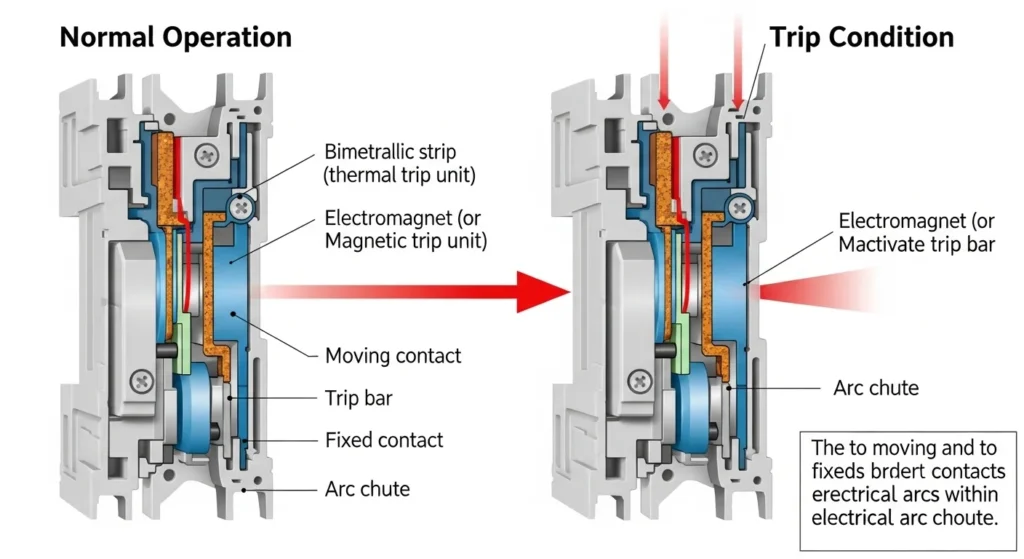
Step 1: Normal Operation
- Current flows through breaker contacts.
- Contacts remain closed.
- Load operates normally.
Step 2: Fault Detection
There are two main fault types:
- Overload (gradual high current)
- Short circuit (sudden very high current)
The breaker senses abnormal current using internal mechanisms.
Step 3: Tripping Mechanism Activation
Depending on the fault:
- Thermal element reacts to overload.
- Magnetic element reacts to short circuit.
Step 4: Contact Separation
- Internal spring mechanism opens contacts.
- Electrical arc forms between contacts.
Step 5: Arc Extinguishing
- Arc chute splits and cools the arc.
- Current flow stops completely.
The circuit breaker working principle ensures quick interruption to prevent fire and equipment damage.
4. Types / Classification
Circuit breakers are classified based on voltage level and application.
1. Miniature Circuit Breaker (MCB)
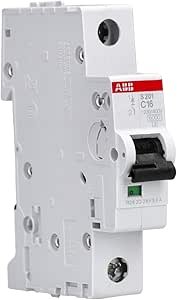
Used in homes and small offices.
Protects against overload and short circuit.
Low current rating.
A Miniature Circuit Breaker (MCB) is an automatic electrical protection device used to protect circuits from damage caused by overload and short circuit conditions. It is commonly used in homes, offices, and small industrial setups to ensure safety and reliable operation of electrical systems. Unlike traditional fuses, an MCB can be reset after it trips, making it more convenient and reusable. Its main function is to automatically disconnect the power supply when it detects abnormal current flow.
The working principle of an MCB is based on two protection mechanisms: thermal protection and magnetic protection. Thermal protection works during overload conditions. When excessive current flows for a longer time, it heats a bimetallic strip inside the MCB. This strip bends due to heat and triggers the tripping mechanism, disconnecting the circuit. Magnetic protection works during short circuit conditions. In such cases, a sudden surge of current creates a strong magnetic field that instantly activates the tripping mechanism. This behavior is related to Electromagnetism, where electric current produces a magnetic field.
An MCB consists of several important components, including a bimetallic strip, electromagnet, trip mechanism, contacts, and an insulating casing. The contacts open when a fault is detected, stopping the current flow. The outer casing provides safety and protection from electric shock.
One of the main advantages of an MCB is its quick response to faults, which helps prevent damage to wiring and appliances. It is easy to operate, requires low maintenance, and provides reliable protection. It also eliminates the need for frequent replacement like fuses. However, MCBs are generally used for low to medium current ratings and may not be suitable for heavy industrial loads.
Overall, a Miniature Circuit Breaker is an essential safety device in modern electrical systems. Its ability to automatically detect faults and protect circuits makes it highly important for both residential and commercial applications.
2. Molded Case Circuit Breaker (MCCB)
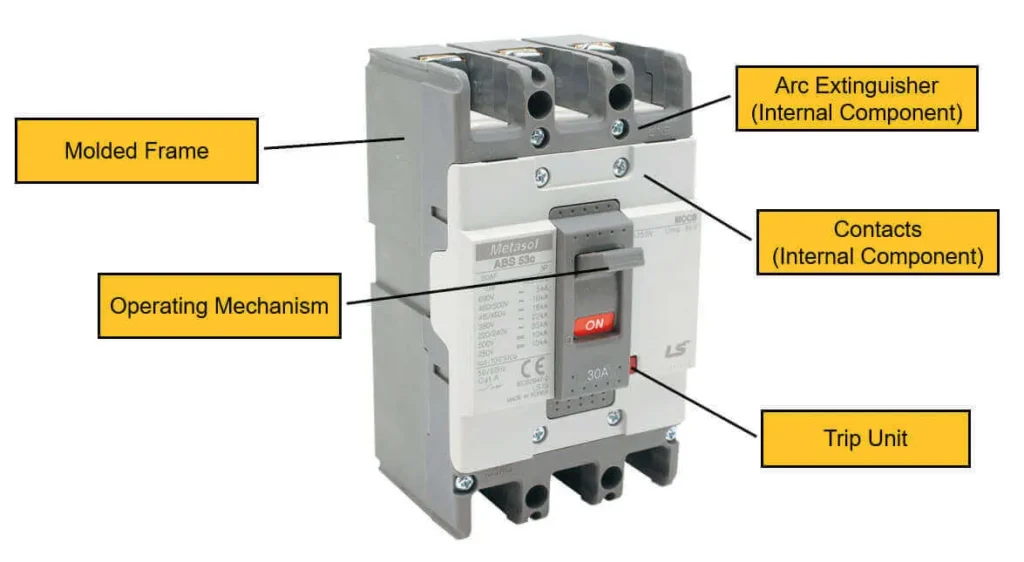
A Molded Case Circuit Breaker (MCCB) is an advanced electrical protection device used to protect circuits from overload, short circuit, and sometimes earth fault conditions. It is commonly used in industrial, commercial, and large electrical systems where higher current capacity is required compared to a Miniature Circuit Breaker (MCB). The MCCB is designed to handle medium to high current ratings and provides adjustable protection settings, making it more flexible and reliable for heavy-duty applications.
The working principle of an MCCB is similar to other circuit breakers and is based on thermal and magnetic protection. During overload conditions, the thermal mechanism operates. Excess current heats a bimetallic strip, causing it to bend and trip the breaker after a certain time delay. During a short circuit, the magnetic mechanism acts instantly. A sudden high current creates a strong magnetic field, which quickly activates the tripping mechanism and disconnects the circuit. This action is related to Electromagnetism, where electric current produces a magnetic force.
An MCCB consists of several important components, including a molded insulating case, contacts, arc extinguishing chamber, trip unit, and operating mechanism. The molded case provides protection and insulation, while the arc chute helps extinguish the arc formed when contacts open. The trip unit controls the operation and can be adjustable in many MCCBs.
One of the main advantages of an MCCB is its high current handling capacity and adjustable protection features. It offers better protection, reliability, and longer life compared to MCBs. It is suitable for protecting motors, generators, and large electrical panels. However, MCCBs are more expensive and larger in size, which makes them less suitable for small household applications.
Overall, a Molded Case Circuit Breaker is a powerful and essential device for protecting electrical systems in industrial and commercial environments. Its strong design, flexibility, and safety features make it a preferred choice for high-power applications.
Used in commercial and industrial systems.
Higher current capacity.
Adjustable trip settings.
3. Air Circuit Breaker (ACB)
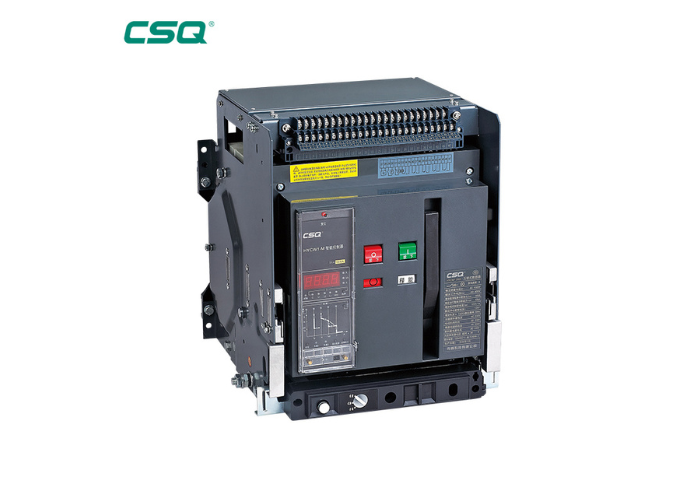
An Air Circuit Breaker (ACB) is a type of electrical protection device used to control and protect low-voltage electrical circuits, especially in industrial plants, commercial buildings, and power distribution systems. It is designed to handle high current ratings and is mainly installed in main distribution panels. The ACB protects electrical systems from overload, short circuit, and earth fault conditions by automatically disconnecting the supply when a fault occurs.
The working principle of an ACB is based on thermal and electromagnetic effects. During overload conditions, a thermal element responds to excessive current and trips the breaker after a time delay. In case of a short circuit, a magnetic mechanism acts instantly to open the contacts. When the contacts separate, an electric arc is formed due to high current flow. This arc is safely extinguished using air as the arc-quenching medium. This process is related to Electromagnetism, where electric current generates magnetic forces that control the tripping mechanism.
An Air Circuit Breaker consists of several important components, including main contacts, arc chutes, operating mechanism, trip unit, and insulating enclosure. The arc chute helps to divide and cool the arc so that it is safely extinguished. The operating mechanism can be manual or motor-operated, allowing easy control of the breaker.
One of the main advantages of an ACB is its high reliability and safety in handling large currents. It is reusable after tripping and provides accurate protection for electrical systems. ACBs also allow easy maintenance and can be customized with advanced protection settings. However, they are large in size, expensive, and mainly suitable for low-voltage applications (typically up to 1 kV).
Overall, an Air Circuit Breaker is an important device in modern electrical distribution systems. Its strong protection capabilities, durability, and safe operation make it essential for protecting industrial and commercial power networks.
Used in low-voltage industrial distribution.
Handles high current.
Suitable for main incoming supply.
4. Vacuum Circuit Breaker (VCB)
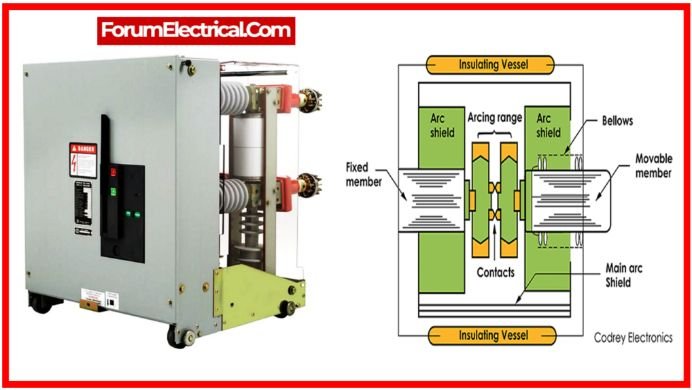
A Vacuum Circuit Breaker (VCB) is a type of electrical protection device used to switch and protect medium-voltage electrical systems. It works by interrupting the current flow in a vacuum environment, which helps extinguish the electric arc very quickly and safely. VCBs are widely used in power stations, substations, industrial plants, and utility networks because they are highly reliable, low maintenance, and efficient for frequent switching operations.
The working principle of a Vacuum Circuit Breaker is based on the interruption of current in a vacuum medium. When a fault such as overload or short circuit occurs, the breaker contacts separate, and an arc is formed between them. In a vacuum, there are very few particles, so the arc gets extinguished almost instantly as there is no medium to sustain ionization. This process is strongly related to Electromagnetism, where electric current and magnetic forces control the switching and arc quenching process.
A VCB consists of several key components such as fixed and moving contacts, vacuum interrupter, operating mechanism, and insulating housing. The vacuum interrupter is the most important part, where the arc is formed and extinguished. When the contacts open inside the vacuum chamber, metal vapor from the contacts quickly disappears, stopping the current flow.
One of the main advantages of a Vacuum Circuit Breaker is its excellent arc quenching ability, which ensures fast and safe interruption of current. It requires very little maintenance, has a long service life, and is environmentally friendly because it does not use oil or gas for arc suppression. It is also compact and highly reliable for medium-voltage applications. However, it is relatively expensive and requires careful handling during installation and maintenance.
Overall, a Vacuum Circuit Breaker is a modern and efficient protection device in electrical systems. Its fast operation, safety, and durability make it an essential component for reliable power distribution in industries and utilities.
Used in medium voltage systems.
Arc is extinguished in vacuum.
5. SF6 Circuit Breaker
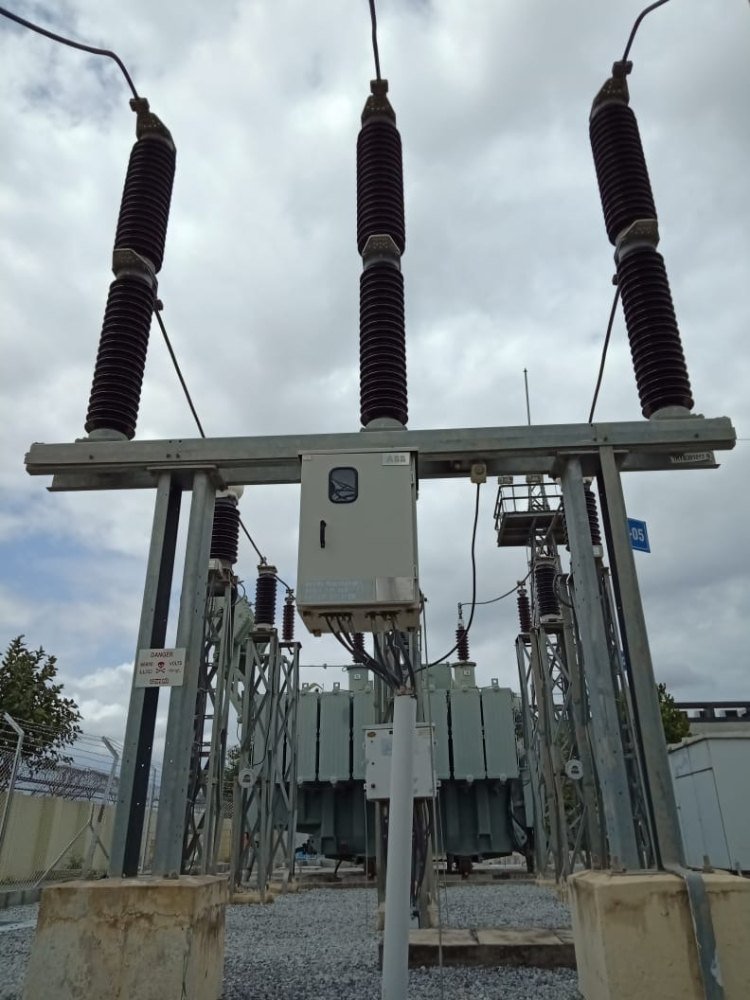
An SF6 Circuit Breaker is a type of high-voltage circuit protection device that uses sulfur hexafluoride (SF6) gas as the arc-quenching medium. It is widely used in power transmission systems, substations, and heavy electrical networks because of its excellent insulating and arc-extinguishing properties. The main function of an SF6 circuit breaker is to protect electrical equipment from damage caused by overloads, short circuits, and other fault conditions by safely interrupting the current flow.
The working principle of an SF6 Circuit Breaker is based on arc interruption in SF6 gas. When a fault occurs, the breaker contacts separate, and an electric arc is formed due to high current. The SF6 gas surrounding the arc quickly absorbs the energy and cools it down, causing rapid de-ionization. This stops the current flow almost instantly. This behavior is related to Electromagnetism, where electric current and magnetic forces influence arc formation and extinction during switching operations.
An SF6 circuit breaker consists of key components such as fixed and moving contacts, arc chamber filled with SF6 gas, operating mechanism, and insulating enclosure. The SF6 gas is stored under pressure inside a sealed chamber. When the breaker operates, the movement of contacts compresses the gas, helping in fast arc extinction and improving insulation strength.
One of the major advantages of SF6 circuit breakers is their high dielectric strength, which allows them to handle very high voltages safely. They have excellent arc-quenching capability, compact design, and require low maintenance. They are also highly reliable and suitable for outdoor and indoor substations. However, they are expensive and SF6 gas is a greenhouse gas, so proper handling and maintenance are required to prevent leakage.
Overall, an SF6 circuit breaker is a powerful and efficient protection device used in modern high-voltage electrical systems. Its superior performance, reliability, and fast operation make it essential for safe and stable power transmission and distribution networks.
Used in high-voltage systems.
Uses sulfur hexafluoride gas for arc quenching.
Each type supports different circuit breaker working principle applications.
5. Main Components
A circuit breaker consists of important parts.
1. Contacts
Allow or stop current flow.
Two types: fixed and moving.
2. Thermal Element
Made of bimetal strip.
Bends when heated due to overload.
3. Magnetic Coil
Creates magnetic field during short circuit.
Provides instant tripping.
4. Arc Chute
Extinguishes arc safely.
5. Operating Mechanism
Spring-loaded system that opens contacts quickly.
Each component plays a vital role in the circuit breaker working principle.
6. Circuit Breaker Working Principle Advantages and Disadvantages
Advantages
- Automatic operation
- Reusable after tripping
- Reliable protection
- Fast response time
- Protects against overload and short circuit
- Reduces fire risk
Disadvantages / Limitations
- Higher cost compared to fuse
- Mechanical wear over time
- Requires periodic maintenance
- Incorrect rating may cause nuisance tripping
Understanding circuit breaker working principle advantages and disadvantages helps in proper system design.
7. Applications
Circuit breaker working principle applications are found everywhere.
Home Applications
- Distribution boards
- Air conditioners
- Lighting circuits
Industrial Applications
- Motor protection
- Generator panels
- Transformer protection
- Power distribution systems
Modern Technology Applications
- Solar power systems
- Electric vehicle charging stations
- Data centers
- Smart buildings
Circuit breakers are essential in all electrical systems.
8. Comparison Section
Many beginners ask about the difference between fuse and circuit breaker.
| Feature | Circuit Breaker | Fuse |
|---|---|---|
| Operation | Automatic switch | Melts when overloaded |
| Reusability | Resettable | Must be replaced |
| Cost | Higher | Lower |
| Response Speed | Fast | Very fast |
| Maintenance | Low | Requires replacement |
This table explains the difference between fuse and circuit breaker clearly.
9. Selection Guide
Choosing the right circuit breaker depends on:
1. Current Rating
Select slightly above normal load current.
2. Breaking Capacity
Must handle maximum possible short circuit current.
3. Voltage Rating
Match system voltage.
4. Type of Load
Motor loads require specific trip curves.
Tips for Beginners
- Never oversize breaker.
- Check manufacturer specifications.
- Ensure proper installation.
- Follow safety standards.
Correct selection ensures reliable protection.
10. Common Problems & Solutions
Q1: Why does breaker trip frequently?
Possible overload or loose wiring.
Q2: Can breaker fail to trip?
Yes, if faulty or poorly maintained.
Q3: Why is breaker getting hot?
Overloading or poor contact tightening.
Q4: Can I replace breaker with higher rating?
Not recommended. It may damage wiring.
Q5: How often should breakers be inspected?
At least once a year in industrial setups.
Proper maintenance increases lifespan.
11. Future Trends
Circuit breakers are becoming smarter.
Smart Circuit Breakers
Provide real-time monitoring and remote control.
Digital Protection Systems
Use microprocessors for precise protection.
Arc Fault Detection
Detect dangerous arc conditions early.
IoT Integration
Remote fault monitoring and predictive maintenance.
Future circuit breaker working principle applications will focus on intelligent protection and automation.
12. Conclusion
The circuit breaker working principle is a fundamental concept in electrical engineering. It ensures safety by automatically interrupting current during overload and short circuit conditions. We discussed its types, components, applications, advantages and disadvantages, and comparison with fuses.
As a junior engineer, always remember that correct breaker selection and proper maintenance are essential for safe and reliable operation. Circuit breakers protect not only equipment but also human life.
Mastering the circuit breaker working principle will strengthen your foundation in electrical protection systems and make you more confident in handling real-world electrical installations.