
Imagine an electrician installing a new power outlet in a house. The electrician needs to connect copper wires to the socket terminals. However, the wires are covered with plastic insulation. If the insulation is not removed properly, the connection will not work. Using a knife to remove insulation can damage the copper wire and create safety problems.
This is where a wire stripper becomes an essential tool.
A wire stripper is a simple but very important tool used by electricians, engineers, technicians, and DIY users to remove insulation from electrical wires safely and accurately. Without stripping the insulation correctly, electrical connections cannot be made properly.
In electrical work, poor wire stripping can lead to weak connections, overheating, or even electrical fires. That is why learning how a wire stripper works and how to use it correctly is a basic skill for anyone working with electrical systems.
In this article, you will learn the wire stripper working principle, different types of wire strippers, main components, practical wire stripper applications, and the wire stripper advantages and disadvantages. This guide is written in simple English so beginners and students can easily understand it.
Wire Stripper
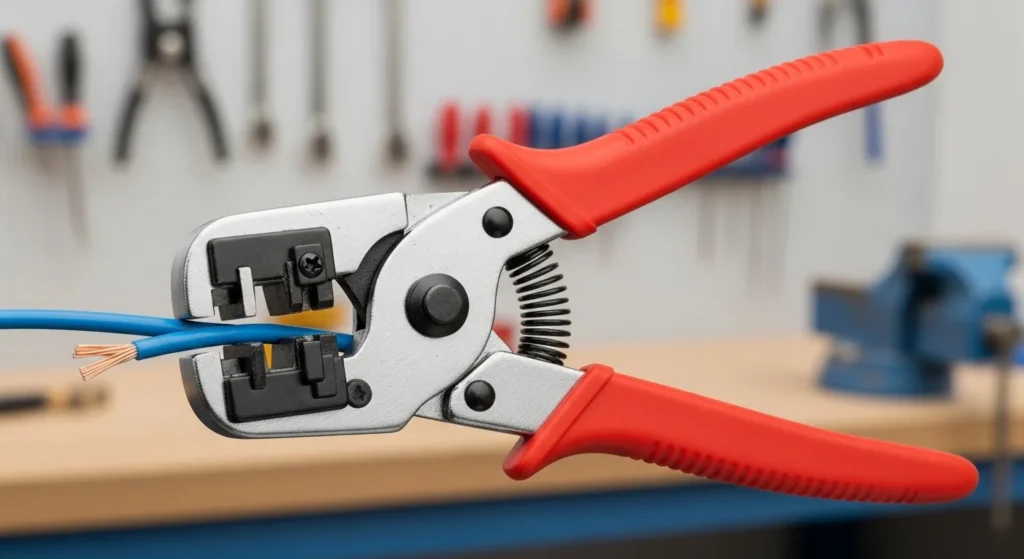
A wire stripper is a hand tool used to remove the outer insulation from electrical wires without damaging the metal conductor inside.
Electrical wires are usually covered with plastic or rubber insulation. This insulation protects people from electric shock and prevents short circuits. However, when making electrical connections, a small portion of this insulation must be removed so the conductor can be connected to terminals, connectors, or other wires.
A wire stripper is specially designed to remove insulation cleanly and safely.
Simple Explanation
A wire stripper cuts only the insulation layer and leaves the copper or aluminum conductor intact.
Practical Example
When installing a light switch, an electrician must strip about 1–2 cm of insulation from the wire before connecting it to the switch terminal. A wire stripper performs this task quickly and safely.
Without this tool, removing insulation could damage the wire or create unsafe electrical connections.
Wire Stripper Working Principle
The wire stripper working principle is based on controlled cutting of insulation without damaging the conductor.
The tool contains specially shaped blades or holes designed for different wire sizes. These blades cut only the outer insulation layer.
Step-by-Step Working Process
- Select the Correct Wire SizeThe user selects the correct hole or blade size according to the wire gauge.
- Insert the WireThe wire is placed inside the stripping slot.
- Apply PressureThe handles are squeezed, allowing the blades to cut the insulation.
- Pull the InsulationThe insulation piece is pulled away from the conductor.
- Expose the ConductorThe metal wire becomes exposed and ready for electrical connection.
Simple Analogy
Think of peeling a fruit like an orange. The goal is to remove only the outer peel without damaging the fruit inside. Similarly, a wire stripper removes the insulation without harming the conductor.
Types / Classification of Wire Strippers
Wire strippers are available in different designs depending on the application and level of automation.
Manual Wire Stripper
Manual wire strippers are the most common tools used by electricians.
Features:
- Simple design
- Low cost
- Multiple wire gauge slots
The user manually squeezes the handles to strip the wire.
Automatic Wire Stripper
Automatic wire strippers perform the stripping process automatically after squeezing the handles.
Advantages:
- Faster operation
- Consistent stripping length
- Less effort required
These tools are commonly used in professional electrical work.
Adjustable Wire Stripper
Adjustable wire strippers allow the user to adjust the cutting depth and stripping length.
Features:
- High precision
- Suitable for different wire types
- Reduces risk of conductor damage
They are often used in electronics and delicate wiring work.
Laser Wire Stripper
Laser wire strippers use laser technology to remove insulation from wires.
Characteristics:
- Very high precision
- No mechanical contact
- Used in aerospace and electronics industries
However, they are expensive and used only in specialized industries.
Main Components of a Wire Stripper
A wire stripper consists of several important parts that perform the stripping operation.
Handles
The handles allow the user to apply force to operate the tool. Most handles are insulated for safety.
Stripping Blades
These blades cut the insulation layer of the wire. The blades are designed to match different wire gauges.
Wire Gauge Slots
These are holes or openings designed for specific wire sizes. Using the correct slot prevents wire damage.
Pivot Point
The pivot point connects the two handles and allows smooth movement during operation.
Spring Mechanism
Some wire strippers include springs that automatically reopen the handles after squeezing.
Wire Stripper Advantages and Disadvantages
Understanding the wire stripper advantages and disadvantages helps technicians choose and use the tool correctly.
Advantages
- Safe removal of insulation
- Prevents conductor damage
- Fast and efficient operation
- Improves connection quality
- Suitable for different wire sizes
- Easy to use for beginners
These benefits make wire strippers an essential tool in electrical work.
Disadvantages / Limitations
- Incorrect slot selection may damage wires
- Low-quality tools may wear out quickly
- Automatic wire strippers can be expensive
- Not suitable for very thick industrial cables
Despite these limitations, wire strippers remain one of the most commonly used electrical tools.
Wire Stripper Applications
There are many practical wire stripper applications in electrical and electronic systems.
Home Electrical Work
Used for installing switches, sockets, and lighting systems.
Electrical Maintenance
Technicians use wire strippers when repairing damaged wiring.
Electronics Assembly
Used for preparing wires in circuit boards and electronic devices.
Industrial Wiring
Wire strippers are used in factories for machine wiring and control panels.
Automotive Wiring
Used to prepare wires for vehicle electrical systems.
Comparison Section
Difference Between Wire Stripper and Wire Cutter
| Feature | Wire Stripper | Wire Cutter |
|---|---|---|
| Main Function | Removes insulation | Cuts wires |
| Precision | High precision stripping | Simple cutting |
| Wire Damage Risk | Low if used properly | May damage conductor if misused |
| Usage | Electrical connections | Cutting wires to length |
Understanding the difference between wire stripper and wire cutter helps technicians choose the correct tool for the job.
Selection Guide
Choosing the right wire stripper depends on several factors.
Wire Size Compatibility
Ensure the tool supports the wire gauges you commonly use.
Type of Work
For home electrical work, a manual wire stripper is usually sufficient.
For professional use, automatic wire strippers are better.
Build Quality
High-quality steel blades provide longer service life.
Ergonomic Design
Comfortable handles reduce fatigue during long working hours.
Safety Features
Insulated handles improve safety when working with electrical systems.
Beginners should start with simple manual wire strippers.
Common Problems & Solutions
Why is the wire getting damaged during stripping?
Possible causes:
- Using the wrong slot size
- Applying too much force
Solution: Use the correct wire gauge slot and apply gentle pressure.
Why is insulation not coming off properly?
Possible causes:
- Dull blades
- Incorrect stripping technique
Solution: Sharpen or replace the blades and adjust the stripping angle.
Why does the tool slip while stripping?
Possible causes:
- Worn grip
- Poor tool quality
Solution: Use a better-quality tool with strong grip handles.
Why does the conductor break?
Possible causes:
- Excessive cutting pressure
- Incorrect blade size
Solution: Select the correct slot and avoid excessive force.
Future Trends
Electrical tools are evolving with modern technology.
Smart Wire Stripping Tools
Future tools may include automatic sensors for wire size detection.
Precision Industrial Machines
Factories are adopting automated wire stripping machines for high production.
Improved Blade Materials
Manufacturers are developing stronger blade materials for longer durability.
Multi-Function Electrical Tools
Many modern tools combine stripping, cutting, and crimping functions in a single device.
Conclusion
A wire stripper is a fundamental tool used in electrical work to remove insulation from wires safely and accurately. It plays a crucial role in creating strong electrical connections in homes, industries, and electronic devices.
In this guide, we explained the wire stripper working principle, different types of wire strippers, key components, and important wire stripper applications. We also discussed the difference between wire stripper and wire cutter, along with a practical selection guide and troubleshooting tips.
For electrical students, technicians, and beginners, learning to use a wire stripper correctly is an essential skill. Proper wire stripping improves safety, ensures reliable electrical connections, and helps prevent wiring faults. Mastering this simple tool is a valuable step toward becoming a skilled electrician or electrical engineer.