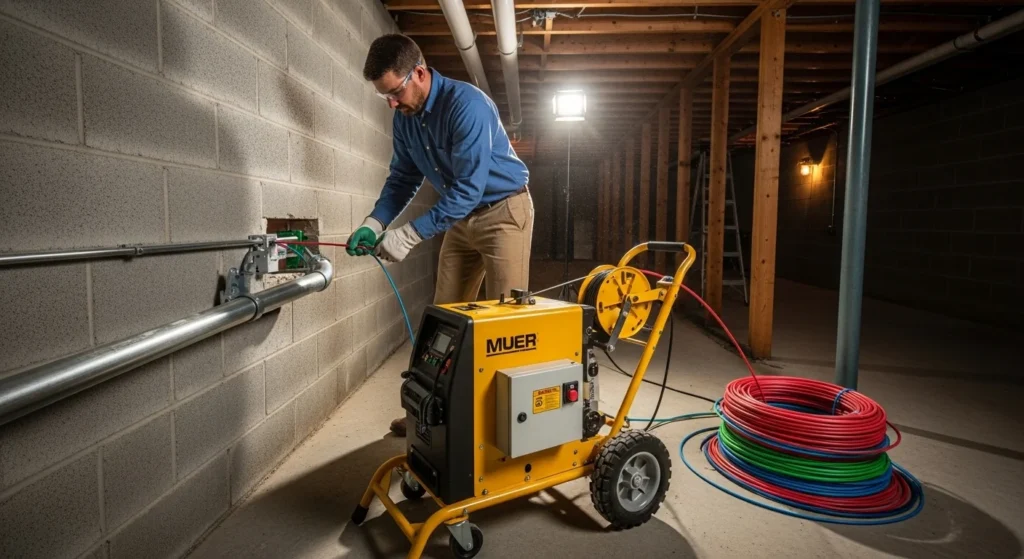

Imagine an electrician installing electrical wiring inside a new building. The wires must pass through long conduits inside walls and ceilings. Sometimes the conduit may be several meters long with multiple bends. Pulling the wire manually through such a narrow path can be extremely difficult and time-consuming.
In these situations, electricians use a wire puller to make the job easier and safer. A wire puller is a tool designed to help pull electrical cables through conduits, ducts, or tight spaces without damaging the wires.
In modern electrical installations, large buildings, factories, and industrial systems often require long cable runs. Without proper tools, pulling these cables could cause insulation damage, excessive strain on the wire, or serious delays in installation work.
Understanding how a wire puller works is very important for electrical students, engineers, and technicians. Proper cable installation ensures electrical systems remain safe, reliable, and long-lasting.
In this guide, you will learn the wire puller working principle, different types of wire pullers, key components, and practical wire puller applications. We will also explain the wire puller advantages and disadvantages, how to choose the right tool, and how to solve common problems during cable pulling.
What is a Wire Puller?
A wire puller is a tool used to pull electrical wires or cables through conduits, ducts, or other enclosed pathways during electrical installation.
Electrical wires are often installed inside pipes or conduits to protect them from damage. However, these pathways can be long and narrow, making it difficult to push wires through manually. A wire puller helps electricians guide and pull the wire smoothly through the conduit.
Simple Explanation
A wire puller acts like a guiding tool that pulls wires from one end of the conduit to the other.
Practical Example
Suppose a technician needs to install a cable through a 20-meter conduit inside a wall. Pushing the cable manually may cause bending or damage. Instead, the technician uses a wire puller to guide and pull the cable smoothly through the pipe.
This method saves time and prevents damage to expensive electrical cables.
Wire Puller Working Principle
The wire puller working principle is based on pulling a cable through a conduit using a guiding line or pulling mechanism.
The tool creates a controlled pulling force that moves the cable through the pathway safely.
Step-by-Step Working Process
- Insert the Pulling LineA flexible wire, tape, or rope is inserted through the conduit first.
- Attach the CableThe electrical cable is attached to the end of the pulling line.
- Apply Pulling ForceThe electrician pulls the line from the opposite end.
- Cable MovementThe cable moves through the conduit smoothly.
- Final InstallationOnce the cable reaches the other end, it is disconnected and installed.
Simple Analogy
Think of pulling a thread through a needle using another thread. The first thread guides the second one through a small hole. A wire puller works in a similar way for electrical cables.
Types / Classification of Wire Pullers
Wire pullers are available in different types depending on the complexity of the electrical installation.
Manual Wire Puller
Manual wire pullers are simple tools operated by hand.
Features:
- Easy to use
- Low cost
- Suitable for small wiring jobs
They are commonly used in homes and small electrical installations.
Fish Tape Wire Puller
Fish tape is a flexible metal or fiberglass tape used to guide wires through conduits.
Characteristics:
- Long and flexible
- Can travel through curved conduits
- Widely used by electricians
Fish tape is one of the most common wire pulling tools.
Electric Wire Puller
Electric wire pullers use motors to pull cables automatically.
Features:
- High pulling power
- Faster operation
- Used for heavy cables
These tools are commonly used in industrial electrical installations.
Hydraulic Wire Puller
Hydraulic wire pullers use hydraulic pressure to pull very heavy cables.
Advantages:
- Very powerful
- Suitable for long cable runs
- Used in large industrial projects
However, these systems are expensive and used only for large-scale installations.
Main Components of a Wire Puller
A wire puller contains several important parts that help guide and pull the cable efficiently.
Pulling Cable or Rope
This cable connects the wire puller to the electrical cable being installed.
Guide Head
The guide head helps the pulling line move smoothly through the conduit.
Handle or Motor Mechanism
Manual wire pullers use handles, while electric versions use motors to generate pulling force.
Frame or Housing
The frame supports the internal components and ensures stable operation.
Hook or Connector
The hook attaches the pulling line to the electrical cable.
Wire Puller Advantages and Disadvantages
Understanding the wire puller advantages and disadvantages helps technicians use the tool effectively.
Advantages
- Makes cable installation easier
- Reduces manual effort
- Prevents wire damage
- Saves installation time
- Improves safety during electrical work
- Suitable for long conduits
These advantages make wire pullers essential in modern electrical installation.
Disadvantages / Limitations
- Some tools can be expensive
- Requires training for proper use
- Incorrect use may damage cables
- Large machines are difficult to transport
Despite these limitations, wire pullers remain extremely valuable tools for electricians.
Wire Puller Applications
There are many practical wire puller applications in electrical systems.
Residential Wiring
Used to pull wires through conduits inside walls and ceilings.
Industrial Electrical Systems
Factories use wire pullers for large power cables.
Commercial Buildings
Used in office buildings, malls, and hospitals during electrical installation.
Underground Cable Installation
Wire pullers help install underground cables through ducts.
Telecommunication Systems
Used to install network and communication cables.
Comparison Section
Difference Between Wire Puller and Fish Tape
| Feature | Wire Puller | Fish Tape |
|---|---|---|
| Function | Pulls cables through conduit | Guides wires through conduit |
| Strength | Higher pulling force | Limited pulling capacity |
| Usage | Heavy cable installation | Small wiring jobs |
| Complexity | More advanced | Simple tool |
Understanding the difference between fish tape and wire puller helps electricians choose the right tool.
Selection Guide
Choosing the correct wire puller depends on several important factors.
Cable Size
Large cables require stronger wire pullers.
Conduit Length
Long conduits may require powered wire pullers.
Work Environment
Manual tools are suitable for homes, while industrial jobs may require electric or hydraulic pullers.
Budget
Manual wire pullers are affordable, while hydraulic systems are more expensive.
Ease of Use
Beginners should start with simple fish tape tools before using advanced wire pullers.
Common Problems & Solutions
Why is the cable getting stuck in the conduit?
Possible causes:
- Too many bends in the conduit
- Lack of lubrication
Solution: Use cable lubricant and check conduit alignment.
Why is the cable insulation getting damaged?
Possible causes:
- Excessive pulling force
- Rough conduit edges
Solution: Reduce pulling force and inspect conduit surfaces.
Why is the pulling line breaking?
Possible causes:
- Weak rope or tape
- Overloading
Solution: Use stronger pulling cables designed for heavy loads.
Why is the cable twisting during pulling?
Possible causes:
- Improper cable attachment
- Uneven pulling force
Solution: Secure the cable properly before pulling.
Future Trends
Electrical installation tools are continuously improving.
Automated Cable Pulling Systems
Future systems may include automated cable pulling machines for faster installation.
Smart Monitoring Tools
Sensors may monitor cable tension during pulling.
Lightweight Materials
New materials will make wire pullers lighter and easier to transport.
Multi-Function Electrical Tools
Manufacturers are developing tools that combine pulling, measuring, and cable guiding functions.
Conclusion
A wire puller is an essential tool used to pull electrical cables through conduits safely and efficiently. It plays a critical role in modern electrical installations by reducing manual effort and preventing cable damage.
In this guide, we explained the wire puller working principle, types of wire pullers, important components, and practical wire puller applications. We also discussed the wire puller advantages and disadvantages, compared it with similar tools, and provided a selection guide for beginners.
For electrical students, engineers, and technicians, learning how to use a wire puller properly is an important skill. Proper cable pulling techniques improve installation quality, increase safety, and ensure reliable electrical systems. Mastering this tool will help you become more efficient in electrical installation work.