
Imagine plugging in your smartphone charger and watching the battery fill up steadily without any sudden surges that could damage the device. That’s the quiet work of an inductor inside the charger’s circuit, smoothing out the power flow. As a senior electrical engineer with over 20 years in the field, I’ve seen how these small components prevent chaos in everyday electronics.
Understanding what an inductor is matters because it’s a key building block in electrical systems. From powering your home appliances to enabling wireless communication in modern gadgets, inductors help manage energy efficiently. Without them, circuits would be unstable, leading to failures or inefficiencies.
In this article, you’ll learn the basics step by step. We’ll cover the inductor working principle, types, components, advantages and disadvantages, applications, and more. By the end, you’ll feel confident tackling inductor-related projects, whether you’re a student building your first circuit or a technician troubleshooting equipment. Let’s dive in and make this concept clear for you.
What is an Inductor?
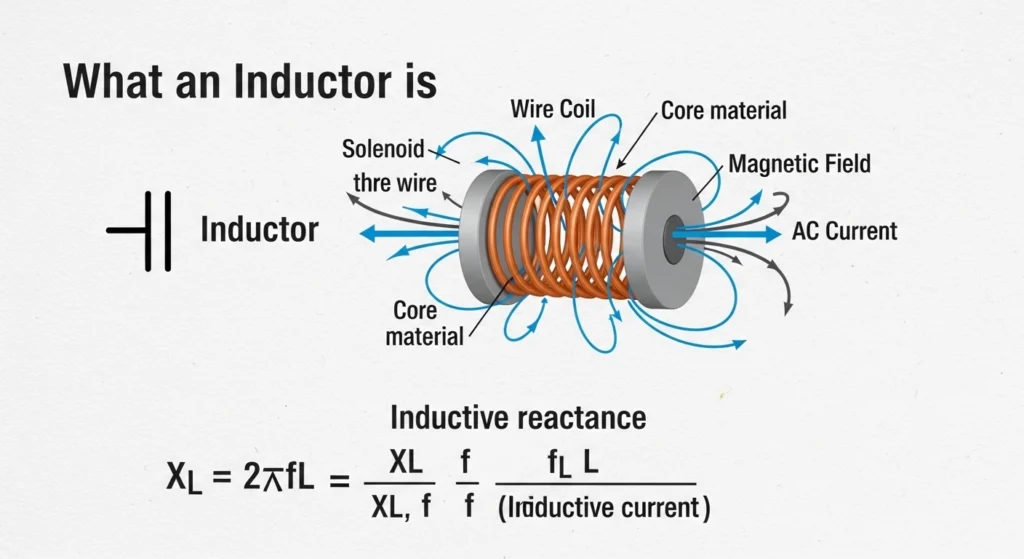
An inductor is a passive electrical component that stores energy in a magnetic field when electric current flows through it. Think of it as a coil of wire that resists changes in current, much like a flywheel resists changes in speed.
In simple terms, it opposes sudden shifts in the flow of electricity. This property, called inductance, is measured in henries (H). A higher value means stronger opposition to change.
For a practical example, consider a car’s ignition system. The inductor (or coil) builds up energy and releases it as a high-voltage spark to start the engine. This shows how inductors turn steady power into bursts when needed.
Types, Principles & Applications of Inductors/Inductor Coils
Inductor Working Principle
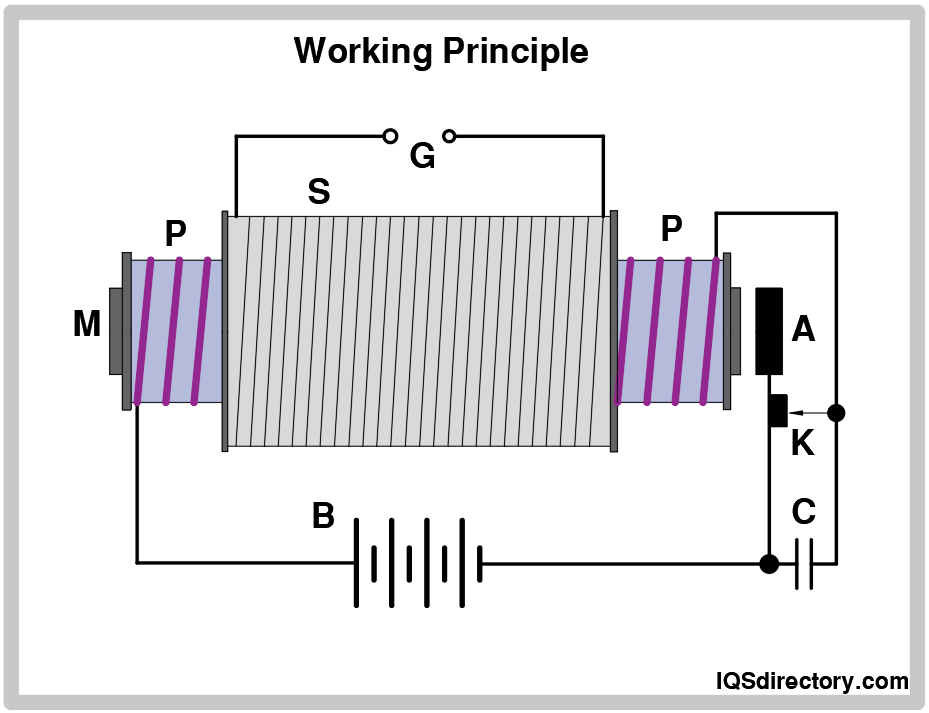
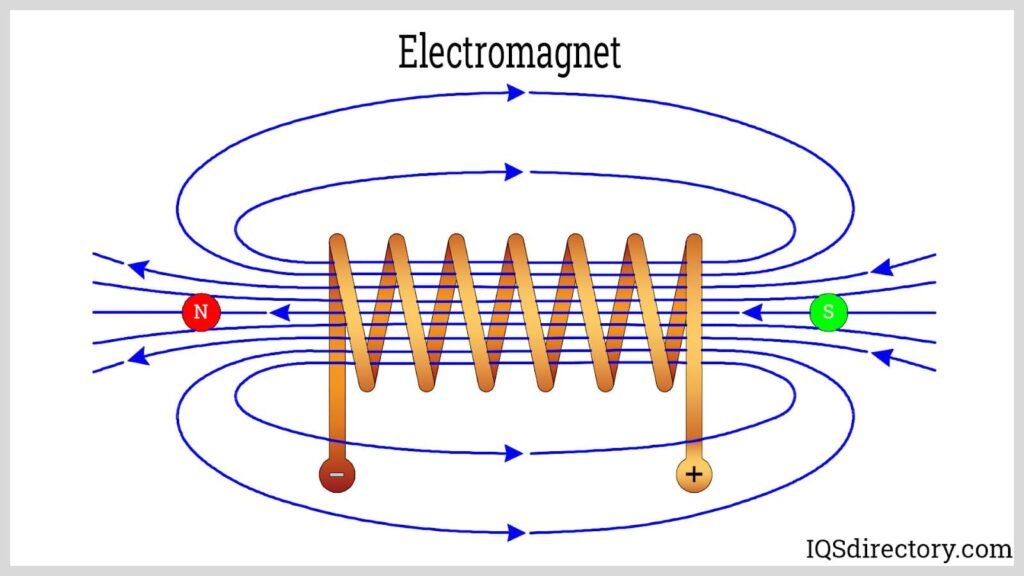
The inductor working principle relies on electromagnetic induction, discovered by Michael Faraday. When current passes through the coil, it creates a magnetic field around it.
Step by step: First, apply voltage, and current starts flowing, building the magnetic field gradually. If you try to change the current quickly, the field induces a voltage that opposes the change—this is self-induction.
Use this analogy: Picture water flowing through a pipe with a turbine. Sudden stops or starts create pressure against the change, like how an inductor smooths current.
- Current increase: The inductor absorbs energy, storing it in the magnetic field.
- Current decrease: It releases stored energy to maintain flow.
- Steady current: No opposition, acts like a short wire.
This makes inductors great for filtering noise in signals.
Types, Principles & Applications of Inductors/Inductor Coils
Types / Classification
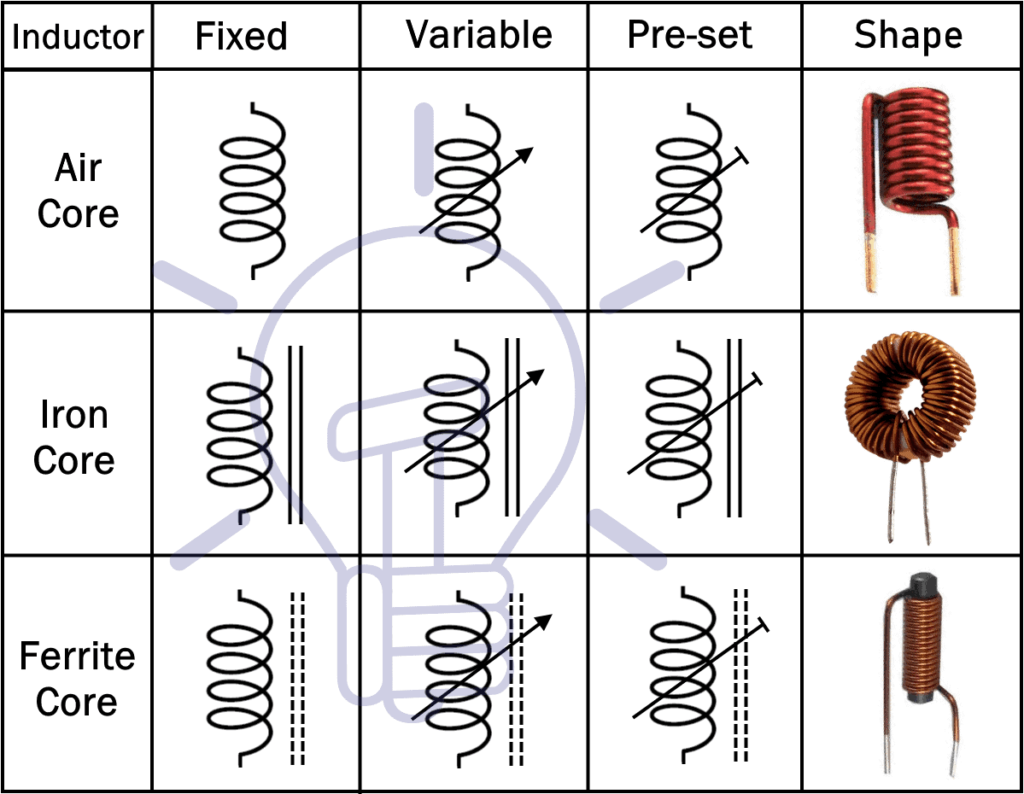
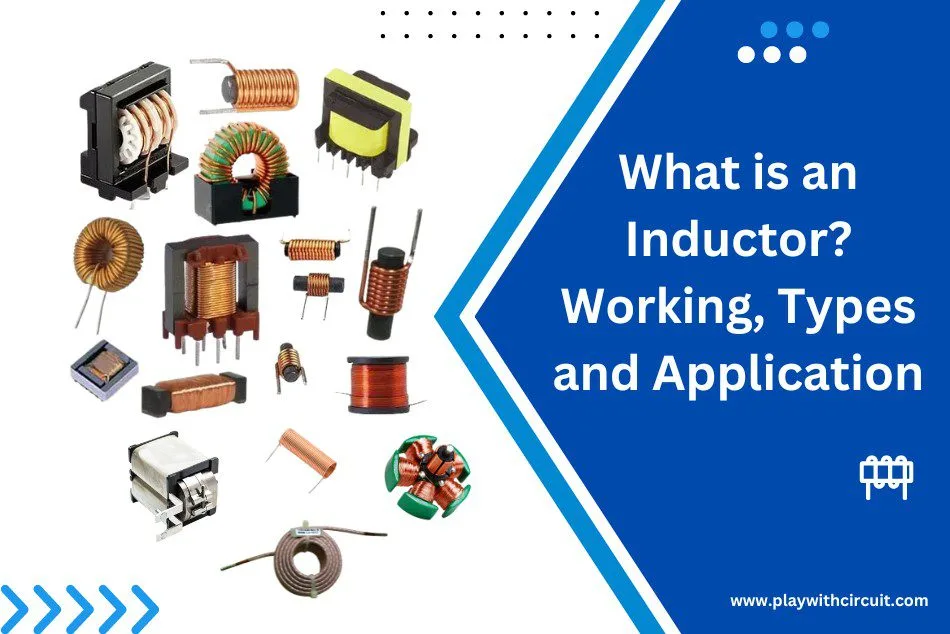
Inductors come in various forms based on construction and use. Each type suits specific needs.
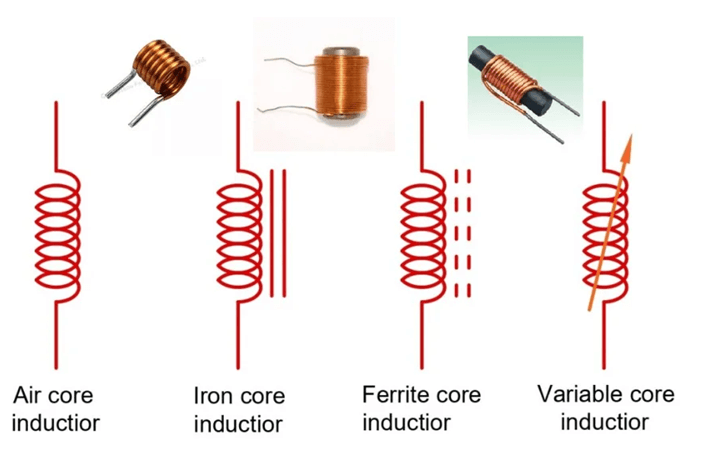
Air Core Inductors
These use a coil wound without a magnetic core, just air inside. They offer low inductance but minimal losses at high frequencies.
Ideal for radio tuning circuits where precision matters. No core means no saturation issues.
Iron Core Inductors
A soft iron core inside the coil boosts inductance by concentrating the magnetic field. They’re common in power applications.
However, they can saturate if current is too high, limiting use in high-power scenarios.
Ferrite Core Inductors
Ferrite, a ceramic with magnetic properties, serves as the core. It provides high inductance in small sizes.
Popular in electronics like filters and transformers due to low energy loss.
Toroidal Inductors
Shaped like a doughnut, the coil winds around a ring core. This design contains the magnetic field inside, reducing interference.
Great for compact devices needing high efficiency, like audio equipment.
Variable Inductors
These allow adjustment of inductance by moving the core or changing coil turns. Useful in tuning radios.
They give flexibility in experimental setups or adjustable circuits.
Main Components
An inductor’s basic parts include the coil, core, and sometimes insulation or mounting.
The coil is wound wire, usually copper for good conductivity. It determines the inductance based on turns and shape.
The core enhances the magnetic field. Materials like air, iron, or ferrite affect performance.
Insulation prevents short circuits between turns. In some, a shield reduces external interference.
Each part works together: Coil carries current, core strengthens the field, insulation ensures safety.
Advantages
- Energy storage: Inductors store and release energy smoothly, vital for stable power in devices like laptops.
- Noise filtering: They block high-frequency noise, improving signal quality in audio systems.
- Compact size: Modern designs fit into small gadgets, enabling portable tech.
- Durability: With no moving parts, they last long in harsh environments, like industrial machines.
- Efficiency boost: In power converters, they reduce losses, saving energy in real-world applications.
These benefits make inductors indispensable in everyday electronics.
Disadvantages / Limitations
Inductors can be bulky compared to other components, limiting use in tiny devices.
They generate heat from resistance in the wire, which might require cooling in high-power setups.
Saturation occurs when the core can’t handle more magnetic field, causing performance drop.
Parasitic effects like capacitance can interfere at high frequencies.
Cost can rise with specialized materials, making them pricier for custom needs.
Applications
At home, inductors are in power supplies for TVs and refrigerators, smoothing voltage.
In industry, they regulate motors and welding equipment for consistent operation.
Modern tech uses them in smartphones for wireless charging and in EVs for efficient battery management.
They’re key in filters for clean signals in communication devices.
Comparison Section
Inductors differ from capacitors and resistors, other passive components. The difference between inductor and capacitor lies in energy storage: inductors use magnetic fields, capacitors electric fields.
| Feature | Inductor | Capacitor | Resistor |
| Function | Opposes current change | Opposes voltage change | Limits current flow |
| Energy Storage | Magnetic field | Electric field | None (dissipates heat) |
| Unit | Henry (H) | Farad (F) | Ohm (Ω) |
| In AC Circuits | Blocks high frequencies | Passes high frequencies | Constant resistance |
| Applications | Filters, transformers | Timing, smoothing | Voltage dividers |
This table highlights how each suits different roles in circuits.
Selection Guide
Choosing the right inductor starts with knowing your circuit’s needs. Check the required inductance value first.
Consider current rating to avoid saturation. For beginners, start with datasheets for specs.
Factor in size and mounting type for your board. Test in a prototype to ensure fit.
Tips: Use online calculators for values. Pick shielded ones for noisy environments.
Common Problems & Solutions
Why does my inductor get hot?
Overcurrent or high resistance causes heat. Solution: Choose higher-rated inductors or add cooling.
How to fix buzzing noise?
Loose windings vibrate. Secure with varnish or replace with encapsulated types.
Inductor not storing energy?
Core saturation. Use a larger core or reduce current.
Circuit unstable at high frequencies?
Parasitic effects. Select low-ESR inductors or add dampers.
How to measure inductance?
Use an LCR meter. Ensure no DC bias during test.
Future Trends
Inductor technology is advancing rapidly toward miniaturization and efficiency. By 2026, expect more compact designs with minimal losses, driven by polymer composites.
AI-driven optimization will refine shapes for better performance in 5G and IoT devices.
Automotive sectors push for high-efficiency inductors in EVs, with market growth at 14% CAGR through 2033.
Thin-film and multilayer types will dominate for high-Q applications in electronics.
The industry heads toward sustainable materials and integration with semiconductors for smarter systems.
Conclusion
We’ve covered what an inductor is, from its definition and working principle to types, advantages, disadvantages, and applications. Remember, inductors store energy magnetically, oppose changes, and play crucial roles in smoothing power and filtering signals.
As you build circuits, think of them as guardians against instability. The difference between inductor and capacitor is key—use both for balanced designs.
Keep experimenting and learning. With practice, you’ll master these components. Dive into projects, and soon you’ll design reliable systems like a pro.