
Imagine you are using your computer, television, or industrial machine when suddenly a lightning strike or power surge hits the electrical system. Within a fraction of a second, the voltage in the electrical line rises far above its normal level. Sensitive equipment may burn, circuits may fail, and expensive systems may stop working. This situation is more common than many people think, especially in areas where lightning, switching operations, or unstable power grids occur.
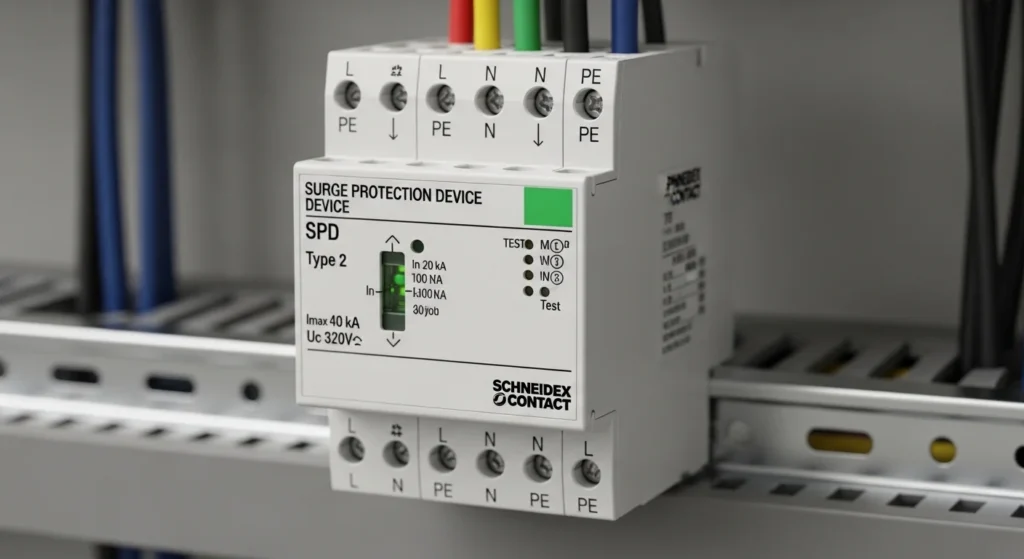
To prevent such damage, electrical systems use a special safety device called a Surge Protection Device (SPD). This device protects electrical and electronic equipment from sudden voltage spikes by diverting excess energy safely to the ground.
Surge protection devices are used in homes, industries, communication systems, data centers, and modern smart buildings. Without proper surge protection, even a small voltage spike can damage computers, automation systems, medical devices, and power electronics.
In this article, you will learn the Surge Protection Device working principle, types, components, Surge Protection Device applications, and the Surge Protection Device advantages and disadvantages. The goal is to provide a clear and practical understanding of SPDs for electrical students, engineers, technicians, and beginners.
2. What is a Surge Protection Device?
A Surge Protection Device (SPD) is an electrical protection device designed to protect electrical systems and equipment from transient voltage spikes or electrical surges.
Simple Explanation
In simple terms, a surge protection device acts like a safety valve for electricity. When voltage becomes too high, the SPD quickly redirects the extra electrical energy to the ground before it can damage connected equipment.
Practical Example
Consider a home with computers, televisions, and routers connected to the electrical system. If lightning strikes near the power line, a sudden voltage surge can enter the house wiring. A surge protection device detects this high voltage and immediately diverts the excess energy to the grounding system.
This quick response protects appliances and electronics from damage.
Because of this protective role, SPDs are considered essential safety devices in modern electrical installations.
3. Surge Protection Device Working Principle
The Surge Protection Device working principle is based on detecting excessive voltage and providing a low-resistance path to safely divert the surge current to ground.
Step-by-Step Operation
- Under normal conditions, the SPD remains inactive and allows electricity to flow normally.
- When a voltage surge occurs, the voltage suddenly increases above a safe limit.
- The SPD detects this abnormal voltage.
- Internal components quickly create a low-resistance path.
- The excess electrical energy is diverted to the grounding system.
- After the surge disappears, the SPD returns to its normal standby condition.
Simple Analogy
Think of an SPD like a pressure relief valve in a water pipe. When pressure becomes too high, the valve opens and releases extra pressure to prevent pipe damage.
Similarly, a surge protection device releases excess electrical energy to prevent damage to electrical equipment.
Key Functions
- Detect overvoltage conditions
- Divert surge current safely
- Protect sensitive electrical devices
- Restore normal operation after surge
This rapid action typically occurs within microseconds.
4. Types of Surge Protection Devices
Surge protection devices are classified based on installation location and protection level.
Type 1 SPD
Type 1 SPDs are installed at the main electrical service entrance.
Features:
- Protect against lightning strikes
- Installed between utility supply and building distribution panel
- Used in industrial and commercial systems
These devices provide the first level of surge protection.
Type 2 SPD
Type 2 SPDs are installed in distribution boards inside buildings.
Features:
- Protect internal electrical circuits
- Reduce residual surge voltage
- Commonly used in residential and commercial buildings
They work as secondary protection devices.
Type 3 SPD
Type 3 SPDs protect individual equipment.
Examples:
- Plug-in surge protectors
- Power strips with surge protection
These are commonly used for computers, televisions, and office electronics.
Combined SPD
Some modern SPDs combine multiple protection levels.
Features:
- Integrated surge protection
- Used in complex electrical systems
- Provides higher reliability
These devices are often used in data centers and industrial automation systems.
5. Main Components of Surge Protection Device
A surge protection device contains several important components that allow it to respond quickly to voltage surges.
Metal Oxide Varistor (MOV)
The MOV is the most important component in many SPDs.
Function:
- Detects voltage increase
- Changes resistance when voltage exceeds safe limits
- Diverts surge current to ground
Gas Discharge Tube (GDT)
Gas discharge tubes are used in high-energy surge protection.
Function:
- Conducts electricity during high voltage surges
- Provides strong surge handling capability
Transient Voltage Suppression Diode (TVS)
TVS diodes provide fast response to voltage spikes.
Function:
- Protect sensitive electronics
- React within nanoseconds
Thermal Protection Mechanism
Some SPDs include thermal protection systems.
Function:
- Prevent overheating
- Disconnect device if internal components fail
Ground Connection
A proper grounding system is essential.
Function:
- Safely dissipates surge energy into the earth
Without good grounding, the SPD cannot provide effective protection.
6. Advantages of Surge Protection Device
There are several Surge Protection Device advantages and disadvantages, but the benefits are significant.
Advantages
- Protects sensitive electronic equipment
- Reduces risk of electrical damage
- Extends lifespan of electrical devices
- Prevents costly downtime in industries
- Improves electrical system reliability
- Protects against lightning-induced surges
Because of these benefits, SPDs are widely recommended in modern electrical systems.
7. Disadvantages / Limitations
Despite their advantages, surge protection devices also have some limitations.
- Limited lifespan due to repeated surges
- Requires proper grounding to work effectively
- May not protect against extremely large lightning strikes
- Needs periodic inspection and replacement
Understanding these limitations helps engineers design better protection systems.
8. Surge Protection Device Applications
There are many Surge Protection Device applications in modern electrical systems.
Residential Buildings
Homes use SPDs to protect:
- Televisions
- Computers
- Home appliances
- Smart home devices
Industrial Facilities
Industries use SPDs to protect:
- Automation systems
- Control panels
- Motors and drives
- PLC systems
Data Centers
Data centers require high-level surge protection for:
- Servers
- Networking equipment
- Power distribution systems
Telecommunications
Telecom systems use SPDs to protect:
- Communication towers
- Signal equipment
- Network devices
These applications highlight the importance of surge protection in modern technology.
9. Comparison: SPD vs Lightning Arrester
Understanding the difference between surge protection device and lightning arrester is important.
| Feature | Surge Protection Device | Lightning Arrester |
|---|---|---|
| Protection Type | Internal electrical surges | Direct lightning strikes |
| Installation | Inside buildings | Outdoor power systems |
| Voltage Level | Low and medium voltage | High voltage transmission lines |
| Response | Protects sensitive electronics | Protects power infrastructure |
Both devices are important but used in different parts of electrical systems.
10. Selection Guide
Choosing the right surge protection device requires careful evaluation.
Voltage Rating
Select an SPD compatible with the system voltage.
Surge Current Capacity
Choose a device capable of handling expected surge energy.
Installation Location
Different types of SPDs are used for:
- Service entrance
- Distribution panel
- Equipment level
Protection Level
Lower protection voltage provides better equipment safety.
Certification and Standards
Always select devices that meet electrical safety standards.
For beginners, consulting experienced engineers during selection is recommended.
11. Common Problems & Solutions
Q1: Why does the SPD fail?
Possible causes:
- Repeated high-energy surges
- Poor grounding system
- Overvoltage beyond device rating
Solution: Replace SPD and check grounding system.
Q2: Why is equipment still damaged despite SPD?
Possible reasons:
- Improper installation
- Incorrect SPD type
- Multiple surge entry points
Solution: Install layered surge protection.
Q3: How often should SPDs be replaced?
Many SPDs last several years, but regular inspection is recommended.
Some devices include status indicators to show when replacement is required.
12. Future Trends in Surge Protection Technology
Surge protection technology continues to improve as electrical systems become more complex.
Smart Surge Protection Devices
Modern SPDs include monitoring systems that detect faults and provide status alerts.
Integration with Smart Grids
Future electrical networks will integrate surge protection with smart grid technologies.
Advanced Materials
New semiconductor materials improve surge response speed and durability.
Renewable Energy Systems
Solar power plants and wind energy systems increasingly require advanced surge protection.
These developments will make surge protection more reliable and efficient in the future.
13. Conclusion
A Surge Protection Device (SPD) is an essential safety component in modern electrical systems. It protects equipment from dangerous voltage spikes caused by lightning, switching operations, and power disturbances. By diverting excess electrical energy to ground, SPDs prevent damage to sensitive electronics and industrial equipment.
Understanding the Surge Protection Device working principle, types, and components helps electrical students and engineers design safer power systems. Although SPDs have some limitations, their ability to reduce electrical damage and improve system reliability makes them highly valuable.
As electrical networks become more advanced and connected, surge protection will become even more important. Learning about SPDs provides a strong foundation for anyone working in electrical engineering, power systems, or industrial automation.