
Imagine a large power plant that supplies electricity to thousands of homes and factories. Inside the plant, a powerful machine spins at very high speed, converting steam energy into mechanical energy that later becomes electricity. This machine is called a steam turbine, and it plays a central role in modern power generation.
Steam turbines are widely used in thermal power plants, nuclear power plants, and many industrial systems. They are known for their high efficiency, reliability, and ability to generate large amounts of power. Because of these advantages, steam turbines have been one of the most important machines in the energy industry for more than a century.
For electrical students, engineers, and technicians, understanding how a steam turbine works is essential. It helps explain how heat energy from fuel or nuclear reactions is converted into electricity that powers cities and industries.
In this article, you will learn the steam turbine working principle, different types of steam turbines, major components, steam turbine applications, and the steam turbine advantages and disadvantages. You will also discover common problems, selection tips, and future developments in steam turbine technology.
2. What is Steam Turbine?
A steam turbine is a mechanical device that converts the energy of high-pressure steam into rotational mechanical energy.
In simple terms, steam under high pressure is directed onto specially designed blades mounted on a rotating shaft. The force of the steam pushes these blades, causing the shaft to spin. This rotating shaft is usually connected to an electric generator that produces electricity.
Simple Explanation
Think of a steam turbine like a windmill. In a windmill, moving air turns the blades. In a steam turbine, high-speed steam replaces the wind and rotates the turbine blades.
Practical Example
In a thermal power plant, water is heated in a boiler to produce steam. This steam flows into the steam turbine and rotates it at high speed. The turbine shaft drives a generator that produces electrical power for the grid.
This simple energy conversion process makes steam turbines essential machines in modern power generation systems.
3. Steam Turbine Working Principle
The steam turbine working principle is based on converting thermal energy of steam into mechanical energy through high-speed rotation of turbine blades.
Step-by-Step Working Process
- Water is heated in a boiler to produce high-pressure steam.
- The steam enters the turbine through a nozzle.
- The nozzle increases the speed of the steam.
- High-velocity steam strikes the turbine blades.
- The blades rotate due to the force of steam.
- The rotating shaft drives a generator to produce electricity.
Easy Analogy
Imagine spraying water from a hose onto a small wheel. The wheel starts spinning because the moving water pushes the blades. A steam turbine works in a similar way, but instead of water spray, it uses high-pressure steam.
Important Points
- Steam pressure provides the driving force.
- Turbine blades convert steam energy into rotation.
- The shaft transfers mechanical energy to the generator.
This simple but powerful principle makes steam turbines extremely effective for large-scale power generation.
4. Types of Steam Turbine
Steam turbines are classified in several ways depending on their design and operation.
Impulse Steam Turbine
In an impulse turbine, steam expands completely in the nozzle before striking the turbine blades.
Characteristics:
- Steam pressure drops only in the nozzle.
- Blades mainly change the direction of steam flow.
- Simple design and easy maintenance.
Example: De Laval turbine.
Reaction Steam Turbine
In a reaction turbine, steam expansion occurs both in the nozzle and on the turbine blades.
Characteristics:
- Steam pressure drops gradually across the blades.
- Blades experience both impulse and reaction forces.
- More efficient for large power plants.
Example: Parsons turbine.
Condensing Steam Turbine
In this type, steam is condensed into water after passing through the turbine.
Features:
- Used in large power plants
- High efficiency
- Connected with condenser systems
Non-Condensing Steam Turbine
Also called back pressure turbines.
Features:
- Exhaust steam is used for industrial heating processes
- Common in industrial plants
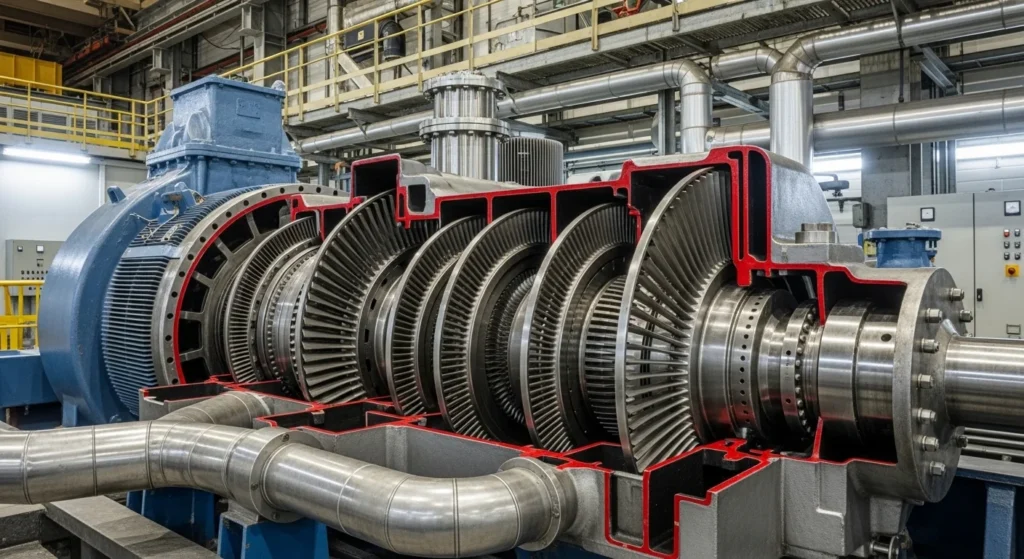
5. Main Components of Steam Turbine
A steam turbine consists of several important components that ensure efficient operation.
Rotor
The rotor is the rotating part of the turbine. It includes the shaft and moving blades. Steam pressure rotates the rotor at high speed.
Turbine Blades
Blades capture the energy from high-velocity steam. Their aerodynamic shape allows efficient energy conversion.
Casing
The casing is the outer covering of the turbine. It protects internal parts and directs steam flow.
Nozzle
The nozzle converts steam pressure into high-velocity steam jets before hitting the blades.
Shaft
The shaft connects the turbine rotor to the generator, transmitting mechanical energy.
Bearings
Bearings support the rotating shaft and reduce friction during high-speed rotation.
Governor
The governor controls turbine speed by regulating steam flow.
These components work together to ensure safe and efficient turbine operation.
6. Advantages of Steam Turbine
Steam turbines offer several advantages in power generation and industrial applications.
- High efficiency for large power plants
- Ability to generate very high power output
- Smooth and continuous rotation
- Reliable operation with long service life
- Lower maintenance compared to many engines
- Suitable for various fuels such as coal, gas, nuclear heat, and biomass
Because of these benefits, steam turbines remain widely used in energy industries worldwide.
7. Disadvantages / Limitations
Despite their advantages, steam turbines also have some limitations.
- High initial installation cost
- Requires large boiler and condenser systems
- Not suitable for small-scale power generation
- Startup time is longer compared to gas turbines
- Needs high-quality water treatment systems
Understanding these limitations helps engineers choose the correct turbine system for specific applications.
8. Steam Turbine Applications
Steam turbines are used in many industries where large amounts of energy must be converted into mechanical or electrical power.
Power Plants
The most common steam turbine applications are in thermal and nuclear power plants where electricity generation requires high power output.
Industrial Power Generation
Many factories use steam turbines for:
- Mechanical drives
- Process heating
- Power generation
Marine Propulsion
Large ships and naval vessels sometimes use steam turbines to drive propellers.
Renewable Energy Systems
Steam turbines are also used in geothermal and solar thermal power plants.
These diverse applications demonstrate the importance of steam turbines in modern energy systems.
9. Comparison: Steam Turbine vs Gas Turbine
Understanding the difference between steam turbine and gas turbine helps engineers choose the right system.
| Feature | Steam Turbine | Gas Turbine |
|---|---|---|
| Working Fluid | Steam | Hot combustion gases |
| Startup Time | Slow | Fast |
| Efficiency | High in large plants | High in smaller plants |
| Fuel Use | External boiler needed | Direct combustion |
| Applications | Thermal & nuclear plants | Aircraft, power plants |
Both machines are important, but their uses depend on operating conditions and power requirements.
10. Selection Guide
Choosing the right steam turbine depends on several factors.
Power Requirement
Large turbines are used for utility power plants, while smaller turbines are used in industries.
Steam Pressure and Temperature
Higher pressure and temperature increase turbine efficiency.
Type of Application
Different industries require different turbine types, such as condensing or back-pressure turbines.
Maintenance Considerations
Reliable turbines with available spare parts are preferred.
Cost and Efficiency
Engineers must balance installation cost with long-term energy savings.
For beginners, it is important to study system requirements before selecting a turbine design.
11. Common Problems & Solutions
Q1: Why does turbine efficiency drop?
Possible causes:
- Blade damage
- Steam leakage
- Poor maintenance
Solution: Regular inspection and proper maintenance.
Q2: Why does turbine vibration occur?
Possible reasons:
- Rotor imbalance
- Bearing wear
- Misalignment
Solution: Balance the rotor and inspect bearings.
Q3: Why does the turbine overheat?
Possible reasons:
- Insufficient cooling
- Poor steam quality
Solution: Check cooling systems and steam parameters.
Regular monitoring helps prevent major turbine failures.
12. Future Trends in Steam Turbine Technology
Steam turbine technology continues to improve with modern engineering developments.
High-Efficiency Turbines
New blade designs and materials improve efficiency and reduce energy losses.
Advanced Materials
Heat-resistant alloys allow turbines to operate at higher temperatures and pressures.
Digital Monitoring Systems
Smart sensors and automation help monitor turbine performance and detect faults early.
Renewable Energy Integration
Steam turbines are increasingly used in solar thermal and geothermal energy plants.
These advancements will keep steam turbines important in the global energy industry.
13. Conclusion
The steam turbine is one of the most important machines used in power generation and industrial energy systems. It converts the energy of high-pressure steam into mechanical rotation, which is then used to generate electricity. Because of their reliability, efficiency, and ability to produce large power outputs, steam turbines remain essential in thermal and nuclear power plants.
Understanding the steam turbine working principle, components, and types helps engineers and technicians operate and maintain these machines effectively. Although steam turbines require significant investment and supporting equipment, their long-term efficiency and performance make them highly valuable in large-scale energy production.
For electrical students and beginners, learning about steam turbines builds a strong foundation in power plant engineering. With continued technological improvements and integration with renewable energy systems, steam turbines will remain a key part of the future energy landscape.