
Imagine you are repairing a damaged mobile charger or assembling a small electronic circuit in a laboratory. You connect the wires and electronic components carefully, but without a proper joint the circuit will not work. This is where solder wire becomes an essential material in electrical and electronics work.
Solder wire is widely used in electrical engineering, electronics manufacturing, and repair work. It helps create strong and reliable electrical connections between wires, components, and circuit boards. Without solder wire, it would be very difficult to connect small electronic components in modern devices such as computers, televisions, and smartphones.
For electrical students, technicians, and engineers, understanding solder wire is very important. A good solder joint ensures proper electrical conductivity and mechanical strength. Poor soldering can cause circuit failure, overheating, or unreliable performance.
In this article, you will learn everything about solder wire, including its definition, solder wire working principle, types, components, solder wire applications, and solder wire advantages and disadvantages. You will also learn how to choose the right solder wire and solve common soldering problems. This knowledge will help beginners and professionals perform better soldering work.
What is Solder Wire?
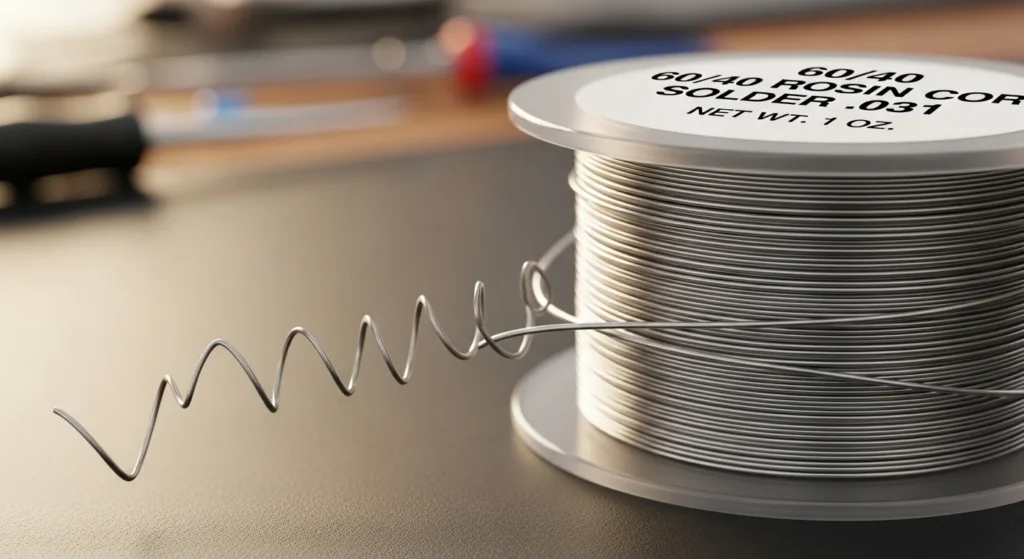
Solder wire is a metal alloy wire used to join electrical components or wires by melting and forming a conductive joint.
In simple words, solder wire melts when heated by a soldering iron and flows around electrical connections. After cooling, it solidifies and creates a strong electrical and mechanical bond between components.
Solder wire usually contains a mixture of metals such as tin and lead or tin and other metals. These metals are chosen because they melt at relatively low temperatures.
Practical Example
Suppose an electronics technician needs to attach a capacitor to a printed circuit board (PCB). The technician heats the joint using a soldering iron and applies solder wire. The solder melts and flows around the capacitor lead and PCB pad. When it cools, it forms a solid electrical connection.
This is how solder wire is commonly used in electronics assembly and repair.
Solder Wire Working Principle
The solder wire working principle is based on melting and solidifying metal to create a strong electrical connection.
When heated, solder wire melts and fills the gap between two metal surfaces. When it cools, it hardens and bonds the metals together.
Step-by-Step Working Process
- Heating the jointA soldering iron heats the metal surfaces that need to be joined.
- Applying solder wireThe solder wire is touched to the heated joint.
- Melting of solderThe heat causes the solder wire to melt and flow into the joint.
- Wetting processThe molten solder spreads over the metal surfaces and fills small gaps.
- Cooling and solidificationAfter removing the heat, the solder cools and becomes solid, forming a strong joint.
Simple Analogy
Think of solder wire like melted glue. When the glue is hot, it flows and sticks materials together. When it cools, it becomes solid and holds them firmly.
Types of Solder Wire
Different types of solder wire are available depending on the materials used and the application.
Lead-Based Solder Wire
Lead-based solder wire is made from a mixture of tin and lead.
It melts easily and creates strong joints. However, due to environmental and health concerns, its use is decreasing in modern electronics.
Lead-Free Solder Wire
Lead-free solder wire contains metals such as tin, silver, and copper.
It is widely used in modern electronics because it is safer for the environment and human health.
Rosin-Core Solder Wire
Rosin-core solder wire contains a flux core inside the wire.
Flux helps clean metal surfaces and improves the flow of solder during the soldering process.
Acid-Core Solder Wire
Acid-core solder wire contains strong flux and is mainly used in plumbing and metal work.
It is generally not recommended for delicate electronic circuits.
Solid Solder Wire
Solid solder wire does not contain flux inside. External flux must be applied during soldering.
Main Components of Solder Wire
Solder wire is made from specific materials that provide good electrical conductivity and strong bonding.
Tin
Tin is the main component of most solder wires. It provides good conductivity and smooth solder flow.
Lead
Lead lowers the melting temperature and improves the strength of solder joints. However, its use is restricted in many electronic products.
Flux Core
Flux is a chemical cleaning agent inside some solder wires. It removes oxidation and allows solder to flow properly.
Alloy Composition
Different combinations of metals are used to create solder wire with specific melting points and mechanical properties.
Advantages of Solder Wire
Understanding solder wire advantages and disadvantages helps technicians choose the right material for electrical work.
Advantages
- Creates strong electrical connections
- Good electrical conductivity
- Low melting temperature
- Easy to use with soldering iron
- Reliable for electronic circuits
- Affordable and widely available
- Suitable for precision electronics work
These advantages make solder wire essential for electronics manufacturing and repair.
Disadvantages / Limitations
Despite its usefulness, solder wire also has some limitations.
- Lead-based solder can be harmful to health
- Poor soldering technique can create weak joints
- Excess heat may damage electronic components
- Some lead-free solders require higher temperatures
- Improper soldering may cause short circuits
Understanding these limitations helps technicians perform safe and effective soldering.
Solder Wire Applications
The solder wire applications are found in many electrical and electronics industries.
Electronics Manufacturing
Solder wire is used to assemble electronic components on printed circuit boards.
Electrical Repairs
Technicians use solder wire to repair damaged wires, connectors, and circuits.
Computer Hardware
Computer motherboards and internal components are assembled using soldering techniques.
Automotive Electronics
Modern vehicles contain electronic systems that require soldered connections.
DIY Electronics Projects
Students and hobbyists use solder wire to build small electronic circuits and experiments.
Difference Between Solder Wire and Welding Rod
Understanding the difference between solder wire and welding rod helps beginners choose the correct joining method.
| Feature | Solder Wire | Welding Rod |
|---|---|---|
| Working Temperature | Low temperature | Very high temperature |
| Application | Electronics | Heavy metal work |
| Strength | Moderate | Very strong |
| Equipment | Soldering iron | Welding machine |
| Precision | High precision | Less precise |
Solder wire is best for electronic circuits, while welding rods are used for heavy metal fabrication.
Selection Guide: How to Choose the Right Solder Wire
Choosing the correct solder wire is important for good soldering results.
Consider the Alloy Type
Lead-free solder wire is recommended for modern electronics because it is environmentally safer.
Check Diameter
Thin solder wire is better for small electronic components, while thicker wire is used for larger connections.
Choose Flux Type
Rosin-core solder wire is ideal for most electronics soldering tasks.
Melting Temperature
Select solder wire with a melting point suitable for the components being soldered.
Quality
Always choose high-quality solder wire from reliable manufacturers to ensure strong joints.
Common Problems and Solutions
Why is solder not sticking to the joint?
Possible reasons include dirty surfaces or insufficient heat.
Solution: Clean the joint and heat it properly before applying solder.
Why does solder form a dull joint?
This is called a cold solder joint.
Solution: Reheat the joint until the solder melts evenly and forms a shiny surface.
Why is solder forming bridges between components?
Too much solder may cause short circuits.
Solution: Use less solder and apply it carefully.
Why is solder not melting properly?
The soldering iron temperature may be too low.
Solution: Increase the temperature slightly and ensure the tip is clean.
Future Trends in Soldering Technology
Soldering technology is evolving with modern electronics manufacturing.
Lead-Free Electronics
Environmental regulations are promoting lead-free solder materials.
Automated Soldering Systems
Robotic soldering machines are used in large electronics factories.
Smart Soldering Stations
Digital soldering stations now offer precise temperature control.
Advanced Flux Materials
New flux technologies improve solder flow and reduce defects.
These advancements will improve reliability and safety in electronics manufacturing.
Conclusion
Solder wire is a fundamental material used in electrical and electronic systems to create strong and reliable connections between components. It plays a critical role in circuit assembly, device repair, and electronics manufacturing.
Understanding the solder wire working principle, types, components, and solder wire applications helps electrical students and technicians perform better soldering work. Proper soldering techniques ensure good electrical conductivity and long-lasting connections.
Although solder wire has many benefits, users must also understand the solder wire advantages and disadvantages and follow proper safety practices. Selecting the correct solder wire and maintaining good soldering skills will lead to better results.
For beginners and professionals alike, mastering soldering techniques is an essential skill in the field of electrical and electronics engineering.