
Imagine building a new home and installing electrical wiring for lights, fans, and appliances. If the wiring is not properly insulated, electricity can leak, causing electric shocks, short circuits, or even fires. To prevent these risks, modern electrical systems use reliable insulation materials that protect wires and ensure safe power transmission. One of the most widely used solutions today is PVC Insulated Wiring.
Electrical wiring is the backbone of any power system, whether it is a small house, an office building, or a large industrial facility. The quality of insulation used in wiring directly affects safety, efficiency, and durability. PVC insulated wiring has become the preferred choice in modern installations because it is strong, flexible, moisture-resistant, and cost-effective.
For electrical students, technicians, and engineers, understanding this wiring system is essential. It is used in almost every modern electrical installation.
In this article, you will learn the PVC insulated wiring working principle, types of PVC wires, key components, PVC insulated wiring applications, and the PVC insulated wiring advantages and disadvantages. The goal is to explain the concept clearly so beginners can understand how this wiring system improves electrical safety and reliability.
2. What is PVC Insulated Wiring?
PVC Insulated Wiring refers to electrical wires or cables that are coated with Polyvinyl Chloride (PVC) insulation to protect the conductor and prevent electrical leakage.
PVC insulation acts as a protective covering that separates the metal conductor from the environment and from other wires.
Simple Explanation
In simple words, PVC insulated wiring is an electrical wire where the conductor (usually copper or aluminum) is covered with a plastic insulation layer made of PVC.
This insulation prevents electricity from escaping the wire and protects users from electric shock.
Practical Example
For example, the wiring inside homes that connects switches, sockets, and lights usually uses PVC insulated wires. When you turn on a light switch, electricity travels through the conductor while the PVC insulation keeps the current safely contained.
Without proper insulation, the electrical system would become unsafe and unreliable.
3. PVC Insulated Wiring Working Principle
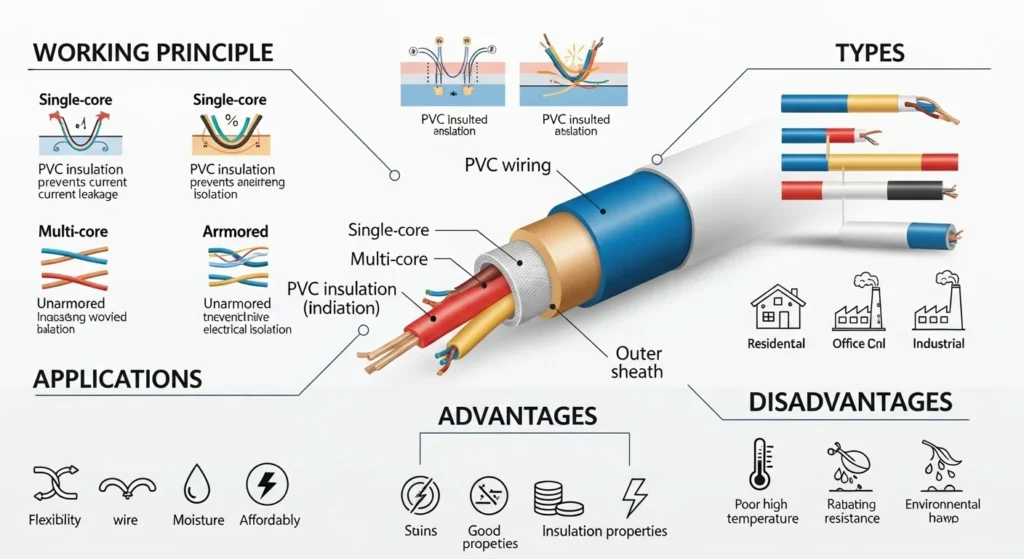
The PVC insulated wiring working principle is based on electrical insulation and safe current transmission.
Electric current flows through the metal conductor, while the PVC insulation prevents electrical leakage and protects the wire from environmental damage.
Step-by-Step Working Principle
- Electric Current Flow
- Electricity flows through the metal conductor inside the wire.
- Insulation Protection
- The PVC insulation surrounds the conductor and prevents current leakage.
- Mechanical Protection
- The insulation protects the wire from moisture, dust, and physical damage.
- Electrical Isolation
- It prevents contact between different wires and metal surfaces.
- Safe Power Transmission
- Electricity safely reaches appliances and devices without risk of short circuits.
Simple Analogy
Think of the conductor as water flowing inside a pipe.
The PVC insulation acts like the pipe wall that keeps water contained and prevents leakage. Without the pipe wall, water would spill everywhere.
Similarly, PVC insulation keeps electricity safely inside the wire.
4. Types / Classification of PVC Insulated Wiring
PVC insulated wiring comes in different types depending on construction and application.
Single Core PVC Insulated Wire
This wire contains only one conductor with PVC insulation.
Features:
- Used in simple electrical circuits
- Common in household wiring
- Flexible and easy to install
Multi-Core PVC Insulated Cable
These cables contain multiple conductors inside a single PVC sheath.
Features:
- Used for complex electrical systems
- Common in industrial wiring
- Provides better protection
PVC Sheathed Cable
In this type, multiple PVC insulated wires are covered with an additional PVC outer sheath.
Features:
- Extra mechanical protection
- Suitable for outdoor installations
Flexible PVC Wire
Flexible PVC wires have fine strands of copper.
Features:
- Highly flexible
- Used in appliances and extension cords
5. Main Components of PVC Insulated Wiring
PVC insulated wiring consists of several important parts.
1. Conductor
The conductor carries the electrical current.
Common materials:
- Copper
- Aluminum
Copper is widely used because of its high electrical conductivity.
2. PVC Insulation
PVC insulation covers the conductor and prevents electrical leakage.
Functions:
- Electrical insulation
- Moisture resistance
- Heat resistance
3. Outer Sheath
Some PVC cables include an additional protective layer.
Functions:
- Mechanical protection
- Protection from chemicals and sunlight
4. Stranding
Many wires contain multiple small strands of metal.
Functions:
- Improves flexibility
- Reduces breakage risk
5. Color Coding
PVC insulated wires are available in different colors.
Purpose:
- Easy identification of live, neutral, and ground wires.
6. Advantages of PVC Insulated Wiring
Understanding the PVC insulated wiring advantages and disadvantages helps engineers select the right wiring system.
Advantages
- Excellent electrical insulation
- High durability and long service life
- Resistant to moisture and chemicals
- Lightweight and flexible
- Easy installation and maintenance
- Cost-effective compared to other insulation types
- Good resistance to abrasion and wear
Real-World Benefits
Because of these advantages, PVC insulated wiring is widely used in homes, offices, factories, and modern electrical infrastructure.
7. Disadvantages / Limitations
Although PVC insulated wiring offers many benefits, it also has some limitations.
Limitations
- Limited temperature resistance compared to some advanced materials
- Can release harmful gases when burned
- Not suitable for extremely high-temperature environments
- Environmental concerns related to plastic disposal
Engineers must consider these factors when selecting wiring for specialized applications.
8. PVC Insulated Wiring Applications
There are many PVC insulated wiring applications in modern electrical systems.
Residential Applications
PVC insulated wiring is commonly used in homes for:
- Lighting circuits
- Switchboards
- Power outlets
- Ceiling fans and appliances
Commercial Buildings
Offices, shopping malls, and schools use PVC insulated cables for electrical distribution.
Industrial Applications
Factories use PVC insulated cables to connect machines, motors, and control panels.
Appliance Wiring
Household appliances such as refrigerators, washing machines, and air conditioners use flexible PVC wires.
Communication and Electronics
PVC insulated cables are also used in communication systems and electronic equipment.
9. Comparison: PVC Insulated Wiring vs Rubber Insulated Wiring
Understanding the difference between PVC insulated wiring and rubber insulated wiring helps in selecting the right wiring type.
| Feature | PVC Insulated Wiring | Rubber Insulated Wiring |
|---|---|---|
| Material | Polyvinyl Chloride | Natural or synthetic rubber |
| Durability | Long-lasting | Moderate lifespan |
| Moisture Resistance | Excellent | Good |
| Cost | Lower cost | Higher cost |
| Flexibility | Good | Very flexible |
| Temperature Resistance | Moderate | Higher temperature tolerance |
Key Difference
The main difference between PVC insulated wiring and rubber insulated wiring is durability and cost. PVC wiring is more economical and widely used in modern installations.
10. Selection Guide
Choosing the right PVC insulated wiring depends on several factors.
Important Factors
- Current Rating
- Select wire size based on electrical load.
- Installation Environment
- Indoor or outdoor installation may require different insulation levels.
- Voltage Rating
- Ensure the wire can handle the system voltage.
- Wire Material
- Copper wires are generally preferred for efficiency.
Tips for Beginners
- Always follow electrical standards and safety codes.
- Use certified wiring products from reliable manufacturers.
- Ensure proper insulation thickness and quality.
11. Common Problems and Solutions
Q1: Why does PVC wiring sometimes overheat?
Overheating usually occurs due to excessive electrical load or poor installation.
Q2: Can PVC wires be used outdoors?
Yes, but they should have an additional protective sheath.
Q3: How long does PVC wiring last?
High-quality PVC wiring can last 20–30 years under normal conditions.
Q4: What causes insulation damage?
Common causes include:
- Excess heat
- Mechanical damage
- Aging of insulation
12. Future Trends in PVC Insulated Wiring
Electrical wiring technology continues to evolve.
Improved Insulation Materials
Researchers are developing advanced PVC compounds with higher heat resistance and longer lifespan.
Eco-Friendly Materials
Manufacturers are working on environmentally friendly PVC alternatives.
Smart Electrical Systems
Future smart homes will integrate PVC insulated wiring with smart control systems and energy management technologies.
Fire-Resistant Cables
New types of PVC insulation are being designed to improve fire safety in buildings.
13. Conclusion
PVC insulated wiring is one of the most widely used wiring systems in modern electrical installations. It provides reliable insulation, protects conductors from environmental damage, and ensures safe transmission of electrical power. Understanding the PVC insulated wiring working principle, types, components, and PVC insulated wiring applications is essential for electrical students, technicians, and engineers.
This wiring system offers many advantages, including durability, flexibility, moisture resistance, and cost efficiency. Although it has some limitations such as moderate heat resistance, it remains the preferred choice for most residential and commercial electrical installations.
As electrical technology continues to advance, improved insulation materials and safer cable designs will further enhance wiring systems. By learning the basics of PVC insulated wiring, beginners can build a strong foundation for working with modern electrical systems.