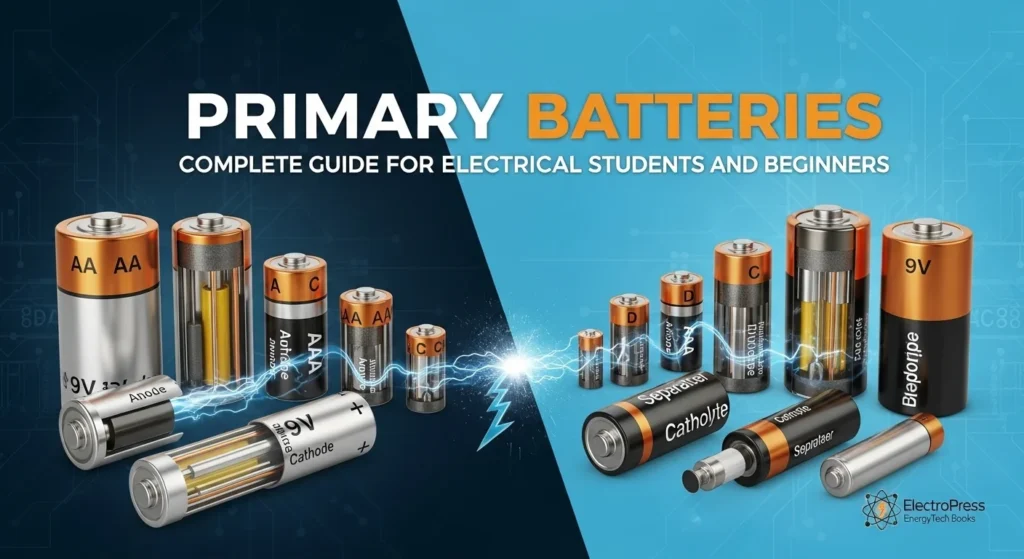

Imagine you pick up a TV remote to change the channel, but the remote does not work. You open the back cover and replace the old batteries with new ones. Instantly, the remote starts working again. These small batteries are known as primary batteries, and they are used in many everyday devices.
Primary batteries play a very important role in modern electronics. They provide portable power for devices that do not require frequent charging. From remote controls and wall clocks to flashlights and medical devices, primary batteries are widely used because they are simple, reliable, and easy to replace.
For electrical students, engineers, technicians, and beginners, understanding primary batteries is essential. Learning how they work, their different types, and their applications helps in selecting the right battery for various electrical systems.
In this article, you will learn the primary batteries working principle, primary batteries applications, and primary batteries advantages and disadvantages. You will also understand their types, components, selection guide, and future trends in battery technology.
2. What are Primary Batteries?
Primary batteries are batteries that are designed for single use only. Once their stored chemical energy is completely used, they cannot be recharged.
In simple terms, a primary battery is a non-rechargeable battery that converts chemical energy into electrical energy only once.
Primary batteries are non-rechargeable electrical energy storage devices designed for single use. Once the chemical energy inside them is consumed, they cannot be recharged and must be replaced. These batteries convert chemical energy directly into electrical energy through an electrochemical reaction. They are widely used in everyday devices because of their convenience, low cost, and long shelf life.
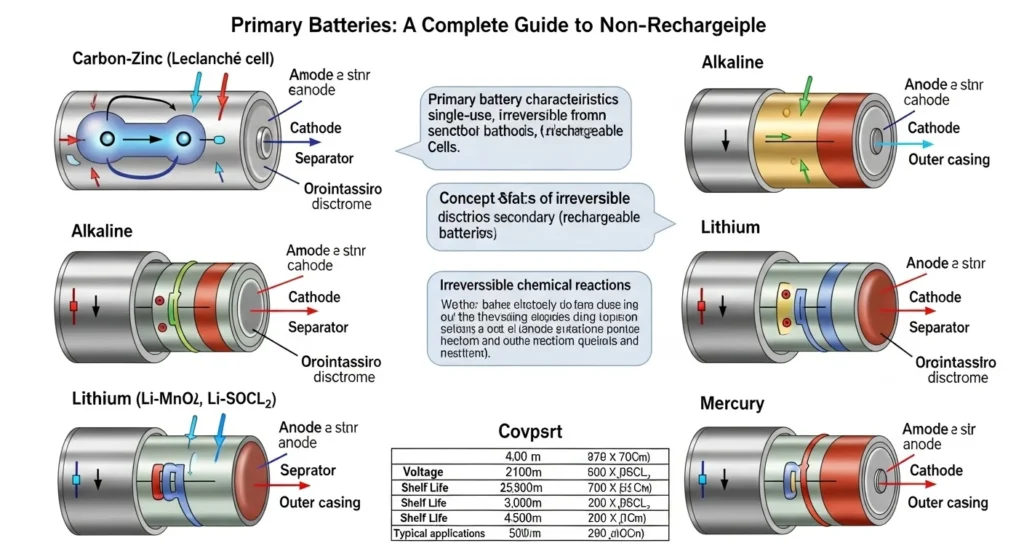
A primary battery consists of three main parts: an anode (negative electrode), a cathode (positive electrode), and an electrolyte. When the battery is connected to a circuit, a chemical reaction occurs inside it. This reaction causes electrons to flow from the anode to the cathode through the external circuit, producing electric current. Since the reaction is not reversible, the battery cannot be recharged.
Common types of primary batteries include zinc-carbon batteries, alkaline batteries, and lithium primary batteries. Zinc-carbon batteries are inexpensive and used in low-power devices like remote controls and clocks. Alkaline batteries are more efficient and last longer, making them suitable for toys, flashlights, and portable electronics. Lithium primary batteries provide high energy density and are used in cameras, medical devices, and backup systems.
Primary batteries have several advantages. They are easy to use, require no maintenance, and have a long storage life, which makes them ideal for emergency devices. They are also available in many sizes and shapes, making them compatible with a wide range of applications.
However, they also have some limitations. Since they are not rechargeable, they can become costly over time if used frequently. They also contribute to environmental pollution if not disposed of properly. In addition, their energy output is limited compared to rechargeable batteries.
In summary, primary batteries are simple, reliable, and widely used power sources for low to moderate energy applications. They are best suited for devices that require a steady supply of power for a limited time and where recharging is not practical.
Practical Example
A common example is the AA battery used in a remote control. When the battery becomes weak, it is replaced with a new one instead of recharging it.
Primary batteries are popular because they are simple, inexpensive, and ready to use without charging equipment.
3. Primary Batteries Working Principle
The primary batteries working principle is based on an electrochemical reaction that produces electrical energy.
Inside the battery, chemical reactions between electrodes and electrolyte create a flow of electrons.
Step-by-Step Working Process
• A primary battery contains a positive electrode (cathode) and a negative electrode (anode).
• These electrodes are placed in a chemical substance called electrolyte.
• A chemical reaction begins when the battery is connected to a circuit.
• The reaction releases electrons from the negative electrode.
• These electrons flow through the external circuit to the positive electrode.
• This movement of electrons produces electric current.
Simple Analogy
You can think of a battery like a fuel tank in a car.
Once the fuel is used, it must be refilled. In the case of primary batteries, the energy cannot be refilled, so the battery must be replaced.
4. Types of Primary Batteries
There are several primary battery types used in different applications.
Zinc-Carbon Battery
Zinc-carbon batteries are one of the oldest and most affordable primary batteries.
Features
• Low cost
• Simple construction
• Suitable for low-power devices
Applications
• Wall clocks
• Remote controls
• Radios
• Flashlights
Alkaline Battery
Alkaline batteries are an improved version of zinc-carbon batteries.
Features
• Longer life
• Higher energy capacity
• Better performance
Applications
• Toys
• Digital cameras
• Portable electronics
• Remote controls
Alkaline batteries are among the most commonly used primary batteries today.
Lithium Primary Battery
Lithium primary batteries use lithium as the main electrode material.
Features
• Very high energy density
• Lightweight
• Long shelf life
Applications
• Medical devices
• Cameras
• Military equipment
• Sensors and smart devices
Silver Oxide Battery
Silver oxide batteries are small batteries commonly used in compact devices.
Features
• Stable voltage
• Compact size
• High reliability
Applications
• Wrist watches
• Calculators
• Medical instruments
Zinc-Air Battery
Zinc-air batteries generate electricity using oxygen from the air.
Features
• High energy density
• Lightweight
• Long operational time
Applications
• Hearing aids
• Medical equipment
5. Main Components of Primary Batteries
Primary batteries consist of several important parts that enable them to generate electricity.
Anode (Negative Electrode)
The anode releases electrons during the chemical reaction.
Cathode (Positive Electrode)
The cathode receives electrons from the external circuit.
Electrolyte
The electrolyte allows ions to move between electrodes.
Separator
The separator prevents the electrodes from touching each other while allowing chemical reactions to occur.
Battery Case
The case protects internal components and prevents leakage.
Terminals
Terminals provide the connection between the battery and external electrical circuits.
6. Primary Batteries Advantages
There are many primary batteries advantages and disadvantages, but they offer several strong benefits.
Advantages
• Ready to use immediately
• No charging equipment required
• Long shelf life
• Simple and reliable design
• Lightweight and portable
• Low initial cost
Primary batteries are especially useful in devices that require low power for long periods.
7. Primary Batteries Disadvantages / Limitations
Although primary batteries are useful, they also have certain limitations.
Disadvantages
• Cannot be recharged
• Must be replaced after use
• Higher long-term cost for frequent use
• Environmental concerns due to disposal
• Limited capacity compared to rechargeable batteries
Understanding these limitations helps users choose the correct battery for their needs.
8. Primary Batteries Applications
Primary batteries have many applications in daily life and industry.
Home Applications
• Remote controls
• Wall clocks
• Flashlights
• Toys
• Smoke detectors
Industrial Applications
• Emergency lighting systems
• Backup control circuits
• Portable measuring instruments
Modern Technology Applications
• Medical devices
• Military equipment
• Wireless sensors
• Smart electronics
Primary batteries are widely used because they provide reliable power without requiring charging systems.
9. Comparison: Primary vs Secondary Batteries
Understanding the difference between primary batteries and secondary batteries is important.
| Feature | Primary Batteries | Secondary Batteries |
|---|---|---|
| Rechargeable | No | Yes |
| Lifespan | Single use | Multiple cycles |
| Cost | Low initial cost | Higher initial cost |
| Maintenance | No charging needed | Requires charging |
| Applications | Remotes, clocks | Phones, laptops |
Primary batteries are ideal for low-power devices, while rechargeable batteries are better for devices that require frequent use.
10. Selection Guide: How to Choose Primary Batteries
Choosing the right primary battery depends on several factors.
Device Power Requirement
Low-power devices can use zinc-carbon batteries.
Battery Life
For longer operation, alkaline batteries are better.
Environmental Conditions
Some batteries perform better in extreme temperatures.
Size and Compatibility
Always select the correct battery size such as AA, AAA, or button cells.
Cost
Balance performance with budget requirements.
Beginners should always follow the device manufacturer’s battery recommendation.
11. Common Problems & Solutions
Problem 1: Device Not Working
Possible Causes:
• Dead battery
• Poor battery contact
Solution:
Replace the battery or clean the battery terminals.
Problem 2: Battery Leakage
Possible Causes:
• Expired battery
• Poor storage conditions
Solution:
Remove and safely dispose of damaged batteries.
Problem 3: Short Battery Life
Possible Causes:
• High power consumption
• Low-quality battery
Solution:
Use high-quality alkaline or lithium batteries.
12. Future Trends in Primary Battery Technology
Battery technology continues to improve as electronic devices evolve.
Longer Shelf Life
New chemical technologies are improving battery storage life.
Environmentally Friendly Materials
Researchers are developing batteries with reduced environmental impact.
Smart Sensors
Primary batteries will power many future Internet of Things (IoT) devices.
Improved Energy Density
Future batteries will store more energy in smaller sizes.
These improvements will make primary batteries more efficient and sustainable.
13. Conclusion
Primary batteries are an essential power source for many everyday devices. They are simple, reliable, and widely used in electronics that require portable power without charging systems.
In this article, we explored primary batteries working principle, primary batteries applications, and primary batteries advantages and disadvantages. We also discussed different battery types such as alkaline, zinc-carbon, lithium, and silver oxide batteries.
Understanding the difference between primary batteries and rechargeable batteries helps electrical students and engineers select the right battery for different applications.
As technology continues to evolve, primary batteries will remain important for portable electronics, medical equipment, and smart devices. Learning about battery technology is an important step for anyone studying electrical engineering or electronics.