
Imagine working on a laptop for several hours while running heavy software. After some time, the device starts getting warm. If the heat continues to increase, the laptop may slow down or even shut down automatically. The component responsible for removing this heat and keeping the device safe is the cooling fan.
Cooling fans are widely used in electrical machines, electronic devices, industrial equipment, and household appliances. Their main purpose is to remove excess heat and maintain a safe operating temperature. Without proper cooling, many electrical systems could overheat, which may damage components, reduce efficiency, or shorten the lifespan of equipment.
For electrical students, engineers, technicians, and beginners, understanding the cooling fan working principle is important because thermal management is a key part of electrical system design. Many motors, power supplies, computers, and control panels depend on cooling fans to operate reliably.
In this article, you will learn what a cooling fan is, the cooling fan working principle, different types of cooling fans, main components, and practical cooling fan applications. We will also explain cooling fan advantages and disadvantages, common problems, and future technological developments.
2. What is a Cooling Fan?
Definition
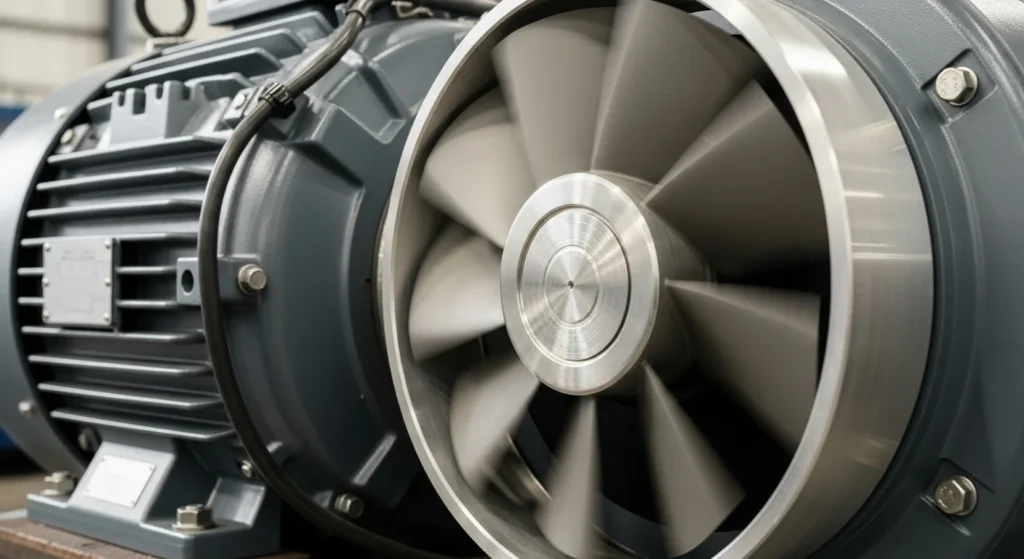
A cooling fan is a mechanical device that moves air across a surface or inside equipment to remove heat and maintain safe operating temperatures.
Cooling fans are commonly powered by electric motors that rotate fan blades to circulate air.
Simple Explanation
In simple terms, a cooling fan works by pushing or pulling air over hot components. As air flows over the hot surface, it carries heat away from the device.
This process helps keep electrical machines and electronic devices at safe temperatures.
Practical Example
Inside a desktop computer, several components such as the CPU, graphics card, and power supply generate heat. Cooling fans move air through the system, preventing overheating and maintaining stable performance.
Without these fans, the computer could quickly fail due to excessive heat.
3. Cooling Fan Working Principle
The cooling fan working principle is based on forced air convection. The fan moves air across hot surfaces, allowing heat to transfer from the equipment into the surrounding air.
Step-by-Step Operation
- Electric Motor Activation
The cooling fan receives electrical power, which drives a small electric motor.
- Blade Rotation
The motor rotates the fan blades at high speed.
- Air Movement
The rotating blades push air forward or pull air through the device.
- Heat Transfer
The moving air absorbs heat from hot components.
- Heat Removal
The warm air exits the device, reducing the overall temperature.
Simple Analogy
Think of a cooling fan like a hand fan used on a hot day.
When you move the fan, air flows across your skin and removes heat, making you feel cooler. A cooling fan works in the same way for machines.
4. Types / Classification of Cooling Fans
Cooling fans are available in several types depending on their design and application.
Axial Cooling Fan
Axial fans move air parallel to the fan shaft.
Features:
- Simple design
- High airflow
- Low pressure
Applications include computer cooling systems and ventilation systems.
Centrifugal Cooling Fan
Centrifugal fans move air at a right angle to the shaft.
Features:
- Higher pressure output
- Suitable for duct systems
- More powerful airflow control
These fans are commonly used in HVAC systems and industrial equipment.
Brushless DC Cooling Fan
This type of fan uses a brushless DC motor.
Features:
- High efficiency
- Low noise
- Longer lifespan
Brushless cooling fans are widely used in computers, power supplies, and electronic equipment.
Cross-Flow Cooling Fan
Cross-flow fans produce a wide and uniform airflow.
Features:
- Quiet operation
- Even air distribution
They are commonly used in air conditioners and electronic cooling systems.
5. Main Components of a Cooling Fan
A cooling fan contains several important parts that work together to move air efficiently.
Fan Blades
Fan blades push air when they rotate.
Functions:
- Generate airflow
- Transfer heat away from equipment
Electric Motor
The motor provides the rotational force that drives the fan.
Functions:
- Rotates the fan blades
- Controls airflow speed
Fan Housing
The housing protects internal components and directs airflow.
Functions:
- Maintains airflow direction
- Protects fan parts
Bearings
Bearings support the fan shaft and reduce friction.
Functions:
- Ensure smooth rotation
- Extend fan lifespan
Control Circuit
Some cooling fans include electronic circuits.
Functions:
- Control fan speed
- Improve energy efficiency
6. Cooling Fan Advantages
Cooling fans provide several benefits in electrical and electronic systems.
Cooling fan advantages include:
- Prevents overheating of electrical equipment
- Improves equipment reliability
- Extends component lifespan
- Maintains stable system performance
- Reduces risk of thermal damage
- Provides cost-effective cooling
These advantages make cooling fans essential in modern electronics and industrial machines.
7. Cooling Fan Disadvantages / Limitations
Despite their benefits, cooling fans also have some limitations.
Cooling fan advantages and disadvantages should both be considered in system design.
Cooling Fan Disadvantages
- Produces noise during operation
- Moving parts may wear out over time
- Requires electrical power
- Dust accumulation may reduce efficiency
- Regular maintenance may be needed
Engineers must balance cooling performance with energy consumption and noise levels.
8. Cooling Fan Applications
Cooling fans are used in many industries and technologies.
Home Applications
Cooling fans are found in:
- Personal computers
- Laptops
- Gaming consoles
- Home appliances
These devices rely on cooling fans to manage heat.
Industrial Applications
In industrial environments, cooling fans are used in:
- Electric motors
- Control panels
- Power electronics
- Industrial machinery
Proper cooling ensures safe and reliable operation.
Modern Technology Applications
Cooling fans are also used in advanced technologies such as:
- Data centers
- Electric vehicles
- Renewable energy systems
- Robotics and automation equipment
These cooling fan applications highlight the importance of effective thermal management.
9. Comparison Section
Difference Between Cooling Fan and Heat Sink
| Feature | Cooling Fan | Heat Sink |
|---|---|---|
| Function | Moves air to remove heat | Absorbs and dissipates heat |
| Operation | Active cooling device | Passive cooling device |
| Power Requirement | Requires electrical power | Does not require power |
| Usage | Computers, motors, electronics | CPUs, power electronics |
Understanding the difference between cooling fan and heat sink helps engineers design better cooling systems.
10. Selection Guide
Choosing the right cooling fan is important for effective heat management.
Important Factors
- Airflow capacity (CFM)
- Fan size and dimensions
- Noise level
- Power consumption
- Operating environment
Tips for Beginners
- Choose fans with adequate airflow
- Ensure proper airflow direction
- Use high-quality bearings for durability
- Consider noise levels for indoor equipment
Proper fan selection ensures effective cooling and long-term reliability.
11. Common Problems & Solutions
Q1: Why is a cooling fan making noise?
Noise may occur due to worn bearings or dust accumulation.
Solution:
- Clean the fan
- Replace damaged bearings
Q2: Why is the cooling fan not spinning?
Possible causes include power supply failure or motor damage.
Solution:
- Check power connections
- Replace faulty fan
Q3: Why does the equipment still overheat?
Overheating may occur if airflow is blocked.
Solution:
- Clean air vents
- Improve ventilation
Q4: Why does the fan run slowly?
Low voltage or controller issues may reduce fan speed.
Solution:
- Verify voltage supply
- Check control circuits
12. Future Trends
Cooling technology continues to evolve with modern electronics.
Smart Cooling Systems
Modern devices use temperature sensors to automatically control fan speed.
Energy Efficient Fans
New fan designs reduce power consumption while maintaining airflow.
Advanced Materials
Improved materials increase durability and reduce noise.
Liquid Cooling Integration
Some high-performance systems combine cooling fans with liquid cooling technology.
These developments will improve cooling efficiency in future electrical systems.
13. Conclusion
Cooling fans are essential components in electrical and electronic systems. They remove excess heat, maintain safe operating temperatures, and protect sensitive equipment from thermal damage. Without effective cooling, many devices such as computers, motors, and industrial machines would quickly fail due to overheating.
In this article, we explained what a cooling fan is, the cooling fan working principle, different fan types, and the key components involved in airflow generation. We also discussed cooling fan advantages and disadvantages and highlighted important cooling fan applications across homes, industries, and modern technologies.
For electrical students, engineers, and technicians, understanding cooling systems is an important part of designing reliable electrical equipment. Proper cooling fan selection, installation, and maintenance can significantly improve equipment performance and lifespan.
As technology continues to advance, cooling fans will remain a critical part of thermal management systems in electronics, automation, and energy systems.