
Imagine you are building a small house or renovating an old room. After the walls are finished, the electrician begins installing wires to supply electricity to lights, fans, and sockets. Instead of hiding the wires inside the wall, the electrician carefully fixes them on wooden battens using metal clips. This simple and organized wiring method is called Batten Wiring.
In many homes, especially in small buildings, workshops, and temporary installations, batten wiring is still used because it is easy to install, affordable, and simple to maintain. Electricians and technicians often prefer it when quick installation is required.
Understanding Batten Wiring in Home Electrical Installation is important for electrical students, technicians, and beginners who want to learn practical wiring systems. It helps you understand how electrical wiring is arranged, how safety is maintained, and how electricity reaches different parts of a building.
In this article, you will learn the batten wiring working principle, types of batten wiring, components, advantages and disadvantages, applications, comparison with other wiring systems, troubleshooting methods, and future trends in electrical installation.
2.Batten Wiring
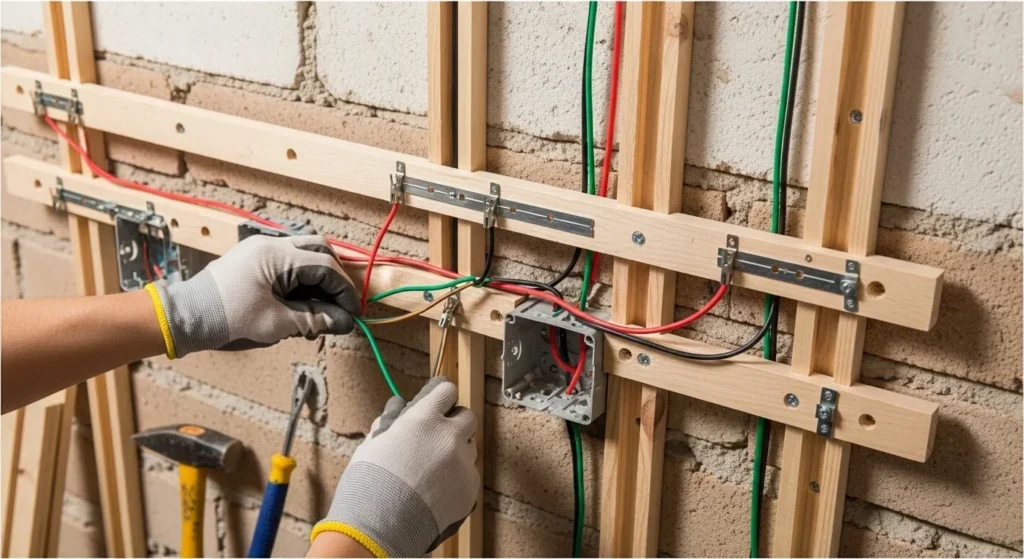
Batten wiring is a simple and commonly used electrical wiring system in which insulated cables are fixed on a wooden strip called a batten. The wires are held in place using metal or plastic clips that are attached to the wooden batten with screws. This method keeps the wires organized, straight, and properly supported along walls or ceilings.
Batten wiring has been widely used in houses, shops, workshops, and small buildings because it is easy to install and economical. In this system, the wiring remains visible on the surface, which makes inspection, maintenance, and repairs very simple for electricians. If any fault occurs, it can be detected and fixed quickly.
This wiring system is especially suitable for low-voltage electrical installations where safety, simplicity, and quick installation are important. In many electrical training institutes and small residential buildings, batten wiring is still used to teach basic wiring methods and circuit connections.
Although modern buildings often use concealed conduit wiring for better appearance and protection, batten wiring is still preferred in places where cost is low and frequent maintenance may be required.
Details of Batten Wiring
Batten wiring works by mounting insulated electrical cables on wooden battens that are fixed to the wall or ceiling. The wooden batten acts as a support base that keeps the wires properly aligned and prevents them from hanging loosely.
The cables used in batten wiring are usually PVC insulated or rubber-sheathed wires. These wires are strong enough to carry current safely while also providing insulation to prevent electrical shocks.
The wires are fixed to the batten using clips that hold the cable firmly in place. These clips are placed at regular intervals so the wires remain tight and properly arranged. Screws are used to fix both the batten and the clips securely.
One of the important advantages of batten wiring is that the entire wiring system remains visible and accessible. This allows electricians to easily check the wiring condition, detect faults, and replace damaged wires without breaking walls or ceilings.
However, because the wiring is exposed, it may be affected by moisture, heat, or mechanical damage. For this reason, batten wiring is usually used in dry indoor locations where the environment is safe and controlled.
Despite the development of modern wiring systems, batten wiring remains an important basic wiring method. It is still used in small electrical installations, workshops, and training laboratories because it is simple, economical, and easy to maintain.
Batten Wiring is a method of electrical wiring in which insulated cables are fixed on wooden battens using metal clips.
The wooden battens are mounted on the wall or ceiling, and the wires are placed neatly along the batten using brass clips. These clips hold the wires firmly and maintain proper spacing.
Simple Explanation
In simple words, batten wiring means:
- Electrical wires are not hidden inside the wall
- Wires are mounted on wooden strips
- Metal clips hold the wires in place
Practical Example
Suppose you install wiring in a small workshop. Instead of cutting walls and hiding wires inside conduits, you attach wooden battens on the wall and run the electrical wires on top of them. This is batten wiring in home electrical installation.
3. Batten Wiring Working Principle
The batten wiring working principle is very simple. It is based on safe routing and secure fixing of electrical cables.
The working process can be understood step-by-step.
Step-by-Step Working
- Wooden battens are fixed to the wall or ceiling.
- Electrical cables are placed along the batten.
- Metal clips are used to hold the wires firmly.
- Switches, sockets, and junction boxes are connected to the wiring.
- Electricity flows through the wires to power electrical devices.
Easy Analogy
Think of a railway track.
- The wooden batten acts like the railway track.
- The electrical wires act like the train.
- The metal clips act like track supports that keep everything in place.
This organized structure ensures safe and neat electrical distribution.
4. Types of Batten Wiring
Batten wiring can be classified based on the type of cable used.
4.1 CTS Batten Wiring
CTS stands for Cab Tyre Sheathed cable.
These cables have strong insulation and protective rubber covering.
Features
- Durable insulation
- Good mechanical protection
- Suitable for residential buildings
This is the most common type of batten wiring used in homes.
4.2 TRS Batten Wiring
TRS means Tough Rubber Sheathed cable.
These cables have rubber insulation and outer covering for protection.
Features
- Flexible cables
- Good resistance to moisture
- Used in small industrial installations
4.3 PVC Batten Wiring
PVC batten wiring uses PVC insulated cables.
Features
- Lightweight
- Low cost
- Easy installation
- Common in modern homes
5. Main Components of Batten Wiring
Several components are used in batten wiring in home electrical installation.
1. Wooden Batten
A flat wooden strip mounted on the wall.
Function:
- Supports electrical cables
- Provides mechanical base
2. Electrical Cables
Insulated wires used for electrical power transmission.
Common types:
- PVC cables
- CTS cables
- TRS cables
3. Brass Clips
Metal clips used to hold wires on the batten.
Function:
- Secure the cables
- Maintain proper spacing
4. Screws
Used to fix battens and clips on the wall.
5. Switches and Sockets
These control and distribute electrical power to devices.
6. Junction Boxes
Used to connect multiple wires safely.
6. Advantages of Batten Wiring
There are several batten wiring advantages and disadvantages, but first let us understand the advantages.
Key Advantages
- Simple installation process
- Low installation cost
- Easy inspection and maintenance
- Quick repair of faulty wires
- Suitable for temporary wiring
- Good heat dissipation
- Less installation time
- Neat and organized appearance
Because of these benefits, electricians often use batten wiring for small projects.
7. Disadvantages / Limitations
Despite its advantages, batten wiring also has some limitations.
Main Disadvantages
- Not suitable for damp locations
- Wires are exposed and may be damaged
- Not ideal for heavy industrial loads
- Wooden battens may catch fire
- Less protection compared to conduit wiring
- Appearance may not look modern
These factors should be considered before choosing this wiring system.
8. Batten Wiring Applications
The batten wiring applications are mainly in places where simple electrical installation is required.
Common Uses
1. Residential Buildings
Used in small homes and rooms.
2. Workshops
Suitable for small electrical workshops.
3. Temporary Installations
Used in exhibitions, events, and construction sites.
4. Schools and Training Labs
Used for electrical training and experiments.
5. Shops and Small Offices
Where simple and low-cost wiring is needed.
9. Comparison with Other Wiring Systems
Understanding the difference between batten wiring and conduit wiring helps electricians choose the right system.
| Feature | Batten Wiring | Conduit Wiring |
|---|---|---|
| Installation | Easy | Complex |
| Cost | Low | High |
| Safety | Moderate | High |
| Appearance | Basic | Modern |
| Maintenance | Easy | Difficult |
| Protection | Low | High |
Batten wiring is economical, while conduit wiring provides better protection.
10. Selection Guide
Choosing the right wiring system depends on several factors.
Tips for Beginners
1. Consider the Environment
Avoid batten wiring in damp or outdoor areas.
2. Check Load Requirements
Use it only for light electrical loads.
3. Choose Quality Cables
Always use high-quality insulated cables.
4. Follow Safety Rules
Proper earthing and circuit protection are essential.
5. Use Skilled Electricians
Correct installation ensures safety and durability.
11. Common Problems & Solutions
Here are some common problems found in batten wiring systems.
Problem 1: Loose Clips
Cause: Improper installation
Solution: Tighten or replace clips.
Problem 2: Damaged Cable Insulation
Cause: Aging or mechanical damage
Solution: Replace the damaged cable immediately.
Problem 3: Overheating Wires
Cause: Excessive electrical load
Solution: Use thicker cables or reduce load.
Problem 4: Short Circuit
Cause: Broken insulation or loose connection
Solution: Inspect wiring and repair the faulty section.
12. Future Trends
Modern electrical installation methods are continuously improving.
New Developments
1. Smart Home Wiring
Advanced electrical systems support automation.
2. Safer Insulation Materials
Modern cables provide better fire protection.
3. Improved Wiring Systems
Conduit wiring and concealed wiring are becoming more common.
4. Energy Efficient Installations
Smart circuits help reduce energy consumption.
Although batten wiring is traditional, it is still useful in specific applications.
13. Conclusion
Batten wiring is one of the simplest and oldest electrical wiring methods used in residential installations. In this system, electrical cables are mounted on wooden battens and secured with metal clips. The batten wiring working principle is straightforward, making it easy to understand and install.
This wiring system offers several advantages such as low cost, quick installation, and easy maintenance. However, it also has limitations like lower protection and exposure of wires. Therefore, it is mainly used in small homes, workshops, and temporary installations.
Understanding the batten wiring applications and batten wiring advantages and disadvantages helps electricians choose the right wiring method for specific situations. For beginners and electrical students, learning this system provides a strong foundation for understanding modern wiring techniques and electrical installation practices.