
Imagine you are repairing a small electronic circuit on a printed circuit board (PCB). The components are extremely tiny, and using your fingers to pick them up could damage the parts or place them incorrectly. In such situations, engineers and technicians use a simple but very important tool called tweezers.
Tweezers are widely used in electronics labs, repair workshops, manufacturing industries, and even medical and laboratory environments. In electrical and electronic work, tweezers help technicians handle small components such as resistors, capacitors, IC chips, and wires safely and precisely.
For electrical students, engineers, and beginners, understanding this small tool is more important than it might seem. Proper handling of delicate components can prevent damage, improve work accuracy, and make circuit assembly easier.
In this article, you will learn everything about tweezers, including their definition, tweezers working principle, types, components, tweezers applications, and tweezers advantages and disadvantages. You will also learn how to choose the right tweezers for electronics work and solve common problems while using them.
What is Tweezers?
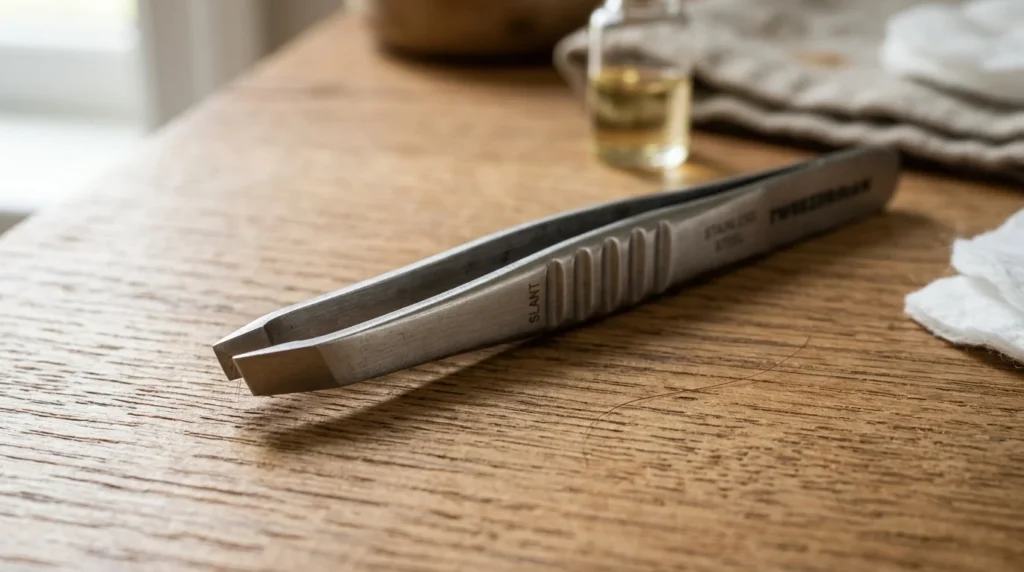
Tweezers are small hand tools used to pick up, hold, or move tiny objects that are difficult to handle with fingers.
In simple words, tweezers work like very small precision pliers that allow a person to grip delicate items accurately without damaging them.
In electrical and electronics work, tweezers are commonly used for handling components on circuit boards. They help technicians place small components correctly during soldering or assembly.
Practical Example
Suppose an electronics technician is repairing a smartphone motherboard. The technician must place a tiny resistor onto the PCB before soldering it. Using fingers could damage the component or drop it. Instead, the technician uses tweezers to carefully pick up and position the resistor.
This shows how tweezers make precise electronic work possible.
Tweezers Working Principle
The tweezers working principle is based on a simple mechanical force system that allows the user to grip small objects using two flexible arms.
Tweezers consist of two metal arms joined at one end. When pressure is applied, the arms come together and hold an object between the tips.
Step-by-Step Working Process
- Applying finger pressureThe user presses the two arms of the tweezers together using fingers.
- Tip alignmentThe tips of the tweezers move toward each other and grip the object.
- Holding the objectThe object remains held between the tips due to the pressure applied.
- Releasing the objectWhen the user releases the pressure, the arms return to their original position and release the object.
Simple Analogy
Think of tweezers like a pair of small tongs used in cooking. When you press them, they grip the food. When you release them, they open again.
Types of Tweezers
Different types of tweezers are designed for different tasks in electronics, laboratories, and precision work.
Pointed Tweezers
Pointed tweezers have very sharp and narrow tips.
They are used for handling extremely small electronic components such as surface-mount devices (SMDs).
Flat Tip Tweezers
Flat tip tweezers have wider tips that provide a stronger grip.
They are commonly used for holding slightly larger components or wires.
Curved Tweezers
Curved tweezers have angled tips that help technicians reach difficult or tight spaces.
They are useful when working inside crowded circuit boards.
Anti-Static Tweezers
Anti-static tweezers are specially designed for electronic work.
They prevent electrostatic discharge (ESD), which can damage sensitive electronic components.
Reverse Action Tweezers
Reverse tweezers automatically grip objects when not pressed.
They are useful for holding components during soldering or heating.
Main Components of Tweezers
Although tweezers are simple tools, they contain several important parts.
Arms
The arms are the two flexible sides of the tweezers that move when pressure is applied.
They control the gripping action.
Tips
The tips are the pointed ends that hold the object.
Different tip shapes are used for different applications.
Joint End
The joint end connects the two arms together and acts as the pivot point.
Grip Area
The grip area is where the user holds the tweezers.
Some tweezers include textured surfaces to improve grip.
Tweezers Advantages and Disadvantages
Understanding tweezers advantages and disadvantages helps technicians use them effectively.
Advantages
- Allows precise handling of very small components
- Prevents damage to delicate electronic parts
- Improves accuracy in circuit assembly
- Lightweight and easy to use
- Affordable and widely available
- Essential for electronics repair work
- Useful in many technical fields
These benefits make tweezers an essential tool for electronics professionals.
Disadvantages / Limitations
Despite their usefulness, tweezers also have some limitations.
- Not suitable for heavy objects
- Requires steady hand control
- Very small tips can bend if used roughly
- Cheap tweezers may lose alignment over time
- Incorrect use can damage delicate components
Understanding these limitations helps prevent mistakes during electronic work.
Tweezers Applications
The tweezers applications are found in many technical and industrial fields.
Electronics Assembly
Tweezers are widely used for placing small components on PCBs during manufacturing.
Circuit Repair
Technicians use tweezers to remove and install small electronic components.
Laboratory Work
Scientists use tweezers to handle delicate materials and samples.
Medical and Surgical Use
Tweezers are used in medical procedures for handling tissues or small objects.
Jewelry and Watch Repair
Jewelry technicians use tweezers to handle tiny gemstones and watch components.
DIY Electronics Projects
Students and hobbyists use tweezers when building small circuits.
Difference Between Tweezers and Pliers
Understanding the difference between pliers and tweezers helps beginners choose the correct tool.
| Feature | Tweezers | Pliers |
|---|---|---|
| Size | Small | Larger |
| Precision | Very high | Moderate |
| Application | Tiny objects | Larger objects |
| Grip Force | Light | Strong |
| Common Use | Electronics | Mechanical work |
Tweezers are ideal for delicate electronic tasks, while pliers are used for stronger gripping jobs.
Selection Guide: How to Choose the Right Tweezers
Choosing the right tweezers is important for accurate electronic work.
Consider the Tip Type
Sharp tips are best for small components, while flat tips provide stronger grip.
Check Material
High-quality stainless steel tweezers are durable and long-lasting.
Anti-Static Protection
For electronics work, choose ESD-safe tweezers to protect sensitive components.
Comfort and Grip
Select tweezers with comfortable grip areas to reduce hand fatigue.
Precision Quality
Always choose tweezers with perfectly aligned tips for accurate handling.
Common Problems and Solutions
Why are tweezers not gripping components properly?
The tips may be misaligned.
Solution: Replace the tweezers or adjust the alignment carefully.
Why are components slipping from tweezers?
The tips may be worn or smooth.
Solution: Use textured or precision tweezers.
Why are electronic components getting damaged?
Too much pressure may be applied.
Solution: Use gentle pressure when gripping delicate parts.
Why is static electricity damaging components?
Non-ESD tweezers may create static charge.
Solution: Use anti-static tweezers when working with sensitive electronics.
Future Trends in Precision Tools
Even simple tools like tweezers are improving with modern technology.
Smart Anti-Static Materials
New materials reduce electrostatic discharge risk.
High-Precision Manufacturing
Modern tweezers are manufactured with extremely precise tips.
Ergonomic Designs
Future tweezers will provide better comfort and reduced hand fatigue.
Specialized Electronics Tools
Advanced tweezers may include integrated sensors for precision electronics assembly.
These improvements will make electronics work safer and more accurate.
Conclusion
Tweezers may look like a simple tool, but they play a critical role in electronics, engineering, and precision work. They allow technicians and engineers to handle extremely small components safely and accurately.
Understanding the tweezers working principle, types, components, and tweezers applications helps electrical students and professionals perform delicate tasks efficiently. Choosing the right tweezers can improve work quality and prevent damage to sensitive electronic components.
Although tweezers have some limitations, their benefits make them an essential tool in laboratories, electronics workshops, and manufacturing industries. Learning how to properly use and maintain tweezers will greatly improve precision and reliability in electrical and electronic work.
For anyone working in electronics, mastering the use of tweezers is a small but important step toward professional-level technical skills.