
Imagine a situation where outdoor lights in a building must turn ON every evening and turn OFF early in the morning. If someone had to do this task manually every day, it would be inconvenient and sometimes forgotten. To solve this problem, electrical engineers use a device called a timer switch. This device automatically controls electrical equipment based on a preset time schedule.
A timer switch is an important component used in electrical automation. It allows devices such as lights, motors, pumps, heaters, and fans to operate at specific times without human intervention. This improves convenience, reduces electricity consumption, and increases the efficiency of electrical systems.
For electrical students, engineers, technicians, and beginners, understanding timer switches is essential. These devices are widely used in residential, commercial, and industrial installations. They also play an important role in modern smart systems and energy management solutions.
In this article, you will learn about the timer switch working principle, different types of timer switches, main components, advantages and disadvantages, and practical timer switch applications. The explanation is written in simple and clear language so that beginners can easily understand how timer switches operate in real-world electrical systems.
2. What is a Timer Switch?
A timer switch is an electrical control device that automatically turns electrical equipment ON or OFF at a specific time or after a preset time delay.
In simple words, a timer switch works like a clock that controls an electrical circuit. Instead of manually switching a device, the timer switch performs the switching operation automatically according to the programmed timing.
Timer switches can be used to control many electrical appliances such as lighting systems, motors, pumps, heaters, and ventilation fans.
Practical Example
For example, street lights in many cities turn ON automatically in the evening and turn OFF in the morning. This operation is usually controlled by a timer switch installed in the electrical control panel.
3. Timer Switch Working Principle
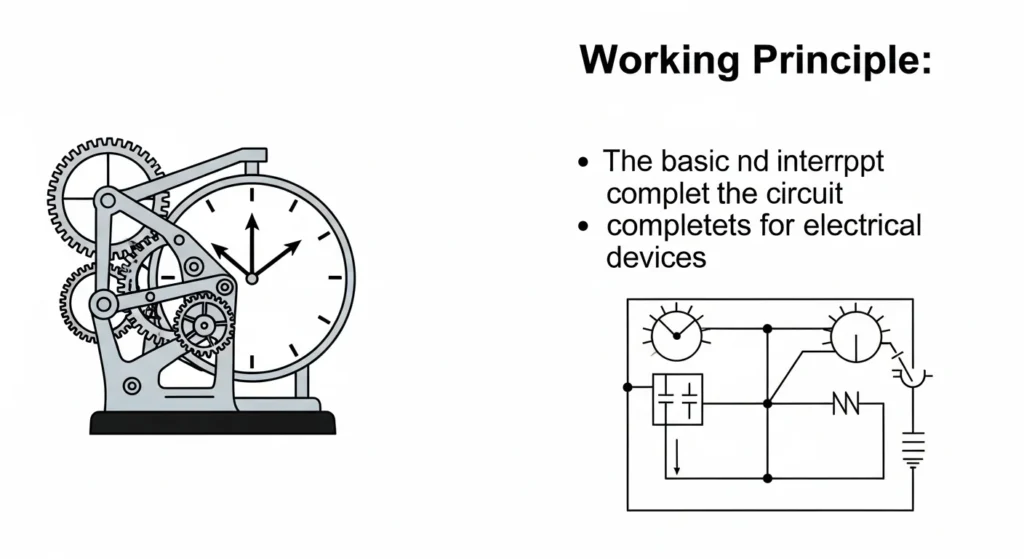
The timer switch working principle is based on controlling electrical contacts using a time-based mechanism.
A timer switch contains a timing circuit that measures the passage of time. When the preset time is reached, the switch contacts change their position and either allow electricity to flow to the load or disconnect it.
Step-by-Step Operation
- Power Supply
Electrical power is supplied to the timer switch. - Time Setting
The user sets the desired time interval or schedule. - Timing Process
The internal mechanism measures the set time period. - Contact Switching
When the preset time is completed, the switch contacts change position. - Load Operation
The connected device turns ON or OFF according to the timer setting.
Simple Analogy
You can think of a timer switch like a kitchen timer used for cooking. When the set time finishes, it triggers an action. In a similar way, a timer switch triggers electrical switching.
4. Types of Timer Switch
Timer switches are available in several types depending on their design and applications.
Mechanical Timer Switch
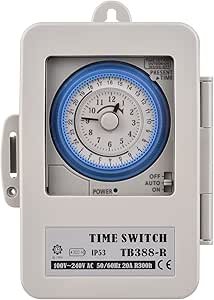
A Mechanical Timer Switch is an electrical control device used to automatically turn electrical appliances ON or OFF after a preset time using mechanical movement. It is commonly used in home appliances, water pumps, heaters, street lights, and industrial equipment where time-based control is required. This device works without complex electronics, making it simple, reliable, and easy to use in basic applications.
The working principle of a Mechanical Timer Switch is based on Electromagnetism along with mechanical energy storage. Inside the timer, there is a spring-loaded mechanism or a rotating clockwork system. When the user sets the time, the spring is wound or a dial is rotated, storing mechanical energy. This stored energy is slowly released in a controlled manner, which moves gears and eventually opens or closes the electrical contacts after a specific time delay.
A Mechanical Timer Switch consists of key components such as a spring mechanism, gears, rotating dial, contact points, and an outer casing. The dial is used to set the required time duration, while the gears control the speed of movement. The contact system is responsible for switching the electrical load ON or OFF when the timing cycle completes.
One of the main advantages of a Mechanical Timer Switch is its simplicity and low cost. It does not require any electronic circuit or external power supply to operate the timing function. It is also durable and easy to maintain, making it suitable for basic household and industrial uses. However, its accuracy is lower compared to digital timers, and it has limited features and flexibility.
Overall, a Mechanical Timer Switch is a practical and reliable timing device used for simple automation tasks. Its easy operation and mechanical design make it suitable for applications where basic time control is required without complex electronics.
Mechanical timer switches use gears, springs, and rotating dials to measure time. The user sets the required time by turning a dial.
These timers are simple, reliable, and commonly used in household appliances.
Digital Timer Switch
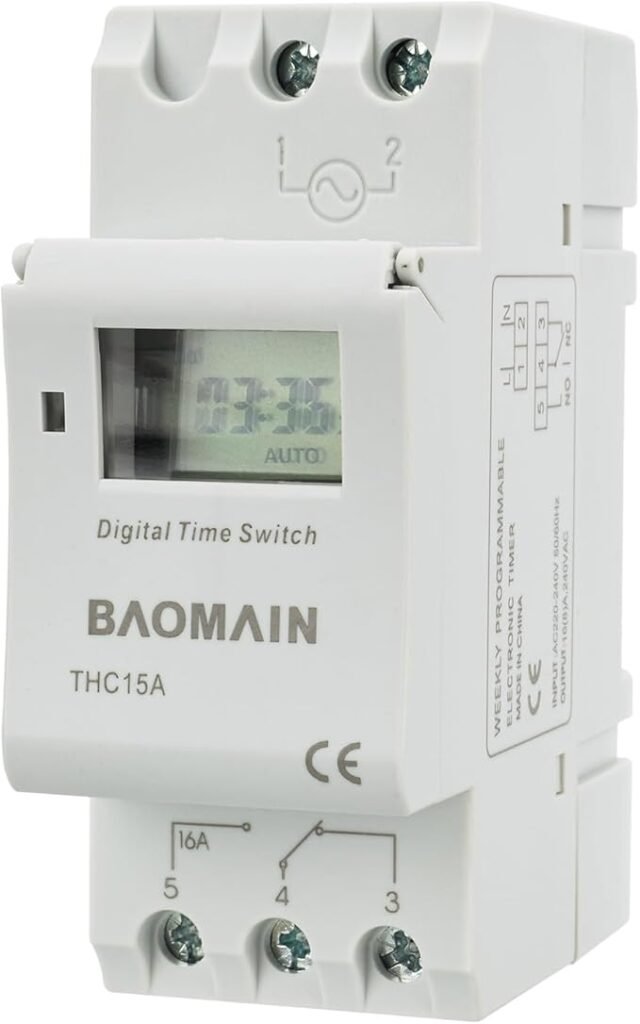
A Digital Timer Switch is an advanced electrical control device used to automatically switch electrical loads ON or OFF at preset time intervals using digital electronics. It is widely used in modern homes, industries, irrigation systems, street lighting, and automation systems where accurate and programmable time control is required. Compared to mechanical timers, it offers higher precision, multiple settings, and better flexibility.
The working principle of a Digital Timer Switch is based on Electromagnetism along with electronic timing circuits. When power is supplied, an internal microcontroller or digital circuit starts operating. The user sets the required time using buttons or a digital interface. The circuit counts time using a crystal oscillator, which ensures accurate timing. Once the preset time is reached, the relay inside the switch activates or deactivates the connected load automatically.
A Digital Timer Switch consists of key components such as a microcontroller, digital display, input buttons, relay, power supply unit, and memory system. The microcontroller acts as the brain of the device, processing time settings and controlling output signals. The relay works as the switching element that connects or disconnects the electrical load. The digital display shows time settings and status clearly to the user.
One of the main advantages of a Digital Timer Switch is its high accuracy and reliability. It allows multiple programming options, such as daily, weekly, or cyclic operations. It also reduces human intervention, improves energy efficiency, and enhances automation in electrical systems. However, it is more expensive than mechanical timers and requires a stable power supply for proper operation.
Overall, a Digital Timer Switch is a modern and efficient device for automatic electrical control. Its precision, flexibility, and smart features make it highly useful in homes, industries, and advanced automation systems where accurate timing control is required.
Digital timer switches use electronic circuits and microcontrollers. They provide more accurate timing and allow users to program multiple ON and OFF schedules.
Many digital timers include LCD displays and push buttons for programming.
Programmable Timer Switch
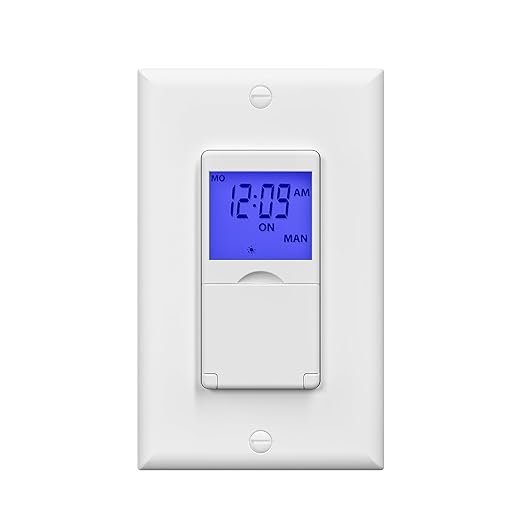
A Programmable Timer Switch is an advanced electrical control device used to automatically switch electrical loads ON and OFF according to a user-defined schedule. It allows multiple time settings in a day, week, or even custom cycles, making it highly useful in industrial automation, home appliances, irrigation systems, HVAC systems, and energy-saving applications. This device helps reduce manual operation and improves efficiency by controlling electrical equipment at exact programmed times.
The working principle of a Programmable Timer Switch is based on Electromagnetism along with digital timing and control circuits. When the device is powered ON, an internal microcontroller starts operating using a crystal oscillator for accurate time measurement. The user can program ON/OFF schedules using buttons or a digital interface. The microcontroller continuously tracks real time and activates a built-in relay whenever the programmed condition is met, switching the load ON or OFF automatically.
A Programmable Timer Switch consists of key components such as a microcontroller, digital display, input buttons, memory unit, relay, and power supply circuit. The memory unit stores user-defined programs even during power failure in many modern models. The relay acts as the switching element, while the display shows current time and programmed settings clearly.
One of the main advantages of a Programmable Timer Switch is its high flexibility and automation capability. It can store multiple schedules, reduce energy consumption, and improve system efficiency. It is very useful in applications where repeated ON/OFF cycles are required without human intervention. However, it is more complex and expensive than basic mechanical or simple digital timers, and requires proper programming knowledge for correct operation.
Overall, a Programmable Timer Switch is a smart and efficient control device used in modern electrical systems. Its ability to automate complex timing operations makes it highly valuable in industrial, commercial, and residential applications for better energy management and control.
Programmable timers allow users to create detailed schedules for daily or weekly operations. They are widely used in automation systems and commercial lighting systems.
Countdown Timer Switch
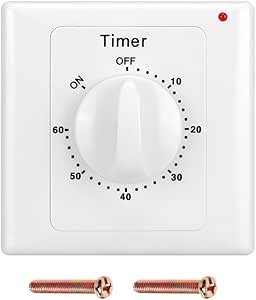
A Countdown Timer Switch is an electrical control device that automatically turns a connected load OFF (or sometimes ON) after a preset amount of time has finished counting down. It is widely used in home appliances, bathroom exhaust fans, kitchen equipment, lighting systems, and industrial machines where temporary operation is required. This device helps save energy and improves safety by ensuring that equipment does not run longer than needed.
The working principle of a Countdown Timer Switch is based on Electromagnetism along with electronic or mechanical timing control. When the switch is activated, an internal timer starts counting down from the set time value. During this period, the electrical load remains ON. Once the countdown reaches zero, the internal relay automatically disconnects the supply and turns the device OFF. Some models also provide a warning or delay signal before switching off.
A Countdown Timer Switch consists of key parts such as a timer circuit or mechanical timing mechanism, relay, control buttons or dial, display (in digital models), and power supply section. The relay acts as the main switching component, controlling the flow of electricity to the connected load.
One of the main advantages of a Countdown Timer Switch is energy saving, as it prevents unnecessary operation of electrical devices. It also improves convenience and safety, especially in areas where users may forget to turn off appliances. However, it has limited functionality compared to programmable timers and usually supports only simple countdown operations.
Overall, a Countdown Timer Switch is a simple yet effective device used for automatic time-based control in electrical systems.
A countdown timer switch turns a device OFF after a specified time period.
For example, a bathroom exhaust fan may run for 10 minutes and then stop automatically.
Astronomical Timer Switch
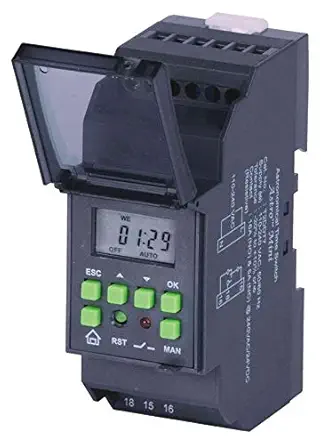
An Astronomical Timer Switch is an advanced electrical control device that automatically switches electrical loads ON and OFF based on the daily sunrise and sunset timings. It is widely used in street lighting systems, outdoor lighting, billboards, gardens, and security lighting. This device removes the need for manual adjustment because it calculates time according to the geographical location and seasonal changes.
The working principle of an Astronomical Timer Switch is based on Electromagnetism along with internal real-time clock and programmed location data. The device stores geographical coordinates (latitude and longitude) and uses this data to calculate sunrise and sunset times for each day. Based on these calculations, the internal microcontroller activates or deactivates a relay to control the connected electrical load automatically. This ensures accurate switching according to natural daylight conditions.
An Astronomical Timer Switch consists of key components such as a microcontroller, real-time clock (RTC), memory unit, digital display, input buttons, relay, and power supply system. The microcontroller performs all calculations related to sunrise and sunset timing. The memory stores location settings and programmed schedules, while the relay controls the actual electrical switching.
One of the main advantages of an Astronomical Timer Switch is its high energy efficiency, as it ensures lights are only used when needed based on natural daylight. It reduces manual intervention, saves electricity, and improves automation in outdoor lighting systems. It also adjusts automatically throughout the year without requiring manual reprogramming. However, it is more expensive than basic timer switches and requires correct location setup for accurate operation.
Overall, an Astronomical Timer Switch is a smart and efficient device used in modern electrical automation systems. Its ability to adapt to natural sunlight patterns makes it highly valuable for energy-saving and intelligent lighting control applications.
Astronomical timers automatically adjust switching times based on sunrise and sunset.
They are commonly used in street lighting and outdoor lighting systems.
5. Main Components of a Timer Switch
A timer switch contains several important electrical and mechanical components.
Timing Mechanism
This component measures time. Mechanical timers use gears, while digital timers use electronic circuits.
Switching Contacts
The contacts open or close the electrical circuit to control the connected load.
Control Interface
Mechanical timers use rotating dials, while digital timers use buttons and display screens.
Power Supply Circuit
This circuit provides electrical power to the timer’s internal components.
Microcontroller
In digital timer switches, the microcontroller controls the timing functions and switching operations.
6. Timer Switch Advantages
Understanding timer switch advantages and disadvantages helps users decide when to use these devices.
Advantages
- Automatic control of electrical equipment
- Saves electrical energy
- Reduces manual operation
- Improves convenience in daily tasks
- Provides precise time control
- Useful for automation systems
- Increases safety by controlling equipment operation
7. Disadvantages / Limitations
Despite their advantages, timer switches also have some limitations.
- Mechanical timers may become less accurate over time
- Digital timers require proper programming
- Some timers need battery backup
- Incorrect settings may cause unwanted switching
- Advanced timers may be more expensive
8. Timer Switch Applications
There are many timer switch applications in different electrical systems.
Residential Applications
- Outdoor lighting control
- Water heater scheduling
- Bathroom exhaust fan control
- Garden irrigation systems
Commercial Applications
- Office lighting control
- Advertising signboards
- Store display lighting
Industrial Applications
- Motor control systems
- Conveyor belt operation
- Industrial machine timing control
Public Infrastructure
- Street lighting systems
- Traffic signal systems
- Public building lighting control
These applications demonstrate the importance of timer switches in modern electrical systems.
9. Comparison Section
Understanding the difference between timer switch and manual switch helps beginners select the correct switching device.
| Feature | Timer Switch | Manual Switch |
|---|---|---|
| Operation | Automatic | Manual |
| Time Control | Yes | No |
| Energy Saving | High | Depends on user |
| Convenience | Very convenient | Requires manual control |
| Applications | Automation systems | Basic electrical control |
Both switches are useful but serve different purposes in electrical installations.
10. Selection Guide
Selecting the correct timer switch depends on several factors.
Load Capacity
The timer switch must support the electrical load connected to it.
Type of Timer
Mechanical timers are suitable for simple tasks, while digital timers provide more advanced control.
Programming Options
Advanced timers allow multiple schedules and flexible timing control.
Installation Type
Timer switches may be wall-mounted, panel-mounted, or plug-in types.
Durability
Industrial environments require more robust timer switches.
11. Common Problems & Solutions
Timer Not Working
Possible causes include no power supply or loose wiring.
Solution: check power connections and wiring.
Timer Not Switching Load
This may happen due to damaged contacts or incorrect programming.
Solution: inspect contacts and reset the timer.
Timer Losing Time
Weak batteries in digital timers or worn mechanical parts may cause timing errors.
Solution: replace batteries or repair the timing mechanism.
Incorrect Timing Operation
This problem usually occurs due to incorrect programming.
Solution: reset the timer and program it again.
12. Future Trends
Timer switches are evolving with modern electrical technology.
Smart Timer Switches
These devices can be controlled using smartphones or remote systems.
IoT Integration
Future timer switches will connect to smart home systems through the Internet of Things.
Energy Management Systems
Timer switches will become part of advanced energy-saving solutions.
Intelligent Automation
Advanced timer systems may automatically adjust schedules based on usage patterns.
13. Conclusion
Timer switches are essential devices used to automate electrical operations based on time. They allow electrical equipment to operate automatically without manual control, improving efficiency and convenience.
Understanding the timer switch working principle, components, and timer switch applications is important for electrical students, engineers, and technicians. These devices demonstrate how timing mechanisms can control electrical circuits effectively.
Although timer switches have some limitations, their advantages such as energy saving, automation, and improved safety make them very useful in modern electrical systems. As technology continues to develop, timer switches will become smarter and more integrated with advanced automation systems.