
In every electrical system—whether it is a small workshop, a shopping mall, or a large factory—efficient use of electricity is very important. One common issue in electrical networks is poor power factor, which leads to higher electricity bills, energy loss, and overload on equipment. For example, in an industrial plant running heavy motors, the electricity consumed may be high, but the useful output may be lower due to poor power factor.
This is where digital power factor meters play an important role. These modern devices help engineers and technicians measure how efficiently electrical power is being used in real time. They are widely used in industries to monitor and improve power quality.
In this article, you will learn what digital power factor meters are, how they work, their types, components, advantages, disadvantages, applications, and how to select the right one. The explanation is simple, practical, and designed for students, technicians, and engineers.
2. What is Digital Power Factor Meter?
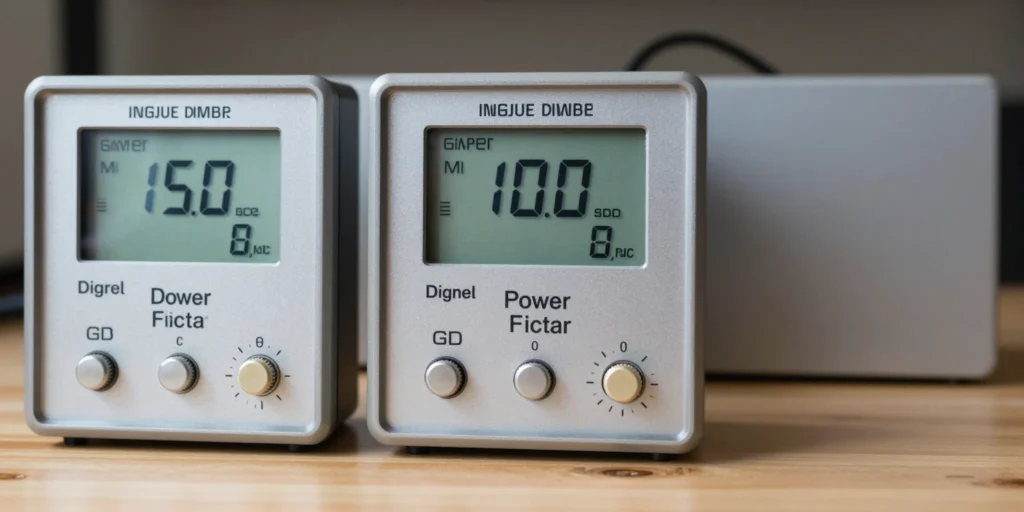
A digital power factor meter is an electronic measuring instrument used to display the power factor of an electrical system in digital form.
Simple Definition
It measures how effectively electrical power is being used in a circuit by comparing real power and apparent power.
Basic Explanation
- Power factor shows efficiency of electricity usage
- Value ranges between 0 and 1
- Higher value means better efficiency
Practical Example
If a factory motor consumes 1000W of power but only 800W is useful, the rest is wasted. A digital power factor meter shows this efficiency clearly on a digital display.
3. Digital Power Factor Meter Working Principle
The digital power factor meter working principle is based on measuring voltage, current, and phase difference between them.
\text{Power Factor} = \cos\phi = \frac{P}{S}
Step-by-Step Working
- The meter senses voltage from the supply
- It measures current using a current transformer
- It calculates phase difference between voltage and current
- Internal circuitry processes the signals
- The result is displayed digitally as power factor
Simple Analogy
Think of two people walking:
- If they walk together → high power factor
- If they are out of sync → low power factor
Key Idea
The closer voltage and current are in phase, the better the power factor.
4. Types / Classification of Digital Power Factor Meters
4.1 Single-Phase Digital Power Factor Meter
Used in residential and small commercial systems.
- Measures single-phase supply
- Simple installation
- Used in homes and small machines
4.2 Three-Phase Digital Power Factor Meter
Used in industries and large electrical systems.
- Measures three-phase supply
- More accurate for heavy loads
- Used in factories and plants
4.3 Panel Mounted Power Factor Meter
Installed on control panels for continuous monitoring.
- Fixed installation
- Real-time display
- Used in industrial control rooms
4.4 Portable Power Factor Meter
Handheld device used for testing and maintenance.
- Easy to carry
- Used for troubleshooting
- Temporary measurements
5. Main Components of Digital Power Factor Meter
Voltage Input Section
- Measures system voltage
- Sends signal to processing unit
Current Transformer (CT)
- Measures current flow
- Converts high current into safe level
Microprocessor Unit
- Processes voltage and current signals
- Calculates power factor
Display Unit
- Shows readings in digital format
- Easy to read LCD or LED screen
Power Supply Unit
- Provides operating power to the device
- Ensures stable functioning
6. Advantages of Digital Power Factor Meters
Advantages
- High accuracy in measurement
- Easy-to-read digital display
- Real-time monitoring
- Helps reduce electricity bills
- Improves energy efficiency
- Useful for industrial load management
- Detects poor power factor quickly
- Requires low maintenance
7. Disadvantages / Limitations
Limitations
- Higher cost compared to analog meters
- Requires stable power supply
- Sensitive to electrical noise
- Needs proper installation
- May require calibration over time
8. Applications of Digital Power Factor Meters
The digital power factor meter applications are widely used in different sectors.
Residential Applications
- Monitoring home electrical systems
- Checking appliance efficiency
Industrial Applications
- Factories and manufacturing plants
- Motor load monitoring
- Power distribution systems
Commercial Applications
- Shopping malls
- Office buildings
- Hotels and hospitals
Modern Energy Systems
- Smart grids
- Renewable energy systems
- Solar power plants
9. Comparison Section
Difference Between Digital and Analog Power Factor Meter
| Feature | Digital Meter | Analog Meter |
|---|---|---|
| Display | Digital screen | Needle pointer |
| Accuracy | High | Moderate |
| Maintenance | Low | Higher |
| Reading | Easy | Requires skill |
| Technology | Modern | Traditional |
This shows the difference between digital and analog power factor meters clearly.
10. Selection Guide
How to Choose the Right Meter
- Check single-phase or three-phase system
- Choose required accuracy level
- Ensure proper CT rating
- Select digital display quality
- Consider installation type (panel or portable)
- Check brand reliability
Tips for Beginners
- Start with basic models for learning
- Understand CT connections carefully
- Always follow wiring diagrams
11. Common Problems & Solutions
Problem: Incorrect Reading
Solution: Check CT connections and calibration
Problem: Display Not Working
Solution: Verify power supply and internal fuse
Problem: Fluctuating Values
Solution: Reduce electrical noise and stabilize load
Problem: No Response
Solution: Check wiring and input voltage
12. Future Trends
Digital power factor meters are becoming smarter with new technology.
- IoT-based monitoring systems
- Wireless data transmission
- AI-based power analysis
- Integration with smart grids
- Real-time cloud monitoring
These advancements help industries improve energy efficiency and reduce costs.
13. Conclusion
Digital power factor meters are essential tools for modern electrical systems. They help measure how efficiently electrical power is being used and provide accurate real-time data. By understanding the digital power factor meter working principle, engineers and technicians can improve system efficiency and reduce energy losses.
These devices are widely used in homes, industries, and commercial systems to monitor power quality and avoid penalties due to poor power factor. With the rise of smart technology, digital power factor meters are becoming more advanced and easier to use. Learning about them is important for anyone working in electrical engineering or energy management.