
Imagine a hospital during a power failure. Suddenly, the main electricity supply stops. Within seconds, lights turn back on, life-support machines continue running, and critical systems remain stable. What makes this possible? A diesel power plant working silently in the background.
A diesel power plant plays a vital role in providing reliable backup and emergency power. In many remote areas, it even serves as the main source of electricity. For electrical students, engineers, and technicians, understanding how a diesel power plant works is essential. It helps you design better systems, select proper equipment, and ensure safe operation.
In this article, you will learn the diesel power plant working principle, types, main components, diesel power plant applications, and diesel power plant advantages and disadvantages. We will also cover the difference between diesel power plant and steam power plant, selection guidelines, common problems, and future trends.
Let’s begin with the fundamentals.
2. What is Diesel Power Plant?
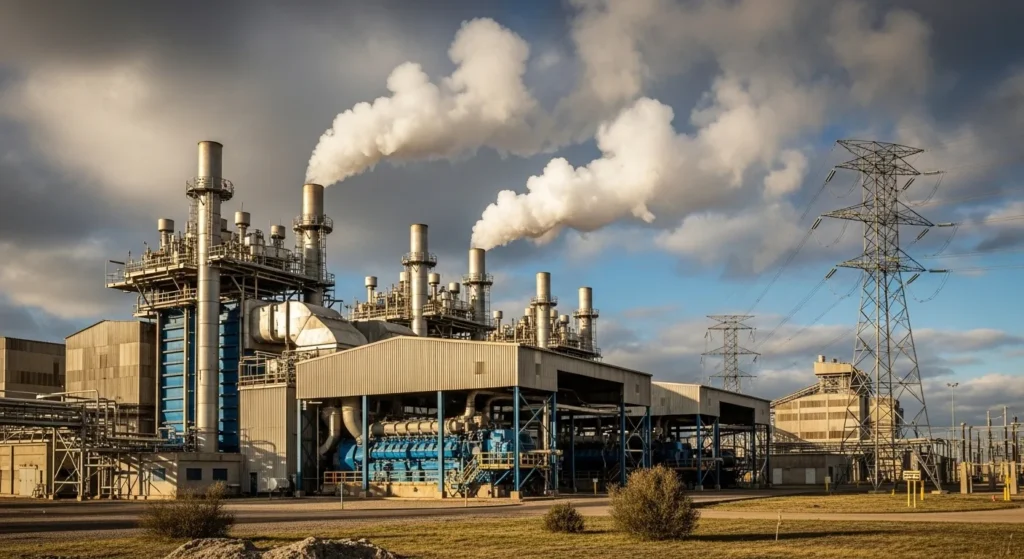
A diesel power plant is a type of power generation system where a diesel engine is used to drive an electric generator to produce electricity.
In simple words, it converts the chemical energy of diesel fuel into mechanical energy, and then into electrical energy.
Simple Explanation
Think of a diesel power plant like a car engine connected to a generator.
- The diesel engine burns fuel.
- The engine rotates a shaft.
- The generator connected to the shaft produces electricity.
Practical Example
In shopping malls and offices, when the main grid fails, a diesel generator automatically starts and supplies electricity. That generator system is part of a diesel power plant.
In remote villages without grid access, diesel power plants provide continuous electricity.
3. Diesel Power Plant Working Principle
The diesel power plant working principle is based on energy conversion in stages.
Let’s understand it step by step.
Step 1: Fuel Injection
- Diesel fuel is injected into the engine cylinder.
- Air inside the cylinder is highly compressed.
- The high temperature of compressed air ignites the diesel automatically.
Unlike petrol engines, no spark plug is needed.
Step 2: Combustion
- The burning fuel creates high-pressure gases.
- These gases push the piston downward.
This converts chemical energy into mechanical energy.
Step 3: Crankshaft Rotation
- The piston movement rotates the crankshaft.
- The crankshaft is connected to the generator shaft.
Step 4: Electricity Generation
- The rotating shaft turns the alternator.
- The alternator converts mechanical energy into electrical energy using electromagnetic induction.
Step 5: Power Distribution
- The generated electricity passes through control panels.
- It is supplied to loads safely.
You can imagine this process like a bicycle dynamo. When you pedal (mechanical energy), the dynamo produces electricity. In a diesel power plant, the diesel engine replaces your legs.
4. Types / Classification of Diesel Power Plant
Diesel power plants can be classified based on application and capacity.
Standby Diesel Power Plant
- Used as backup power
- Starts automatically during power failure
- Common in hospitals and offices
Prime Power Diesel Plant
- Used as main power source
- Operates continuously
- Common in remote areas
Portable Diesel Generator
- Small capacity
- Easy to transport
- Used in construction sites and events
Industrial Diesel Power Plant
- Large capacity
- Used in factories and mining operations
Each type is selected based on load requirement and usage duration.
5. Main Components of Diesel Power Plant
Understanding components is essential for proper design and maintenance.
1. Diesel Engine
- Heart of the system
- Converts fuel energy into mechanical energy
2. Alternator
- Converts mechanical energy into electrical energy
- Produces AC power
3. Fuel System
- Fuel tank
- Fuel pump
- Fuel filters
Ensures clean and continuous fuel supply.
4. Cooling System
- Radiator
- Water pump
- Cooling fan
Prevents engine overheating.
5. Lubrication System
- Oil pump
- Oil filter
Reduces friction and wear.
6. Starting System
- Battery
- Starter motor
Used to start the engine.
7. Control Panel
- Monitors voltage, current, frequency
- Protects system from faults
Each component must work properly for reliable operation.
6. Diesel Power Plant Advantages and Disadvantages
Advantages
- Quick start and fast response
- Low initial installation cost
- Compact size
- Easy installation
- Suitable for small loads
- Reliable backup power
Disadvantages / Limitations
- High fuel cost
- Noise and vibration
- Air pollution
- High maintenance cost for long operation
- Not suitable for very large power generation
Understanding diesel power plant advantages and disadvantages helps in proper decision-making.
7. Diesel Power Plant Applications
Diesel power plant applications are widespread.
Home Use
- Backup generator for houses
- Small portable generators
Commercial Buildings
- Hospitals
- Banks
- Data centers
Industrial Applications
- Construction sites
- Factories
- Oil and gas industry
Modern Technology
- Telecom towers
- Remote research stations
- Military operations
In many cases, diesel power plants act as emergency lifesavers.
8. Comparison Section
Let us understand the difference between diesel power plant and steam power plant.
| Feature | Diesel Power Plant | Steam Power Plant |
|---|---|---|
| Fuel | Diesel | Coal or gas |
| Initial Cost | Low | High |
| Start Time | Very fast | Slow |
| Capacity | Small to medium | Large |
| Maintenance | Moderate | Complex |
| Efficiency | Moderate | Higher for large scale |
This comparison helps clarify the difference between diesel power plant and steam power plant for beginners.
9. Selection Guide
Choosing the right diesel power plant requires careful planning.
1. Load Requirement
- Calculate total connected load
- Consider future expansion
2. Type of Use
- Standby or prime power
- Continuous or emergency use
3. Fuel Availability
- Ensure reliable diesel supply
4. Space Availability
- Proper ventilation required
- Safe installation area
5. Noise Level
- Choose soundproof enclosure if required
6. Budget
- Balance between cost and performance
Always select capacity 20–30% higher than maximum expected load.
10. Common Problems & Solutions
Q1: Why does the diesel generator not start?
Possible reasons:
- Weak battery
- Fuel blockage
- Faulty starter
Solution: Check battery voltage and fuel system.
Q2: Why is there excessive smoke?
- Poor fuel quality
- Dirty air filter
- Incomplete combustion
Clean filters and use proper fuel.
Q3: Why is voltage unstable?
- Faulty AVR (Automatic Voltage Regulator)
- Speed fluctuation
Check alternator and engine speed.
Q4: Why is the engine overheating?
- Low coolant
- Blocked radiator
Maintain cooling system regularly.
Regular maintenance prevents most issues.
11. Future Trends in Diesel Power Plant
Technology is improving diesel systems.
Hybrid Systems
- Diesel combined with solar
- Reduced fuel consumption
Advanced Emission Control
- Cleaner exhaust systems
- Reduced pollution
Smart Monitoring
- Remote monitoring via internet
- Real-time performance tracking
Fuel Efficiency Improvements
- Electronic fuel injection
- Better combustion control
The future is moving toward cleaner and smarter diesel power plants.
12. Conclusion
A diesel power plant is a reliable and flexible power generation system. It converts fuel energy into electricity using a diesel engine and alternator.
We discussed the diesel power plant working principle, types, components, and diesel power plant applications. We also covered diesel power plant advantages and disadvantages and the difference between diesel power plant and steam power plant.
As a junior engineer, always focus on proper load calculation, fuel management, ventilation, and maintenance planning. Diesel systems are simple compared to large thermal plants, but they require discipline in operation.
Keep studying real installations, observe maintenance practices, and understand protection systems. Mastering diesel power plant fundamentals will strengthen your power engineering knowledge.